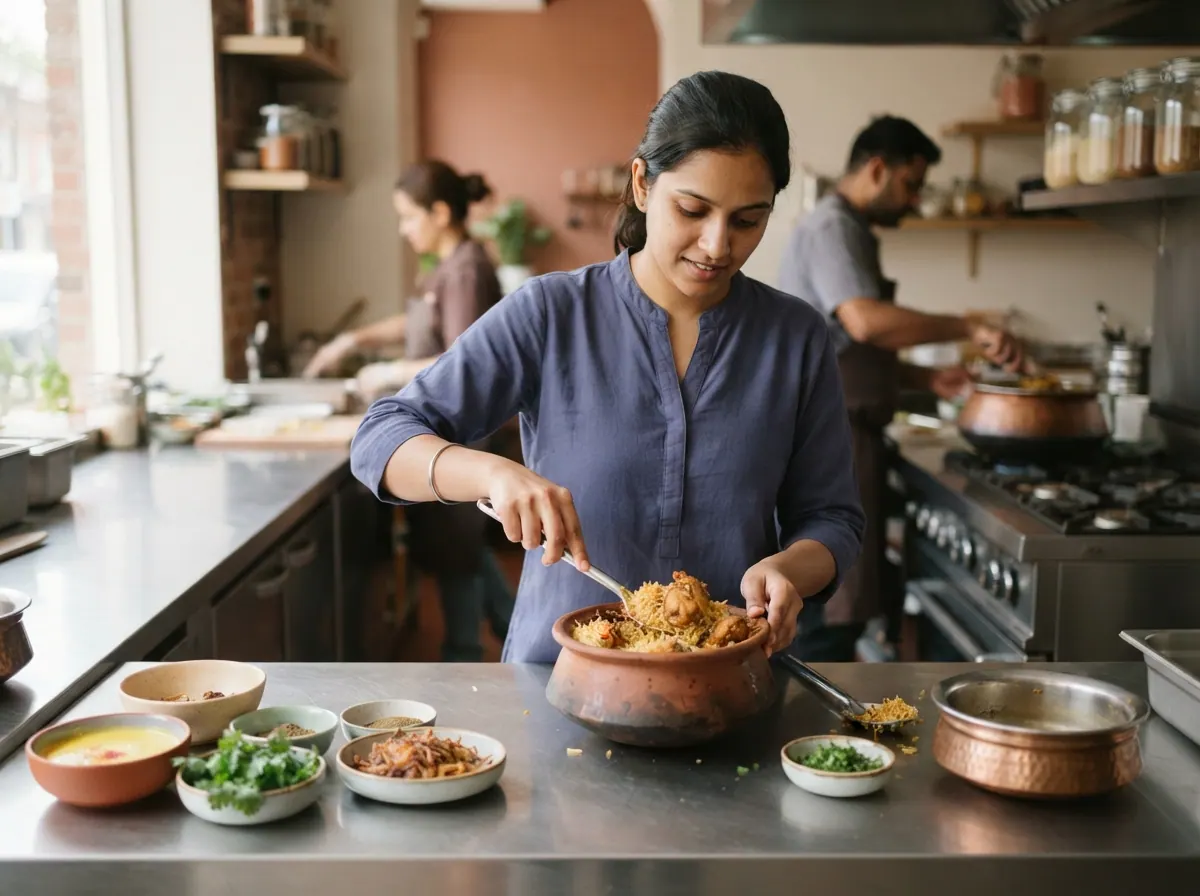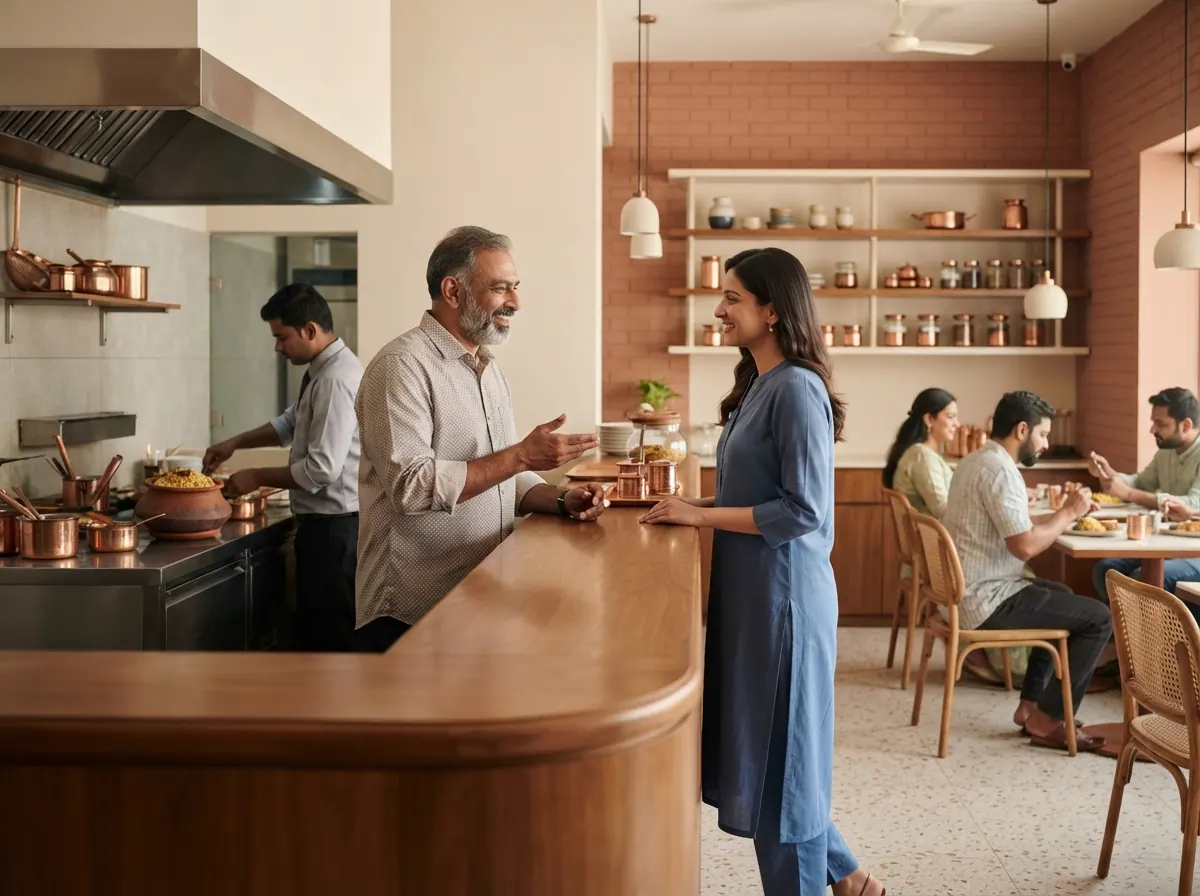
भारत में बिरयानी का बिज़नेस शुरू करने के लिए आपको चाहिए एक अच्छी रेसिपी जो हर बार एक जैसी बने, कुछ बड़े बर्तन (हांडी या देगची), भरोसे का मीट सप्लायर, और साइज़ के हिसाब से लगभग ₹1–8 लाख। टेकअवे काउंटर सबसे कम में खुल जाता है, और बैठने व डिलीवरी वाली दुकान में ज़्यादा लगता है। बिरयानी आसान दिखती है क्योंकि सबको पसंद है, लेकिन कमाई या नुकसान इस पर तय होता है कि मीट कैसे खरीदते हैं और बचे हुए चावल को कैसे कंट्रोल करते हैं।
यहाँ सारे आँकड़े अंदाज़े हैं। खर्च करने से पहले अपने इलाके के रेट ज़रूर देख लें।
कितना खर्च आएगा?
| खर्च | टेकअवे काउंटर | बैठने वाली दुकान |
|---|---|---|
| किराए का डिपॉज़िट और दुकान की फ़िटिंग | ₹30,000–1.5 लाख | ₹1.5–3 लाख |
| बड़े बर्तन, कलछी, सर्विंग ट्रे | ₹15,000–40,000 | ₹40,000–80,000 |
| गैस बैंक या कमर्शियल बर्नर | ₹10,000–25,000 | ₹25,000–50,000 |
| कच्चे मीट के लिए फ़्रिज/चिलर | ₹15,000–30,000 | ₹40,000–80,000 |
| काउंटर, टेबल, साइनबोर्ड | ₹10,000–40,000 | ₹50,000–1.2 लाख |
| पहला स्टॉक: चावल, मसाले, तेल, पैकिंग | ₹15,000–30,000 | ₹40,000–80,000 |
| लाइसेंस और रजिस्ट्रेशन | ₹5,000–15,000 | ₹10,000–25,000 |
| पहले दो महीने का चलाने का पैसा | ₹30,000–70,000 | ₹1–2 लाख |
| कुल | लगभग ₹1.3–4 लाख | लगभग ₹4–8 लाख |
अगर आप घर की छोटी किचन से सिर्फ़ डिलीवरी शुरू करें तो इससे भी कम में हो सकता है, पर तब आपकी बिक्री डिलीवरी ऐप और उनके कमीशन पर टिकी रहेगी।
कौन-सी बिरयानी बेचें?
वही बेचें जो आपका इलाका पहले से जानता है, फिर बाद में एक स्पेशल आइटम जोड़ें:
- हैदराबादी दम: मीट और चावल एक बंद हांडी में साथ पकते हैं। मशहूर है, पर धीमी और बड़े स्केल पर मुश्किल।
- लखनवी या अवधी: हल्की और खुशबूदार, आम तौर पर बनाने में महँगी।
- कोलकाता: आलू और अंडे वाली, जिससे प्लेट की लागत कम रहती है।
- आम्बूर या डिंडीगुल: छोटे दाने वाला सीराग सांबा चावल, तमिलनाडु में लोकप्रिय।
- थालास्सेरी: केरल की शैली, अलग चावल और हल्का मसाला।
चिकन सबसे सुरक्षित शुरुआत है। मटन बिरयानी प्लेट पर ज़्यादा कमाई देती है, लेकिन उसका भाव ऊपर-नीचे होता है और क्वालिटी एक जैसी रखना मुश्किल है।
कितनी कमाई हो सकती है?
यह एक ऐसी दुकान का हिसाब है जो रोज़ करीब 80 प्लेट बेचती है, दूसरे-तीसरे महीने में, महीने के 30 दिन खुली।
बिक्री
- 60 चिकन प्लेट × ₹160 = ₹9,600
- 20 मटन प्लेट × ₹260 = ₹5,200
- रोज़ का कुल = ₹14,800
- ₹14,800 × 30 दिन = लगभग ₹4,44,000 महीना
हर महीने के खर्च
- मीट, चावल, तेल, मसाले, दही: बिक्री का करीब 42% = ₹1,86,500
- किराया = ₹30,000
- दो कुक और एक हेल्पर = ₹45,000
- गैस, बिजली, पानी = ₹25,000
- पैकिंग और डिलीवरी कमीशन = ₹35,000
- बर्बादी और मरम्मत = ₹10,000
- कुल = लगभग ₹3,31,500
बचत: ₹4,44,000 − ₹3,31,500 = लगभग ₹1,12,500, टैक्स और अपनी सैलरी से पहले। अगर आप अपने लिए ₹40,000 निकालें तो करीब ₹72,000 बचते हैं।
ज़्यादातर नई दुकानें इस आँकड़े तक धीरे-धीरे पहुँचती हैं। पहले महीने में रोज़ सिर्फ़ 30–40 प्लेट बिक सकती हैं, और उस घाटे को आपका चलाने का पैसा संभालता है। मटन के भाव में थोड़ी बढ़त या एक दिन की बिना बिकी बिरयानी भी मुनाफ़ा तेज़ी से घटा देती है।
शुरू करने से पहले क्या चाहिए?
- ऐसी रेसिपी जो हर बार वही बने। दोस्तों के लिए वही बैच दस बार बनाएँ और मात्रा चम्मच या मुट्ठी में नहीं, ग्राम में लिखें।
- भरोसे का मीट सप्लायर। हर दिन सबसे सस्ते रेट की जगह एक पक्की दुकान का ताज़ा चिकन बेहतर है। डिलीवरी का समय और ठंडा रखने की व्यवस्था पूछें।
- लंच के समय भीड़ वाली जगह। ऑफ़िस, हॉस्टल और कॉलेज के पास लंच के पक्के ऑर्डर मिलते हैं।
- बचे हुए खाने का प्लान। पका हुआ चावल और मीट अगले दिन के लिए सुरक्षित नहीं रहता, इसलिए छोटे बैच में पकाना सीखें।
कदम-दर-कदम
- एक स्टाइल और छोटा मेन्यू चुनें: दो चिकन बिरयानी, एक मटन, एक वेज, और रायता-सालन जैसे साइड।
- प्लेट की लागत तय करें। एक प्लेट के चावल, मीट, तेल और मसाले तौलें, पैकिंग जोड़ें, और रेट उसका करीब 2.2 से 2.5 गुना रखें।
- दुकान लें और रजिस्ट्रेशन कराएँ। बेचने के लिए खाना बनाने से पहले FSSAI ज़रूरी है।
- दो साइज़ के बर्तन लें, ताकि धीमे दिन छोटा और वीकेंड पर बड़ा बैच बन सके।
- पहले सिर्फ़ लंच शुरू करें, जब लंच पूरा बिकने लगे तब डिनर जोड़ें।
- काउंटर चलने के बाद डिलीवरी ऐप से जुड़ें, और पक्के ग्राहकों के लिए अपना फ़ोन नंबर रखें।
- हर शाम लिखें: कितनी प्लेट बिकीं, कितनी बचीं, कितना मीट आया। इसी से गड़बड़ी जल्दी पकड़ में आती है।
कौन-से लाइसेंस लगते हैं?
- FSSAI रजिस्ट्रेशन या लाइसेंस। कौन-सा, यह सालाना बिक्री पर निर्भर है। FoSCoS पोर्टल पर अप्लाई करें और मौजूदा सीमा पक्की कर लें।
- ट्रेड या दुकान का लाइसेंस नगर निगम या पंचायत से, और कई राज्यों में शॉप एंड एस्टैब्लिशमेंट रजिस्ट्रेशन।
- GST, जब बिक्री सीमा पार करे या कुछ ऐप पर बेचने पर। CA से पूछें।
- आग और गैस की सुरक्षा। कमर्शियल सिलेंडर और बंद किचन में सावधानी चाहिए। स्थानीय फ़ायर ऑफ़िस से पूछें कि क्या लागू है।
- नियम राज्य और शहर के हिसाब से अलग होते हैं, इसलिए हर बात स्थानीय ऑफ़िस से पक्की करें।
क्या गलत हो सकता है?
- ज़्यादा पका लेना। बिना बिकी बिरयानी सीधा नुकसान है, और उसे अगले दिन नहीं बेचना चाहिए। छोटे बैच में पकाएँ और ज़रूरत पर और बनाएँ।
- मीट का भाव उछलना। मटन और चिकन के रेट बदलते हैं, और मेन्यू का तय रेट चुपचाप घाटे में बदल सकता है।
- कुक बदलने पर स्वाद बदलना। जिस ग्राहक को सोमवार का स्वाद पसंद आया और शुक्रवार को कुछ और मिला, वह वापस नहीं आएगा।
- डिलीवरी कमीशन। ऐप हर ऑर्डर का बड़ा हिस्सा ले सकते हैं। डिलीवरी बढ़ाने से पहले देखें कि एक प्लेट पर बचता क्या है।
- भीड़ के समय गैस खत्म होना। एक एक्स्ट्रा सिलेंडर और दूसरा सप्लायर रखें।
- सफ़ाई में चूक। कच्चा मीट पके चावल के पास रखना या गंदी नाली बीमारी और दुकान बंद होने तक पहुँचा सकती है।
ये हालात आपके सामने आएँगे
आप क्या करेंगे? हर फ़ैसले की एक क़ीमत है।
शुरुआत
Your area likes Hyderabadi dum, but a Kolkata style with potato costs less per plate. You can only perfect one at the start.
- Hyderabadi dum: Higher price, slower cooking
- Kolkata style with potato: Cheaper plate, less famous
A big handi cooks more at once. Three small ones let you cook fresh batches on slow days.
- Buy one big handi: Cheaper, waste on slow days
- Buy three small ones: Costs more, less leftover
A trader offers cheaper old-crop basmati. Premium aged rice costs more but the grains come out long and separate.
- Buy aged premium rice: Costly, grains cook better
- Take the cheaper rice: Saves money, grains break
One shop sells fresh chicken at a fixed rate with daily delivery. A wholesaler is cheaper but delivers whenever it suits them.
- Use the steady shop: Higher rate, reliable supply
- Use the wholesaler: Lower rate, late deliveries
You have your first batch planned for Saturday. The FSSAI registration will take a few more days.
- Wait for registration: Lose a few days of sales
- Hand out free tasting only: Some goodwill, still no sales
Two shops are free. One is near offices with strong lunch trade and high rent. The other is near a college with cheaper rent.
- Take the office shop: Higher rent, steady lunch
- Take the college shop: Lower rent, price-sensitive
पहला महीना
Few people know your shop yet. A one-plus-one offer would fill the counter but eat your meat money.
- Run buy-one-get-one: Crowds come, thin margin
- Give a free raita instead: Small cost, small crowd
You cooked for 60 plates and sold 35. The rest will not be safe tomorrow, but it is still fresh tonight.
- Sell the rest cheaper tonight: Some cash back, still fresh tonight
- Throw it and cook less: Lose the cost, learn the number
A food app can send many orders, but it keeps a large commission on each plate.
- List on the app: More orders, lower margin
- Use your own phone orders: Slower, keeps full margin
A regular says Tuesday's biryani was too salty. The cook says the customer is wrong.
- Taste and apologise: Free plate, builds trust
- Defend the cook: Saves face, may lose a regular
By eye, plates vary a lot. Weighing every plate slows the counter but makes costs stable.
- Use a fixed serving scoop: Small cost, steady plates
- Keep serving by eye: Faster, uneven cost
A nearby office wants 40 packed plates by 1 p.m. tomorrow. You normally cook 25 plates in the morning.
- Hire a helper for the day: Pay now, good first order
- Offer only 25 plates: Safe cooking, smaller order
रोज़ का काम
Mutton costs far more this week. At your menu price, each plate now loses money.
- Raise the mutton price: Fewer orders, safe margin
- Pause mutton biryani: Lose sales, no loss
Most customers buy only the biryani plate. A combo with salan, raita and a sweet could raise each bill.
- Launch the combo: More spend, more prep
- Keep the plain menu: Simple, lower bill
Your last cylinder runs out in the middle of the afternoon. The supplier says delivery by evening.
- Buy one from a dealer now: Higher price, save the lunch
- Close early today: No cost, lose the day
A larger restaurant offered your head cook more pay. They know your masala blend.
- Raise their pay: Costly, keeps your taste
- Write the recipe, let them go: Cheaper, slow transition
Bought masala is easy but costs more and varies. Grinding your own needs a machine and a daily hour.
- Grind your own: Machine cost, signature taste
- Keep buying masala: No effort, higher running cost
A wedding reception family asks for 150 plates in big containers on a Sunday. They want a discount.
- Accept with a small discount: Large order, tight margin
- Quote full price: Better margin, may lose it
Customers wait 20 minutes for packed plates on weekends. Some leave without ordering.
- Hire a weekend helper: Extra wage, shorter wait
- Take pre-orders by phone: Cheap, needs discipline
It rains all day and walk-ins drop. You cooked your usual quantity by habit.
- Push delivery at a discount: Sell more, less profit
- Cook half next time: No loss tomorrow, risk empty tray
जब मुश्किल आए
A tray of cooked rice stayed warm too long in the afternoon. The smell is faintly sour.
- Throw the tray, carry on: Loss now, same habit
- Throw it, buy smaller trays: Bigger cost, fixes the cause
A customer messages that they had a stomach upset after eating your biryani yesterday.
- Refund and check your kitchen: Pay now, protect trust
- Block the message: No cost, bad word spreads
A food safety officer walks in. Your meat fridge shows a bit of ice melt and your registration copy is not on the wall.
- Fix everything listed: Spend a little, stay compliant
- Fix only the paper today: Cheap, risk next visit
You find the raw meat fridge off in the morning after a power cut. The meat is warm to touch.
- Throw the meat, repair fridge: Big loss, safe kitchen
- Throw the meat, rent cold storage: Loss plus rent, no downtime
A competitor opens with a cheap thali-sized biryani at ₹20 lower than yours.
- Match with a small plate: Keep crowd, lower margin
- Hold price, stress quality: Keep margin, some loss
बढ़ाना
A shop in another area is free. Your first shop runs well, but your cook is already busy.
- Open the second counter: Big cost, more sales
- Strengthen the first shop: Safer, slower growth
Delivery biryani arrives soggy in thin boxes. Vented, sturdy boxes cost more per order.
- Switch to better boxes: Costs more per plate
- Keep current boxes: Cheaper, more complaints
A company wants 60 lunch boxes daily at a fixed lower price, paid monthly.
- Sign the contract: Steady sales, payment delays
- Decline, sell retail: Higher price, uneven sales
The shop has room for 12 seats. Seating adds sit-down customers but needs cleaning and a server.
- Add the tables: Cost and staff, more family trade
- Stay takeaway: Lean, caps your growth
A supplier offers a lower rate if you buy 20 quintals of rice upfront. Rice rates may fall later.
- Buy the full lot: Cash locked, lower cost
- Buy in small lots: Cash free, pay more per kg
क्या यह आपके लिए सही है?
बिरयानी का बिज़नेस उनके लिए ठीक है जो लंबे घंटे गर्म किचन में खड़े रह सकें, बड़ी मात्रा में पकाना पसंद करें, और हर दिन लागत पर नज़र रख सकें। अगर आप पहला साल आराम से बिताना चाहते हैं तो यह कम ठीक है, क्योंकि शुरुआती हफ़्तों में बिक्री कम और बर्बादी ज़्यादा होती है।
एक अच्छा टेस्ट: पैसा लगाने से पहले एक हफ़्ता किसी व्यस्त बिरयानी किचन में काम करें। अगर सुबह 5 बजे मीट लेने जाना फिर भी अच्छा लगे, तो एक काउंटर और एक स्टाइल से शुरू करें, और तभी बढ़ाएँ जब लंच लगातार पूरा बिकने लगे।