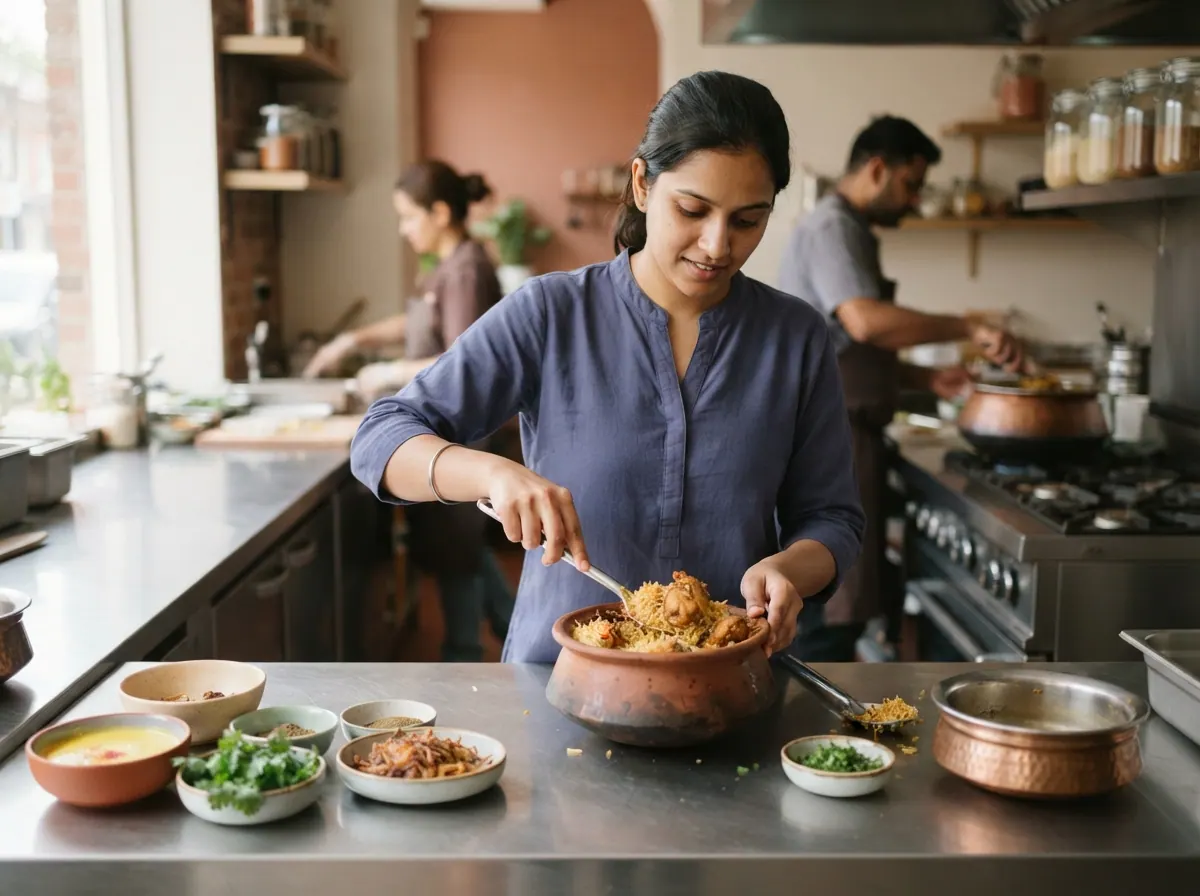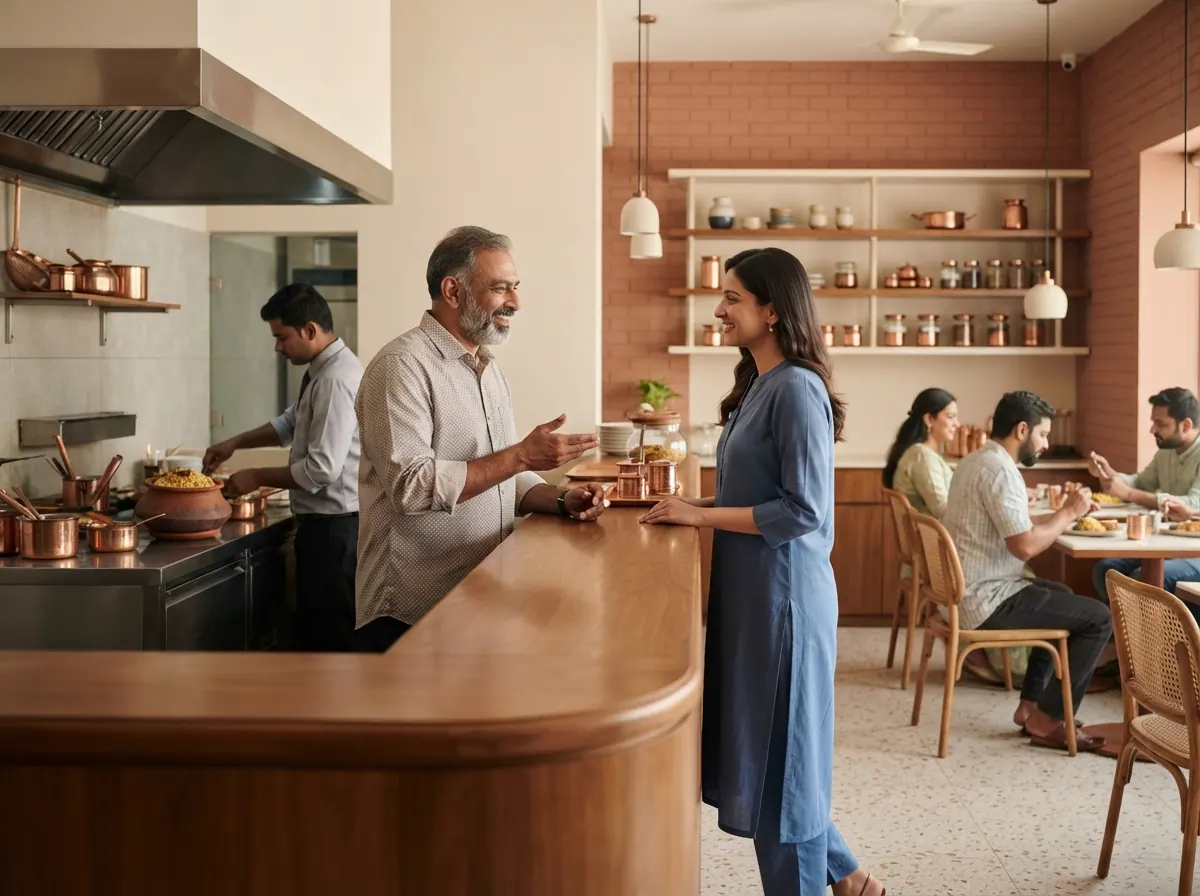
To start a biryani business in India you need a good recipe you can repeat, a few large vessels (handi or degchi), a reliable meat supplier, and about ₹1–8 lakh depending on size. A takeaway counter sits at the low end, and a shop with seating and delivery sits at the high end. Biryani looks easy because everyone loves it, but the money is made or lost in how you buy meat and how you control leftover rice.
All figures here are estimates. Check prices near you before you spend.
What does it cost?
| Item | Takeaway counter | Shop with seating |
|---|---|---|
| Rent deposit and shop fitting | ₹30,000–1.5 lakh | ₹1.5–3 lakh |
| Large vessels, ladles, serving trays | ₹15,000–40,000 | ₹40,000–80,000 |
| Gas bank or commercial burners | ₹10,000–25,000 | ₹25,000–50,000 |
| Fridge and chiller for raw meat | ₹15,000–30,000 | ₹40,000–80,000 |
| Counter, tables, signboard | ₹10,000–40,000 | ₹50,000–1.2 lakh |
| First stock: rice, spices, oil, packing | ₹15,000–30,000 | ₹40,000–80,000 |
| Licences and registrations | ₹5,000–15,000 | ₹10,000–25,000 |
| Working money for the first two months | ₹30,000–70,000 | ₹1–2 lakh |
| Total | about ₹1.3–4 lakh | about ₹4–8 lakh |
If you start with a small home kitchen and delivery only, you can come in below the lowest figure, but your sales will depend on delivery apps and their commission.
Which biryani should you sell?
Sell what your area already knows, then add one special item later:
- Hyderabadi dum: meat and rice cooked together in a sealed handi. Famous, but slower and harder to scale.
- Lucknowi or Awadhi: lighter and more fragrant, usually more expensive to make.
- Kolkata: with potato and egg, which keeps your cost per plate lower.
- Ambur or Dindigul: short-grain seeraga samba rice, popular in Tamil Nadu.
- Thalassery: a Kerala style that uses a different rice and a milder masala.
Chicken is the safe base. Mutton biryani earns more per plate, but its price swings and quality is harder to hold.
How much can it earn?
Here is a shop that sells about 80 plates a day, in its second or third month, open 30 days.
Sales
- 60 chicken plates × ₹160 = ₹9,600
- 20 mutton plates × ₹260 = ₹5,200
- Total per day = ₹14,800
- ₹14,800 × 30 days = about ₹4,44,000 a month
Costs each month
- Meat, rice, oil, spices and curd: about 42% of sales = ₹1,86,500
- Rent = ₹30,000
- Two cooks and one helper = ₹45,000
- Gas, power, water = ₹25,000
- Packing and delivery commission = ₹35,000
- Wastage and repairs = ₹10,000
- Total = about ₹3,31,500
Left over: ₹4,44,000 − ₹3,31,500 = about ₹1,12,500 before tax and your own salary. If you take ₹40,000 for yourself, you keep about ₹72,000.
Most new shops reach this figure slowly. In the first month you may sell only 30–40 plates a day, and the loss is covered by your working money. A small rise in mutton rates or a day of unsold biryani cuts into the profit fast.
What do you need before you start?
- A recipe you can repeat. Cook the same batch ten times for friends and write down quantities in grams, not in handfuls.
- A meat supplier you trust. Fresh chicken from one steady shop is better than the cheapest rate every day. Ask about delivery time and cold storage.
- A location with footfall at lunch. Offices, hostels and colleges bring steady lunch orders.
- A plan for leftovers. Cooked rice and meat cannot be kept safely for another day, so you must cook in smaller batches.
Step by step
- Choose one style and a short menu: two chicken biryanis, one mutton, one veg, and a few sides like raita and salan.
- Fix a plate cost. Weigh rice, meat, oil and spices for one plate and add packing. Price it at about 2.2 to 2.5 times that.
- Take the shop and register with FSSAI before you cook for sale.
- Buy vessels in two sizes so you can cook a small batch on a slow day and a big one at the weekend.
- Start with lunch only, then add dinner when you can sell out lunch.
- Join a delivery app after the counter is running, and keep a direct phone number for regular customers.
- Track every evening: plates sold, plates left, meat bought. This is how you find a problem early.
Which licences apply?
- FSSAI registration or licence. Which one depends on your yearly sales. Apply on the FoSCoS portal and confirm the current limit.
- Trade or shop licence from your municipality or panchayat, and a shop and establishment registration in many states.
- GST once your sales cross the limit, or if you sell through some apps. Ask a CA.
- Fire and gas safety. Commercial cylinders and a closed kitchen need care. Ask your local fire office what applies.
- Rules differ by state and city, so confirm each with the local office.
What goes wrong?
- Cooking too much. Unsold biryani is a pure loss, and it should not be sold the next day. Cook in smaller batches and top up.
- Meat price jumps. Mutton and chicken rates change, and a fixed menu price can quietly turn into a loss.
- Quality changes between cooks. A customer who liked Monday's biryani and got a different taste on Friday will not come back.
- Delivery commission. Apps can take a large share of each order. Check what is left on a delivery plate before you push it.
- Gas running out at peak time. Keep a spare cylinder and a back-up supplier.
- Hygiene lapses. Raw meat kept near cooked rice, or a dirty drain, can lead to illness and a closed shop.
Situations you will face
What would you do? Each choice costs something.
Getting started
Your area likes Hyderabadi dum, but a Kolkata style with potato costs less per plate. You can only perfect one at the start.
- Hyderabadi dum: Higher price, slower cooking
- Kolkata style with potato: Cheaper plate, less famous
A big handi cooks more at once. Three small ones let you cook fresh batches on slow days.
- Buy one big handi: Cheaper, waste on slow days
- Buy three small ones: Costs more, less leftover
A trader offers cheaper old-crop basmati. Premium aged rice costs more but the grains come out long and separate.
- Buy aged premium rice: Costly, grains cook better
- Take the cheaper rice: Saves money, grains break
One shop sells fresh chicken at a fixed rate with daily delivery. A wholesaler is cheaper but delivers whenever it suits them.
- Use the steady shop: Higher rate, reliable supply
- Use the wholesaler: Lower rate, late deliveries
You have your first batch planned for Saturday. The FSSAI registration will take a few more days.
- Wait for registration: Lose a few days of sales
- Hand out free tasting only: Some goodwill, still no sales
Two shops are free. One is near offices with strong lunch trade and high rent. The other is near a college with cheaper rent.
- Take the office shop: Higher rent, steady lunch
- Take the college shop: Lower rent, price-sensitive
First month
Few people know your shop yet. A one-plus-one offer would fill the counter but eat your meat money.
- Run buy-one-get-one: Crowds come, thin margin
- Give a free raita instead: Small cost, small crowd
You cooked for 60 plates and sold 35. The rest will not be safe tomorrow, but it is still fresh tonight.
- Sell the rest cheaper tonight: Some cash back, still fresh tonight
- Throw it and cook less: Lose the cost, learn the number
A food app can send many orders, but it keeps a large commission on each plate.
- List on the app: More orders, lower margin
- Use your own phone orders: Slower, keeps full margin
A regular says Tuesday's biryani was too salty. The cook says the customer is wrong.
- Taste and apologise: Free plate, builds trust
- Defend the cook: Saves face, may lose a regular
By eye, plates vary a lot. Weighing every plate slows the counter but makes costs stable.
- Use a fixed serving scoop: Small cost, steady plates
- Keep serving by eye: Faster, uneven cost
A nearby office wants 40 packed plates by 1 p.m. tomorrow. You normally cook 25 plates in the morning.
- Hire a helper for the day: Pay now, good first order
- Offer only 25 plates: Safe cooking, smaller order
Running it
Mutton costs far more this week. At your menu price, each plate now loses money.
- Raise the mutton price: Fewer orders, safe margin
- Pause mutton biryani: Lose sales, no loss
Most customers buy only the biryani plate. A combo with salan, raita and a sweet could raise each bill.
- Launch the combo: More spend, more prep
- Keep the plain menu: Simple, lower bill
Your last cylinder runs out in the middle of the afternoon. The supplier says delivery by evening.
- Buy one from a dealer now: Higher price, save the lunch
- Close early today: No cost, lose the day
A larger restaurant offered your head cook more pay. They know your masala blend.
- Raise their pay: Costly, keeps your taste
- Write the recipe, let them go: Cheaper, slow transition
Bought masala is easy but costs more and varies. Grinding your own needs a machine and a daily hour.
- Grind your own: Machine cost, signature taste
- Keep buying masala: No effort, higher running cost
A wedding reception family asks for 150 plates in big containers on a Sunday. They want a discount.
- Accept with a small discount: Large order, tight margin
- Quote full price: Better margin, may lose it
Customers wait 20 minutes for packed plates on weekends. Some leave without ordering.
- Hire a weekend helper: Extra wage, shorter wait
- Take pre-orders by phone: Cheap, needs discipline
It rains all day and walk-ins drop. You cooked your usual quantity by habit.
- Push delivery at a discount: Sell more, less profit
- Cook half next time: No loss tomorrow, risk empty tray
When things go wrong
A tray of cooked rice stayed warm too long in the afternoon. The smell is faintly sour.
- Throw the tray, carry on: Loss now, same habit
- Throw it, buy smaller trays: Bigger cost, fixes the cause
A customer messages that they had a stomach upset after eating your biryani yesterday.
- Refund and check your kitchen: Pay now, protect trust
- Block the message: No cost, bad word spreads
A food safety officer walks in. Your meat fridge shows a bit of ice melt and your registration copy is not on the wall.
- Fix everything listed: Spend a little, stay compliant
- Fix only the paper today: Cheap, risk next visit
You find the raw meat fridge off in the morning after a power cut. The meat is warm to touch.
- Throw the meat, repair fridge: Big loss, safe kitchen
- Throw the meat, rent cold storage: Loss plus rent, no downtime
A competitor opens with a cheap thali-sized biryani at ₹20 lower than yours.
- Match with a small plate: Keep crowd, lower margin
- Hold price, stress quality: Keep margin, some loss
Growing
A shop in another area is free. Your first shop runs well, but your cook is already busy.
- Open the second counter: Big cost, more sales
- Strengthen the first shop: Safer, slower growth
Delivery biryani arrives soggy in thin boxes. Vented, sturdy boxes cost more per order.
- Switch to better boxes: Costs more per plate
- Keep current boxes: Cheaper, more complaints
A company wants 60 lunch boxes daily at a fixed lower price, paid monthly.
- Sign the contract: Steady sales, payment delays
- Decline, sell retail: Higher price, uneven sales
The shop has room for 12 seats. Seating adds sit-down customers but needs cleaning and a server.
- Add the tables: Cost and staff, more family trade
- Stay takeaway: Lean, caps your growth
A supplier offers a lower rate if you buy 20 quintals of rice upfront. Rice rates may fall later.
- Buy the full lot: Cash locked, lower cost
- Buy in small lots: Cash free, pay more per kg
Is it right for you?
A biryani business suits you if you can stand a hot kitchen for long hours, enjoy cooking in volume, and can keep a watchful eye on cost every single day. It suits you less if you want a relaxed first year, because early weeks involve small sales and big wastage.
A good test: work in a busy biryani kitchen for a week before you invest. If you still enjoy the 5 a.m. meat buying, start with a counter and one style, and grow only when you sell out lunch consistently.