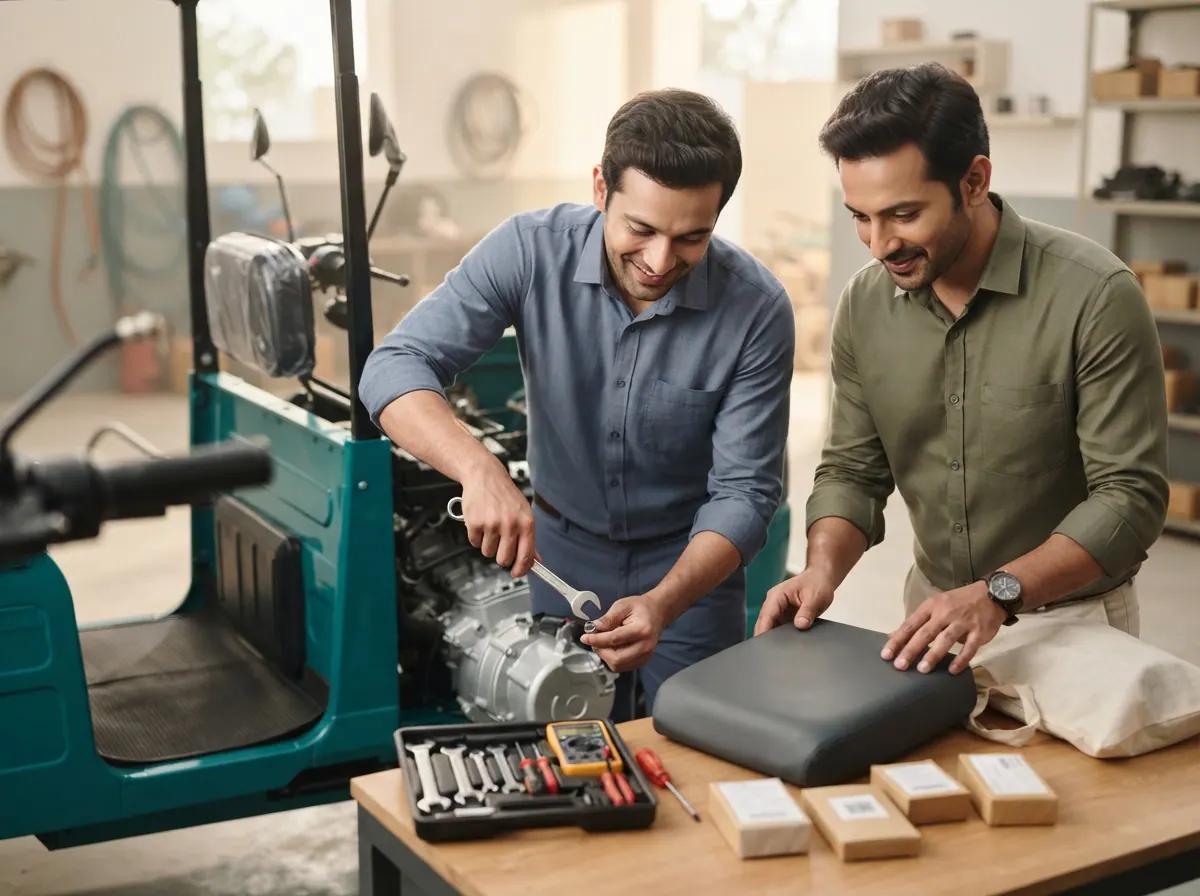
भारत में ऑटो रिक्शा बिज़नेस शुरू करने के लिए आपको परमिट वाला रजिस्टर्ड ऑटो, कमर्शियल बैज वाला ड्राइविंग लाइसेंस, बीमा और फिटनेस के कागज़, और लगभग ₹2–4 लाख चाहिए। ऑटो फेरे के हिसाब से कमाता है, और रोज़ का ईंधन, लोन की किस्त और साल भर के कागज़ तय करते हैं कि आपके हाथ में असल में क्या बचता है।
यहाँ दिए सारे आँकड़े अंदाज़े हैं। पैसा लगाने से पहले अपने इलाके में भाव पूछ लें।
खर्च कितना आता है?
| मद | पेट्रोल ऑटो | CNG या इलेक्ट्रिक ऑटो |
|---|---|---|
| नया ऑटो (एक्स-शोरूम) | ₹1.6–2.2 लाख | ₹2–3 लाख |
| रजिस्ट्रेशन, रोड टैक्स, नंबर प्लेट | ₹15,000–30,000 | ₹15,000–30,000 |
| बीमा, पहला साल | ₹8,000–15,000 | ₹8,000–15,000 |
| परमिट और फीस (शहर पर निर्भर) | ₹5,000–50,000 | ₹5,000–50,000 |
| मीटर, फेयर कार्ड, सीट कवर | ₹5,000–10,000 | ₹5,000–10,000 |
| ईंधन और मरम्मत का रिज़र्व | ₹15,000–25,000 | ₹15,000–25,000 |
| कुल | लगभग ₹2–3.3 लाख | लगभग ₹2.7–4 लाख |
शहरों के बीच सबसे ज़्यादा बदलने वाला आँकड़ा परमिट का खर्च है। कुछ जगहों पर परमिट की संख्या तय है, और खरीदार को पहले से चल रहा परमिट लेना पड़ सकता है, जिसका अपना दाम होता है। डीलर को पैसा देने से पहले RTO से पूछें।
कौन सा ऑटो चुनें?
- पेट्रोल: मिलना और ठीक कराना सबसे आसान, पर ईंधन का खर्च सबसे ज़्यादा।
- CNG: पंप पास हो तो चलाना सस्ता, पर लाइन और गैस किट की देखभाल का ध्यान रखें।
- इलेक्ट्रिक: चलाने का खर्च बहुत कम, पर बैटरी आगे का बड़ा बिल है और चार्जिंग के लिए सुरक्षित जगह चाहिए।
- पुराना ऑटो: शुरू में सस्ता, पर पुराने इंजन, घिसी गैस किट और अस्पष्ट कागज़ का जोखिम। पहले परमिट और कागज़ जाँचें।
कमाई कितनी हो सकती है?
एक मझोले शहर में अपना CNG ऑटो चलाने वाले ड्राइवर का उदाहरण लें, जो महीने में लगभग 26 दिन चलाता है।
रोज़ की कमाई
- लगभग 14 भाड़े वाले फेरे × औसत किराया ₹90 = ₹1,260
- खाली चलना, इंतज़ार और सुस्त दिन घटाकर लगभग ₹1,100 गिनें
- ₹1,100 × 26 दिन = ₹28,600 महीना
हर महीने का खर्च
- CNG, लगभग ₹350 रोज़ × 26 = ₹9,100
- मरम्मत, टायर, सर्विसिंग = ₹2,500
- बीमा, फिटनेस और परमिट, बाँटकर = ₹1,500
- पार्किंग और चालान का जोखिम = ₹1,000
- कुल = ₹14,100
बचत: ₹28,600 − ₹14,100 = लगभग ₹14,500 महीना।
₹7,000 की लोन किस्त हो तो बचत करीब ₹7,500 रह जाती है। अगर आप ₹500 रोज़ पर किराये का ऑटो चलाएँ तो ईंधन उतना ही रहता है, और ₹13,000 किराया निकल जाता है: ₹28,600 − ₹9,100 − ₹13,000 = लगभग ₹6,500। इसी फ़र्क की वजह से कई ड्राइवर अपना ऑटो चाहते हैं।
शुरू करने से पहले क्या चाहिए?
- कमर्शियल बैज वाला लाइसेंस। किराये की सवारी के लिए सामान्य लाइसेंस काफ़ी नहीं है। RTO से पूछें कि आपकी गाड़ी की श्रेणी के लिए बैज कैसे मिलेगा।
- परमिट। इसके बिना आपको रोका और जुर्माना लगाया जा सकता है, और ऑटो चल ही न पाए।
- स्टैंड या ऐप। पता हो कि भाड़ा कहाँ मिलेगा: स्टैंड, स्टेशन, बाज़ार या ऐसे राइड ऐप जो फेरे भेजते हैं।
- साल भर के कागज़ के लिए पैसा। फिटनेस, बीमा और परमिट का नवीनीकरण साल में एक बार आता है, और अक्सर साथ आता है।
कदम दर कदम
- कुछ दिन किसी ऑटो ड्राइवर के साथ घूमें और देखें कि अलग-अलग समय पर भाड़ा कहाँ से मिलता है।
- RTO जाएँ और परमिट के नियम, बैज की परीक्षा और ज़रूरी कागज़ पूछें।
- डीलर की तुलना करें: ऑन-रोड दाम, ईंधन का प्रकार और आपके पास उस मॉडल की सर्विस कौन करता है।
- सारे कागज़ अपने नाम पर लेकर खरीदें, इनवॉइस, रजिस्ट्रेशन और बीमा संभालकर रखें।
- मीटर और फेयर कार्ड लगवाएँ अगर आपके शहर में ज़रूरी है, और किराये के नियम जानें।
- स्टैंड या राइड ऐप से जुड़ें और देखें कि कौन ज़्यादा भाड़े वाले किलोमीटर देता है।
- रोज़ की कॉपी रखें: भाड़ा, ईंधन और मरम्मत। अगली फिटनेस और बीमा की तारीख कैलेंडर में लिखें।
कौन से लाइसेंस लगते हैं?
नियम राज्य और शहर के हिसाब से बदलते हैं:
- रजिस्ट्रेशन, बीमा और फिटनेस सर्टिफिकेट चाहिए, और फिटनेस की जाँच तय अंतराल पर दोहराई जाती है।
- परमिट परिवहन विभाग से, टैक्सी जैसे वाहन के रूप में चलाने के लिए।
- बैज वाला ड्राइविंग लाइसेंस कमर्शियल ड्राइविंग के लिए।
- मीटर और किराये के नियम। कई शहरों में किराया तय है या मीटर ज़रूरी है। ट्रैफ़िक या परिवहन ऑफिस से पूछें।
- लोन। बैंक और फाइनेंस कंपनियाँ वाहन लोन देती हैं, पर ब्याज देखें और यह भी कि किस्त छूटने पर क्या होता है।
- टैक्स। कमाई पर इनकम टैक्स भरना है या नहीं, यह CA से पूछें।
क्या गलत हो सकता है?
- कागज़ की तारीख निकल जाना। फिटनेस या बीमा की तारीख चूकने पर जुर्माना और एक दिन की कमाई बंद।
- ज़्यादा किराये का ऑटो। रोज़ का किराया ऊँचा हो तो सुस्त दिन में बहुत कम बचता है।
- ईंधन का दाम बढ़ना। रोज़ सौ किलोमीटर से ज़्यादा चलाने पर थोड़ी बढ़त भी आपका मुनाफ़ा बदल देती है।
- सवारी मना करना। सवारी शिकायत करती है, और शिकायत पर जुर्माना या बैज जा सकता है।
- मरम्मत के लिए बचत न होना। गियरबॉक्स या क्लच की दिक्कत ऑटो को हफ़्ते भर रोक सकती है।
- लंबे घंटे। थके हुए चलाने से हादसे होते हैं, और एक हादसा महीने भर की कमाई से ज़्यादा खर्च करा सकता है।
ये हालात आपके सामने आएँगे
आप क्या करेंगे? हर फ़ैसले की एक क़ीमत है।
शुरुआत
An owner offers an auto at ₹500 a day. Buying your own needs a big down payment and a monthly instalment.
- Rent for a month first: Learn the city, pay daily rent
- Buy your own auto: Big spend, keep all earning
CNG costs ₹30,000 more upfront and queues at pumps are long. Petrol costs more to run each day.
- Choose CNG: Costly now, cheaper to run
- Choose petrol: Cheaper now, higher fuel bill
The dealer says you can start now and the permit will follow. The RTO says driving without it is an offence.
- Wait for the permit: Lose earning days, stay legal
- Hire a licensed driver's auto: Rent costs, you keep learning
A coaching agent offers to prepare you for the commercial badge test for ₹2,500. You could also study the rules yourself.
- Pay for coaching: Costs money, better chance
- Study the rules alone: Free, may need a second try
A digital meter costs ₹4,500. A reconditioned one costs ₹2,000 but may fail inspection.
- Fit the digital meter: Costs more, passes checks
- Fit the reconditioned one: Cheaper, may be rejected
The dealer offers a loan with no paperwork but a high rate. A bank loan is slower and has lower interest.
- Take the dealer's loan: Quick cash, higher interest
- Wait for the bank loan: Delay, cheaper over time
पहला महीना
The railway station stand has a queue and a monthly fee. The market stand is small but friendly.
- Join the station stand: Fee paid, steady fares
- Join the market stand: Cheap, slower fares
An app sends trips but takes a share of each fare. Stand fares have no share but arrive slowly.
- Join the ride app: More trips, lower per fare
- Stay with the stand: Full fares, fewer trips
The road to the station floods. Fares are high, but water can damage the engine and gas kit.
- Park the auto safely: Lose a night's earning
- Use the higher road: Longer trips, some earning
A passenger says the meter runs too fast and wants a fixed price lower than the meter.
- Stick to the meter: Fair, may lose the ride
- Offer a small discount: Lose a few rupees, calm ride
A family of five with large bags wants to go to the bus stand. Your auto has space for three and bags.
- Make two trips: Takes time, double fare
- Say no politely: Free of trouble, lose fare
Many riders pay by phone. A printed QR code is free, but a payment speaker costs ₹1,200.
- Buy the payment speaker: Small cost, quick payment
- Use a printed QR code: Free, slower to confirm
रोज़ का काम
Four children need a morning and afternoon ride. The pay is fixed at ₹6,000 a month but takes two hours each day.
- Take the school run: Steady money, fewer open fares
- Stay on open fares: Flexible, uneven money
Rain is coming. New tyres cost ₹6,000 for the set, retreaded tyres cost ₹3,000.
- Buy new tyres: Costly, safe in rain
- Fit retreaded tyres: Cheaper, wear out sooner
The fitness check is next week. The testing centre may reject the auto for worn lights and brakes.
- Service it before the check: Costs money, passes smoothly
- Go without servicing: Saves money, risk of rejection
A rider offers double fare to a distant suburb at 11 pm. The road is dark and the return trip will be empty.
- Take the night fare: Good fare, tiring and empty return
- Say no and head home: Rested, no extra money
The airport queue pays a big fare but can take four hours of waiting each time.
- Wait in the airport queue: Big fare, long idle hours
- Work the city lanes: Small fares, steady flow
Fares are high for a week and roads are blocked. Tired drivers get into more accidents.
- Add two hours with rest breaks: More money, some tiredness
- Keep normal hours: Rest, lose some fares
A traffic officer fines you ₹500 for stopping where passengers wave you down.
- Pay with receipt: Costs money, clean record
- Argue and lose time: Fine remains, day wasted
You find a phone on the back seat. The owner is worried and offers nothing.
- Return it to the stand: Costs time, builds trust
- Hand it to the police: Safe, takes an hour
जब मुश्किल आए
Fuel costs rise by ₹8 a unit. The fare rates stay the same for months.
- Cut empty running: More waiting, less fuel
- Add an hour, rest between fares: Earn a little more, stay alert
The engine misses and smokes. A mechanic says an overhaul costs ₹9,000 and takes four days.
- Overhaul properly: Costly, auto reliable again
- Patch with a quick fix: Cheap, breaks down again
You smell gas after refuelling. A certified fitter says the kit needs checking.
- Stop and repair at a fitter: Costs money, safe auto
- Park until it is checked: Lose earning, safest wait
A rider hits your side and wants money. Nobody is hurt, and the dent is real.
- Settle through insurance: Slow, costs your time
- Pay the rider on the spot: Quick, costs more
A week of rain left you ₹6,000 short for the instalment. The lender calls daily.
- Ask for a few days: Late fee, trust kept
- Borrow at heavy interest: Pays now, costs later
App cabs now wait outside the station and fares at your stand have dropped.
- Join an app yourself: More trips, lower share
- Move to a lane route: New route, steady regulars
Your back hurts after twelve-hour days. A doctor says rest and a better seat will help.
- Rest and fit a better seat: Lose days, fix the cause
- Keep driving and hope: No cost, pain gets worse
बढ़ाना
You have saved a down payment. A second auto needs a trusted driver who will bring the rent each day.
- Buy and hire a driver: More income, more worry
- Stay with one auto: Safe, slower growth
A small office wants a fixed morning and evening ride for three staff at ₹9,000 a month.
- Take the contract: Steady pay, fixed hours
- Decline: Stay flexible
An electric auto costs more but runs cheaply. Your old auto can be sold at a lower price.
- Sell and switch: Big spend, low running cost
- Keep the CNG auto: No spend, rising fuel bill
क्या यह आपके लिए सही है?
यह बिज़नेस आपके लिए ठीक है अगर आप अपना शहर अच्छे से जानते हैं, ट्रैफ़िक में धैर्य रख सकते हैं और लंबे दिनों से दिक्कत नहीं है। अगर आपको तय तनख़्वाह चाहिए तो यह कम जँचेगा, क्योंकि आमदनी मौसम, त्योहार और ईंधन के दाम के साथ ऊपर-नीचे होती है।
एक अच्छी जाँच: खरीदने से पहले एक-दो हफ़्ते किराये पर ऑटो चलाएँ। भाड़ा, ईंधन और किराये का सच्चा हिसाब रखें। फिर भी जितना बचे उसमें गुज़ारा हो जाए तो अपने ऑटो के लिए लोन लेना समझदारी लगने लगता है।