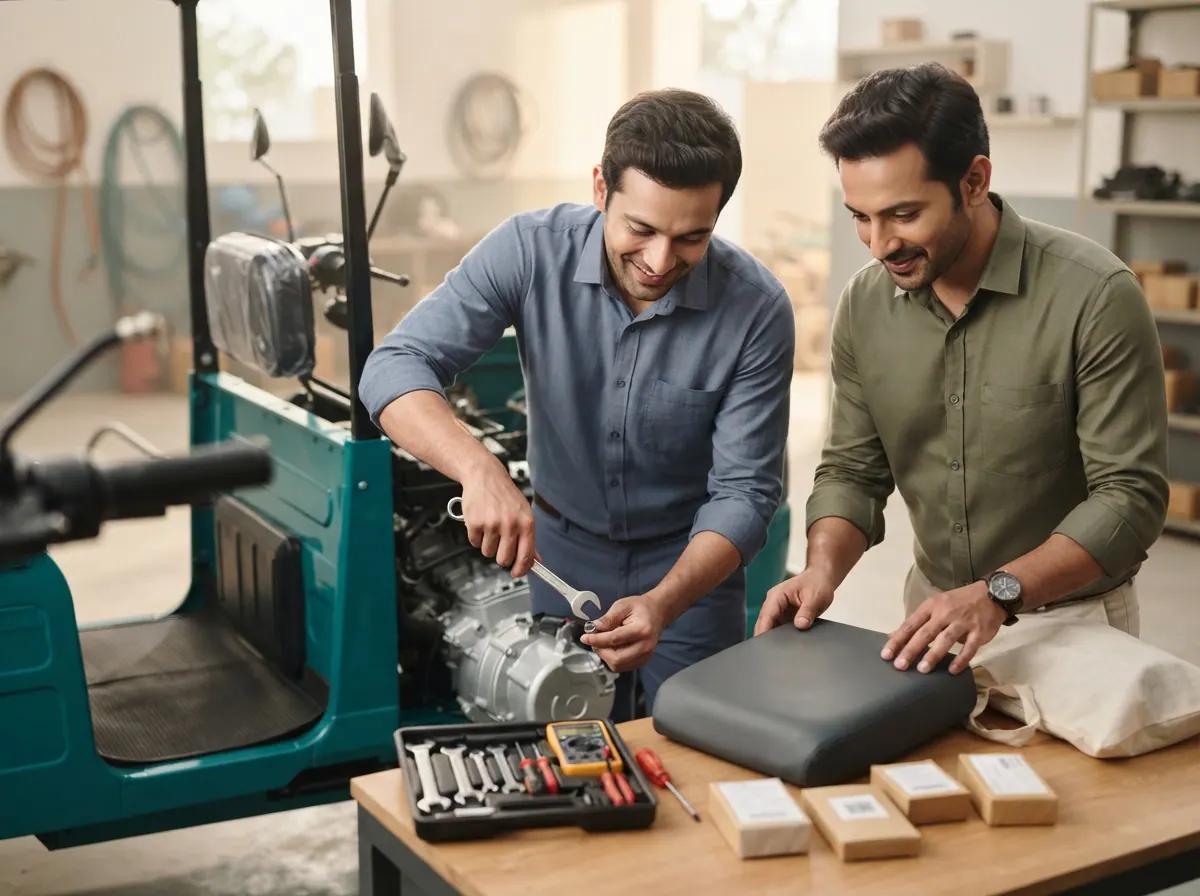
To start an auto rickshaw business in India you need a registered auto with a valid permit, a driver's licence with a commercial badge, insurance and fitness papers, and about ₹2–4 lakh. The auto earns per trip, and the daily fuel, the loan instalment and the yearly paperwork decide what you actually keep.
All figures here are estimates. Check prices near you before you spend.
What does it cost?
| Item | Petrol auto | CNG or electric auto |
|---|---|---|
| New auto (ex-showroom) | ₹1.6–2.2 lakh | ₹2–3 lakh |
| Registration, road tax, number plate | ₹15,000–30,000 | ₹15,000–30,000 |
| Insurance, first year | ₹8,000–15,000 | ₹8,000–15,000 |
| Permit and fees (varies by city) | ₹5,000–50,000 | ₹5,000–50,000 |
| Meter, fare card, seat covers | ₹5,000–10,000 | ₹5,000–10,000 |
| Fuel and repair reserve | ₹15,000–25,000 | ₹15,000–25,000 |
| Total | about ₹2–3.3 lakh | about ₹2.7–4 lakh |
Permit cost is the figure that changes most between cities. In some places permits are capped, and a buyer may need to take over an existing permit, which has its own price. Ask your RTO before paying a dealer.
Which auto should you choose?
- Petrol: the easiest to find and fix, but fuel is the highest running cost.
- CNG: cheaper to run where pumps are near, but queues and the gas kit's upkeep matter.
- Electric: very low running cost, but the battery is a big future bill and charging needs a safe place.
- Used auto: cheaper upfront, with the risk of an old engine, a worn gas kit and unclear papers. Check the permit and the papers first.
How much can it earn?
Take an owner-driver in a mid-size city, working about 26 days a month, on a CNG auto.
Daily earning
- About 14 paid trips × ₹90 average fare = ₹1,260
- Take away empty running, waiting and slow days and count about ₹1,100
- ₹1,100 × 26 days = ₹28,600 a month
Costs each month
- CNG, about ₹350 a day × 26 = ₹9,100
- Repairs, tyres, servicing = ₹2,500
- Insurance, fitness and permit, spread out = ₹1,500
- Parking and challan risk = ₹1,000
- Total = ₹14,100
Left over: ₹28,600 − ₹14,100 = about ₹14,500 a month.
A loan instalment of ₹7,000 would bring this to about ₹7,500. If you rent an auto at ₹500 a day instead, your fuel is the same, and you take away ₹13,000 of rent: ₹28,600 − ₹9,100 − ₹13,000 = about ₹6,500. The gap shows why many drivers want their own auto.
What do you need before you start?
- A licence with a commercial badge. A normal licence is not enough for a paid ride. Ask the RTO how to get the badge for your vehicle class.
- A permit. Without it, you can be stopped and fined, and the auto may not run at all.
- A stand or an app. Know where you will find fares, a stand, a station, a market, or ride apps that send trips.
- Cash for yearly papers. Fitness, insurance and permit renewals all fall due once a year, and they arrive together.
Step by step
- Ride with an auto driver for a few days and see where fares come from at different hours.
- Visit the RTO and ask for permit rules, the badge test and the papers needed.
- Compare dealers on the on-road price, fuel type and who services the model near you.
- Buy with all papers in your name, keeping the invoice, registration and insurance.
- Fix the meter and fare card if your city requires them, and know the rate rules.
- Join a stand or a ride app and note which brings you more paid kilometres.
- Keep a daily book of fares, fuel and repairs. Put the next fitness and insurance dates on a calendar.
Which licences apply?
Rules vary by state and city:
- Registration, insurance and fitness certificate are needed, and the fitness check is repeated at intervals.
- Permit from the transport authority for running as a taxi-type vehicle.
- Driving licence with a badge for commercial driving.
- Meter and fare rules. Many cities fix fares or require meters. Ask the traffic or transport office.
- Loans. Banks and finance companies give vehicle loans, but check interest and what happens if you miss an instalment.
- Tax. Ask a CA if you need to file income tax on what you earn.
What goes wrong?
- Papers expire. A missed fitness or insurance date means fines, and a day without earning.
- Over-rented auto. A daily rent that is too high leaves very little on a slow day.
- Fuel price rises. A small rise changes your profit when you drive over a hundred kilometres a day.
- Refusing rides. Passengers complain, and a complaint can mean a fine or a lost badge.
- No saving for repairs. A gearbox or clutch problem can stop the auto for a week.
- Long hours. Driving tired is how accidents happen, and one accident can cost more than a month's earning.
Situations you will face
What would you do? Each choice costs something.
Getting started
An owner offers an auto at ₹500 a day. Buying your own needs a big down payment and a monthly instalment.
- Rent for a month first: Learn the city, pay daily rent
- Buy your own auto: Big spend, keep all earning
CNG costs ₹30,000 more upfront and queues at pumps are long. Petrol costs more to run each day.
- Choose CNG: Costly now, cheaper to run
- Choose petrol: Cheaper now, higher fuel bill
The dealer says you can start now and the permit will follow. The RTO says driving without it is an offence.
- Wait for the permit: Lose earning days, stay legal
- Hire a licensed driver's auto: Rent costs, you keep learning
A coaching agent offers to prepare you for the commercial badge test for ₹2,500. You could also study the rules yourself.
- Pay for coaching: Costs money, better chance
- Study the rules alone: Free, may need a second try
A digital meter costs ₹4,500. A reconditioned one costs ₹2,000 but may fail inspection.
- Fit the digital meter: Costs more, passes checks
- Fit the reconditioned one: Cheaper, may be rejected
The dealer offers a loan with no paperwork but a high rate. A bank loan is slower and has lower interest.
- Take the dealer's loan: Quick cash, higher interest
- Wait for the bank loan: Delay, cheaper over time
First month
The railway station stand has a queue and a monthly fee. The market stand is small but friendly.
- Join the station stand: Fee paid, steady fares
- Join the market stand: Cheap, slower fares
An app sends trips but takes a share of each fare. Stand fares have no share but arrive slowly.
- Join the ride app: More trips, lower per fare
- Stay with the stand: Full fares, fewer trips
The road to the station floods. Fares are high, but water can damage the engine and gas kit.
- Park the auto safely: Lose a night's earning
- Use the higher road: Longer trips, some earning
A passenger says the meter runs too fast and wants a fixed price lower than the meter.
- Stick to the meter: Fair, may lose the ride
- Offer a small discount: Lose a few rupees, calm ride
A family of five with large bags wants to go to the bus stand. Your auto has space for three and bags.
- Make two trips: Takes time, double fare
- Say no politely: Free of trouble, lose fare
Many riders pay by phone. A printed QR code is free, but a payment speaker costs ₹1,200.
- Buy the payment speaker: Small cost, quick payment
- Use a printed QR code: Free, slower to confirm
Running it
Four children need a morning and afternoon ride. The pay is fixed at ₹6,000 a month but takes two hours each day.
- Take the school run: Steady money, fewer open fares
- Stay on open fares: Flexible, uneven money
Rain is coming. New tyres cost ₹6,000 for the set, retreaded tyres cost ₹3,000.
- Buy new tyres: Costly, safe in rain
- Fit retreaded tyres: Cheaper, wear out sooner
The fitness check is next week. The testing centre may reject the auto for worn lights and brakes.
- Service it before the check: Costs money, passes smoothly
- Go without servicing: Saves money, risk of rejection
A rider offers double fare to a distant suburb at 11 pm. The road is dark and the return trip will be empty.
- Take the night fare: Good fare, tiring and empty return
- Say no and head home: Rested, no extra money
The airport queue pays a big fare but can take four hours of waiting each time.
- Wait in the airport queue: Big fare, long idle hours
- Work the city lanes: Small fares, steady flow
Fares are high for a week and roads are blocked. Tired drivers get into more accidents.
- Add two hours with rest breaks: More money, some tiredness
- Keep normal hours: Rest, lose some fares
A traffic officer fines you ₹500 for stopping where passengers wave you down.
- Pay with receipt: Costs money, clean record
- Argue and lose time: Fine remains, day wasted
You find a phone on the back seat. The owner is worried and offers nothing.
- Return it to the stand: Costs time, builds trust
- Hand it to the police: Safe, takes an hour
When things go wrong
Fuel costs rise by ₹8 a unit. The fare rates stay the same for months.
- Cut empty running: More waiting, less fuel
- Add an hour, rest between fares: Earn a little more, stay alert
The engine misses and smokes. A mechanic says an overhaul costs ₹9,000 and takes four days.
- Overhaul properly: Costly, auto reliable again
- Patch with a quick fix: Cheap, breaks down again
You smell gas after refuelling. A certified fitter says the kit needs checking.
- Stop and repair at a fitter: Costs money, safe auto
- Park until it is checked: Lose earning, safest wait
A rider hits your side and wants money. Nobody is hurt, and the dent is real.
- Settle through insurance: Slow, costs your time
- Pay the rider on the spot: Quick, costs more
A week of rain left you ₹6,000 short for the instalment. The lender calls daily.
- Ask for a few days: Late fee, trust kept
- Borrow at heavy interest: Pays now, costs later
App cabs now wait outside the station and fares at your stand have dropped.
- Join an app yourself: More trips, lower share
- Move to a lane route: New route, steady regulars
Your back hurts after twelve-hour days. A doctor says rest and a better seat will help.
- Rest and fit a better seat: Lose days, fix the cause
- Keep driving and hope: No cost, pain gets worse
Growing
You have saved a down payment. A second auto needs a trusted driver who will bring the rent each day.
- Buy and hire a driver: More income, more worry
- Stay with one auto: Safe, slower growth
A small office wants a fixed morning and evening ride for three staff at ₹9,000 a month.
- Take the contract: Steady pay, fixed hours
- Decline: Stay flexible
An electric auto costs more but runs cheaply. Your old auto can be sold at a lower price.
- Sell and switch: Big spend, low running cost
- Keep the CNG auto: No spend, rising fuel bill
Is it right for you?
This business suits you if you know your city well, can stay patient in traffic, and are fine with long days. It suits you less if you need a fixed salary, because income rises and falls with weather, festivals and fuel prices.
A good test: rent an auto for a week or two before buying. Keep an honest record of fares, fuel and rent. If you still earn a number you can live on, a loan for your own auto starts to make sense.