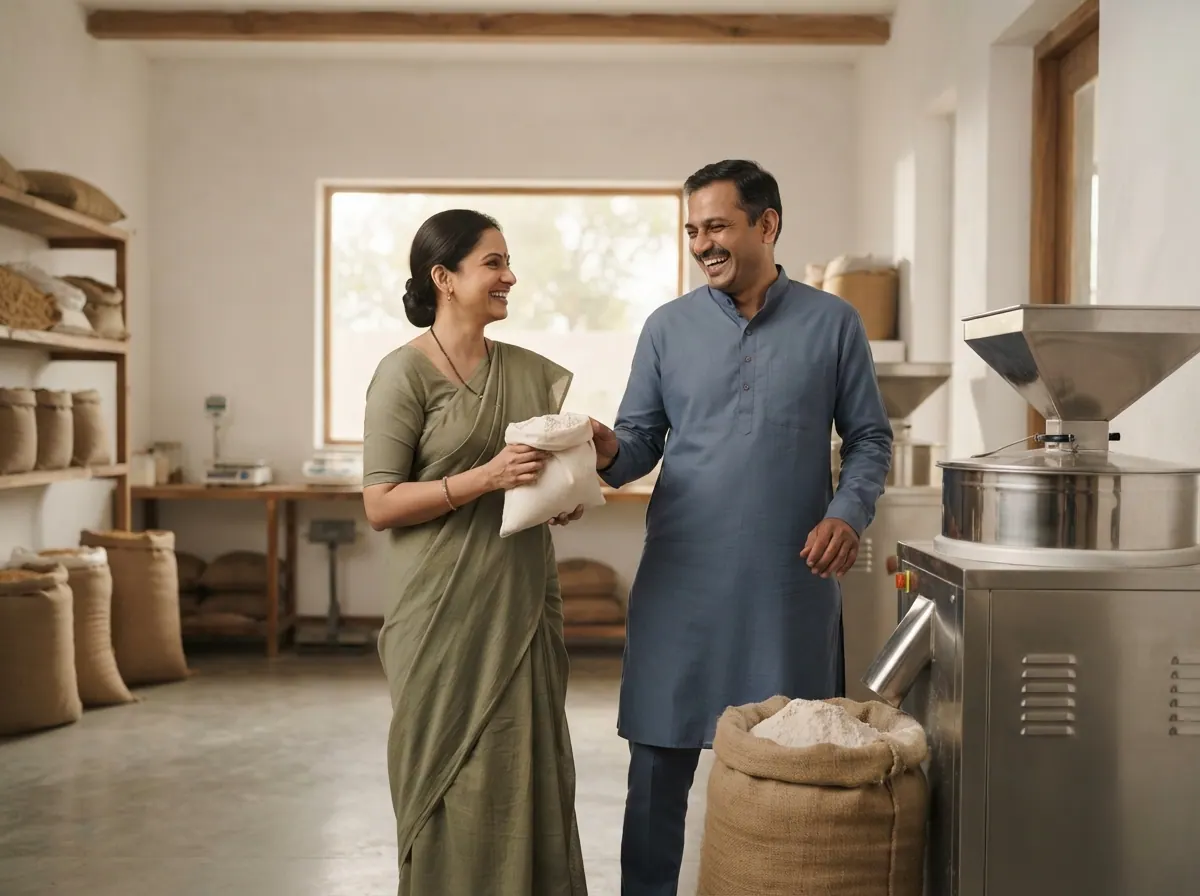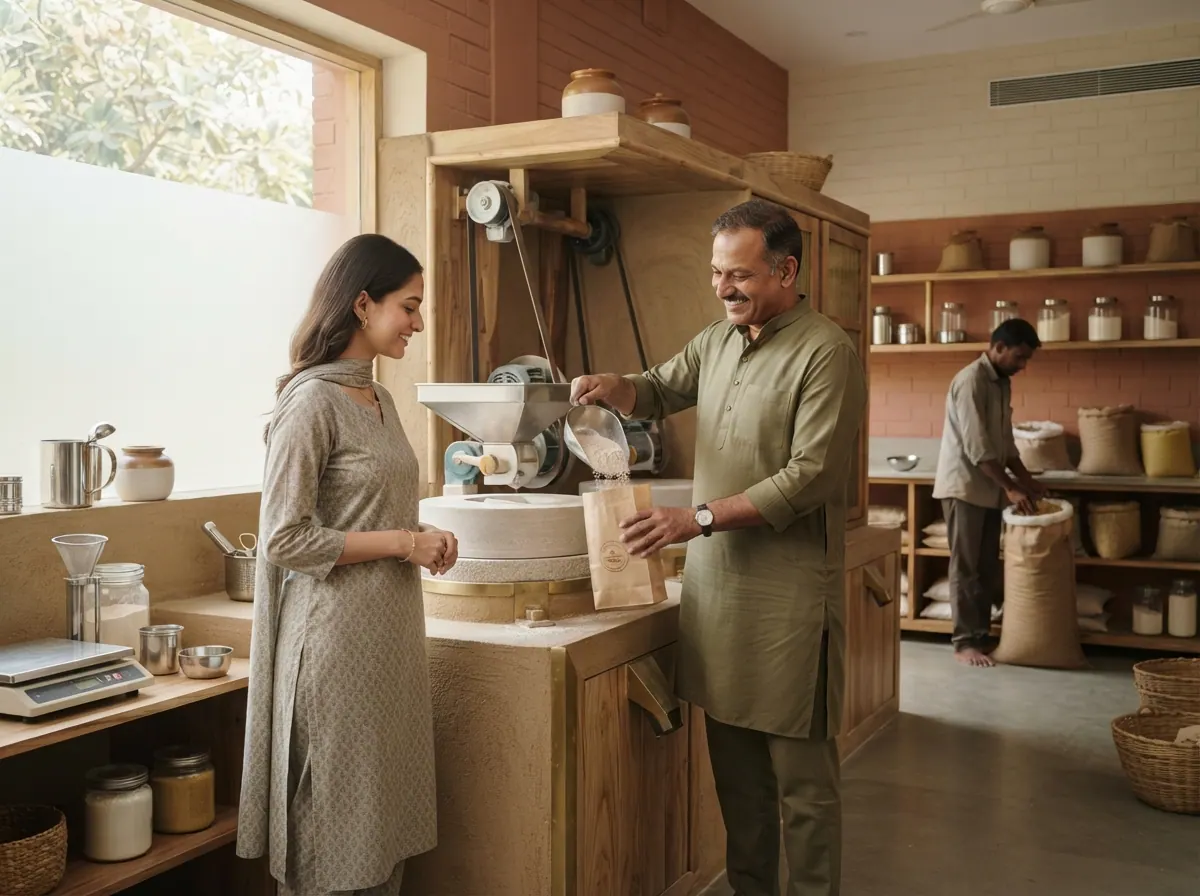
भारत में आटा चक्की शुरू करने के लिए पक्के फ़र्श और थ्री-फ़ेज़ बिजली वाली दुकान, चक्की और मोटर, अनाज साफ़ करने और आटा पैक करने की व्यवस्था, पैक आटे के लिए FSSAI रजिस्ट्रेशन और एक छोटी मशीन के लिए करीब ₹50,000–1.5 लाख चाहिए। पूरे सेटअप में करीब ₹3 लाख तक लगते हैं। यह काम बड़ी मात्रा पर छोटे चार्ज से कमाता है, इसलिए जगह, समय और ईमानदार तौल मुनाफ़ा तय करते हैं।
यहाँ सब आँकड़े अंदाज़े हैं। पैसा लगाने से पहले अपने इलाके के भाव पूछ लें।
कितना खर्च आएगा?
| चीज़ | एक चक्की | पूरी दुकान |
|---|---|---|
| चक्की (पत्थर या स्टील) मोटर के साथ | ₹40,000–80,000 | ₹70,000–1.2 लाख |
| स्टार्टर और वायरिंग, थ्री-फ़ेज़ सेटअप | ₹8,000–20,000 | ₹15,000–30,000 |
| अनाज साफ़ करने का क्लीनर या छलनी | ₹5,000–12,000 | ₹20,000–45,000 |
| मसाले का पल्वराइज़र (ज़रूरी नहीं) | ₹0 | ₹25,000–50,000 |
| तराज़ू और काउंटर | ₹5,000–10,000 | ₹10,000–20,000 |
| पैकिंग: थैले, सीलर, लेबल | ₹3,000–8,000 | ₹10,000–25,000 |
| पहली खेप का गेहूँ | ₹15,000–30,000 | ₹40,000–80,000 |
| डिपॉज़िट, शटर, FSSAI | ₹10,000–25,000 | ₹25,000–50,000 |
| कुल | करीब ₹50,000–1.5 लाख | करीब ₹2–3 लाख |
डीलर से बिजली की खपत, पत्थर या प्लेट बदलने और पूरे दिन चलने के बारे में पूछें। सस्ती मशीन जो गरम हो जाए, आटे की क्वालिटी खोकर आपको महँगी पड़ती है।
कमाई कहाँ से आती है?
- पिसाई का चार्ज: ग्राहक गेहूँ, बाजरा या मक्का लाते हैं और प्रति किलो देते हैं। रोज़ नकद आता है, स्टॉक का जोखिम नहीं।
- पैक आटा बेचना: गेहूँ खरीदें, पीसें और 5 या 10 किलो के थैले में बेचें। किलो पर ज़्यादा मुनाफ़ा पर स्टॉक रखना पड़ता है और पैक आटे के लिए लाइसेंस चाहिए।
- दूसरे अनाज: बाजरा, ज्वार, रागी और बेसन सर्दियों में और उन इलाकों में खूब चलते हैं जहाँ खाए जाते हैं।
- मसाले और दाल: सही मशीन जोड़ें तो अतिरिक्त कमाई।
मशीन से ज़्यादा जगह मायने रखती है: घरों, बाज़ार या हॉस्टल के पास की चक्की में रोज़ ग्राहक आते हैं।
कितनी कमाई हो सकती है?
एक दुकान जो महीने में 4,000 किलो पैक आटा बेचती है और ग्राहकों का 4,000 किलो अनाज भी पीसती है।
बिक्री
- खरीदा गेहूँ: 4,000 किलो। करीब 95% आटा बनता है, यानी 3,800 किलो आटा × ₹38 = ₹1,44,400
- चोकर: 200 किलो × ₹20 = ₹4,000
- पिसाई का चार्ज: 4,000 किलो × ₹3 = ₹12,000
- कुल = ₹1,60,400
हर महीने का खर्च
- गेहूँ: 4,000 किलो × ₹30 = ₹1,20,000
- बिजली: ₹10,000
- थैले, 400 × ₹5: ₹2,000
- किराया: ₹5,000
- एक हेल्पर: ₹8,000
- डिलीवरी और छोटे खर्च: ₹4,000
- कुल = ₹1,49,000
बचत: ₹1,60,400 − ₹1,49,000 = करीब ₹11,400 महीना।
यह पतला है क्योंकि गेहूँ का खर्च ही ज़्यादातर बिल है। जो दुकान सिर्फ़ पिसाई करती है उसमें स्टॉक का जोखिम नहीं और चार्ज लगभग पूरा बचता है, पर कुल कमाई कम होती है। गेहूँ के दाम साल भर और इलाके के हिसाब से बदलते हैं, इसलिए स्थानीय मंडी देखें।
शुरू करने से पहले क्या चाहिए?
- मज़बूत फ़र्श वाली दुकान कंपन के लिए, घरों या बाज़ार के पास।
- थ्री-फ़ेज़ बिजली और वोल्टेज गिरने की योजना।
- धूल की योजना: बारीक आटे की धूल फेफड़ों को परेशान करती है और आग का ख़तरा भी हो सकती है, इसलिए सफ़ाई और हवा चाहिए।
- साफ़ गेहूँ का स्रोत, भरोसे के मंडी व्यापारी से।
कदम-दर-कदम
- आते-जाते ग्राहक गिनें: दुकान की जगह के पास दो दिन खड़े होकर देखें कितने लोग अनाज लेकर आते हैं।
- चालू चक्की देखें और पूछें कि पत्थर या प्लेट का सेट कितना चलता है।
- बिजली कनेक्शन लें अपनी मोटर के हिसाब का।
- पक्की नींव पर लगाएँ मोटर, बेल्ट और गार्ड ठीक से लगाकर।
- पीसने से पहले अनाज साफ़ और सूखा करें। कंकड़, मिट्टी और नमी मशीन और आटा दोनों बिगाड़ते हैं।
- पिसाई का चार्ज तय करें और लिखकर लगाएँ। ग्राहक के सामने अनाज तौलें और आटा भी तौलकर लौटाएँ।
- पैक आटा तभी शुरू करें जब लाइसेंस हो और कुछ परिवार या दुकानें खरीदने को तैयार हों।
कौन से लाइसेंस लगते हैं?
- FSSAI रजिस्ट्रेशन या लाइसेंस पैक आटे के लिए, साइज़ के हिसाब से।
- उद्यम रजिस्ट्रेशन लोन और योजनाओं में काम आ सकता है। दफ़्तर से पक्का करें।
- वज़न और माप: तराज़ू की आम तौर पर जाँच या मोहर चाहिए। स्थानीय दफ़्तर से पूछें।
- बिजली और स्थानीय इजाज़त मशीन की दुकान के लिए, शोर और धूल की सीमा समेत।
- GST बिक्री बढ़ने पर। CA से पूछें।
क्या-क्या गड़बड़ हो सकती है?
- कम तौल का शक। एक इल्ज़ाम से दुकान खाली हो सकती है, इसलिए खुलेआम तौलें।
- एक ही चक्की में मिले अनाज। आटे में पुरानी गंध आ जाती है और ग्राहक शिकायत करते हैं।
- कंकड़ या कीड़े वाला गेहूँ, जो मशीन बिगाड़ता है या स्टॉक ख़राब करता है।
- पत्थर या प्लेट का उम्मीद से जल्दी घिसना।
- पड़ोसियों की धूल और शोर की शिकायतें।
- आटे का रेट तय होने के बाद गेहूँ महँगा होना।
ये हालात आपके सामने आएँगे
आप क्या करेंगे? हर फ़ैसले की एक क़ीमत है।
शुरुआत
Buyers praise stone-ground atta for its taste. A steel chakki is cheaper and grinds faster.
- Buy the stone chakki: Costlier, slower, loved taste
- Buy the steel chakki: Cheaper, faster, hotter flour
A corner shop near the market costs more rent but has many walk-ins. A quiet lane shop is cheap.
- Take the market corner: Higher rent, steady trade
- Take the lane shop: Low rent, slow start
The power office says three-phase will take weeks. A neighbour offers a shared line, but voltage drops.
- Wait for your own connection: No risk, lose weeks
- Pay for a dedicated line: Fee now, steady power
A shop closing down offers its chakki at half the price. The stones look worn and the motor is old.
- Buy it, replace stones: Cheaper, repair cost
- Buy a new machine: Costly, fewer worries
A cheap digital scale costs little. Customers trust stamped scales more and officers check them.
- Buy a stamped scale: Costs more, trusted weight
- Buy the cheap scale: Saves money, buyers doubt
A mandi trader offers a big lot at a good rate. Your shop and cash are limited.
- Buy a big lot: Good price, cash tied up
- Buy a small lot weekly: Higher rate, cash free
पहला महीना
A customer's grain has many small stones that damage the plates. They are in a hurry.
- Clean it first, charge extra: Time, customer may grumble
- Grind it as it is: Quick, plates wear faster
A regular claims the atta weighs less than the wheat they brought. A small loss in grinding is normal but they are upset.
- Weigh again in front of them: Time, builds trust
- Give a few kilos free: Costs flour, ends the dispute
After grinding bajra, a wheat customer says the atta smells off. The chakki was not cleaned.
- Clean the chakki between grains: Time lost, clean flour
- Grind wheat first each day: Free, limits orders
Fine flour dust blows into the next shop. They threaten to complain to the municipality.
- Fit a dust hood, cloth bag: Cost, cleaner shop
- Shut the shutter while grinding: Cheap, hot and dark
रोज़ का काम
A few weeks after harvest, wheat gets dearer. Your packed atta rate is fixed with shops.
- Raise your atta price: Margin holds, some buyers drop
- Hold price, thin margin: Buyers stay, less profit
Families bring bajra and jowar for rotis. The chakki cannot take wheat and bajra at once.
- Set separate hours for each: Planning, clean flour
- Add a small second chakki: Cost, no mixing
Several families want packed atta delivered. A delivery boy and a bike cost money.
- Start delivery with a boy: Wages, more sales
- Ask them to come by: No cost, some leave
The chakki is slow and hot, and the flour feels coarse. The plates are worn from dusty grain.
- Replace the plates: Cost, better flour
- Adjust the gap and carry on: Cheap, coarse flour stays
A hostel mess wants atta every week at a low rate, paid at month end.
- Accept the order: Steady volume, thin margin
- Ask for weekly payment: Safer money, may lose it
Two kirana shops want 10 kg bags of your atta. Packed flour needs FSSAI registration and proper labels.
- Register, then supply: Fee and wait, safe sales
- Keep to custom grinding: No fee, smaller trade
Families want ragi and jowar ground fresh. Each one means cleaning the stones between grains.
- Grind them on set days: Cleaning time, new buyers
- Stay with wheat only: Simple, lose the work
Before a big festival every family brings grain at the same time. Queues reach the road.
- Run extra hours: More power, more income
- Take tokens, serve in turn: Calm, some customers leave
जब मुश्किल आए
A motor spark lit a small heap of dust. A worker beat it out and nobody is hurt. Dust has built up in corners.
- Clean daily, add extinguisher: Time and cost, safer
- Clean it once and carry on: Cheap, risk remains
Voltage dips keep stopping the chakki. Customers wait or leave to the shop down the road.
- Buy a stabilizer: Cost, steady running
- Grind at night, steady power: Free, loses day trade
A weights-and-measures inspector checks your scale and finds a small error. You face a fee and a fix.
- Get it fixed and stamped: Fee, a clean record
- Argue the error is tiny: No fee, weaker standing
A new chakki opposite your shop charges less per kilo and offers free grinding on Sundays.
- Match the grinding charge: Keeps customers, thin margin
- Stay with your quality: Margin kept, may lose some
Regulars say they will pay next week for grinding. Some owe you money from last month.
- Cash only from now: Safe money, some leave
- Allow credit for regulars: Keeps them, cash waits
बढ़ाना
Households ask for ground turmeric and chilli. A separate machine avoids mixing smells with atta.
- Buy a spice pulveriser: Cost, extra income
- Stay with grain only: No cost, narrower trade
Health-minded families ask for a wheat, jowar and ragi mix. It needs blending and extra bags.
- Launch a multigrain blend: Test cost, higher price
- Keep plain wheat atta: No risk, no new buyers
Dirty wheat slows grinding and damages plates. A cleaner costs money but protects the machine.
- Buy a cleaner: Costly, longer plate life
- Hand sieve each lot: Cheap, slower and less clean
A landlord offers a shop in a growing colony. You would need another machine and trusted staff.
- Open the second shop: Heavy cost, more trade
- Improve your first shop: Small spend, steady
A farmer group offers wheat at harvest price if you take a full truck and pay on delivery.
- Buy a full truck: Cheaper wheat, cash locked
- Keep buying weekly: Higher rate, cash flexible
A printer offers branded 5 and 10 kg bags with a minimum order. Branded bags raise trust with families.
- Order branded bags: Print cost, trusted look
- Use plain bags with stickers: Cheap, plainer look
A bank officer says a small business loan may fund more machines if you show accounts and a plan.
- Prepare accounts with a CA: Fees now, funds for growth
- Grow from own savings: No fee, slower growth
क्या यह आपके लिए ठीक है?
आटा चक्की आपके लिए ठीक है अगर आप बँधे-बँधाए, बार-बार आने वाले काम से खुश हैं, ज़्यादातर दिन दुकान पर रह सकते हैं और मशीन व फ़र्श साफ़ रख सकते हैं। अगर जल्दी मुनाफ़ा चाहिए तो कम ठीक है, क्योंकि पतले margin में सब्र और ईमानदारी का फल मिलता है।
आसान टेस्ट: किसी चलती चक्की के पास दो दिन खड़े होकर ग्राहक और किलो गिनें, और मालिक से पूछें कि सिर्फ़ पिसाई से कितना कमाते हैं। फिर पिसाई से शुरू करें और नाम जमने पर पैक आटा जोड़ें।