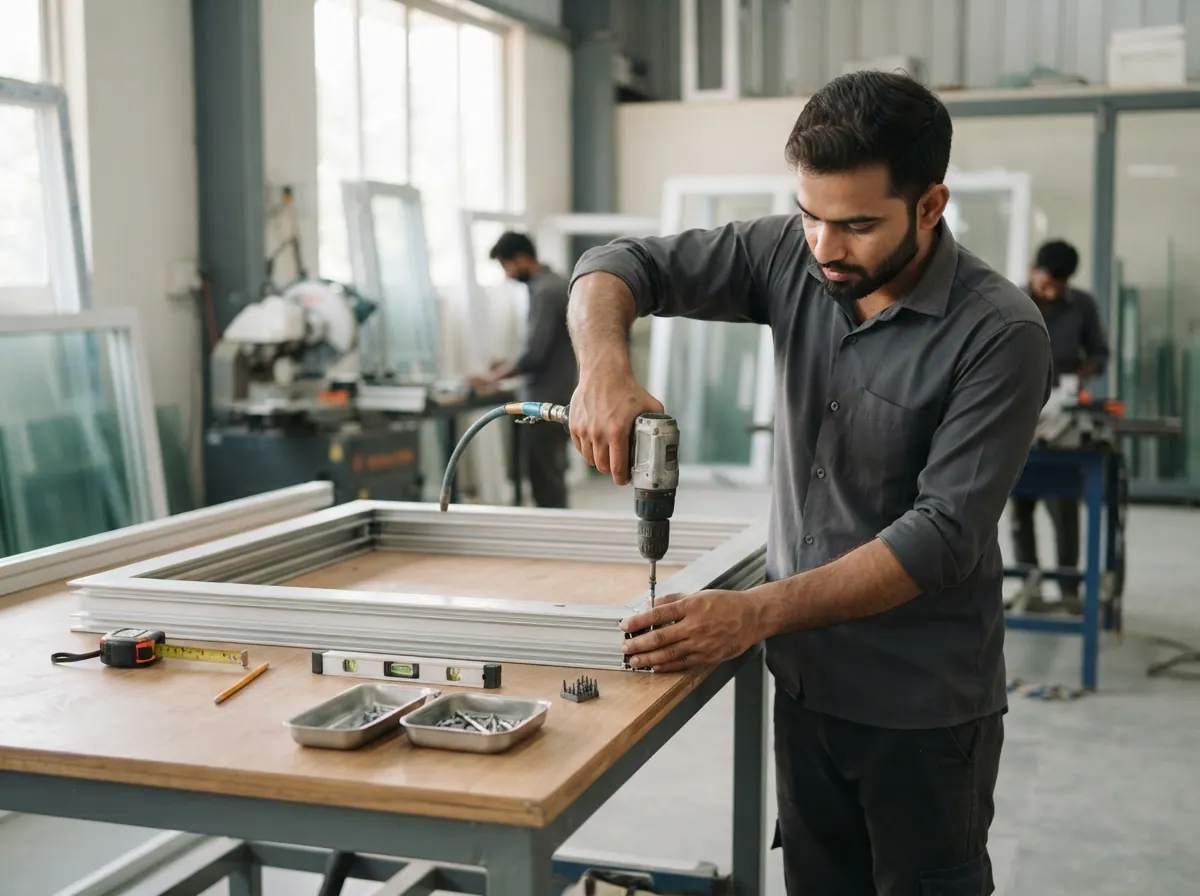
भारत में एल्युमिनियम और ग्लास फ़ैब्रिकेशन बिज़नेस शुरू करने के लिए आपको लंबे सेक्शन रखने की जगह वाली छोटी वर्कशॉप, मिटर कटिंग मशीन, ड्रिल और हाथ के औज़ार, सेक्शन, ग्लास और हार्डवेयर का स्टॉक, एक-दो कुशल फ़िटर, लंबे सेक्शन ढोने की गाड़ी और लगभग ₹2 लाख से ₹8 लाख चाहिए। आप खिड़कियाँ, दरवाज़े, पार्टीशन, शॉवर केबिन और दुकान के फ़्रंट बनाते हैं, और कमाई बिल्डरों, इंटीरियर डिज़ाइनरों और घर वालों के प्रति वर्ग फ़ुट के काम से आती है।
यहाँ सारे आँकड़े अंदाज़े हैं। पैसा लगाने से पहले अपने इलाक़े के भाव देख लें।
कितना खर्च आता है?
| चीज़ | छोटी वर्कशॉप | बड़ी वर्कशॉप |
|---|---|---|
| मिटर कटिंग मशीन | ₹30,000–70,000 | ₹70,000–1.5 लाख |
| ड्रिल, ग्राइंडर, क्रिम्पिंग और हाथ के औज़ार | ₹15,000–30,000 | ₹30,000–60,000 |
| ग्लास काटने के औज़ार, सक्शन लिफ़्टर, ट्रॉली | ₹8,000–15,000 | ₹15,000–30,000 |
| सेक्शन, ग्लास और हार्डवेयर का स्टॉक | ₹60,000–1.5 लाख | ₹1.5–3 लाख |
| uPVC वेल्डिंग और सफ़ाई मशीन | – | ₹1–2 लाख |
| वर्कशॉप का किराया डिपॉज़िट, रैक, शटर | ₹30,000–60,000 | ₹60,000–1 लाख |
| लंबे सेक्शन की गाड़ी | हर ट्रिप किराये पर | ₹0–1.5 लाख |
| फ़ोन, सैंपल, विज़िटिंग कार्ड | ₹10,000–20,000 | ₹20,000–40,000 |
| कुल | लगभग ₹2–3.5 लाख | लगभग ₹5–8 लाख |
शुरू में बड़े स्टॉक की ज़रूरत नहीं। हर जॉब के हिसाब से भरोसेमंद डीलर से सेक्शन और ग्लास लें, और सिर्फ़ तेज़ बिकने वाली चीज़ें जैसे रोलर, लॉक और सीलेंट रखें।
शुरू करने से पहले क्या चाहिए?
- सीखा हुआ फ़िटर। सीधी कटिंग, कसे हुए जोड़ और आराम से सरकने वाली खिड़की वही है जो बिल्डर देखते हैं। किसी चालू फ़ैब्रिकेटर से सीखें।
- सामान की समझ। अलग-अलग काम के लिए अलग सेक्शन चलते हैं, और ग्लास की मोटाई साइज़ और जगह पर निर्भर करती है। सड़क के पास की खिड़की और बाथरूम पार्टीशन के लिए अलग ग्लास चाहिए।
- सही नाप लेना। ज़्यादातर ग़लतियाँ साइट पर शुरू होती हैं। 10 मिमी छोटी कटी खिड़की ऐसा नुक़सान है जो ठीक नहीं हो सकता।
- डीलरों से रिश्ते। सेक्शन का एक, ग्लास का एक और हार्डवेयर का एक डीलर। डिलीवरी का समय और उधार पूछें।
- सुरक्षा। ग्लास बुरी तरह काटता है, और ऊपरी मंज़िलों पर काम का सुरक्षित तरीक़ा चाहिए। हेल्पर को खिड़की के किनारे पर खड़ा न होने दें।
कितनी कमाई हो सकती है?
यह एक छोटी वर्कशॉप के दूसरे साल का उदाहरण है। ये अंदाज़े हैं, वादा नहीं।
महीने की आमदनी
- 12 जॉब × औसत बिल लगभग ₹18,000 = ₹2,16,000
- सामान की लागत लगभग 65% = ₹1,40,400
- मार्जिन: ₹2,16,000 − ₹1,40,400 = ₹75,600
महीने का खर्च
- दो फ़िटर = ₹28,000
- वर्कशॉप का किराया = ₹10,000
- ढुलाई और पेट्रोल = ₹6,000
- बिजली, ब्लेड, सामान = ₹4,000
- कुल = ₹48,000
बचत: ₹75,600 − ₹48,000 = लगभग ₹27,600 महीना।
काम गुच्छों में आता है, आम तौर पर जब बिल्डर फ़्लैट पूरे कर रहे हों। पैसे देर से आ सकते हैं, इसलिए सामान के लिए एडवांस लेना और बाक़ी किस्तों में लेना आम है।
कदम दर कदम
- किसी फ़ैब्रिकेटर के साथ छह महीने से एक साल काम करें, ताकि ख़ुद नाप, कटिंग और फ़िटिंग कर सकें।
- छोटी वर्कशॉप बनाएँ जिसमें सेक्शन रखने की जगह हो और काटने, जोड़ने और ग्लास रखने की जगह हो।
- एक सैंपल खिड़की और पार्टीशन बनाएँ ग्राहकों को दिखाने के लिए, ताकि वे फ़िनिश देख और छू सकें और सरकना भी।
- बिल्डरों, इंटीरियर डिज़ाइनरों और आर्किटेक्टों से मिलें। सैंपल और रेट शीट छोड़ें। कुछ पक्के बिल्डर बहुत सारे बेतरतीब घर वालों से ज़्यादा काम देते हैं।
- साइट पर सावधानी से नाप लें, ड्रॉइंग पर साइज़ लिखें, और ग्राहक से लिखित में पक्का करवाएँ।
- काटने से पहले एडवांस माँगें जो सामान के लिए काफ़ी हो, और बाक़ी फ़िटिंग पर।
- uPVC, शॉवर केबिन और रेलिंग जोड़ें जब एल्युमिनियम का काम पक्का हो जाए।
कौन से लाइसेंस लगते हैं?
काग़ज़ी काम आम तौर पर हल्का होता है:
- शॉप और एस्टैब्लिशमेंट रजिस्ट्रेशन अपने स्थानीय निकाय में, अगर दुकान या वर्कशॉप से काम करते हैं।
- GST जब बिक्री सीमा पार करे, या बिल्डर और कंपनियाँ टैक्स इनवॉइस माँगें। CA से पूछें।
- स्टाफ़ के नियम। अगर कई फ़िटर रखते हैं तो रिकॉर्ड और मज़दूरी के बारे में अपने श्रम दफ़्तर से पूछें।
- साइट के नियम। बिल्डरों के ऊँचाई पर काम करने वाले फ़िटरों के लिए अपने सुरक्षा और प्रवेश के नियम हो सकते हैं।
- वारंटी। देखें कि आपके सेक्शन और हार्डवेयर सप्लायर क्या देते हैं और अपनी शर्तें साफ़ लिखें।
क्या ग़लत हो सकता है?
- ग़लत नाप। कुछ मिलीमीटर छोटी खिड़की ठीक नहीं हो सकती, और ग्लास बेकार जा सकता है।
- बड़ी खिड़की में पतला ग्लास। पहले गर्म दिन या तेज़ हवा में चटक जाता है, और ग्राहक फ़िटर को दोष देता है।
- बारिश में रिसाव। फ़्रेम के आसपास कमज़ोर सीलिंग पहली बारिश में परेशानी बन जाती है।
- देर से पैसे देने वाले बिल्डर। जो बिल्डर महीनों बाद पैसे दे वह छोटी वर्कशॉप को डुबो सकता है।
- फ़िटिंग के दौरान टूटा ग्लास। एक शीशा एक दिन का मुनाफ़ा खा जाता है, और ख़राब कट हेल्पर को चोट पहुँचा सकता है।
- रंग और फ़िनिश का फ़र्क़। ग्राहक कार्ड से शेड चुनता है और लगे हुए सेक्शन के अलग दिखने पर शिकायत करता है।
ये हालात आपके सामने आएँगे
आप क्या करेंगे? हर फ़ैसले की एक क़ीमत है।
शुरुआत
You can cut sections but have never fitted a full window. A fabricator offers you work for three months at a low wage.
- Work under a fabricator first: Low pay now, clean fitting later
- Open and learn on jobs: Earn sooner, costly mistakes
A good double-head mitre machine costs a lot. A basic single-cut one is cheaper but slower and less exact.
- Buy the better machine: Costly, clean fast cuts
- Buy the basic machine: Cheaper, slower and rougher
A dealer sells sections that are thinner and cheaper. Other fabricators warn that windows made of them bend and rattle.
- Buy proper thickness: Higher cost, solid windows
- Buy the thin sections: Cheaper, complaints later
Builders want to see and touch a window before they order. A sample set takes a day and good material.
- Make a sample set: Cost and time, wins builders
- Show photos only: No cost, fewer orders
A shed with room for six-metre sections costs double. A small room is cheap but long cuts are awkward.
- Rent the big shed: Higher rent, easy work
- Use the small room: Low rent, slow handling
A skilled fitter asks for a high daily wage. A helper with no experience costs much less.
- Hire the skilled fitter: Higher wage, neat fitting
- Hire the helper: Low wage, rework likely
A glass cutter and suction lifters cost money, but dropped glass costs much more.
- Buy proper tools and lifters: Costly, fewer breakages
- Rent lifters for each job: Rent each time, safer lifting
पहला महीना
You cut a sliding window based on the owner's measurement. At fitting, it is short and leaves a gap.
- Remake it at your cost: Costly, owner satisfied
- Offer a discount and refit trim: Honest, a discount and extra work
A buyer asks for thin glass on a big window to cut the bill. You know it may crack in the heat.
- Recommend thicker glass: Higher bill, safer window
- Offer two smaller panes: Lower bill, a frame bar added
While carrying a large pane up the stairs, your helper trips and the glass shatters. The helper has a small cut.
- Treat the cut, order again: Cost and delay, helper looked after
- Cut a smaller piece instead: Cheaper, a smaller window
A home owner asks you to start work and pay everything after fitting. Material costs are high.
- Ask for a material advance: Safe cash flow, may lose job
- Start on trust: Friendly, cash tied
The customer chose a shade from a small card, but the fitted section looks darker. The customer is upset.
- Replace the frames: Costly, customer satisfied
- Show the card again: No cost, unhappy customer
A cheap sealant costs half the branded tube. Fitters say it cracks and peels after a few months of sun.
- Use the branded sealant: Costs more, lasts longer
- Use cheap for interior jobs only: Saves on indoor work
रोज़ का काम
A builder wants forty windows for a finishing deadline at a low per-square-foot price. Payment will be slow.
- Take it with stage payments: Large work, thin margin
- Ask for a higher rate: Better margin, may refuse
Three homeowners call about water coming in at the frame edges. Your sealing was rushed.
- Re-seal all three at your cost: Cost and time, trust kept
- Charge a service fee: Earn something, angry owners
A designer brings steady work but wants a share of your bill for each referral.
- Give a small agreed share: Less margin, regular jobs
- Decline the arrangement: Full margin, fewer jobs
Section prices go up while you have fixed quotes for several customers.
- Raise your new quotes: Keeps margin, fewer orders
- Hold prices to keep clients: Margin falls, loyal clients
Some homeowners prefer uPVC. It needs a welding machine and training, and you work only in aluminium.
- Buy the machine, train: Large spend, new customers
- Refer them elsewhere: No cost, lose some jobs
A new flat owner wants a toughened-glass shower cabin in a week. Glass takes time from the toughening plant.
- Rush the glass order: Rush fee, a happy owner
- Quote the normal time: No extra cost, may lose job
A balcony glass job is on the fifth floor with no scaffolding. A helper offers to lean out to save time.
- Hire safe scaffolding: Cost and delay, safe crew
- Turn the job down: No risk, lose the job
जब मुश्किल आए
A builder owes you ₹80,000 and says it will come after sales close in two months. You owe the glass dealer.
- Stop work till part payment: Pressure, may lose builder
- Keep working, wait: Keep the client, cash tied
A bundle of aluminium sections left at a site overnight is missing. It was for a job tomorrow.
- Reorder and absorb the loss: Costly, job on time
- Ask the builder to share: Cheaper, a strained talk
Your fitter takes a job with a rival and some builders follow along. Two jobs are half done.
- Hire a replacement quickly: Higher wage, jobs finish
- Finish them yourself: No wage, late jobs
A new workshop quotes a far lower per-square-foot rate using thin sections.
- Match on basic windows: Thin margin, keep builders
- Show them the difference: Margin safe, lose some
A customer demands free repair on a roller you supplied. Your terms said six months.
- Repair at cost price: Small cost, goodwill
- Stick to six months: Policy kept, angry owner
बढ़ाना
Orders are rising and one cutting machine is the bottleneck. A double-head one cuts twice as fast.
- Buy the machine: Big spend, faster output
- Add a second shift: Wage cost, tired crew
A shop on the main road would let walk-in customers see finished windows and partitions.
- Open the display shop: Rent and stock, walk-ins
- Keep working from workshop: Low cost, fewer walk-ins
A small mall asks for glass shopfronts for twelve units. It is big work with a strict finishing date.
- Take it with a bigger crew: Hiring cost, big bills
- Take only half the units: Manageable, less income
Architects ask for glass balustrades. It needs toughened glass handling, steel fittings and careful installation.
- Add railings with training: Cost and time, high-value jobs
- Stay with windows: Simple, miss premium work
Customers ask who will fix rollers and seals later. A yearly visit would bring steady small jobs.
- Offer a yearly service plan: Time and parts, repeat work
- Charge only per call: Simple, fewer repeat clients
क्या यह आपके लिए ठीक है?
एल्युमिनियम फ़ैब्रिकेशन उनके लिए ठीक है जिन्हें बारीक हाथ का काम पसंद है, जो सही नाप ले सकते हैं, और बिल्डरों से पैसे के लिए इंतज़ार कर सकते हैं। जिन्हें रोज़ पैसा चाहिए, या जिन्हें ऊँचाई पर और धूप में साइट पर काम पसंद नहीं, उनके लिए कम ठीक है।
एक अच्छा टेस्ट: कुछ महीने किसी फ़ैब्रिकेटर के साथ बिताएँ, कम से कम बीस खिड़कियों की नाप और फ़िटिंग करें, फिर छोटी वर्कशॉप और कुछ भरोसेमंद बिल्डरों से शुरू करें, और बार-बार आने वाले ग्राहक मिलने पर ही uPVC और शॉवर केबिन जोड़ें।