How to start a furniture business in India (2026): investment, profit and licences
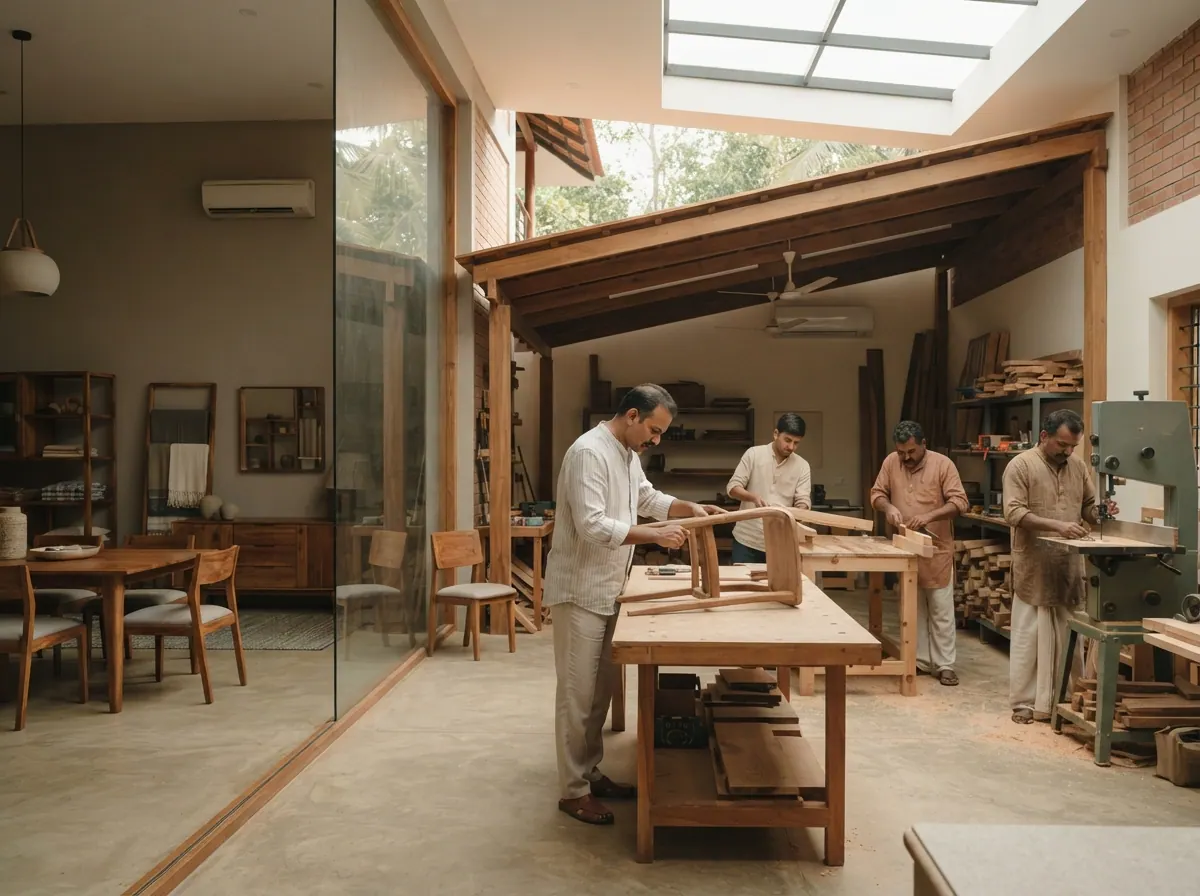
A furniture business in India needs about ₹5 lakh–₹20 lakh to set up, depending on the format. A well-run one typically makes ₹13,000–₹1.4 lakh a month in profit. You usually need: Shop & Establishment registration, municipal trade licence, GST registration above the state threshold (₹40 lakh in most states), pollution board intimation for a workshop; consent if you add a spray booth, fire safety clearance where your city asks for it, BIS mark rules for furniture, or the small-unit exemption (ask a CA).
How much investment do you need?
- Cheapest start
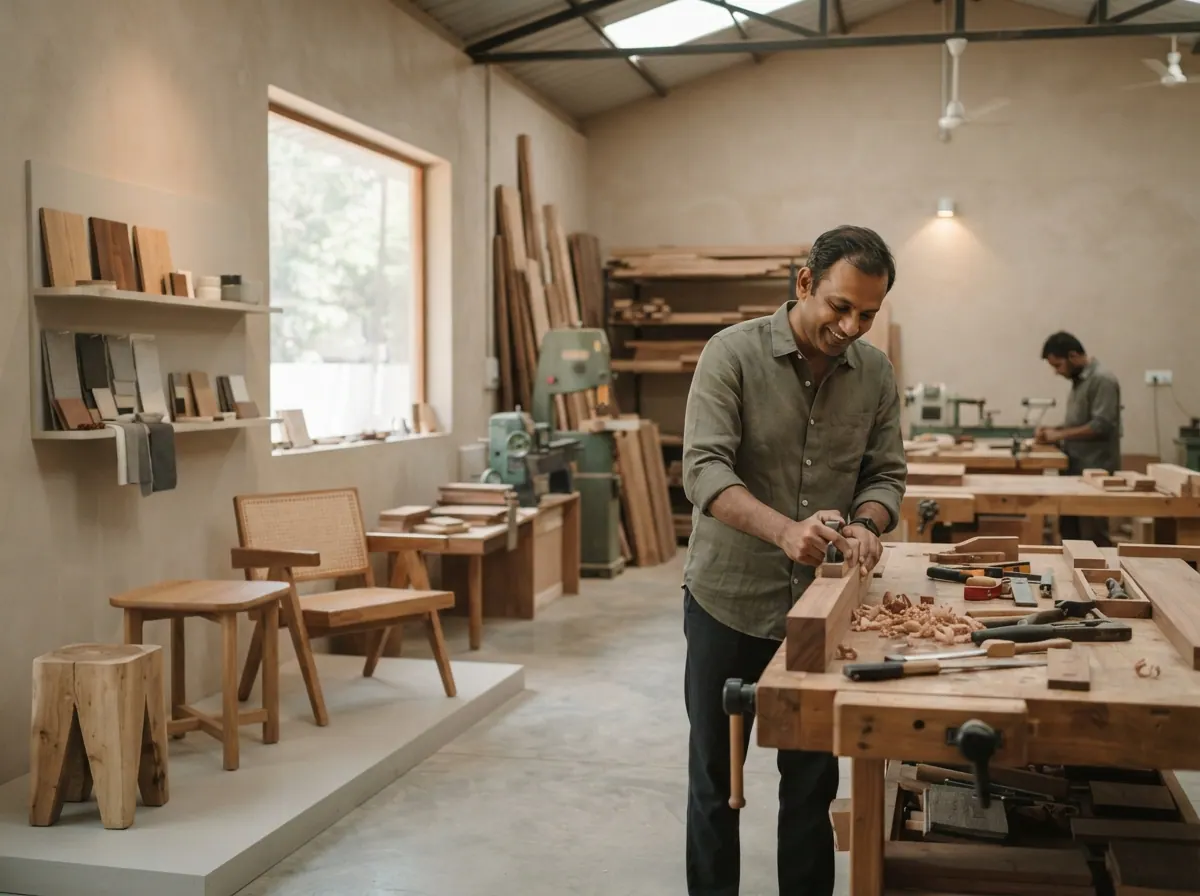
Made-to-order workshop
A rented shed, a sample corner and work by phone and word of mouth. Lowest cost, few walk-ins.
Setup cost₹5 lakhSuggested budget (with working capital): ₹5.7 lakh Shop with workshop
A small shop with samples, and a shed attached or nearby. Two carpenters and a helper.
Setup cost₹10 lakhSuggested budget (with working capital): ₹11.1 lakh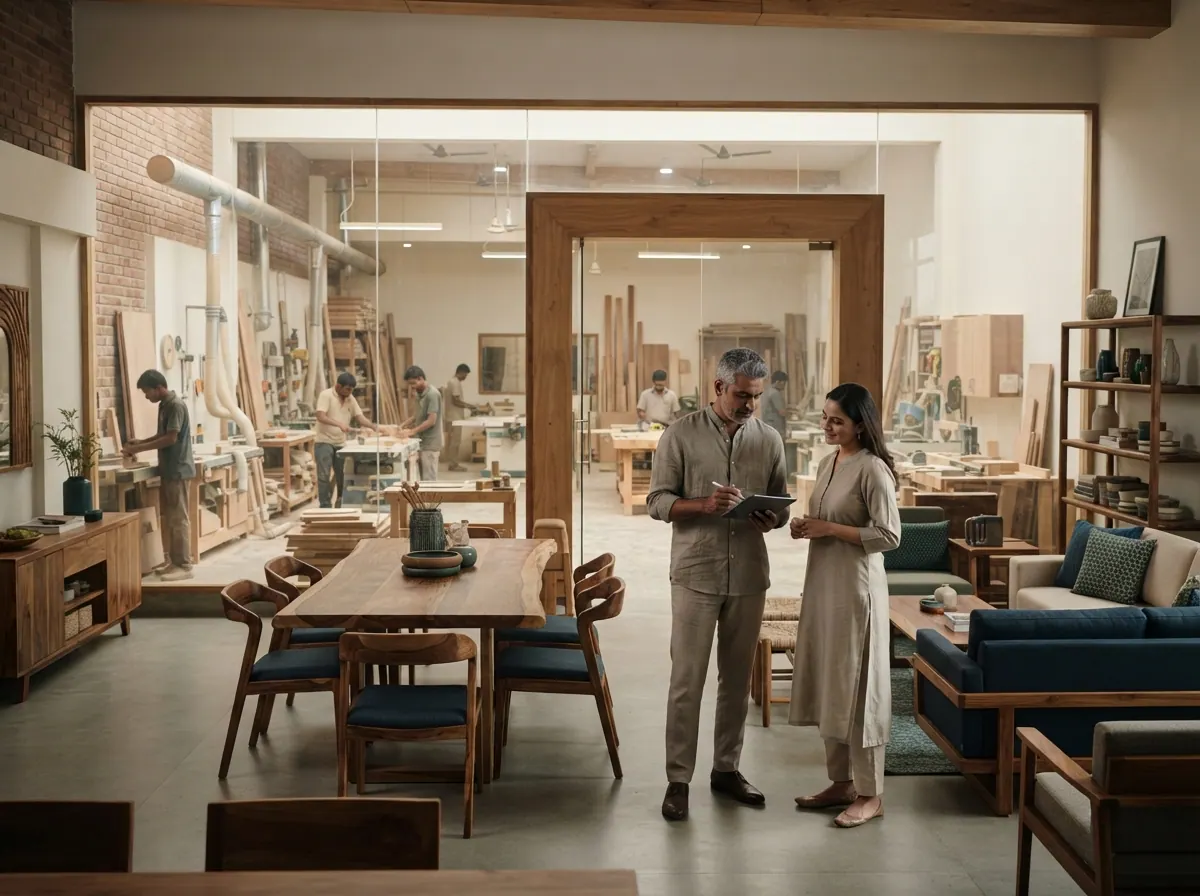
Showroom with workshop
A big display floor, readymade pieces and more staff. Bills are higher and so is the rent.
Setup cost₹20 lakhSuggested budget (with working capital): ₹21.6 lakh
How to start a furniture business, step by step
- Choose your format and budget: Start with Made-to-order workshop: about ₹5 lakh to set up, or ₹5.7 lakh with working capital.
- Pick the location: Compare the rent with the number of customers who pass by, at the hours you will be open.
- Get your licences: Commonly needed: Shop & Establishment registration, municipal trade licence, GST registration above the state threshold (₹40 lakh in most states), pollution board intimation for a workshop; consent if you add a spray booth, fire safety clearance where your city asks for it, BIS mark rules for furniture, or the small-unit exemption (ask a CA). Rules vary by state and city, so confirm with your municipal office.
- Arrange stock, staff and prices: Check local prices first, and keep money aside for the first months of rent, wages and stock.
- Plan for the risks: Watch for: board swelling in the monsoon, cutting mistakes and wasted sheets, customers paying the balance late, a master carpenter leaving with clients, saw injuries and fire in the shed.
- Practise before you invest: Run it day by day in the free simulator to see where the money goes.
How much profit can you make?
A well-run furniture business typically nets ₹13,000–₹1.4 lakh a month: about ₹52,000–₹1.4 lakh in a metro and ₹13,000–₹43,500 in a small town. A casually run one can make far less or lose money.
| City | Net profit per week | Net profit per month |
|---|---|---|
| Metro city | ₹12,000–₹32,000 | ₹52,000–₹1.4 lakh |
| Tier 2 city | ₹8,000–₹20,000 | ₹34,500–₹86,500 |
| Small town | ₹3,000–₹10,000 | ₹13,000–₹43,500 |
Ranges are for a well-run business of the typical format in each city size, from public sources and estimates. Your results depend on location and how you run it.
Profit calculator
Put in your own numbers for a quick monthly estimate. For a realistic run with festivals, rain, staff and stock, use the simulator.
Run it day by day before you invest
Run a furniture business day by day. Choose your city, budget and location, then make the decisions a real owner faces as they come up. Your advisor can test each choice on your next 3 months.
Play the simulator free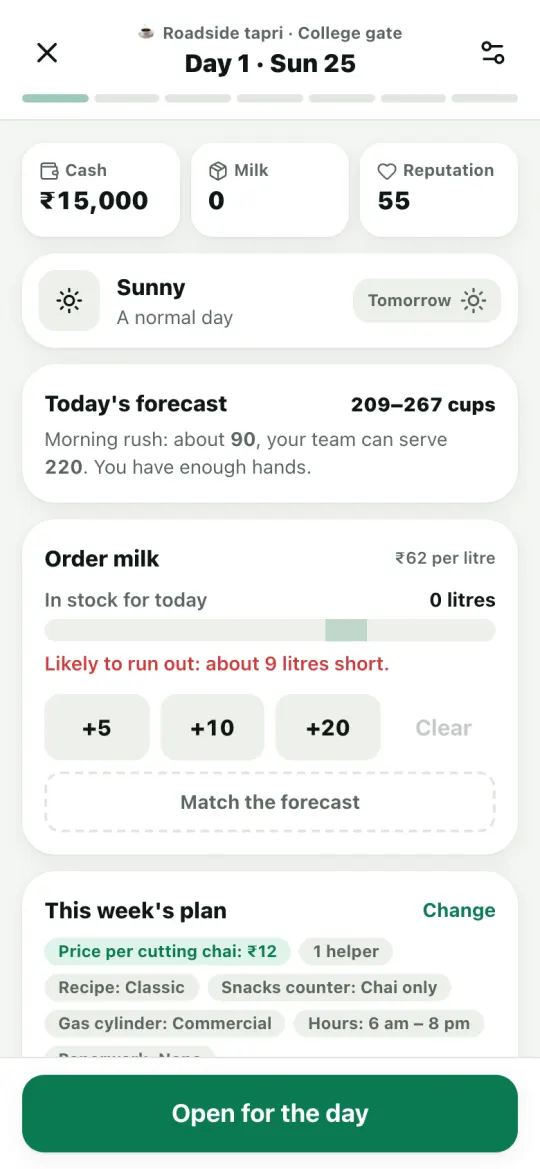
Key numbers (205 researched factors)
JSON · Source · Estimate
| Factor | Typical value in India | Source |
|---|---|---|
| Small custom workshop | ₹5–15 lakh | Franchise India, Nov 2025 |
| Showroom-based setup | ₹15–50 lakh | Franchise India, Nov 2025 |
| Retail space | 600–2,000 sq ft | Franchise India, Nov 2025 |
| Small showroom | 2,000–3,000 sq ft | Accountune, Sep 2026 |
| Basic openable wardrobe | ₹1,300–1,800 per sq ft | StudioMatrx, Jun 2026 |
| Mid, BWP and soft-close | ₹1,800–2,600 per sq ft | StudioMatrx, Jun 2026 |
| 18 mm 8×4 ply | ₹3,000–5,500 a sheet | Greenply, Mar 2026 |
| MR grade | ₹700–1,800 a sheet | Greenply, Mar 2026 |
| Site carpenter time | 3–6 weeks a wardrobe | StudioMatrx, Jun 2026 |
| Modular brand time | 4–8 weeks | StudioMatrx, Jun 2026 |
| Delhi skilled minimum | ₹22,411 a month | Wisemonk, April 2025 basis |
| Skilled mason | ₹841–963 a day | InfraLens, Oct 2026 |
| Festive and wedding share | About 35% of annual revenue | Mediainfoline, Nov 2024 |
| Festive growth at Godrej Interio | 25% in 2024 | Mediainfoline, Nov 2024 |
| Advance example | 40% on a sofa set | Accountune, Sep 2026 |
| Contractor receivables | 60–90 days | calcguru, Sep 2026 |
| Unorganised share | 85%, 2023 | Datum Intelligence |
| Organised share | 21% | Business Today |
| Furniture QCO | S.O. 801(E), IS 17631–17636 | calcguru, Sep 2026 |
| QCO start | 14 Feb 2026, micro and small 14 Aug 2026 | calcguru, Sep 2026 |
| Search demand | "furniture business in india" is high | src/data/business-catalog.json, trends… |
| Fire, Sircilla | A worker died, about ₹80 lakh of goods | Deccan Chronicle, 2026 |
| Working capital cycle | 60–120 days | calcguru, Sep 2026 |
| Weekly net T1 | ₹12,000–32,000Estimate | Est. build, see table |
Licences and rules
Rules vary by state and city: confirm with your municipal office.
- Shop & Establishment registration
- Municipal trade licence
- GST registration above the state threshold (₹40 lakh in most states)
- Pollution board intimation for a workshop; consent if you add a spray booth
- Fire safety clearance where your city asks for it
- BIS mark rules for furniture, or the small-unit exemption (ask a CA)
| Factor | Typical value in India | Source |
|---|---|---|
| Furniture QCO | S.O. 801(E), IS 17631–17636 | calcguru, Sep 2026 |
| QCO start | 14 Feb 2026, micro and small 14 Aug 2026 | calcguru, Sep 2026 |
| QCO small-unit exemption | Machines to ₹25 lakh, turnover to ₹2 crore, CA certified | calcguru, Sep 2026; not checked in gaz… |
| Board QCOs | Plywood, MDF, laminate in force by Aug 2025 | calcguru, Sep 2026 |
| Pollution White | No spray painting, no sawmill, intimation only | calcguru, Sep 2026 |
| Pollution Green | Spray booth, consent needed | calcguru, Sep 2026 |
| Trade licence | ₹2,000–25,000 a year | calcguru, Sep 2026 |
| Fire NOC | ₹10,000–50,000 typical, 1–3 years | calcguru, Sep 2026 |
Risks to plan for
- Board swelling in the monsoon
- Cutting mistakes and wasted sheets
- Customers paying the balance late
- A master carpenter leaving with clients
- Saw injuries and fire in the shed
| Factor | Typical value in India | Source |
|---|---|---|
| Fire, Sircilla | A worker died, about ₹80 lakh of goods | Deccan Chronicle, 2026 |
| Fire, Adhartal | Shops and factory gutted | Hitavada, Mar 2026 |
| Fire, Govindpura | Nine-hour blaze | Hitavada, May 2026 |
| Fire, Pune Handewadi | Four shops, cause unknown | NewKerala, 2026 |
| Saw injuries | Carpentry 36% of cases, about 70% to the hand | IJCIIS, 2019–2022, one hospital |
| Wood dust | Reduces lung function | Journal of Human Ergology |
| Damp timber lot | Warps, needs dryingEstimate | Guide, Est.; D24 |
| Delivery scratch | RepolishEstimate | Guide, Est. |
Frequently asked questions
How much investment is needed to start a furniture business?
It depends on the format: Made-to-order workshop ₹5 lakh; Shop with workshop ₹10 lakh; Showroom with workshop ₹20 lakh. Keep extra working capital for stock, wages and rent for the first months.
How much profit does a furniture business make per month?
A well-run furniture business typically nets ₹13,000–₹1.4 lakh a month: about ₹52,000–₹1.4 lakh in a metro and ₹13,000–₹43,500 in a small town. A casually run one can make far less or lose money.
Which licences do I need for a furniture business?
Commonly: Shop & Establishment registration, municipal trade licence, GST registration above the state threshold (₹40 lakh in most states), pollution board intimation for a workshop; consent if you add a spray booth, fire safety clearance where your city asks for it, BIS mark rules for furniture, or the small-unit exemption (ask a CA). Rules vary by state and city, so check with your municipal office.
Is a furniture business profitable in a small town?
Yes, at a smaller scale. A well-run furniture business in a small town nets about ₹13,000–₹43,500 a month, with lower rent and wages but fewer customers.
What are the biggest risks of a furniture business?
The main ones are: board swelling in the monsoon, cutting mistakes and wasted sheets, customers paying the balance late, a master carpenter leaving with clients, saw injuries and fire in the shed.
How can I practise running a furniture business before investing?
Play the free BizGame furniture business simulator. It runs day by day with Indian prices, festivals, weather and inspections, and shows how your money is doing after every decision.
furniture business in india · how to start furniture business in india · furniture business profit margin in india · furniture shop business plan · carpentry business
More business ideas to simulate
 Kirana storeSetup from ₹2 lakh180 researched factors
 Mobile repair shopSetup from ₹45,000188 researched factors
 Medical storeSetup from ₹6 lakh161 researched factors
 Boutique businessSetup from ₹1 lakh175 researched factors
 Cement and building materials businessSetup from ₹4 lakh136 researched factors
 Clothing storeSetup from ₹50,000160 researched factors
 Footwear shopSetup from ₹6 lakh158 researched factors
 Hardware and paint shopSetup from ₹4 lakh186 researched factors
 Artificial jewellery businessSetup from ₹50,000159 researched factors
 Chicken shopSetup from ₹3.3 lakh188 researched factors
 Optical shopSetup from ₹2.5 lakh170 researched factors
 Saree shopSetup from ₹2 lakh176 researched factors