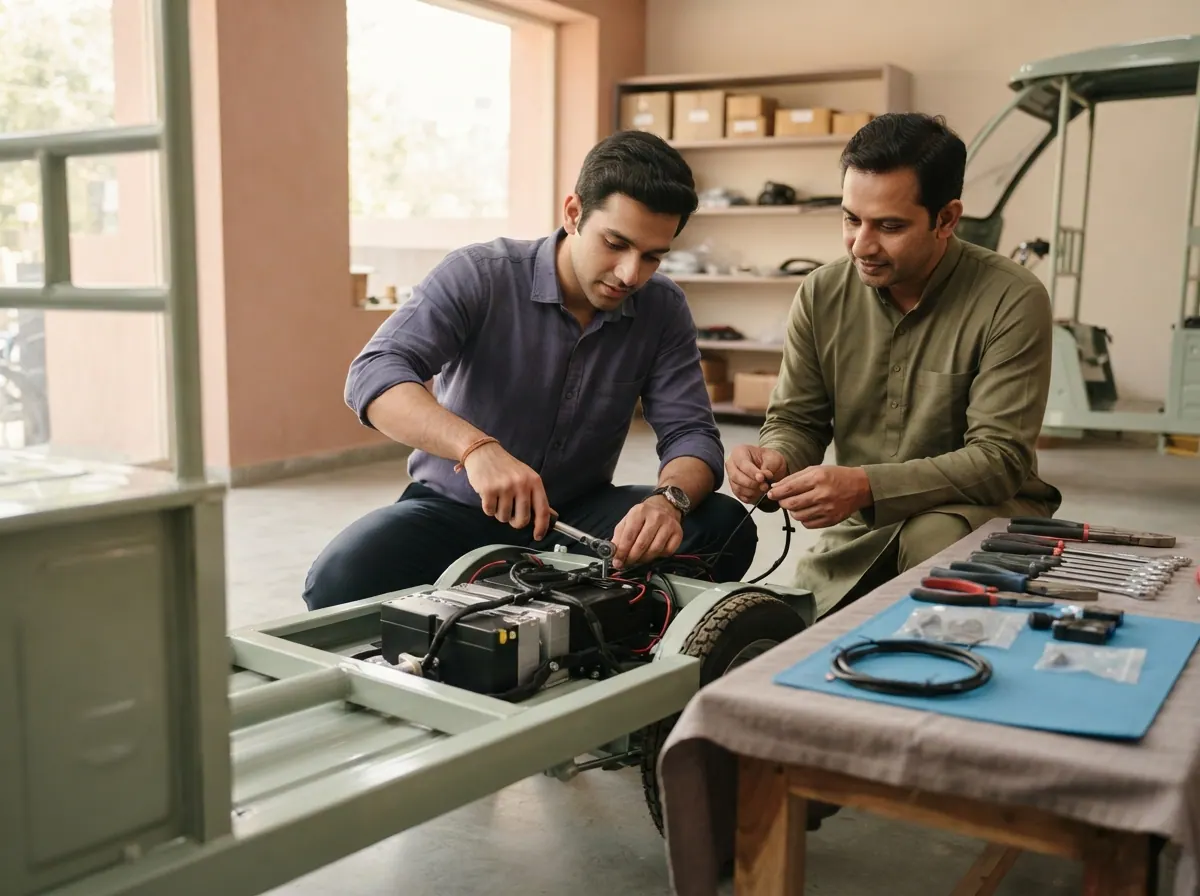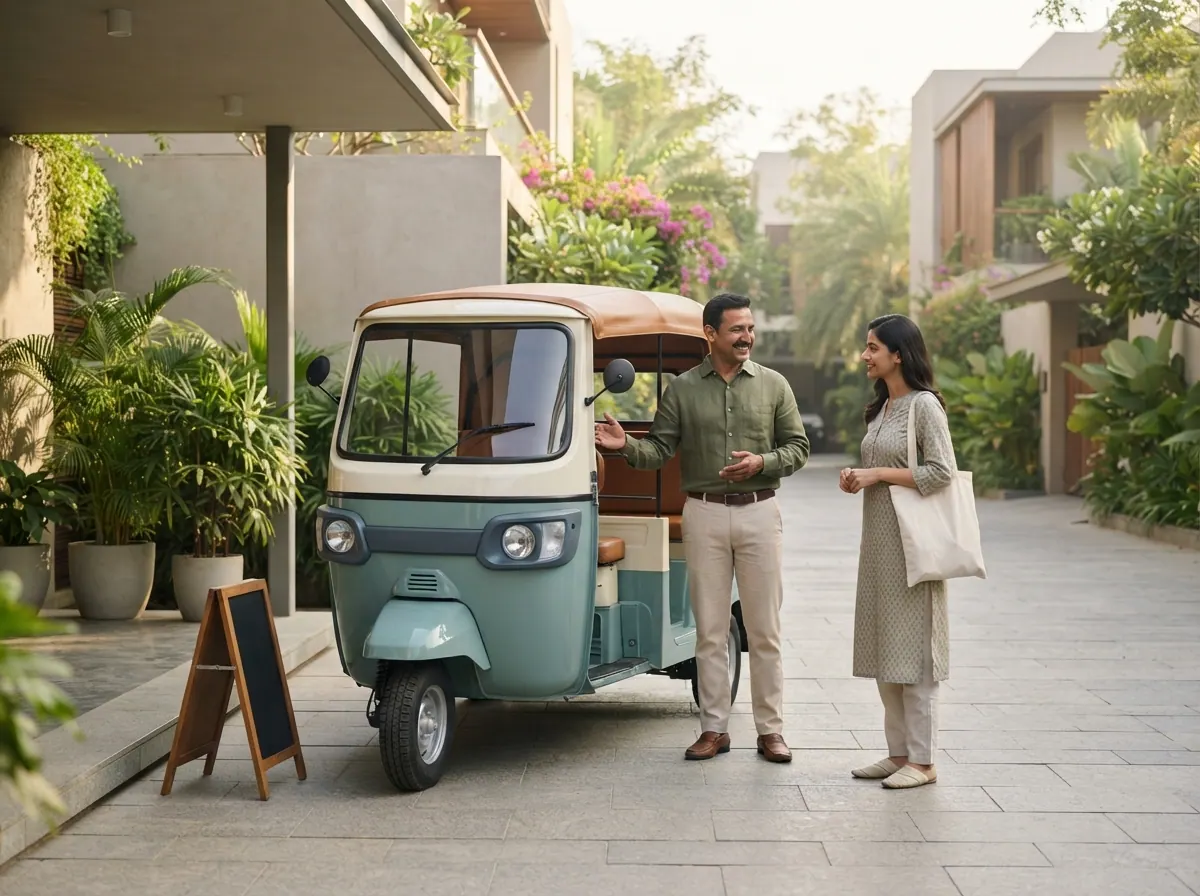
To start an e-rickshaw business in India you need a registered, insured vehicle, a safe place to charge it overnight, a route with steady passengers, and about ₹1.2–2.5 lakh. The e-rickshaw earns by carrying shared passengers over short distances, and its biggest hidden cost is the battery, which wears out and has to be replaced.
All figures here are estimates. Check prices near you before you spend.
What does it cost?
| Item | Basic model | Better model |
|---|---|---|
| E-rickshaw (ex-showroom) | ₹90,000–1.5 lakh | ₹1.5–2 lakh |
| Registration, road tax, number plate | ₹8,000–20,000 | ₹10,000–25,000 |
| Insurance for the first year | ₹5,000–10,000 | ₹6,000–12,000 |
| Charger, wiring, meter or safe plug point | ₹4,000–10,000 | ₹5,000–12,000 |
| Reserve for tyres, first service | ₹5,000–10,000 | ₹8,000–15,000 |
| Licence and papers | ₹2,000–5,000 | ₹2,000–5,000 |
| Total | about ₹1.2–1.9 lakh | about ₹1.8–2.5 lakh |
Cheaper models often use lead-acid batteries and lighter parts. A better model may have a stronger body and a longer battery warranty. Ask for the battery type, warranty, and how many kilometres the dealer says it gives on a charge, then test it with a full load of passengers.
Which model should you buy?
Choose by what your road is like and who will service it:
- Passenger model: the usual shared ride, with seats for around four passengers behind the driver. Check the seat width and the suspension.
- Cargo e-rickshaw: a loader for small goods in markets. It earns by trip, and often has steadier payments from shopkeepers.
- Lead-acid or lithium battery: lead-acid costs less but wears faster, lithium costs more but may last longer. Ask what the replacement costs, not only the vehicle.
- A local service point: a brand with a mechanic near you is worth more than a cheaper one with no spare parts nearby.
How much can it earn?
Take a driver on a busy shared route, owning the vehicle, running about 26 days a month.
Daily earning
- About 12 hours on the road, with 30 trips
- 30 trips × about ₹10 per passenger × 3 passengers on average = ₹900
- Some trips run with empty seats, so count about ₹800 a day, not ₹900
- ₹800 a day × 26 days = ₹20,800 a month
Costs each month
- Electricity to charge, about ₹100 a day × 26 = ₹2,600
- Battery saving: a ₹40,000 battery lasting 20 months = ₹2,000 a month
- Tyres, brakes, repairs = ₹1,500
- Parking, police or union charges, if any = ₹1,000
- Insurance and papers, spread out = ₹800
- Total = ₹7,900
Left over: ₹20,800 − ₹7,900 = about ₹12,900 a month.
That is before your own loan instalment. A ₹1.5 lakh loan over three years may mean about ₹5,000 a month, which leaves roughly ₹7,900. On a quiet route the fares fall quickly, and every rainy day, strike day or breakdown is a day with no earning.
What do you need before you start?
- A route you know. Stand at the stand for two or three days and count how many passengers wait and how many e-rickshaws wait with them.
- A safe charging place. Charging overnight needs a proper plug and wiring, and ideally a place away from a bed or a shop stock. A bad plug point is a fire risk.
- A driver's licence and a clean record. Passengers and the police remember drivers who break rules.
- Money for the battery. Keep a battery fund from day one, even if it is a small amount every day.
Step by step
- Spend a week on your target route and note rush hours, fares and how many e-rickshaws are already there.
- Visit two or three dealers. Ask for the on-road price, battery type, warranty and where service is done.
- Test the vehicle with a full load on a slope, since weak motors struggle with passengers and a bridge.
- Buy through a proper dealer with the invoice, registration and insurance included in writing.
- Set up charging with a qualified electrician, with the right plug, wire size and a switch.
- Drive, keep a daily note of earnings, units used and repairs, and learn what a good day looks like.
- Save a small amount every day for the battery and for the next service.
Which licences apply?
Rules vary by state and city:
- Registration and insurance of the vehicle are needed. Third party insurance is a basic need.
- Driving licence for the correct vehicle class. Ask your RTO what applies to e-rickshaws.
- Routes and stands. Some cities limit e-rickshaws to certain roads or zones. Ask the traffic office or the union before buying.
- Subsidies or loans. Some states have offered support for electric vehicles, and banks and finance companies give vehicle loans. Offers change, so confirm with the dealer and the state transport office. Read loan terms carefully.
- Tax. Ask a CA if you need to file income tax on your earnings.
What goes wrong?
- Cheap battery, short life. The vehicle looks cheap, then the battery dies early and costs a big part of the vehicle's price again.
- Overloading. More than the seats allow strains the motor and brakes, and risks a fine.
- Charging on a bad plug. Loose wiring heats up. Do not charge on a damaged board, and do not leave it unattended near anything that burns.
- A route full of e-rickshaws. Too many vehicles share too few passengers, and you wait for hours.
- Skipping service. Small brake and motor problems become big bills.
- Renting out without a plan. A hired driver may overdrive the battery, skip charging, or delay payment.
Situations you will face
What would you do? Each choice costs something.
Getting started
Lithium costs ₹30,000 more upfront. Lead-acid is cheaper but wears faster.
- Pay for lithium: Costly now, longer life
- Take lead-acid: Cheaper, earlier replacement
A used e-rickshaw is ₹45,000 cheaper, but its battery age is unclear.
- Buy new at showroom: Costly, full warranty
- Buy the used one: Saves money, battery risk
The dealer's test drive was empty. Your road has a slope and a bridge.
- Test with four people: Costs an hour, true picture
- Trust the dealer: Quick, risk of weak motor
The old plug at home looks loose. An electrician offers a proper charging point for ₹5,000.
- Get the proper point: Pay now, safer charging
- Use a shop's connection: Monthly fee, less control
A finance company offers an easy loan. The instalment is about ₹5,000 a month and interest adds up.
- Take the loan: Smaller upfront, monthly burden
- Use your savings: Drains savings, no instalment
Third-party cover is cheaper. Full cover costs ₹4,000 more but covers your own vehicle too.
- Take full insurance: Costly, covers your vehicle
- Take basic cover: Cheaper, damage is on you
First month
The stand has a queue and a union fee. Roaming gives no queue but you burn charge looking for fares.
- Join the stand: Pay fee, steady queue
- Roam the lanes: No fee, more battery use
Three parents want a fixed morning ride at ₹1,800 a month each. It means the same time daily.
- Take the monthly rides: Steady income, fixed hours
- Stay on open fares: Flexible, uneven income
At the market chowk seven people crowd round and want to go together. Your seats take four.
- Take four, others wait: Safe, some walk off
- Do two quick trips: More fares, uses more charge
Many passengers pay with ₹500 notes and you run out of change before noon.
- Use a UPI QR code: Small setup, smooth fares
- Ask for exact change: No cost, lose some fares
The road ahead is under water. Carrying on risks the motor and the battery box.
- Park and wait: Lose the day's earning
- Take a longer dry route: More battery, some earning
Passengers complain about torn seat covers. New covers cost ₹3,000.
- Replace the covers: Costs money, better rides
- Patch with tape: Cheap, looks poor
Running it
A passenger insists the fare is half of what you ask, for a long ride with luggage.
- Explain and settle midway: Lose a little, keep goodwill
- Insist on full fare: Full money, passenger upset
The mechanic says the brake pads are worn. Branded pads cost ₹2,000, local ones ₹1,000. Either takes half a day.
- Fit branded pads: Costs more, lasts longer
- Fit local pads: Cheaper, wear out sooner
A market shopkeeper offers ₹600 a day to carry goods in the morning, instead of passengers.
- Take the goods trips: Steady pay, rough on seats
- Keep to passengers: Cleaner vehicle, uneven pay
Your cousin wants to drive in the evening for ₹300 a day rent. Your battery would be used more.
- Rent it out: Daily income, wear and risk
- Say no: Vehicle stays in your hands
You entered a road closed to e-rickshaws, following another driver. The fine is ₹1,000.
- Pay the fine and take a receipt: Costly, clean record
- Argue and lose the day: Fine still applies, time lost
For a week, thousands visit the temple. Fares double but roads jam and the charge runs fast.
- Work long festival hours: More money, tiring
- Work normal hours: Rest, lose some earning
A shop sells a fast charger for ₹8,000 that cuts charging time but may stress the battery.
- Buy the fast charger: More trips, battery wears faster
- Keep slow charging: Longer life, fewer trips
Both rear tyres are bald. New tyres cost ₹5,000, retreads cost half.
- Buy new tyres: Costly, safe grip
- Use retreaded tyres: Cheaper, wears sooner
A passenger offers double fare to go to the far edge of town at 10 pm on a dark road.
- Take the late fare: Good money, tiring and risky
- Go home and charge: Lose the fare, rested
When things go wrong
The vehicle stops. The service centre says the controller needs replacement for ₹6,500 and three days.
- Use the authorised centre: Costly, proper part
- Use a roadside mechanic: Cheaper, unknown part
After eighteen months the battery runs out by afternoon. A new one costs ₹40,000, a repair of cells costs ₹15,000.
- Buy a new battery: Costly, full day again
- Repair the old one: Cheaper, short life
The queue now takes hours. Your daily fares fall sharply.
- Move to a new route: Learn the road, lose some time
- Stay and wait it out: Familiar, low income
A week of rain and a breakdown left you ₹5,000 short. The lender asks you to pay.
- Ask for a few days: Late fee, relationship kept
- Borrow from a moneylender: Pays now, heavy interest
A rider hits your side. Nobody is hurt but the body is dented and the rider wants money.
- Settle with insurance papers: Slow, costs your time
- Pay the rider on the spot: Quick, costs more
A neighbour's battery was taken from their parked e-rickshaw. You park yours on the street at night.
- Rent a secure parking spot: Monthly cost, peace of mind
- Add a lock and chain: One-time cost, some risk
Growing
You have saved a down payment. A second vehicle needs a trusted driver and its own charging.
- Buy and hire a driver: More income, more worry
- Keep one and save: Safe, slower growth
Shopkeepers need morning goods trips. A cargo model costs ₹1.4 lakh and has fewer rivals.
- Buy the cargo model: Steady loads, big spend
- Stay with passengers: Familiar, crowded market
A housing colony wants a daily ride service to the market at fixed rates for a year.
- Sign the contract: Steady income, lower fares
- Keep open fares: Higher fares, uneven days
Is it right for you?
This business suits you if you know your town's roads, are comfortable with long hours outdoors, and want a low-cost way to earn daily. It suits you less if you need a high income early, because most of what you make goes back to loan instalments, charging and battery savings.
A good test: before buying, ride as a passenger on your planned route for a few days at different hours and count the fares. If the numbers do not add up for one vehicle, they will not for two.