How to start a electrician business in Maharashtra (2026): investment, profit and licences

A electrician business in Maharashtra needs about ₹31,500–₹10.5 lakh to set up, depending on the format. Run well in a city like Nashik, it typically nets ₹36,000–₹72,000 a month. The numbers below are India-wide research rescaled to Maharashtra's own wages, shop rents, power tariffs and street prices.
How much investment do you need in Maharashtra?
- Cheapest start
Solo electrician on a bike
Tools, meter, ladder and a few spares. Calls by phone and WhatsApp. Bike already owned.
Setup cost₹31,500Suggested budget (with working capital): ₹52,500 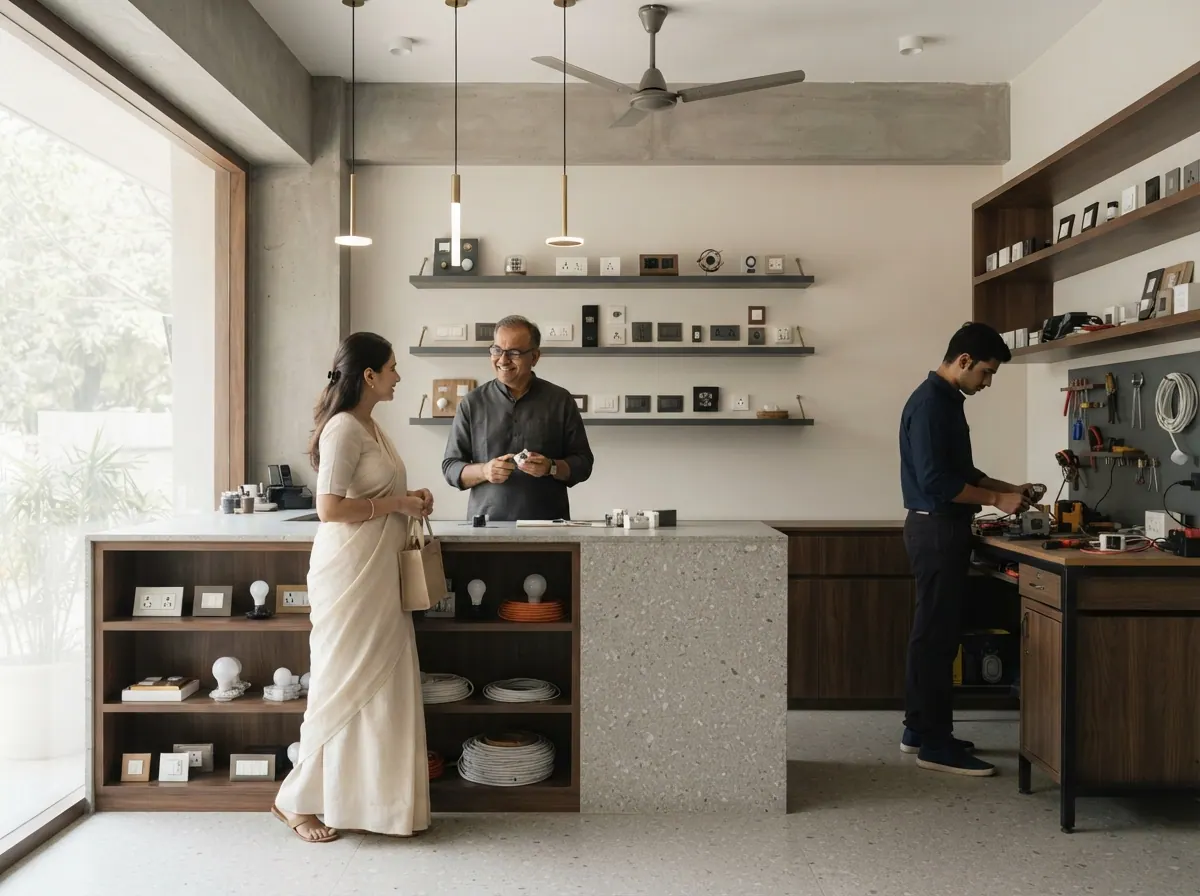
Electrical shop + services
A counter of switches, fans and LED lights, with one helper on the payroll and room for a second.
Setup cost₹5.3 lakhSuggested budget (with working capital): ₹5.6 lakh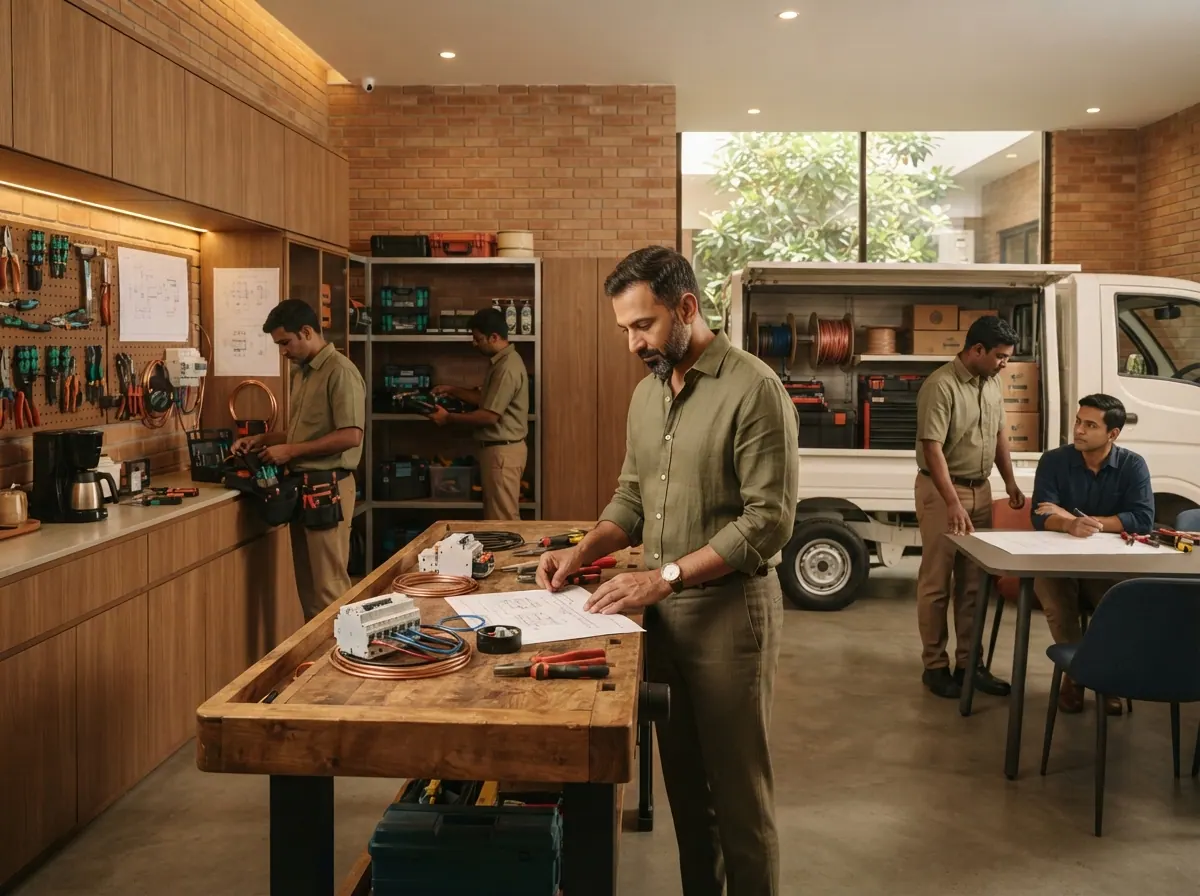
Licensed wiring contractor
A van, a Class C or B licence and a five-person crew wiring new houses. Builders pay 30–90 days late.
Setup cost₹10.5 lakhSuggested budget (with working capital): ₹11 lakh
How to start a electrician business, step by step
- Choose your format and budget: Start with Solo electrician on a bike: about ₹31,500 to set up, or ₹52,500 with working capital.
- Pick the location: Compare the rent with the number of customers who pass by, at the hours you will be open.
- Get your licences: Commonly needed: state wireman permit (fee about ₹500–1,500; 15–30 days), supervisor certificate of competency, by exam or experience, electrical contractor licence: Class C or B (fees up to ₹15,000), GST registration above ₹20 lakh of service turnover (18%), Shops & Establishments and trade licence for an electrical shop. Rules vary by state and city, so confirm with your municipal office.
- Arrange stock, staff and prices: Check local prices first, and keep money aside for the first months of rent, wages and stock.
- Plan for the risks: Watch for: electric shock or a fall that stops work for weeks, being blamed for a short circuit or a burnt appliance, builders paying 30–90 days late or short, copper and wire price jumps after you quote, app penalties or a rating drop, a trained helper leaving to compete.
- Practise before you invest: Run it day by day in the free simulator to see where the money goes.
How much profit can you make in Maharashtra?
A well-run electrician business in Maharashtra typically nets ₹36,000–₹72,000 a month in a mid-size city: about ₹43,000–₹86,000 in the metro and ₹20,500–₹38,000 in a small town. A casually run one can make far less or lose money.
| City | Net profit per week | Net profit per month |
|---|---|---|
| Mumbai | ₹9,908–₹19,816 | ₹43,000–₹86,000 |
| Nashik | ₹8,301–₹16,601 | ₹36,000–₹72,000 |
| Satara | ₹4,710–₹8,748 | ₹20,500–₹38,000 |
Ranges are for a well-run business of the typical format in each city size, from public sources and estimates. Your results depend on location and how you run it.
What changes in Maharashtra
The researched local factors that move this business’s numbers.
| Here | India | vs India | |
|---|---|---|---|
| Minimum wage, monthly | ₹14,863 | ₹12,500 | +19% |
| Unskilled day wage | ₹572 | ₹500 | +14% |
| Shop rent, metro (per sq ft/month) | ₹250Estimate | ₹150 | +67% |
| Shop rent, mid-size city | ₹70Estimate | ₹60 | +17% |
| Shop rent, small town | ₹35Estimate | ₹25 | +40% |
| Commercial power, per kWh | ₹12.5 | ₹9.5 | +32% |
| Commercial LPG cylinder | ₹2,790 | ₹2,810 | −1% |
| Petrol, per litre | ₹112 | ₹102 | +10% |
| Cup of tea / coffee | ₹15Estimate | ₹12 | +25% |
| Simple meal | ₹100Estimate | ₹80 | +25% |
| Men's haircut | ₹120Estimate | ₹100 | +20% |
| Milk, 1 litre | ₹60Estimate | ₹60 | ≈ |
| Bread loaf | ₹50 | ₹45 | +11% |
| Factor | Typical value in India | Source |
|---|---|---|
| Minimum wage, shops, unskilled, Zone I (Jul–Dec 2026) | ₹14,862.75/month (incl. VDA ₹4,134) | ascent-hr.com |
| Minimum wage, semi-skilled / skilled Zone I | ₹15,739.50 / ₹16,554.30 per month | ascent-hr.com |
| Conflicting summary | DCPSOL lists Zone I unskilled ₹14,155 (VDA likely computed differently); AscentHR used | dcpsol.com |
| Zones II/III | Zone II ~₹14,100, Zone III ~₹13,400 per month (Est.: basic steps ~₹750/zone)Estimate | ascent-hr.com |
| Unskilled daily equivalent | ₹572/day (₹14,863 / 26) | ascent-hr.com |
| Typical informal shop-helper pay | Mumbai ₹14–20k (+meals/stay), Nashik ₹10–13k, small towns ₹8–11kEstimate | Est.: national presets scaled up for M… |
| Shop rent T1 Mumbai (neighbourhood shop) | ₹250/sq ft/month (suburban market streets ₹150–400; prime high streets ₹700+)Estimate | Est.: Mumbai listings and broker repor… |
| Shop rent T2 Nashik | ₹70/sq ft/monthEstimate | Est.: Nashik listings ₹15–25k for 250–… |
| Shop rent T3 Satara | ₹35/sq ft/monthEstimate | Est. |
| Pagdi (tenancy key money) system | old Mumbai shops change hands via pagdi payments of lakhs; rents controlledEstimate | Est.: Maharashtra Rent Control Act 199… |
| Electricity duty, LT commercial | 21% of bill | thehitavada.com |
| Commercial electricity all-in (MSEDCL) | about ₹12.5/kWhEstimate | Est.: (₹8.51 + ₹1.60 + FAC ~₹0.2) × 1.… |
| Commercial LPG 19 kg | Mumbai ₹2,764.50 (1 Oct 2026); Nashik ~₹2,790 (Est. +transport) | goodreturns.in |
| S&E for <10 workers | free online intimation; registration only at 10+ | mahakamgar.maharashtra.gov.in |
Festivals and demand
- Diwali (Padwa, Bhau-beej) (8–11 Nov 2026) · faral sweets/snacks, clothes, gold peak; Diwali Padwa auspicious for new shops
- Ganeshotsav (14–24 Sep 2026 (passed); next ~4–14 Sep 2027 (verify)) · 10-day surge in modak/sweets, flowers, décor; road closures hit some shops
- Gudi Padwa (Marathi New Year) (about 7 Apr 2027 (verify)) · shrikhand, gold, vehicle and new-shop openings
- Shiv Jayanti / Maharashtra Day (19 Feb 2027 / 1 May 2027) · state holidays; dry day on 1 May
- Christmas–New Year (Mumbai, Konkan tourism) (24 Dec 2026–1 Jan 2027) · restaurants, bakeries, beach towns peak
Licences and rules
Rules vary by state and city: confirm with your municipal office.
- State wireman permit (fee about ₹500–1,500; 15–30 days)
- Supervisor certificate of competency, by exam or experience
- Electrical contractor licence: Class C or B (fees up to ₹15,000)
- GST registration above ₹20 lakh of service turnover (18%)
- Shops & Establishments and trade licence for an electrical shop
- Shop & Establishment intimation (Maharashtra S&E Act 2017, Form F) for <10 workers · Free, online (Aaple Sarkar / mahakamgar) · Labour dept
- S&E registration (10+ workers) · about ₹400–₹10,000 by worker slab (Est.) · Labour dept
- Professional tax enrolment (PTEC) and registration (PTRC) · PTEC ₹2,500/yr · GST/Sales Tax dept (mahagst.gov.in)
- Municipal health/trade licence for eateries (e.g. BMC Section 394) · ₹2,000–₹20,000/yr by area (Est.) · Municipal corporation
Run it day by day before you invest
Run a electrician business day by day. Choose your city, budget and location, then make the decisions a real owner faces as they come up. Your advisor can test each choice on your next 3 months. The free simulator currently runs on India-wide numbers; a state preset is coming.
Play the simulator freeFrequently asked questions
How much does it cost to start a electrician business in Maharashtra?
About ₹31,500–₹10.5 lakh, depending on the format. That is the India-wide setup cost rescaled to Maharashtra's rents and prices.
How much profit does a electrician business make in Maharashtra?
A well-run one typically nets ₹36,000–₹72,000 a month in a city like Nashik. Casual owners earn far less.
What licences does a electrician business need in Maharashtra?
State wireman permit (fee about ₹500–1,500; 15–30 days), Supervisor certificate of competency, by exam or experience, Electrical contractor licence: Class C or B (fees up to ₹15,000), GST registration above ₹20 lakh of service turnover (18%), Shops & Establishments and trade licence for an electrical shop, Shop & Establishment intimation (Maharashtra S&E Act 2017, Form F) for <10 workers, S&E registration (10+ workers), Professional tax enrolment (PTEC) and registration (PTRC)
Which city in Maharashtra is best for a electrician business?
Bigger cities bring more customers and higher bills but also higher rent and wages. The chart above compares metro, mid-size city and small town.