How to start a goat farming business in Bihar (2026): investment, profit and licences
A goat farming business in Bihar needs about ₹1.4 lakh–₹22.4 lakh to set up, depending on the format. Run well in a city like Gaya, it typically nets ₹7,000–₹28,000 a month. The numbers below are India-wide research rescaled to Bihar's own wages, shop rents, power tariffs and street prices.
How much investment do you need in Bihar?
- Cheapest start
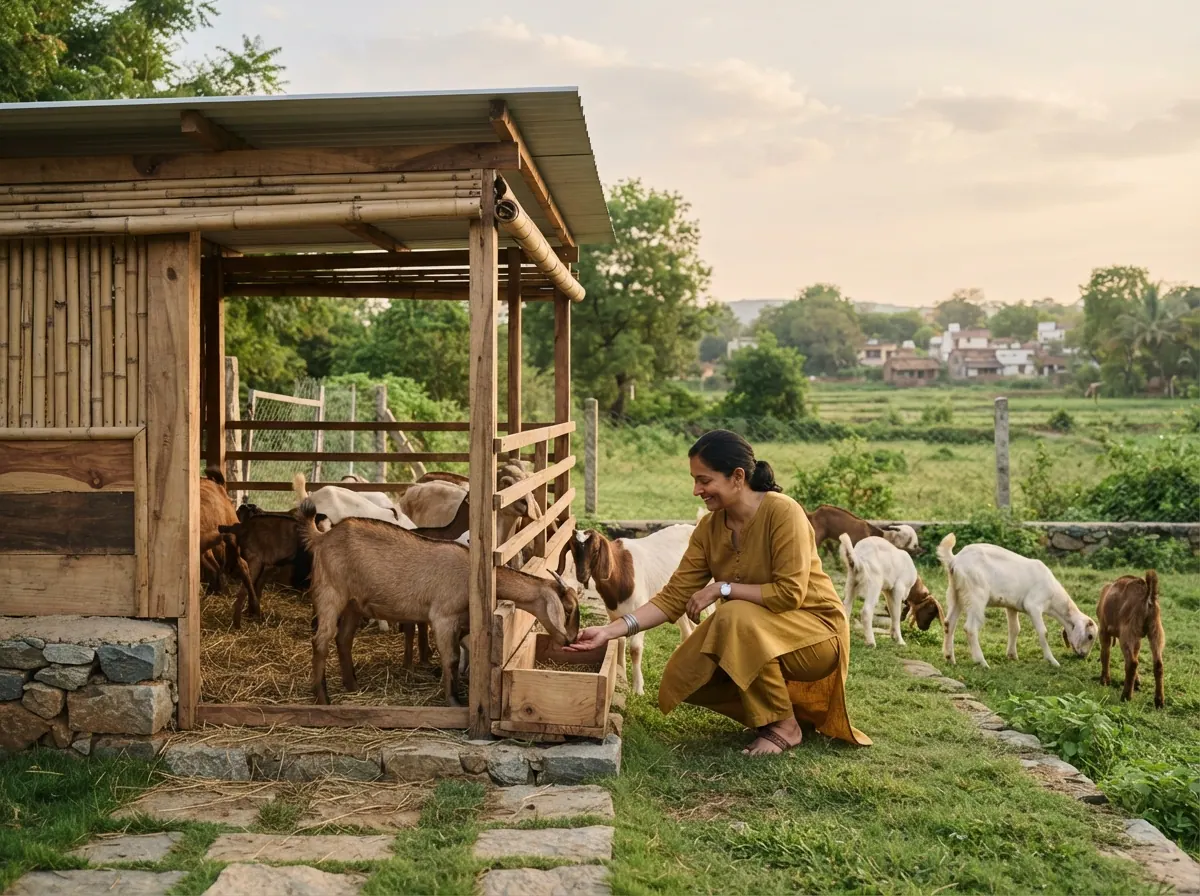
Backyard flock, 15 does
A lean-to and a shared village buck. The family grazes the flock on commons and field bunds.
Setup cost₹1.4 lakhSuggested budget (with working capital): ₹1.6 lakh Semi-intensive shed, 50 does
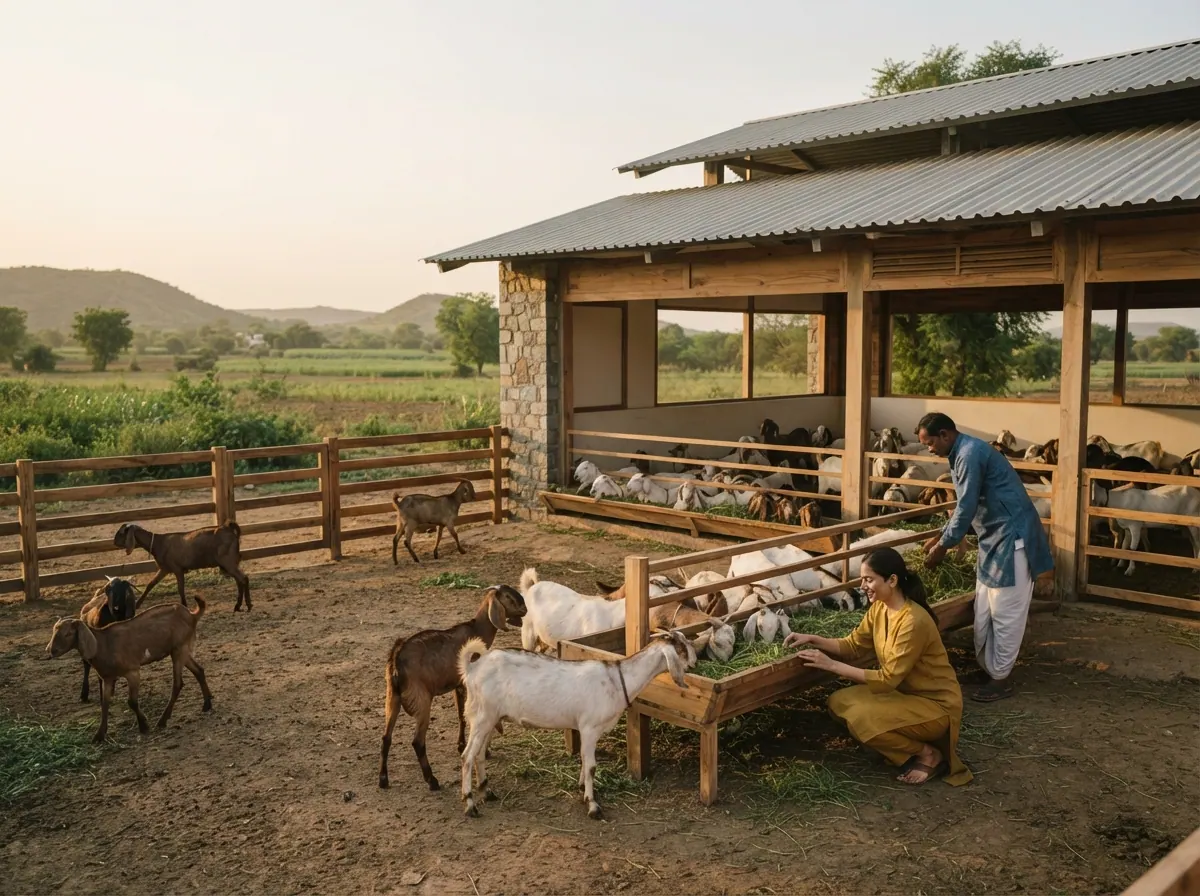
1,200 sq ft basic shed and paddock, 5–6 hours of grazing, evening concentrate. One hired hand.
Setup cost₹7.5 lakhSuggested budget (with working capital): ₹8.4 lakh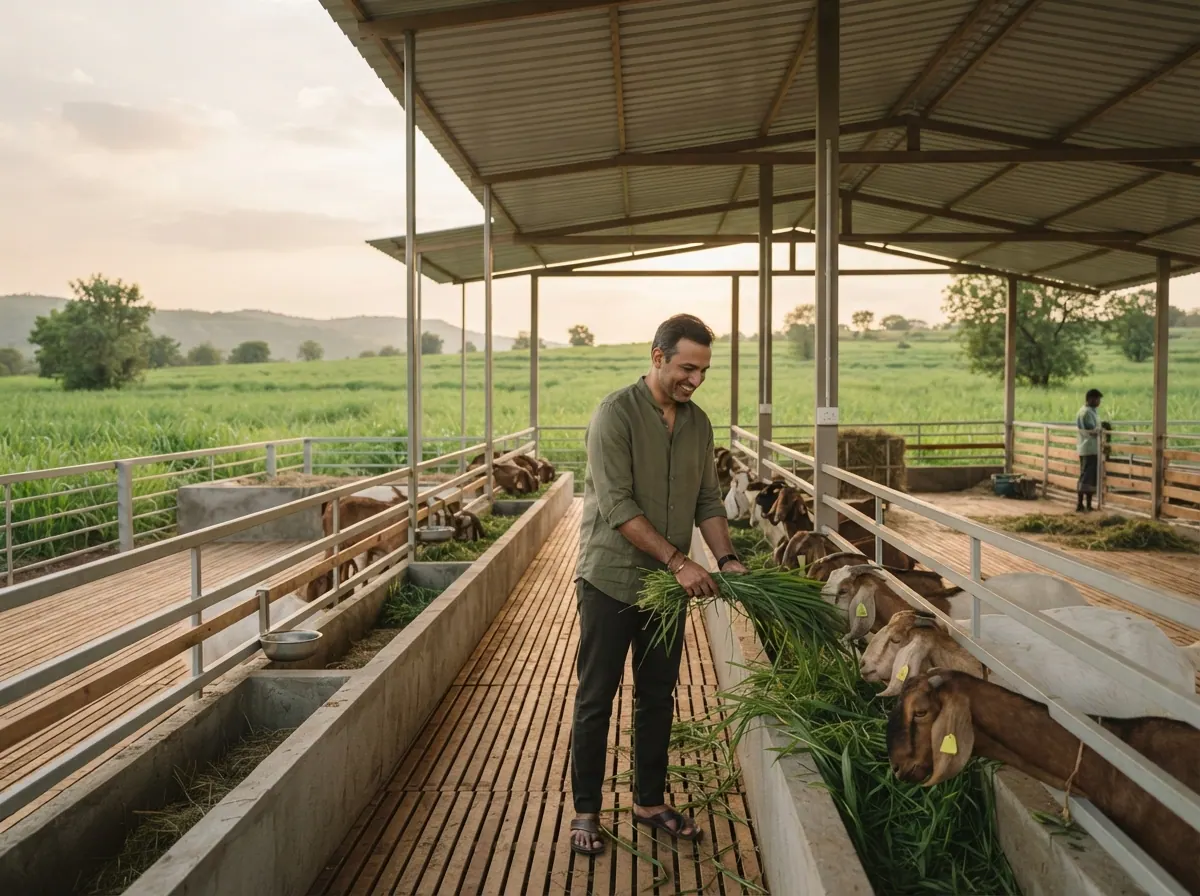
Stall-fed farm, 100 does
3,000 sq ft elevated shed and a 3–4 acre fodder plot. Meets the NLM 100+5 minimum, but feed decides everything.
Setup cost₹22.4 lakhSuggested budget (with working capital): ₹24.5 lakh
How to start a goat farming business, step by step
- Choose your format and budget: Start with Backyard flock, 15 does: about ₹1.4 lakh to set up, or ₹1.6 lakh with working capital.
- Pick the location: Compare the rent with the number of customers who pass by, at the hours you will be open.
- Get your licences: Commonly needed: no licence needed just to keep goats, 12-digit ear tags for insurance and subsidy claims, NLM subsidy: vet experience certificate, 100 does + 5 bucks minimum, vet fitness certificate for moving goats by truck, FSSAI only if you sell meat, not live goats. Rules vary by state and city, so confirm with your municipal office.
- Arrange stock, staff and prices: Check local prices first, and keep money aside for the first months of rent, wages and stock.
- Plan for the risks: Watch for: PPR outbreak can kill half an unvaccinated herd, kid deaths of 15–33% in village herds, theft by vehicle gangs, worse before Bakrid, drought and fodder prices up 30–60%, price slump after Bakrid and in Shravan.
- Practise before you invest: Run it day by day in the free simulator to see where the money goes.
How much profit can you make in Bihar?
A well-run goat farming business in Bihar typically nets ₹7,000–₹28,000 a month in a mid-size city: about −₹36,500–₹96,500 in the metro and ₹4,000–₹8,000 in a small town. A casually run one can make far less or lose money.
| City | Net profit per week | Net profit per month |
|---|---|---|
| Patna | −₹8,375–₹22,333 | −₹36,500–₹96,500 |
| Gaya | ₹1,613–₹6,453 | ₹7,000–₹28,000 |
| Bettiah | ₹951–₹1,902 | ₹4,000–₹8,000 |
Ranges are for a well-run business of the typical format in each city size, from public sources and estimates. Your results depend on location and how you run it.
What changes in Bihar
The researched local factors that move this business’s numbers.
| Here | India | vs India | |
|---|---|---|---|
| Minimum wage, monthly | ₹11,336 | ₹12,500 | −9% |
| Unskilled day wage | ₹450Estimate | ₹500 | −10% |
| Shop rent, metro (per sq ft/month) | ₹90Estimate | ₹150 | −40% |
| Shop rent, mid-size city | ₹40Estimate | ₹60 | −33% |
| Shop rent, small town | ₹18Estimate | ₹25 | −28% |
| Commercial power, per kWh | ₹8.2 | ₹9.5 | −14% |
| Commercial LPG cylinder | ₹3,101 | ₹2,810 | +10% |
| Petrol, per litre | ₹113 | ₹102 | +11% |
| Cup of tea / coffee | ₹10Estimate | ₹12 | −17% |
| Simple meal | ₹70Estimate | ₹80 | −12% |
| Men's haircut | ₹60Estimate | ₹100 | −40% |
| Milk, 1 litre | ₹59 | ₹60 | −2% |
| Bread loaf | ₹40Estimate | ₹45 | −11% |
| Factor | Typical value in India | Source |
|---|---|---|
| Minimum wage, unskilled, shops & commercial establishments | ₹436/day, ₹11,336/month incl. VDA (from 1 Apr 2026; Oct 2026 VDA order not yet seen) | hrengage.ai |
| Minimum wage, semi-skilled / skilled | ₹452/day (₹11,752) semi-skilled; ₹551/day (₹14,326) skilled | hrengage.ai |
| Minimum wage, highly skilled | ₹672/day (₹17,472/month) | hrengage.ai |
| Typical informal shop helper pay (T2) | ₹7,000–10,000/month (Gaya), ₹9,000–12,000 (Patna)Estimate | Est.: informal helpers commonly paid a… |
| Small shop rent, T1 (Patna) | ₹90/sq ft/monthEstimate | houssed.com |
| Small shop rent, T2 (Gaya) | ₹40/sq ft/monthEstimate | Est.: no 2026 high-street rent survey … |
| Small shop rent, T3 (Bettiah) | ₹18/sq ft/monthEstimate | Est.: no 2026 high-street rent survey … |
| Commercial electricity, small shop (~200 units/month) | ₹7.73/unit energy charge (NDS-II, BERC order 18 Mar 2026) + 6% electricity duty ≈ ₹8.2/unit; fixed ₹150/connection (≤0.5 kW) or ₹300/kVA/month | thediscombill.com |
| Commercial LPG 19 kg cylinder | ₹3,100.5 (25 Oct 2026; national Delhi reference ₹2,810) | goodreturns.in |
| Domestic LPG 14.2 kg (illegal for commercial use) | ₹1,031.50 (highest among major states) | goodreturns.in |
| Professional tax | Annual: nil up to ₹3 lakh income, ₹1,000 (₹3–5 lakh), ₹2,000, ₹2,500 cap; due by 30 Nov | calcguru.in |
| GST registration threshold / composition | National thresholds apply (₹40 lakh goods / ₹20 lakh services); composition up to ₹1.5 crore | cleartax.in |
| Casual unskilled day wage, open market (T2) | ₹450/dayEstimate | Est.: Gaya casual labour ₹450/day; ope… |
| Per-capita income (GSDP per capita, current prices) | ₹84,925 (2025–26), lowest of all states; India ₹2,51,393 | en.wikipedia.org |
Festivals and demand
- Chhath Puja (13–16 Nov 2026 (Sandhya Arghya 15 Nov)) · Biggest demand spike of the year: fruit, sugarcane, soop baskets, ghee, jaggery, new clothes; migrant workers return; many shops shut on the two arghya days
- Diwali / Dhanteras (6–8 Nov 2026) · Sweets, utensils, electronics and clothing peak; precedes Chhath so the whole of November is high season
- Sonepur Mela (From Kartik Purnima, 24 Nov 2026, about a month) · Huge fair near Hajipur; stall demand and temporary vending income
- Holi (about 22 Mar 2027) · Sweets, colours, meat and new clothes demand; markets shut on Holi day
- Makar Sankranti (dahi-chura, tilkut) (14 Jan 2027) · Tilkut, curd and chura sales peak (Gaya tilkut famous)
Licences and rules
Rules vary by state and city: confirm with your municipal office.
- No licence needed just to keep goats
- 12-digit ear tags for insurance and subsidy claims
- NLM subsidy: vet experience certificate, 100 does + 5 bucks minimum
- Vet fitness certificate for moving goats by truck
- FSSAI only if you sell meat, not live goats
- Shops & Establishments registration (only 10+ workers after 2026 ordinance repealing the Bihar Shops and Establishments Act 2025) · Nil for shops with fewer than 10 workers · Labour Resources Department
- Municipal (trade) licence, Patna Municipal Corporation (s.342 Bihar Municipal Act 2007) · Up to ₹2,500/yr (statutory cap); no published schedule · Patna Municipal Corporation
Run it day by day before you invest
Run a goat farming business day by day. Choose your city, budget and location, then make the decisions a real owner faces as they come up. Your advisor can test each choice on your next 3 months. The free simulator currently runs on India-wide numbers; a state preset is coming.
Play the simulator freeFrequently asked questions
How much does it cost to start a goat farming business in Bihar?
About ₹1.4 lakh–₹22.4 lakh, depending on the format. That is the India-wide setup cost rescaled to Bihar's rents and prices.
How much profit does a goat farming business make in Bihar?
A well-run one typically nets ₹7,000–₹28,000 a month in a city like Gaya. Casual owners earn far less.
What licences does a goat farming business need in Bihar?
No licence needed just to keep goats, 12-digit ear tags for insurance and subsidy claims, NLM subsidy: vet experience certificate, 100 does + 5 bucks minimum, Vet fitness certificate for moving goats by truck, FSSAI only if you sell meat, not live goats, Shops & Establishments registration (only 10+ workers after 2026 ordinance repealing the Bihar Shops and Establishments Act 2025), Municipal (trade) licence, Patna Municipal Corporation (s.342 Bihar Municipal Act 2007)
Which city in Bihar is best for a goat farming business?
Bigger cities bring more customers and higher bills but also higher rent and wages. The chart above compares metro, mid-size city and small town.