How to start a AC repair business in Andaman & Nicobar Islands (2026): investment, profit and licences
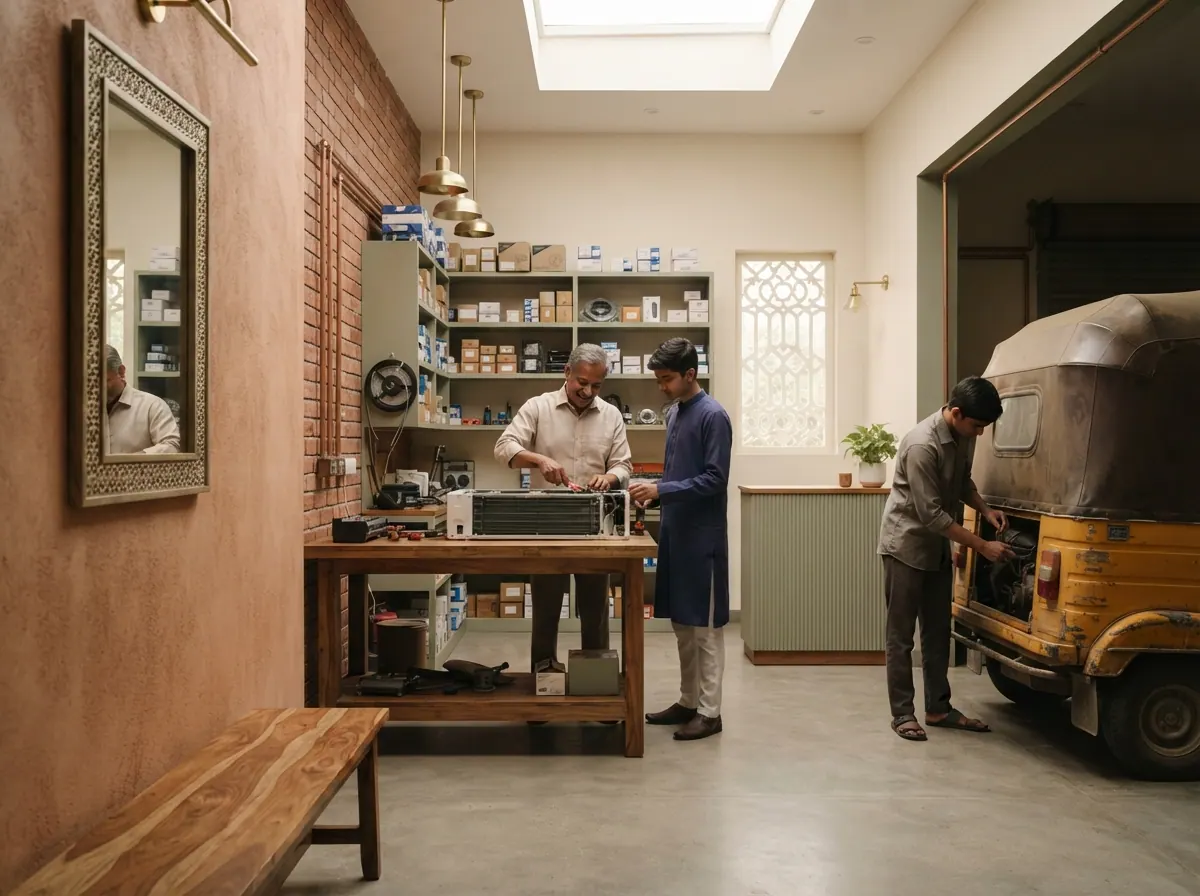
A AC repair business in Andaman & Nicobar Islands needs about ₹85,500–₹13.1 lakh to set up, depending on the format. Run well in a city like Swaraj Dweep (Havelock), it typically nets ₹81,500–₹1.2 lakh a month. The numbers below are India-wide research rescaled to Andaman & Nicobar Islands's own wages, shop rents, power tariffs and street prices.
How much investment do you need in Andaman & Nicobar Islands?
- Cheapest start
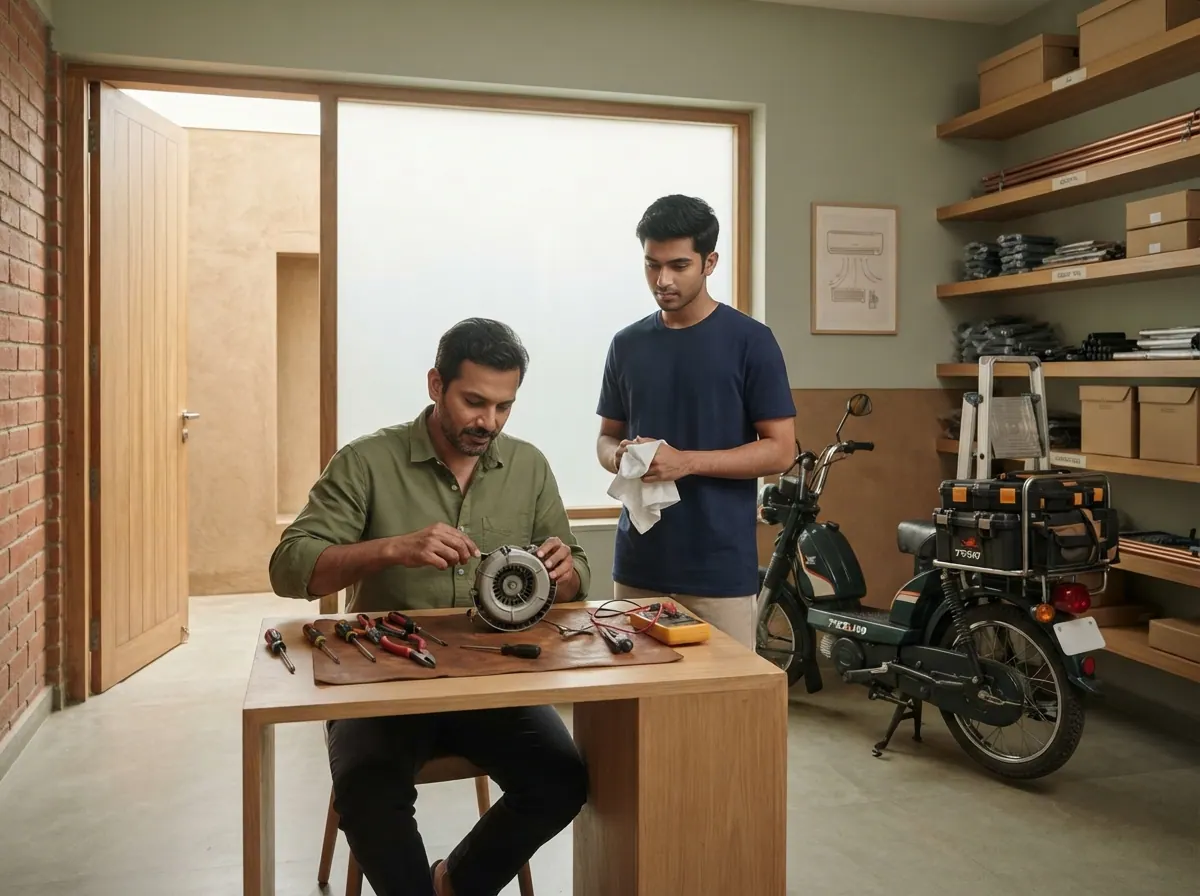
Solo technician on a two-wheeler
Work from home with tools on the bike and a day helper for installs. 4–6 services a day.
Setup cost₹85,500Suggested budget (with working capital): ₹1.1 lakh Shop with 2–3 technicians
Small front shop, parts stock, a used three-wheeler or van and a helper.
Setup cost₹5.1 lakhSuggested budget (with working capital): ₹5.7 lakh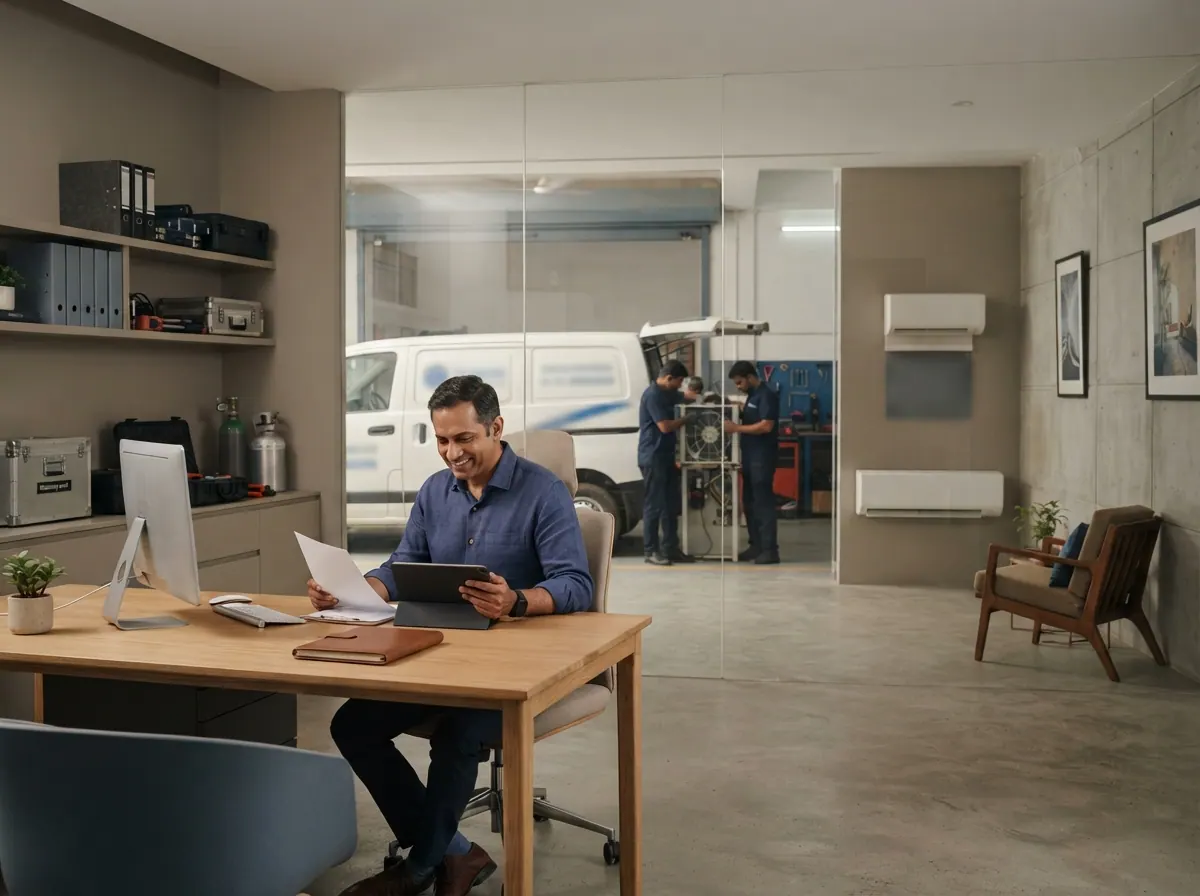
AMC firm with a van
GST billing, recovery machine, nitrogen and contracts with offices, banks and clinics.
Setup cost₹13.1 lakhSuggested budget (with working capital): ₹14.6 lakh
How to start a AC repair business, step by step
- Choose your format and budget: Start with Solo technician on a two-wheeler: about ₹85,500 to set up, or ₹1.1 lakh with working capital.
- Pick the location: Compare the rent with the number of customers who pass by, at the hours you will be open.
- Get your licences: Commonly needed: Shop & Establishment registration (₹0–2,000 by state), free Udyam MSME registration, municipal trade licence (₹1,500–3,000), GST at 18% above ₹20 lakh, or when AMC clients ask for it, no technician licence required in India today. Rules vary by state and city, so confirm with your municipal office.
- Arrange stock, staff and prices: Check local prices first, and keep money aside for the first months of rent, wages and stock.
- Plan for the risks: Watch for: a short or wet summer, accidents from compressor bursts, falls and electric shock, complaints about unnecessary gas refills, Urban Company and brand free-installation offers, AMC clients paying 60–120 days late, technicians leaving in March and April.
- Practise before you invest: Run it day by day in the free simulator to see where the money goes.
How much profit can you make in Andaman & Nicobar Islands?
A well-run AC repair business in Andaman & Nicobar Islands typically nets ₹81,500–₹1.2 lakh a month in a mid-size city: about ₹1.7 lakh–₹2.4 lakh in the metro and ₹50,500–₹60,500 in a small town. A casually run one can make far less or lose money.
| City | Net profit per week | Net profit per month |
|---|---|---|
| Sri Vijaya Puram (Port Blair) | ₹39,727–₹55,618 | ₹1.7 lakh–₹2.4 lakh |
| Swaraj Dweep (Havelock) | ₹18,819–₹27,601 | ₹81,500–₹1.2 lakh |
| Diglipur | ₹11,664–₹13,997 | ₹50,500–₹60,500 |
Ranges are for a well-run business of the typical format in each city size, from public sources and estimates. Your results depend on location and how you run it.
What changes in Andaman & Nicobar Islands
The researched local factors that move this business’s numbers.
| Here | India | vs India | |
|---|---|---|---|
| Minimum wage, monthly | ₹17,160 | ₹12,500 | +37% |
| Unskilled day wage | ₹700Estimate | ₹500 | +40% |
| Shop rent, metro (per sq ft/month) | ₹90Estimate | ₹150 | −40% |
| Shop rent, mid-size city | ₹80Estimate | ₹60 | +33% |
| Shop rent, small town | ₹25Estimate | ₹25 | ≈ |
| Commercial power, per kWh | ₹10Estimate | ₹9.5 | +5% |
| Commercial LPG cylinder | ₹3,300Estimate | ₹2,810 | +17% |
| Petrol, per litre | ₹89Estimate | ₹102 | −13% |
| Cup of tea / coffee | ₹15Estimate | ₹12 | +25% |
| Simple meal | ₹120Estimate | ₹80 | +50% |
| Men's haircut | ₹120Estimate | ₹100 | +20% |
| Milk, 1 litre | ₹70Estimate | ₹60 | +17% |
| Bread loaf | ₹50 | ₹45 | +11% |
| Factor | Typical value in India | Source |
|---|---|---|
| Minimum wage, unskilled (all schedules incl. shops/hotels) | ₹660/day from 1 Jul 2026 (₹652 from 1 Jan 2026) | nicobartimes.com |
| Minimum wage, other skill levels (Jan 2026) | Semi-skilled ₹733 (₹741 from Jul), skilled/clerical ₹856, highly skilled ₹939 per day | andamansheekha.com |
| Monthly equivalent used in basket | ₹17,160 (₹660 × 26)Estimate | Est.: computed from P01 |
| VDA revision cadence | Every 1 Jan and 1 Jul under the Code on Wages | nicobartimes.com |
| Casual day wage (market) | ₹700/day; tourism-season labour scarceEstimate | Est.: legal floor ₹660 plus premium |
| Mainland migrant staff | Shops/hotels hire from Bengal, Tamil Nadu, Kerala; travel and lodging add ~₹2k–4k/month per workerEstimate | Est. |
| Shop rent T1 Sri Vijaya Puram (Aberdeen Bazaar) | ₹90/sq ft/monthEstimate | Est.: scarce commercial space in a ~1.… |
| Shop rent T2 Swaraj Dweep (Havelock) | ₹80/sq ft/month (tourism premium)Estimate | Est. |
| Shop rent T3 Diglipur / Rangat | ₹25/sq ft/monthEstimate | Est. |
| Commercial electricity | ≈₹10/kWh effective (FY24: ₹9.25 for 0–200 units, ₹16.50 above 1,000; revised order from 1 Nov 2025 not retrieved)Estimate | nicobartimes.com |
| Commercial LPG 19 kg | ≈₹3,300Estimate | Est.: Kolkata ₹2,954 / Chennai ₹2,983 … |
| Power cuts | Scheduled/unscheduled outages common, especially outer islands; gensets needed for cold storageEstimate | Est.: diesel-grid fragility |
| S&E and trade licence | Nominal fees; PBMC licence in the capitalEstimate | Est. |
| Restricted areas | Tribal reserves (Jarawa, Nicobar) and restricted islands bar non-locals from trading; land purchase limited for outsidersEstimate | Est.: ANPATR regulation |
Festivals and demand
- Deepavali (about 8 Nov 2026) · Sweets, clothes; supply must be shipped in weeks ahead
- Christmas / New Year (25 Dec 2026 – 1 Jan 2027) · Peak tourist arrivals; Havelock/Neil hotels and eateries full
- Island Tourism Festival (about Jan 2027) · 10-day fair at Sri Vijaya Puram; food stalls, crafts
- Subhas Chandra Bose Jayanti / Parakram Diwas (23 Jan 2027) · Netaji-linked events; Ross (Netaji Subhas Chandra Bose) Island visitors
- Eid al-Fitr (about 10 Mar 2027) · Local Muslim community demand
- Durga Puja (about 4–8 Oct 2027) · Large Bengali settler population; pandals, sweets, clothes
Licences and rules
Rules vary by state and city: confirm with your municipal office.
- Shop & Establishment registration (₹0–2,000 by state)
- Free Udyam MSME registration
- Municipal trade licence (₹1,500–3,000)
- GST at 18% above ₹20 lakh, or when AMC clients ask for it
- No technician licence required in India today
- Shop & Establishment registration (A&N Shops & Establishments Regulation) · Nominal (not retrieved) · Labour Department, A&N Administration
- Trade licence (Port Blair Municipal Council / panchayat) · By trade (not retrieved) · PBMC / PRI
- Tourism trade / homestay registration · Required for guesthouses, tour operators, water sports (fee not retrieved) · Directorate of Tourism
Run it day by day before you invest
Run a AC repair business day by day. Choose your city, budget and location, then make the decisions a real owner faces as they come up. Your advisor can test each choice on your next 3 months. The free simulator currently runs on India-wide numbers; a state preset is coming.
Play the simulator freeFrequently asked questions
How much does it cost to start a AC repair business in Andaman & Nicobar Islands?
About ₹85,500–₹13.1 lakh, depending on the format. That is the India-wide setup cost rescaled to Andaman & Nicobar Islands's rents and prices.
How much profit does a AC repair business make in Andaman & Nicobar Islands?
A well-run one typically nets ₹81,500–₹1.2 lakh a month in a city like Swaraj Dweep (Havelock). Casual owners earn far less.
What licences does a AC repair business need in Andaman & Nicobar Islands?
Shop & Establishment registration (₹0–2,000 by state), Free Udyam MSME registration, Municipal trade licence (₹1,500–3,000), GST at 18% above ₹20 lakh, or when AMC clients ask for it, No technician licence required in India today, Shop & Establishment registration (A&N Shops & Establishments Regulation), Trade licence (Port Blair Municipal Council / panchayat), Tourism trade / homestay registration
Which city in Andaman & Nicobar Islands is best for a AC repair business?
Bigger cities bring more customers and higher bills but also higher rent and wages. The chart above compares metro, mid-size city and small town.