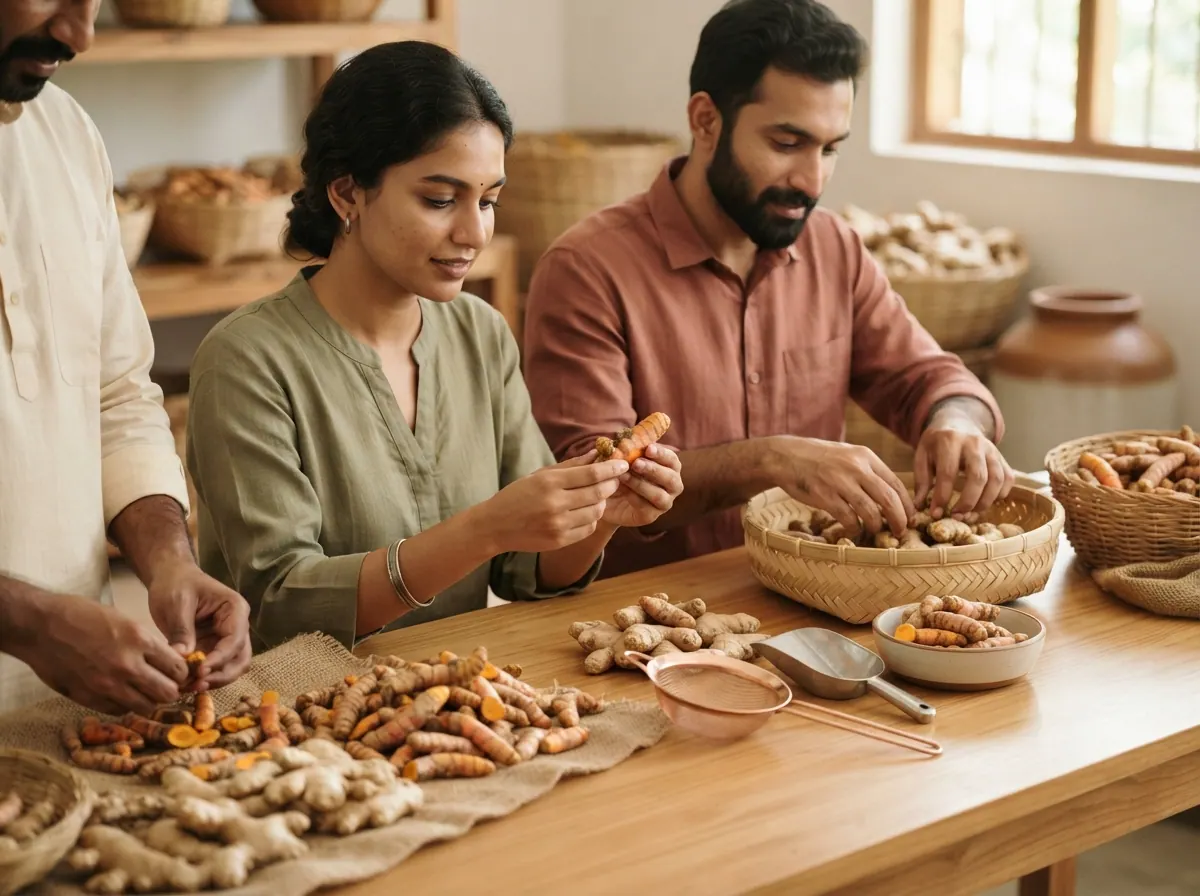
भारत में हल्दी उगाने के लिए हल्की, अच्छी निकासी वाली मिट्टी, अच्छे बीज कंद, लगातार पानी और, ज़मीन अपनी हो तो, क्योरिंग समेत एक एकड़ के लिए करीब ₹1.2–2 लाख चाहिए। फ़सल में सात से नौ महीने लगते हैं, और profit ज़्यादातर दो बातों पर निर्भर है: कितने बीज कंद सड़ने से बचे, और जिस महीने आप बेचें उस महीने सूखी हल्दी का भाव क्या है।
यहां के सारे आंकड़े अंदाज़े हैं। पैसा लगाने से पहले अपने इलाके के दाम देख लें।
कितना खर्च आएगा?
एक एकड़ हल्दी, ऊंची क्यारियों पर ड्रिप या नाली से सिंचाई के साथ:
| चीज़ | एक एकड़ |
|---|---|
| खेत की तैयारी, ऊंची क्यारियां, गोबर की खाद | ₹15,000–30,000 |
| बीज कंद (करीब 800–1,000 किलो) | ₹35,000–60,000 |
| फ़सल भर की खाद | ₹15,000–30,000 |
| स्प्रे और बीज उपचार | ₹5,000–12,000 |
| रोपाई, निराई और मिट्टी चढ़ाने की मज़दूरी | ₹20,000–35,000 |
| पानी और बिजली या ड्रिप | ₹5,000–20,000 |
| खुदाई, उबालना और सुखाना | ₹20,000–35,000 |
| बोरे, ढुलाई, पॉलिश | ₹5,000–10,000 |
| एक एकड़ का कुल | करीब ₹1.2–2 लाख |
अदरक का बजट भी इतना ही रहता है, पर बीज अदरक प्रति किलो महंगा हो सकता है। छोटा शुरू करना हो तो आधा एकड़ करें और बाकी आधा दूसरी फ़सल के लिए रखें।
क्योरिंग के लिए उबालने और सुखाने की जगह चाहिए। कई किसान उबालने का सेट किराये पर लेते हैं या ताज़े कंद प्रोसेसर को बेचते हैं, जिससे खर्च और कमाई दोनों बदलते हैं।
क्या उगाएं और क्या बेचें?
- हल्दी: ताज़ी प्रोसेसर को बिकती है, या उबालकर, सुखाकर सूखी उंगलियों और गांठों के रूप में। सलेम, इरोड, सांगली, निज़ामाबाद और कुछ और जगहें हल्दी के जाने-माने बाज़ार हैं, और आपका खरीदार बताएगा कि उसे कौन-सी किस्म पसंद है।
- अदरक: ताज़ा सब्ज़ी बाज़ार में, या सूखा सोंठ बनाकर। अदरक को सड़न से बचाने में ज़्यादा देखभाल चाहिए।
- बीज कंद: कुछ किसान फ़सल का हिस्सा दूसरों को बीज के रूप में बेचते हैं, अगर उनके पौधे साफ़ और स्वस्थ हों।
- सूखी उंगलियां या पाउडर: पाउडर बेचना अलग बिज़नेस है जिसका अपना लाइसेंस है, इसलिए सूखी या ताज़ी हल्दी से शुरू करें।
कितनी कमाई हो सकती है?
अपनी ज़मीन पर एक एकड़ हल्दी, रोपाई से सूखी बिक्री तक।
आमदनी
- ताज़ी पैदावार: करीब 9,000 किलो
- उबालने और सुखाने के बाद सूखी हल्दी: करीब पांचवां हिस्सा, यानी करीब 1,800 किलो
- भाव: करीब ₹100 किलो (साल-दर-साल इससे बहुत ऊपर या नीचे जा सकता है)
- 1,800 × ₹100 = ₹1,80,000
खर्च
- खेत की तैयारी और खाद = ₹20,000
- बीज: 900 किलो × ₹45 = ₹40,500
- उर्वरक = ₹20,000
- स्प्रे और बीज उपचार = ₹8,000
- रोपाई, निराई और मिट्टी चढ़ाने की मज़दूरी = ₹25,000
- पानी और बिजली = ₹8,000
- खुदाई, उबालना और सुखाना = ₹25,000
- बोरे और ढुलाई = ₹6,500
- कुल = ₹1,53,000
बचत: ₹1,80,000 − ₹1,53,000 = करीब आठ महीने में फ़सल का करीब ₹27,000। ₹130 किलो पर आमदनी ₹2,34,000 होती है और ₹81,000 बचते हैं। ₹70 पर नुकसान होगा। अदरक अच्छे सब्ज़ी सीज़न में ज़्यादा दे सकता है, पर बीज सड़ जाए तो नुकसान भी ज़्यादा होता है।
कुछ किसान सूखी हल्दी गोदाम में रखकर बेहतर भाव का इंतज़ार करते हैं। इसके लिए इंतज़ार करने लायक पैसा और सूखा, चूहे-रहित कमरा चाहिए।
शुरू करने से पहले क्या चाहिए?
- हल्की, अच्छी निकासी वाली मिट्टी। पानी भरे खेत में कंद सड़ते हैं। गीले इलाकों में ऊंची क्यारियां काम आती हैं।
- स्वस्थ बीज। भरोसे के किसान या बीज सप्लायर से लें। किस्म का नाम पूछें और उंगलियों पर सड़न या दाग देखें।
- खरीदार या व्यापारी। रोपाई से पहले मंडी के व्यापारी या प्रोसेसर से बात करें। पूछें कि कौन-सी किस्म, कैसा रंग और कितनी नमी चाहिए।
- उबालने और सुखाने की जगह। खुदाई के जल्दी बाद हल्दी उबालनी पड़ती है और साफ़ सतह पर अच्छी तरह सुखानी पड़ती है।
- फ़सल चक्र। हल्दी या अदरक एक ही खेत में साल-दर-साल न लगाएं। बीमारी बढ़ती है।
कदम-दर-कदम
- दो हल्दी के खेत और एक व्यापारी का यार्ड देखें। व्यापारी से पूछें कि साफ़ सूखे माल और नम माल का क्या भाव देते हैं।
- मिट्टी और पानी की जांच कराएं, और local बागवानी कार्यालय या कृषि विज्ञान केंद्र से पूछें कि आपके इलाके में कौन-सी किस्म सही है।
- खाद के साथ ऊंची क्यारियां बनाएं और निकासी की नालियां खुली रखें।
- बीज कंद का उपचार जानकार की सलाह से करें, और सही गहराई और दूरी पर लगाएं।
- हो सके तो मल्चिंग करें, इससे पहले महीनों में नमी टिकती है और खरपतवार कम होते हैं।
- निराई, मिट्टी चढ़ाना और खाद चरणों में दें, और गीले मौसम में पत्ती के धब्बे और कंद की सड़न पर नज़र रखें।
- पत्ते सूखने पर खोदें, उबालें, ध्यान से सुखाएं, और बेचें या रखें। बोरे में भरने से पहले खरीदार की नमी की सीमा जान लें।
कौन-से लाइसेंस लगते हैं?
फ़सल में खुद कागज़ कम हैं:
- ज़मीन और पानी। बोरवेल या बिजली कनेक्शन के लिए इजाज़त लग सकती है। local दफ़्तर से पूछें।
- मसाले और बोर्ड। मसाला बोर्ड और बागवानी विभाग मसाला उगाने वालों के लिए कार्यक्रम चलाते हैं। नियम और फ़ायदे बदलते रहते हैं, इसलिए अपने ज़िले के बागवानी कार्यालय से पूछें कि अभी क्या खुला है।
- कीटनाशक। लाइसेंसी दुकान से लें और खुदाई से पहले इंतज़ार वाले दिन मानें।
- पाउडर या पैक मसाला बेचने के लिए food licence और साफ़, लेबल वाली पैकिंग चाहिए। शुरू करने से पहले लाइसेंस दफ़्तर से पूछें।
- टैक्स। आपकी बिक्री पर टैक्स कैसे लगेगा, यह CA से पूछें।
क्या गलत हो सकता है?
- भारी बारिश के बाद बीज सड़ना। खराब निकासी से फ़सल का बड़ा हिस्सा मर जाता है, और अदरक सबसे ज़्यादा मार खाता है।
- खराब बीज। सस्ता, पुराना या संक्रमित बीज पतली फ़सल और कमज़ोर पैदावार देता है।
- पत्ती के धब्बे और कंद की सड़न। खेत घना या गीला हो तो नमी वाले मौसम में बीमारी तेज़ी से फैलती है।
- कम उबली या नम सुखाई हल्दी। उसमें फफूंद लगती है या रंग घटता है, और खरीदार भाव काट देते हैं।
- कटाई पर भाव गिरना। सबकी फ़सल एक साथ निकले तो भाव गिरता है। माल रोकने के लिए पैसा और सूखा गोदाम चाहिए।
- हर साल वही खेत। बीमारी और कमज़ोर पैदावार पीछे लगी रहती है।
ये हालात आपके सामने आएँगे
आप क्या करेंगे? हर फ़ैसले की एक क़ीमत है।
शुरुआत
A seller offers turmeric seed rhizomes at a low rate. Some fingers have dark marks.
- Buy from a trusted farmer: Costs more, clean seed
- Take the cheap seed: Saves money, rot risk
An experienced neighbour says to treat the rhizomes. It takes a day and a small cost.
- Treat the seed: Small cost, fewer rots
- Plant them straight: Saves a day, more rot risk
Raised beds cost labour but drain well. Flat planting is quicker and cheaper.
- Make raised beds: Labour cost, less rot
- Plant flat: Cheap, waterlogging risk
Ginger can pay more in a good year, but it rots easily. Turmeric is hardier but needs curing.
- Plant turmeric: Hardier, curing needed
- Plant ginger: Higher seed cost, rot risk
Your best plot grew ginger last year. A fresh field needs rent and more work.
- Rent a fresh plot: Extra rent, cleaner soil
- Use the same plot: No rent, disease risk
Dry leaves for mulch cost money and labour but keep moisture and cut weeds.
- Mulch every bed: Costly, fewer weeds
- Skip mulching: Saves cost, more weeding
A trader in the nearest mandi asks you to come and see what quality they want. It is half a day's trip.
- Visit the trader: Small cost, clear standards
- Plant and sell later: No trip, unknown quality
पहला महीना
A month in, a third of the beds show no shoots. Waterlogging or rot may be the cause.
- Dig a sample, replant gaps: Seed and labour cost
- Wait another two weeks: Free, bare patches may stay
Weeds are up faster than the shoots. Hand weeding takes many workers for several days.
- Hire a full weeding crew: Labour cost, strong start
- Weed with family only: Cheaper, slow, uneven
Water is standing between beds. Drainage channels need digging while it is still raining.
- Dig channels now: Costs labour, saves beds
- Wait for the rain to stop: Free, rhizomes may rot
You see rolled leaves and tiny holes in shoots. Spraying costs money but waiting can hurt yield.
- Ask the plant doctor, spray: Fee and spray, saves yield
- Ignore for now: Free, damage may grow
The shop asks more for the second dose. Skipping it lowers the size of rhizomes.
- Buy the full dose: Costly, bigger rhizomes
- Give a smaller dose: Cheaper, smaller rhizomes
रोज़ का काम
Plants in one corner turn yellow and fall. The rhizomes underneath look soft and smell bad.
- Remove and treat that area: Labour, protects the rest
- Ignore until harvest: Free, rot spreads
Brown spots are spreading in damp weather. Spraying often costs money and time.
- Follow a spray schedule: Costly, protects yield
- Spray only once: Cheap, spots return
Rain has stopped for weeks and the borewell is slow. Rhizomes are filling and need water.
- Buy tanker water: Costly, steady filling
- Cut watering: Free, smaller rhizomes
A hired boiling set charges per quintal. Buying your own pan and firewood setup costs more upfront.
- Hire the boiling set: Pay per lot, no setup
- Build your own boiler: Setup cost, cheaper later
A processor offers a good rate for fresh turmeric today. Curing takes weeks and shrinks the weight a lot.
- Sell fresh now: Quick cash, lower total
- Boil and dry it: Labour, higher price later
Boiled turmeric is drying on the ground and clouds are building. A tarpaulin helps but costs money.
- Buy tarpaulins to cover: Costs now, dry quality
- Cover with old sacks: Cheap, risk of damp
A buyer pays more for polished, bright turmeric. Polishing is slow and loses some weight.
- Polish the lot: Labour and loss, better rate
- Sell unpolished: No effort, lower rate
Leaves have dried and it is time to dig. The crew asks more per day since every farm digs now.
- Pay the higher rate: Costly, dug on time
- Wait for a cheaper crew: Saves money, rhizomes sit
A spice company offers seed and a fixed buy-back rate if you grow their variety to their rules.
- Sign the buy-back deal: Fixed rate, their rules
- Grow freely, sell open: Open price, no guarantee
जब मुश्किल आए
The dry turmeric rate drops in the mandi. You have a dry store, but bills are due.
- Sell what pays your bills: Cash now, rest held
- Hold everything for months: Waiting, price may stay low
Rats have chewed a few bags of dried turmeric. You are holding stock for a better rate.
- Repair store, use traps: Costs now, saves stock
- Sell it all quickly: No repair, maybe lower rate
The trader's moisture meter says your turmeric is above the limit. They offer a cut price or send it back.
- Take it back and re-dry: Extra labour, better price
- Accept the cut price: Lose money, finish today
A dealer says a little colour makes pale turmeric look bright and fetch more. It is not safe food.
- Refuse and sell as it is: Lower price, clean name
- Polish by hand, no colour: Small gain, safe
A buyer has taken your whole lot and offers payment in parts over two months.
- Insist on cash: Fair, may lose the sale
- Accept instalments: Sale made, money waits
बढ़ाना
Other farmers want your clean rhizomes as seed. Seed sells well but you must store it carefully till planting.
- Keep seed for sale: Store cost, better price
- Sell it all as spice: Simple, normal price
A neighbour offers fresh land. You can plant more, but you will need seed, labour and curing capacity.
- Rent and plant it: Big spend, more to sell
- Improve your own acre: Smaller spend, steadier yield
A pulveriser unit could turn your turmeric into powder at a higher price. It needs a food licence and clean packing.
- Set up with a food licence: Big cost, better margin
- Keep selling dry fingers: No licence, normal price
The district horticulture office mentions help for spice growers. It needs papers and nothing is promised.
- Apply with a CA's help: Fees, cleaner records
- Skip the paperwork: No fees, no support
क्या यह आपके लिए सही है?
हल्दी आपके लिए ठीक है अगर हल्की, अच्छी निकासी वाली ज़मीन है, करीब आठ महीने रुक सकते हैं, और कम भाव वाला साल झेल सकते हैं। ठीक नहीं है अगर फ़सल का फेल होना बर्दाश्त नहीं कर सकते या क्योरिंग के लिए सूखी जगह नहीं है।
एक अच्छा test: एक सीज़न के लिए स्वस्थ बीज से आधा एकड़ उगाएं, ध्यान से क्योर करें, और पहले पूछे गए व्यापारी को बेचें। उसके बाद ज़्यादा ज़मीन का फ़ैसला करें।