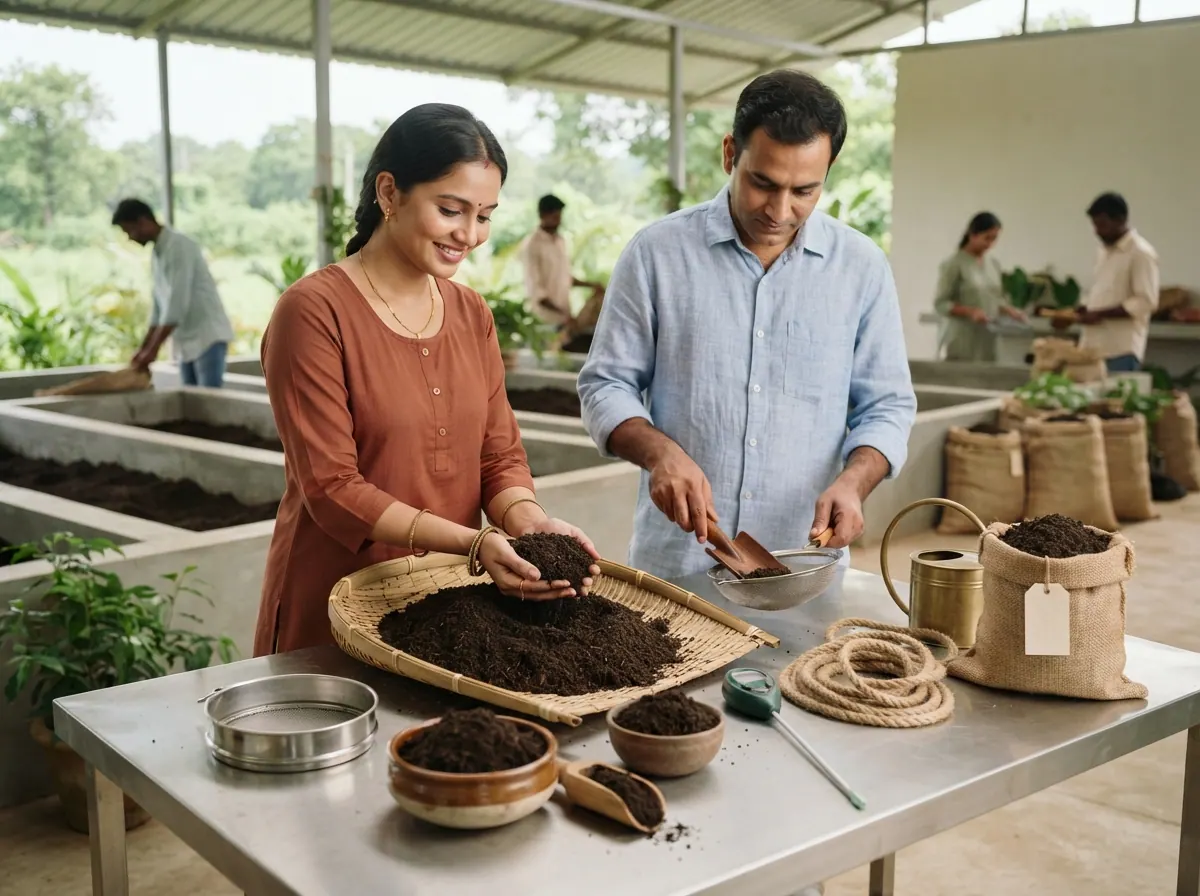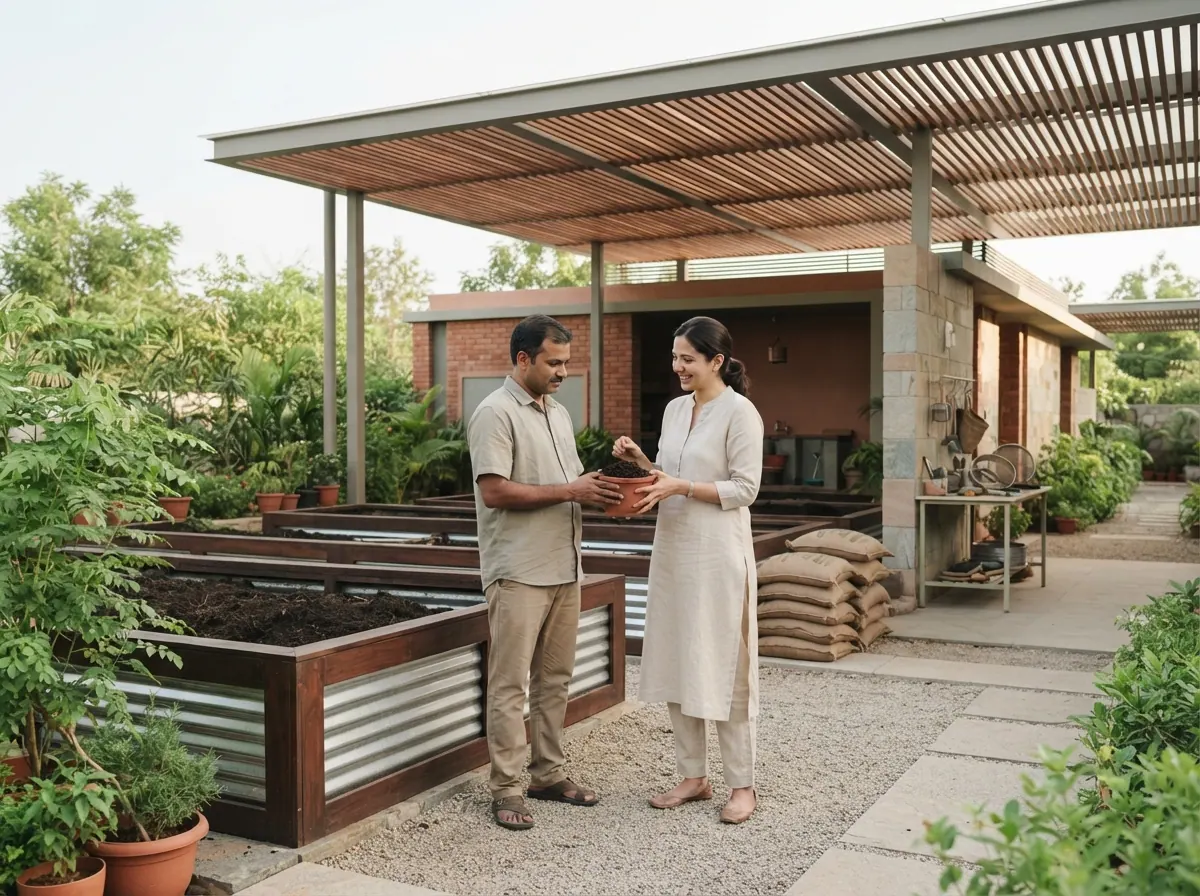
भारत में वर्मीकम्पोस्ट बिज़नेस शुरू करने के लिए छायादार बेड, गाय या भैंस के गोबर की लगातार सप्लाई, कम्पोस्ट वाले केंचुए और 10 बेड के लिए लगभग ₹30,000–80,000 या 40 बेड के लिए ₹1.5–3 लाख चाहिए। यह खर्च उस ज़मीन पर है जो आपके पास पहले से है। कमाई तैयार खाद किलो या टन के हिसाब से बेचकर होती है, और पहली बिक्री बेड भरने के लगभग दो महीने बाद आती है।
यहाँ सारे आँकड़े अंदाज़े हैं। खर्च करने से पहले अपने इलाक़े के दाम ज़रूर देख लें।
इसकी लागत कितनी है?
| चीज़ | 10 बेड | 40 बेड |
|---|---|---|
| छत और शेड नेट वाला शेड (खुले किनारे, कम खर्च) | ₹10,000–30,000 | ₹60,000–1.2 लाख |
| बेड (ईंट या सीमेंट टैंक, या HDPE बेड) | ₹10,000–25,000 | ₹40,000–90,000 |
| शुरुआती केंचुए | ₹3,000–8,000 | ₹10,000–25,000 |
| पानी की लाइन, स्प्रिंकलर या झारा | ₹2,000–5,000 | ₹8,000–15,000 |
| पहली बार का गोबर और सूखे पत्ते | ₹3,000–8,000 | ₹15,000–30,000 |
| छलनी, औज़ार, बोरे, तराज़ू | ₹3,000–6,000 | ₹15,000–30,000 |
| कुल | लगभग ₹30,000–80,000 | लगभग ₹1.5–3 लाख |
लगभग 10 फ़ीट × 3 फ़ीट और 1.5 फ़ीट गहरे बेड आम हैं। छत के नीचे गड्ढा सस्ता पड़ता है, पर खाद निकालना मुश्किल होता है और नीचे पानी जमा होता है। थोड़ा उठा हुआ और नाली वाला बेड संभालना आसान है।
कौन-से केंचुए और कौन-सा खाना?
- Eisenia fetida (रेड विगलर): आम पसंद। यह तापमान का अच्छा फ़र्क़ झेल लेता है और तेज़ खाता है।
- Eudrilus eugeniae (अफ़्रीकन नाइटक्रॉलर): बड़ा और तेज़ बढ़ता है, पर ठंड कम सहता है।
- खाना: पुराना गाय या भैंस का गोबर मुख्य चीज़ है। ताज़े गोबर को लगभग दो हफ़्ते सुखाकर ठंडा होने दें, क्योंकि ताज़ा गोबर गरम होकर केंचुए मार देता है। इसमें सूखे पत्ते और फ़सल का कचरा मिलाएँ।
- ये न डालें: ज़्यादा मात्रा में प्याज़ के छिलके, नींबू-संतरे का कचरा, नमक, तेल, पका खाना, मांस और कीटनाशक लगी चीज़ें।
कमाई कितनी हो सकती है?
यह 40 बेड की यूनिट का हिसाब है जो दूसरे साल में ठीक चल रही है।
साल भर में बनी खाद
- हर बेड में एक बैच में लगभग 640 किलो पुराना गोबर मिश्रण आता है और लगभग 300 किलो तैयार खाद मिलती है।
- 40 बेड × 300 किलो = एक राउंड में 12,000 किलो
- साल में लगभग 5 राउंड, क्योंकि सबसे गरम और सबसे ठंडे हफ़्ते धीमे रहते हैं = साल में 60,000 किलो
- औसतन लगभग ₹10 किलो के भाव से (खुली थोक सस्ती, छोटे पैकेट महँगे) = साल का ₹6,00,000
- ₹6,00,000 ÷ 12 = लगभग ₹50,000 महीना
हर महीने का खर्च
- गोबर: 40 बेड × 640 किलो × 5 राउंड = साल में 128 टन। लगभग ₹1,000 टन के भाव से = साल का ₹1,28,000 = लगभग ₹10,700 महीना
- एक मज़दूर = ₹10,000
- बोरे, पैकिंग और भाड़ा = ₹5,000
- पानी, बिजली और शेड की मरम्मत = ₹2,000
- नए केंचुए और छोटी चीज़ें = ₹1,000
- कुल = ₹28,700
बचत: ₹50,000 − ₹28,700 = लगभग ₹21,300 महीना।
अगर आपके अपने पशु और अपना गोबर है तो नकद खर्च घट जाता है, पर गोबर को बाज़ार भाव पर गिनें, क्योंकि आप उसे बेच भी सकते हैं। अगर परिवार काम करता है तो ₹10,000 वापस जोड़ लें। अगर आप ज़्यादातर खुली खाद पास के किसानों को ₹6 किलो में बेचते हैं, तो यही यूनिट खर्च से पहले लगभग ₹30,000 महीना कमाती है, जिसमें बचत बहुत कम रहती है।
शुरू करने से पहले क्या चाहिए?
- पास में गोबर का स्रोत। भाड़ा मुनाफ़ा खा सकता है। 10 या ज़्यादा पशुओं वाली डेयरी पास में हो तो सबसे अच्छा।
- छाया और पानी की निकासी। केंचुए सीधी धूप और रुके हुए पानी में मर जाते हैं।
- साल भर पानी। बेड निचोड़े हुए स्पंज जितना नम रहना चाहिए।
- पहले बैच से पहले खरीदार। जब पहले बेड पक रहे हों, तभी किसानों, नर्सरी और खाद की दुकानों से बात कर लें।
कदम-दर-कदम
- एक चालू यूनिट देखें, पूरा दिन। पूछें कि कितने बेड हैं, किस भाव पर बेचते हैं और पिछली गर्मी में कितने केंचुए मरे।
- शेड और बेड बनाएँ हल्की ढलान के साथ, ताकि फ़ालतू पानी निकल जाए।
- गोबर को पहले सड़ाएँ, लगभग दो हफ़्ते, पलटते हुए और गर्मी निकल जाने दें।
- लगभग 6 इंच मोटा गोबर बिछाकर केंचुए डालें। उन्हें दबाएँ नहीं। ऊपर सूखे पत्ते या बोरा ढकें।
- बेड को नम रखें, गीला नहीं। हल्का पानी छिड़कें और हाथ डालकर गर्मी देखें।
- इंतज़ार करें और निकालें। जब ऊपर की परत काली और भुरभुरी हो जाए और खाना ख़त्म दिखे, कुछ दिन पानी बंद करें। केंचुए नीचे चले जाते हैं और आप ऊपर की खाद खुरचकर सुखाते और छानते हैं।
- छानें, छाया में सुखाएँ और पैक करें। तौल सही रखें, क्योंकि किसान कम वज़न तुरंत पकड़ लेते हैं।
- केंचुए रखें। छलनी में बचे केंचुए नए बेड में वापस डालें। वे बढ़ते हैं, इसलिए समय के साथ केंचुओं का खर्च घटता है।
कौन-से लाइसेंस लगते हैं?
- स्थानीय अनुमति। पंचायत या नगरपालिका से पूछें, ख़ासकर अगर घर पास हों, क्योंकि गोबर की बदबू और मक्खियों की शिकायतें आती हैं।
- ब्रांड के नाम से पैकेट वाली खाद बेचना। वज़न और नाम से बिकने वाली खाद के नियम राज्यों में अलग हैं और लेबल के लिए जाँच ज़रूरी हो सकती है। बोरे छपवाने से पहले ज़िले के कृषि दफ़्तर से पूछ लें।
- GST और रजिस्ट्रेशन। बिक्री बढ़ने पर कब रजिस्टर करना है, यह CA से पूछें।
- लोन और योजनाएँ। कुछ बैंकों और राज्य के कृषि विभागों ने जैविक इनपुट को मदद दी है। नियम और रक़म बदलते रहते हैं, इसलिए ज़िला दफ़्तर से पूछें कि अभी क्या चालू है।
क्या गड़बड़ हो सकती है?
- बेड में ताज़ा गोबर। यह गरम होता है और केंचुए कुछ ही दिन में भाग जाते हैं या मर जाते हैं। गोबर हमेशा पहले पुराना करें।
- बहुत गीला या बहुत सूखा। गीला बेड खट्टा होकर बदबू देता है। सूखा बेड केंचुओं का खाना बंद कर देता है।
- चींटी, चूहे और चिड़िया। चींटियाँ सूखे बेड पसंद करती हैं, और चूहे-चिड़िया पूरा बेड साफ़ कर सकते हैं। जगह साफ़ और ढकी रखें।
- गर्मी। छाया, गीला बोरा और रात में पानी केंचुओं को बचाते हैं।
- कच्चे गोबर को खाद बताकर बेचना। जो ग्राहक बोरे में गोबर देखेगा, वापस नहीं आएगा।
- खरीदार नहीं। खाद से भरा शेड और बेचने वाला कोई नहीं, यह आम असफलता है। किसानों को पहले से जोड़ें।
ये हालात आपके सामने आएँगे
आप क्या करेंगे? हर फ़ैसले की एक क़ीमत है।
शुरुआत
A dairy owner will give you a trolley of fresh dung for nothing if you take it now. Your beds are ready, but the dung is still hot.
- Take it and age it: Needs space, ready in two weeks
- Skip it, buy aged dung: Costs more, safe for worms
A roadside seller offers worms very cheap. A known unit charges double and gives a written species name.
- Buy from the known unit: Costly, right worms
- Buy from the roadside seller: Cheap, unknown worms
The mason quotes cement tanks that last for years. HDPE bed sheets are quick to set up but wear out in the sun.
- Build cement beds: Higher cost, lasts long
- Use HDPE bed sheets: Lower cost, replace sooner
Summer is coming and your beds are open to the sun. A proper roof costs money, but a shade net is much cheaper.
- Put up a proper roof: Costly, cooler beds
- Use shade net only: Cheaper, warmer in May
The nearest big dairy that will sell you dung is far. A closer farmer has less dung but charges more per tonne.
- Buy from the far dairy: Cheap dung, heavy transport
- Buy from the close farmer: Dear dung, small supply
The family next to your plot says the dung heaps will bring flies. They have not complained to the panchayat yet.
- Cover heaps, talk to them: Small cost, goodwill
- Carry on as planned: No cost, complaint risk
पहला महीना
Three days after loading, you can feel heat in one bed and worms are climbing the walls.
- Remove dung and cool it: Extra work, saves worms
- Sprinkle more water: Quick, bed turns soggy
Ants have built a nest at one end of a dry bed and are carrying worm eggs away.
- Water trenches around beds: Labour and water, safe
- Use a strong powder: Quick, can harm worms
Crows and mynas are digging the top layer every morning and eating surfacing worms.
- Cover with net and sacks: Cost and daily work
- Scare them with noise: Cheap, only helps a little
Your first beds are ready. Sieving by hand is slow, and a small sieve machine costs a lot for your size.
- Buy a small sieve machine: Costly, saves days
- Hire a helper to sieve: Cheap, slower output
A print shop offers branded 5 kg and 50 kg bags. Plain sacks cost much less, and farmers do not ask for a brand.
- Order printed bags: Costs more, looks serious
- Use plain sacks: Cheap, no brand
रोज़ का काम
After a week of rain, water has leaked in and two beds smell sour. The worms are low in the bed.
- Fix the roof, replace top: Costly, saves the beds
- Mix in dry leaves only: Cheap, slower harvest
A vegetable farmer wants a full tonne at a low loose rate and will pay on delivery.
- Sell the tonne loose: Quick cash, low rate
- Offer 50 kg bags instead: Better price, more packing
A city nursery will take 5 kg packs every week, but wants steady supply and neat packing.
- Supply the nursery weekly: Good price, packing cost
- Keep selling to farmers: Simple, lower price
A regular farmer weighed your 50 kg bags and found them about 3 kg light. The farmer is not angry yet.
- Give extra bags, buy a scale: Costs stock, trust kept
- Weigh again together, refund the gap: Costs stock, honest weight
Your worms have multiplied. Other new growers ask to buy starter worms by the kilo.
- Sell worms to growers: Cash now, some risk of rivals
- Start new beds with them: Costs bed work, more compost
In April the borewell gives water only for two hours a day. Beds need watering every day.
- Buy a water tank, store: Costly, steady water
- Cut watering, cover beds: Cheap, slower worms
Your dairy tells you dung will cost more next month because another grower is bidding for it.
- Pay the higher price: Steady supply, thinner margin
- Mix in crop waste more: Cheaper feed, slower compost
The helper who waters and sieves leaves for a city job. Beds need daily care.
- Hire a new worker, pay more: Costs more, beds stay safe
- Do all the work yourself: No pay, harvest slows
जब मुश्किल आए
Rats have dug into your best bed and eaten the worms from one side.
- Rebuild with a mesh base: Costly, a lasting fix
- Set traps and refill: Cheap, they may return
Temperatures cross 44 degrees and worms are dying in the corner beds. Water is already short.
- Hire a tanker, mist at night: Costly, saves worms
- Cover and wait it out: Cheap, many worms lost
A nursery owner says your compost still has lumps of undigested dung and wants money back.
- Refund and re-sieve: Lose the sale, fix quality
- Offer a discount only: Smaller loss, quality doubt
Worms are dying in a bed filled from a new supplier. The dairy has recently sprayed animals for ticks.
- Discard that batch: Lose dung and work
- Test a small batch before use: Costs a test, safe for crops
An agri-input shop took three loads on credit and keeps saying next week. It is your largest buyer.
- Stop supply until paid: Risk the buyer, protect cash
- Keep supplying on credit: More owed, buyer stays
Neighbours complained and the panchayat sent a notice. You can improve the site or move some beds.
- Fix drainage, cover heaps: Costs money, compliant
- Argue it is farm activity: Free, trouble may grow
बढ़ाना
Your 20 beds are always full and buyers are waiting. A loan could fund 20 more, but dung supply is tight.
- Build 20 more beds: Loan and work, more compost
- Improve what you have: Small spend, steady growth
A gardening group in town wants small neat packs and will pay about double per kilo, but orders are small.
- Start small retail packs: Packing cost, better price
- Stay with farmers: Simple, lower price
A buyer asks for the liquid that drains from the beds. It means tanks, bottles and testing what works.
- Set up vermiwash tanks: Setup cost, extra product
- Skip it for now: No cost, focus on compost
A large orchard asks for a lab report on nutrients before a big order. Testing costs money and the result is unknown.
- Pay for a lab test: Fee, proof for big buyers
- Offer a trial lot instead: Free lot, slower order
A local bank will lend for expansion if you show records. Keeping neat records takes weeks of work.
- Prepare papers, apply: CA fee, interest later
- Grow from own profit: Slower, no debt
क्या यह आपके लिए सही है?
वर्मीकम्पोस्ट आपके लिए ठीक है अगर आपके पास कुछ ज़मीन है, पास में सस्ता गोबर है और धीरज है, क्योंकि कमाई पहले बैच के बाद ही शुरू होती है और बेड बढ़ाने के साथ धीरे-धीरे बढ़ती है। अगर आप बदबू और मक्खियाँ नहीं झेल सकते, या पहले महीने से नियमित आमदनी चाहिए, तो यह कम सही है।
एक अच्छी परीक्षा: 10 बेड से शुरू करें, जो बने सब पास के किसानों को बेचें और अपनी असली लागत प्रति किलो लिख लें। अगर वह लागत आपके बिक्री भाव से काफ़ी नीचे है, तो एक साथ 40 बेड बनाने की जगह कुछ-कुछ बेड बढ़ाएँ।