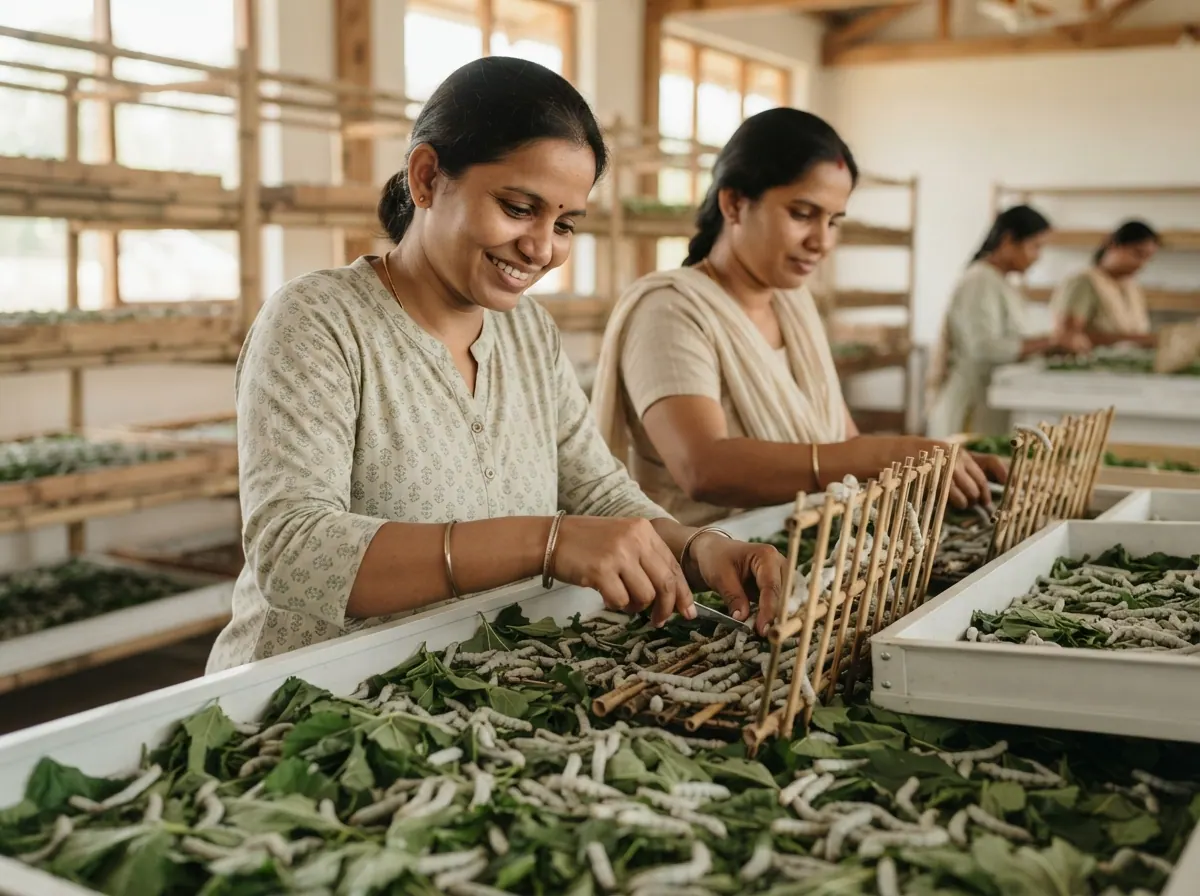
भारत में सेरीकल्चर (रेशम कीट पालन) शुरू करने के लिए शहतूत का बाग़, साफ़ रियरिंग हाउस, किसी भरोसेमंद जगह से रोगमुक्त रेशम के अंडे, पहुँच में कोकून मंडी, और अगर शेड पहले से है तो लगभग ₹1–1.5 लाख, या एक एकड़ शहतूत के साथ नया रियरिंग हाउस हो तो ₹2.5–5 लाख चाहिए। पत्तियों की पहली कटाई लगाने के लगभग छह महीने बाद आती है। चल पड़ने पर एक फ़सल चूजों से कोकून तक लगभग चार हफ़्ते लेती है।
यहाँ सारे आँकड़े अंदाज़े हैं। खर्च करने से पहले अपने इलाक़े के दाम ज़रूर देख लें।
इसकी लागत कितनी है?
| चीज़ | एक एकड़ शहतूत, नया शेड |
|---|---|
| शहतूत की कलमें, रोपाई और खेत की तैयारी | ₹15,000–25,000 |
| रियरिंग हाउस (लगभग 20 × 50 फ़ीट, सादी छत, हवा के रास्ते) | ₹1.5–3 लाख |
| रियरिंग स्टैंड, ट्रे, जाली, पत्ती काटने के औज़ार | ₹30,000–60,000 |
| ड्रिप या दूसरी सिंचाई | ₹30,000–50,000 |
| कीटाणुनाशक और पहली खेप के अंडे | ₹10,000–15,000 |
| पहले कोकून बिकने तक फ़ार्म चलाने का पैसा | ₹20,000–30,000 |
| कुल | लगभग ₹2.5–5 लाख |
अगर आपके पास शेड और कुछ शहतूत पहले से है तो लागत ₹1 लाख तक कम हो सकती है। कई किसान पहले मौजूदा इमारत किराए पर लेकर या बदलकर शुरू करते हैं, और एक-दो अच्छे सीज़न के बाद ही अलग से घर बनाते हैं।
शुरू करने से पहले क्या चाहिए?
- पहले शहतूत। अच्छी तरह बढ़ा, सिंचित बाग़ ही फ़ार्म है। कलमों को पत्ती ठीक से काटने लायक होने में लगभग छह महीने चाहिए।
- सिंचाई। पौधों पर तनाव आए तो शहतूत की पत्ती की गुणवत्ता जल्दी गिरती है।
- हवा के आवागमन वाला रियरिंग हाउस। गरम, नम और ठहरी हवा में रोग फैलता है।
- अंडों का भरोसेमंद स्रोत। अंडे, जिन्हें DFL (रोगमुक्त अंडे) कहते हैं, सरकारी या लाइसेंस वाले ग्रेनेज से आने चाहिए। अनजान जगह के सस्ते अंडे पूरी फ़सल गँवा सकते हैं।
- कोकून मंडी। पता करें कि वह कहाँ है, कब खुलती है और दाम कैसे तय होता है।
- ट्रेनिंग। आपके राज्य का रेशम कार्यालय और केंद्रीय रेशम बोर्ड ट्रेनिंग देते हैं। शुरू करने से पहले जाएँ।
कमाई कितनी हो सकती है?
यह एक एकड़ शहतूत और रियरिंग हाउस का दूसरे साल का हिसाब है, लगभग पाँच फ़सलें।
साल भर में कोकून
- 5 फ़सलें × 150 DFL = साल में 750 DFL
- प्रति DFL लगभग 0.6 किलो कोकून = साल में 450 किलो
- लगभग ₹500 किलो के भाव से = साल का ₹2,25,000
- ₹2,25,000 ÷ 12 = लगभग ₹18,750 महीना
हर महीने का खर्च
- मज़दूरी (खिलाने और तोड़ने में पार्ट-टाइम मदद) = ₹6,000
- खाद और बाग़ का काम = ₹2,500
- अंडे और कीटाणुनाशक = ₹1,500
- बिजली और पानी = ₹1,000
- ढुलाई और मंडी खर्च = ₹1,500
- कुल = ₹12,500
बचत: ₹18,750 − ₹12,500 = लगभग ₹6,250 महीना।
परिवार की मेहनत यहाँ मुख्य चीज़ है। अगर आपका परिवार खिलाने और सफ़ाई का काम करता है और आप किसी को पैसे नहीं देते, तो ₹6,000 वापस जोड़ें और लगभग ₹12,250 महीना बचता है। एक ख़राब खेप से एक महीने की आमदनी जा सकती है, और अच्छी खेप औसत से ज़्यादा देती है, इसलिए असली आँकड़ा बहुत घटता-बढ़ता है।
पालन का चक्र कैसे चलता है?
रेशम के कीड़े लगभग चार हफ़्ते में चरणों में पाले जाते हैं:
- चॉकी पालन (पहला चरण)। नए निकले कीड़े नाज़ुक होते हैं और बारीक, कोमल पत्ती और सावधानी से गर्माहट माँगते हैं। कई किसान यह चरण खुद करने की जगह विशेष चॉकी केंद्र से चॉकी कीड़े ख़रीदते हैं।
- बड़े कीड़ों का पालन। आख़िरी दिनों में कीड़े बहुत सारी पत्ती खाते हैं। ताज़ा शहतूत दिन में कई बार देना पड़ता है।
- कोकून बुनना। पूरे बढ़े कीड़ों को माउंटिंग फ़्रेम पर रखा जाता है जहाँ वे कोकून बुनते हैं।
- कटाई और बिक्री। कोकून फ़्रेम से उतारकर साफ़ किए जाते हैं और जल्दी मंडी पहुँचाए जाते हैं, क्योंकि अंदर का पतंगा निकलकर रेशम ख़राब कर सकता है।
कदम-दर-कदम
- अपने ज़िला रेशम कार्यालय और दो चालू फ़ार्म देखें। पूछें कि आपके इलाक़े में कौन-सी शहतूत किस्म और रेशम कीट नस्ल ठीक है, और आप कौन-सी कोकून मंडी इस्तेमाल करेंगे।
- शहतूत लगाएँ, अच्छी कलमों और सिंचाई के साथ, और उसे छह महीने दें।
- रियरिंग हाउस बनाएँ या बदलें, खिड़कियों, हवा के रास्तों और स्टैंड की जगह के साथ। हर फ़सल से पहले उसे कीटाणुरहित करने की योजना रखें।
- हर खेप से पहले कमरा और उपकरण कीटाणुरहित करें, जैसा कार्यालय सलाह दे।
- अंडे या चॉकी कीड़े तय तारीख़ पर मँगाएँ। उसी तारीख़ के हिसाब से पत्ती की सप्लाई तय करें।
- समय पर ताज़ी, साफ़ पत्ती खिलाएँ। रोज़ पुरानी पत्ती और बीट हटाएँ।
- पूरे बढ़े कीड़ों को फ़्रेम पर रखें जब वे खाना बंद करके बुनने की जगह खोजने लगें।
- कोकून तोड़ें और मंडी में बेचें। हर खेप का रिकॉर्ड रखें: DFL, इस्तेमाल पत्ती, वज़न, दाम।
कौन-से लाइसेंस लगते हैं?
रेशम कीट पालन खेती की गतिविधि है और आम तौर पर कोई ख़ास लाइसेंस नहीं लगता। अपने स्थानीय दफ़्तरों से पूछें:
- रेशम विभाग में रजिस्ट्रेशन। कई राज्य पालकों को रजिस्टर करते हैं, और कुछ मदद सिर्फ़ रजिस्टर्ड किसानों को मिलती है।
- सहायता: केंद्रीय रेशम बोर्ड और राज्यों के रेशम विभागों ने शहतूत रोपण, रियरिंग हाउस और उपकरणों में मदद और ट्रेनिंग दी है। योजनाएँ और रक़म बदलती रहती हैं, इसलिए ज़िला कार्यालय से पूछें कि अभी क्या चालू है।
- लोन: बैंकों ने खेती से जुड़े कामों के लिए लोन दिए हैं। अपने बैंक से पूछें कि कौन-से काग़ज़ चाहिए।
- कोकून मंडी के नियम: तौल, गुणवत्ता ग्रेडिंग और भुगतान मंडी के अपने नियमों से चलते हैं।
- टैक्स: अपनी बिक्री पर टैक्स कैसे लगेगा, CA से पूछें।
क्या गड़बड़ हो सकती है?
- खेप में रोग। कमरा गंदा, नम या कम हवादार हो तो फ़्लैचरी और दूसरे रोग पूरी फ़सल साफ़ कर सकते हैं। हर फ़सल से पहले सख़्त सफ़ाई और कीटाणुशोधन सबसे अच्छी सुरक्षा है।
- पड़ोसी के खेत का कीटनाशक। रसायन छिड़की शहतूत की पत्ती, या पास के खेत से उड़ता छिड़काव, कुछ घंटों में कीड़े मार सकता है। शुरू करने से पहले पड़ोसियों से बात करें।
- आख़िर में पत्ती कम पड़ना। कीड़े ज़्यादातर खाना आख़िरी दिनों में खाते हैं। खेप के हिसाब से छोटा बाग़ सबसे बुरे समय पर कम पड़ जाता है।
- गर्मी और नमी। बहुत गरम या बहुत नम हफ़्ते खेप बिगाड़ सकते हैं।
- उज़ी मक्खी। यह मक्खी कीड़ों पर अंडे देती है और कोकून की गुणवत्ता घटा सकती है। खिड़कियों पर जाली मदद करती है।
- देर से बेचना। बहुत देर रखे कोकून की गुणवत्ता गिर जाती है और कम दाम मिलता है।
ये हालात आपके सामने आएँगे
आप क्या करेंगे? हर फ़ैसले की एक क़ीमत है।
शुरुआत
You have savings for either the rearing house or the mulberry garden. Leaf takes about six months to be ready.
- Plant mulberry first: Wait for leaf, safer order
- Build the shed first: Costly, idle for months
A neighbour offers cheap mulberry cuttings from an old garden. The sericulture farm sells improved variety cuttings at a higher rate.
- Buy improved variety: Costs more, better leaf
- Take the neighbour's cuttings: Cheap, uncertain leaf yield
You have an old shed. It can be fixed up, or you can build a proper rearing house with vents and a smooth floor.
- Build a proper rearing house: Costly, easier to disinfect
- Repair the old shed: Cheaper, disease risk
The sericulture office runs a short training for new rearers. It costs a few days and a small fee.
- Attend the training: Time and fee, fewer mistakes
- Learn from a neighbour: No fee, patchy knowledge
Your neighbour sprays cotton every week. Spray drifts over your young mulberry and your future shed.
- Talk, plant a hedge: Small cost, a safer garden
- Ignore it and go ahead: No cost, a big risk
Mulberry gives better leaf with steady moisture. Drip costs more now, and flooding wastes water in summer.
- Install drip: Costly, steady leaf
- Flood irrigate: Cheap, uneven leaf
पहला महीना
A private dealer offers cheaper eggs without papers. The government grainage charges more and gives a batch certificate.
- Buy certified eggs: Costs more, disease-free
- Buy from the dealer: Cheaper, no paperwork
The first stage is delicate. A chawki centre sells ready young worms, but doing it yourself is cheaper.
- Buy chawki worms: Pay more, stronger start
- Rear chawki yourself: Cheaper, high first-timer risk
The shed looks clean after sweeping. The guidebook says to disinfect walls, floor and trays before every batch.
- Disinfect everything: Time and cost, safer batch
- Sweep and wash only: Quick, hidden disease risk
Your young garden has few tender leaves. A neighbour sells fresh tender leaf at a price per bundle.
- Buy tender leaf: Cost per day, better growth
- Feed the old leaf: Free, slow worms
Afternoon heat is crossing 33 degrees in the shed. Worms are eating less and crawling to the edges.
- Wet the roof and walls: Water cost, cooler room
- Keep windows shut: Free, hotter and damp
रोज़ का काम
In the last three days the worms eat more than your garden gives. You are short by a day's feed.
- Buy leaf from a neighbour: Costly, healthy cocoons
- Thin out the worms: Cuts yield, cheaper
Many worms have stopped eating and are wandering. The mounting frames are stacked in the corner, and you are short of labour.
- Hire extra hands for mounting: Wages, good cocoons
- Mount slowly alone: Free, some spoilt cocoons
The market price rose this week after a dip last week. Your cocoons are ready now, and waiting loses quality.
- Sell in today's market: Fair price, sure sale
- Hold for a better price: Moth may emerge, loss
A reeler wants to buy cocoons at your farm at a fixed price slightly under market. It saves transport.
- Sell to the reeler: Less trouble, slightly less money
- Go to the market: Transport cost, open price
The garden is giving less leaf than before. Pruning and manuring takes weeks of lower leaf.
- Prune and manure now: Cost and a pause, better leaf
- Skip it this season: No cost, weaker leaf
Uzi flies are around the shed at feeding time. Nets cost money, but some cocoons already show marks.
- Fit fine nets on windows: Cost now, cleaner cocoons
- Wait and watch: No cost, quality may drop
May heat makes batches risky. Farmers who skip it lose a month of income, but those who rear often lose cocoons.
- Rest the shed in May: No income, safer worms
- Rear with cooling in place: Water and fans cost, income kept
A sericulture field officer visits and asks for batch records. The officer may help you apply for support if records are neat.
- Show neat records: Good name, support chance
- Ask officer to return next week: Delay, weak impression
जब मुश्किल आए
Many worms are dull, soft and dying in the third week. Diseased worms spread it to healthy ones.
- Remove, burn, disinfect fully: Lose the batch, protect next
- Isolate and call the officer: Advice, partial loss
The neighbour sprayed in the evening wind. By morning the worms are twitching and dying.
- Clean fully, restart later: Big loss, safe restart
- Talk to the neighbour and officer: Time and a settlement chance
A heat wave and a long power cut stopped the fan. The shed is hot and still on the day worms need most air.
- Run a generator, wet the roof: Costly, saves the batch
- Open doors and hope: Free, risk heavy loss
The market grader marks many cocoons as double or stained and offers a much lower rate.
- Accept and fix your process: Loss now, better next
- Argue for a regrade: Time, may not change
Water has dropped and mulberry leaves are curling. Your next batch is a week away.
- Buy tanker water: Costly, keeps the leaf
- Skip the next batch: No cost, lose a crop
The person who feeds leaf and cleans trays quits in the second week of a batch.
- Hire a replacement at higher pay: Costs more, batch safe
- Family does extra shifts: No cost, tired and slower
बढ़ाना
Your first acre is fully used. A neighbour will lease another acre, but it needs irrigation and six months before leaf.
- Lease and plant mulberry: Heavy cost, bigger batches later
- Improve your first acre: Small spend, steady gain
Other farmers in the village buy chawki worms from far away. A small chawki room could serve them and earn fees.
- Set up a chawki room: Setup and skill needed, extra income
- Stay with cocoons: Simple, one income
Hand chopping takes hours each day. A leaf chopper and light stands save labour and give cleaner rearing.
- Buy equipment: Costly, saves labour
- Keep chopping by hand: No spend, more labour
The office mentions support for rearing houses and equipment. It needs a layout, bills and records, and nothing is promised.
- Apply with full records: Time and fees, a chance
- Skip it, use own funds: No paperwork, slower growth
A reeler friend says reeling yarn pays more than cocoons. It needs machines, skilled labour and a yarn buyer.
- Start a small reeling unit: Big spend, new skills
- Stay a cocoon grower: Lower risk, simpler work
क्या यह आपके लिए सही है?
सेरीकल्चर आपके लिए ठीक है अगर आपके पास सिंचित ज़मीन है, परिवार रोज़ सावधानी का काम करने को तैयार है और कोकून मंडी पहुँच में है। अगर आप हफ़्तों फ़ार्म से दूर रहते हैं, या एक खेप में रोग का नुकसान नहीं झेल सकते, तो यह कम सही है।
एक अच्छी परीक्षा: अपना शुरू करने से पहले किसी सफल फ़ार्म पर दो फ़सलें काम करें। फिर भी इच्छा हो तो आधा एकड़ शहतूत लगाएँ, छोटी पहली खेप लें, और कई अच्छी फ़सलें बेचने के बाद ही ज़मीन बढ़ाएँ।