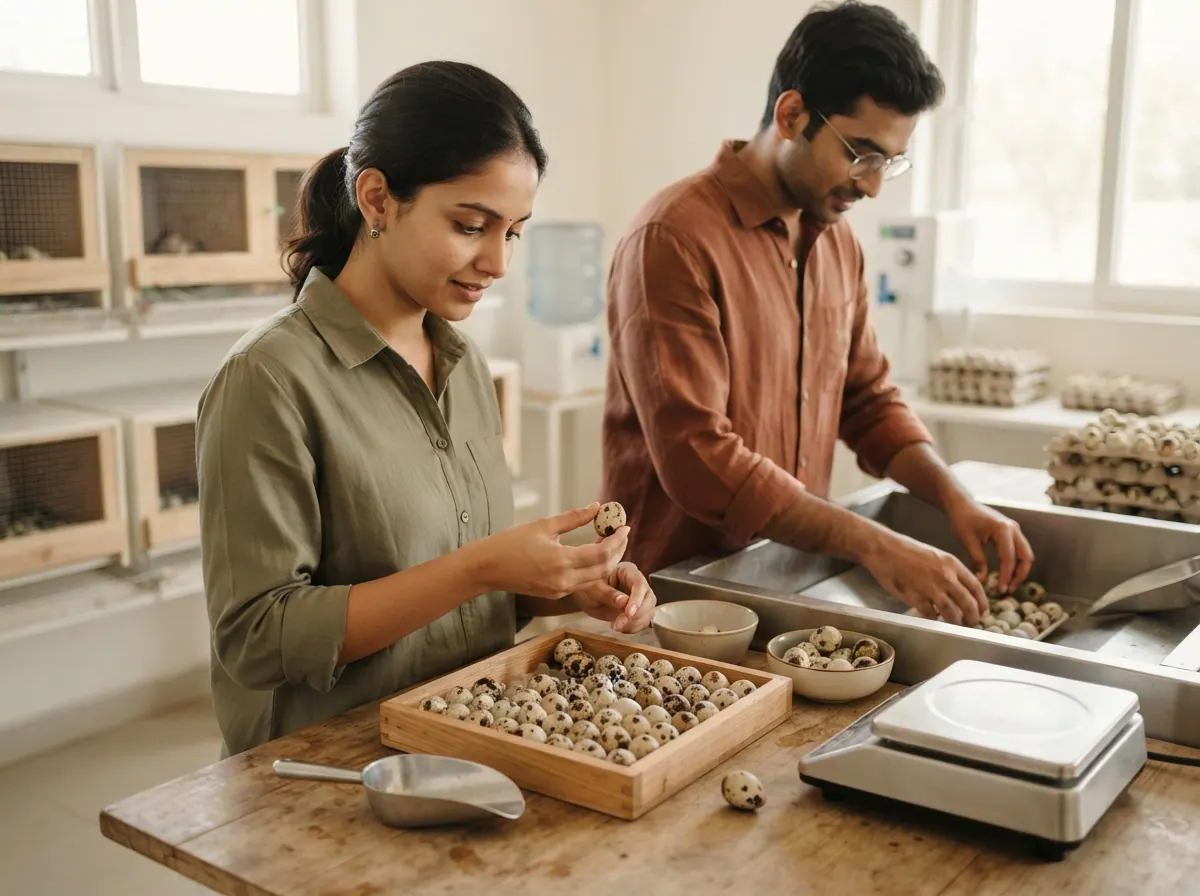
भारत में बटेर फ़ार्म शुरू करने के लिए आपको हवादार शेड और एक के ऊपर एक पिंजरे, अंडे और बूढ़ी बटेर के खरीदार, चारे का सप्लायर, और 200 बटेर के लिए करीब ₹25,000–40,000 या 1,500 बटेर के लिए ₹1.5–2 लाख चाहिए। बटेर करीब छह हफ़्ते में अंडे देने लगती है, इसलिए ज़्यादातर पशुपालन से कमाई जल्दी शुरू होती है। पर आप छोटे और सस्ते अंडे बेच रहे हैं, इसलिए profit संख्या से, और नुकसान व चारे की बर्बादी कम रखने से आता है।
यहां के सारे आंकड़े अंदाज़े हैं। पैसा लगाने से पहले अपने इलाके के दाम देख लें।
कितना खर्च आता है?
| चीज़ | 200 बटेर | 1,500 बटेर |
|---|---|---|
| बैटरी पिंजरे (एक के ऊपर एक) | ₹8,000–15,000 | ₹60,000–90,000 |
| बटेर या एक दिन के चूज़े | ₹2,000–4,000 | ₹15,000–30,000 |
| शेड या कमरा, छत, जाली | ₹5,000–10,000 | ₹30,000–50,000 |
| feeder, drinker, लाइट | ₹2,000–4,000 | ₹10,000–15,000 |
| शुरू के महीनों का चारा | ₹5,000–8,000 | ₹30,000–40,000 |
| दवा, विटामिन, अंडे की ट्रे | ₹1,500–3,000 | ₹8,000–15,000 |
| कुल | करीब ₹25,000–40,000 | करीब ₹1.5–2 लाख |
बटेर के पिंजरे मुर्गी से सस्ते हैं क्योंकि पक्षी छोटा है, लेकिन मज़बूत और साफ़ करने में आसान होने चाहिए, और फ़र्श में ढलान हो ताकि अंडे लुढ़ककर बाहर आ जाएं।
कौन-सी बटेर और चूज़े कहां से?
ज़्यादातर व्यावसायिक फ़ार्म अंडे और मांस दोनों के लिए जापानी बटेर (कोटर्निक्स) रखते हैं। एक दिन के चूज़े रजिस्टर्ड हैचरी या सरकारी संस्थान से लें, किसी अनजान विक्रेता से नहीं। पूछें कि चूज़े कब निकले और टीका लगा है या सिर्फ़ स्टार्टर चारा मिला है, क्योंकि इससे पालने का तरीका बदलता है।
कमाई कितनी हो सकती है?
1,500 अंडे देने वाली बटेर का जमा हुआ फ़ार्म। ये उदाहरण के आंकड़े हैं।
हर महीने बिके अंडे
- 1,500 बटेर × किसी एक दिन करीब 80% अंडे देती हुईं = 1,200 अंडे रोज़
- 1,200 अंडे × 30 दिन = 36,000 अंडे
- 36,000 अंडे × करीब ₹3 प्रति अंडा = ₹1,08,000
हर महीने का खर्च
- चारा: 1,500 बटेर × करीब 28 ग्राम रोज़ × 30 दिन = 1,260 किलो × करीब ₹32 = करीब ₹40,000
- एक साल बाद अंडा बंद करने वाली बटेर बदलने के लिए चूज़े और उनका चारा = करीब ₹3,700
- एक मज़दूर = ₹10,000
- दवा और विटामिन = ₹3,000
- बिजली, पानी, अंडे की ट्रे और ढुलाई = करीब ₹6,000
- कुल = करीब ₹63,000
बचत: ₹1,08,000 − ₹63,000 = करीब ₹45,000 महीना।
इसमें बूढ़ी बटेर के मांस की बिक्री नहीं गिनी है, जिससे थोड़ा और मिलता है। यह भी माना गया है कि अंडे का दाम और अंडे देना स्थिर रहे। लू, बीमारी या आपकी मंडी में दाम गिरना इसे काफ़ी घटा सकता है।
शुरू करने से पहले क्या चाहिए?
- खरीदार। बटेर के अंडे छोटी दुकानों, होटलों और कुछ हेल्थ-फ़ूड खरीदारों को जाते हैं। मांस वाली बटेर रेस्टोरेंट और स्थानीय विक्रेताओं को। शुरू करने से पहले उनसे बात करें।
- जगह और हवा। चिड़ियों को हवा चाहिए पर ठंडी सीधी हवा नहीं। भीड़ वाले पिंजरों में बदबू और अमोनिया जल्दी बनती है।
- रोशनी पर काबू। अंडे देने के लिए दिन की लंबाई स्थिर चाहिए, इसलिए अंधेरे शेड में लाइट लगानी होगी।
- डॉक्टर या पास का संस्थान, जो चारे और बीमारी पर सलाह दे सके।
कदम दर कदम
- किसी चल रहे बटेर फ़ार्म पर एक दिन बिताएं और पूछें कि उनके चूज़े किससे मरते हैं।
- शेड बनाएं या ठीक करें: एक के ऊपर एक पिंजरे, ढलान वाला फ़र्श, बीट की ट्रे और छांव।
- 200 बटेर से शुरू करें और कुछ महीने चारा, रोशनी और सफ़ाई सीखें।
- चूज़ों को पहले हफ़्तों में गर्म रखें, गर्मी के स्रोत और स्टार्टर चारे के साथ।
- अंडे देने वाली बटेर को layer पिंजरों में डालें, उस उम्र में जो आपकी हैचरी बताए।
- दिन में दो बार अंडे उठाएं और साफ़ ट्रे में गर्मी से दूर रखें।
- अंडे, चारा और मौतें रोज़ लिखें। इससे समस्या जल्दी दिखती है।
कौन-से लाइसेंस लगते हैं?
- स्थानीय इजाज़त: मुर्गीपालन जैसे शेड के लिए पंचायत या नगरपालिका की मंज़ूरी लग सकती है, ज़्यादातर बड़े स्तर पर।
- खाने का registration: पैक अंडे या मांस बेचने के लिए बेचने के तरीके के हिसाब से FSSAI registration लग सकता है। FSSAI दफ़्तर से पूछें।
- Loan और योजनाएं: मुर्गी और छोटे पशुपालन के लिए बैंक loan या राज्य की मदद मिल सकती है। नियम बदलते हैं, इसलिए ज़िले के पशुपालन दफ़्तर से पूछें।
- टैक्स: अपनी बिक्री पर टैक्स कैसे लगेगा, CA से पूछें।
क्या गलत हो सकता है?
- गर्मी और ठंड। बटेर तेज़ गर्मी और ठंडी रातों में तकलीफ़ पाती है। पंखे और पर्दों में पैसा लगता है पर पक्षी बचते हैं।
- बीमारी और गीली बीट। गीली बीट से पेट के इन्फ़ेक्शन होते हैं। ट्रे सूखी और साफ़ रखें।
- खराब हैचरी के कमज़ोर चूज़े। पहले हफ़्ते में बहुत मरें तो सबसे पहले स्रोत पर शक करें।
- टूटे अंडे। खराब पिंजरे और रूखे हाथों से टूट-फूट का नुकसान होता है।
- मांग कम होना। बटेर के अंडे का बाज़ार छोटा है। खरीदार न हो तो कम दाम पर बेचना पड़ सकता है।
- चारे के दाम में उछाल। मक्का और सोया से आपका चारा बिल और profit बदलता है।
ये हालात आपके सामने आएँगे
आप क्या करेंगे? हर फ़ैसले की एक क़ीमत है।
शुरुआत
A registered hatchery sells chicks at a fixed price. A roadside seller offers them cheaper, with no papers.
- Buy from the hatchery: Higher price, stronger chicks
- Buy from the seller: Cheaper, many may die
Steel battery cages last years and are easy to clean. A local man offers bamboo cages for far less.
- Buy steel cages: Costly, lasts and cleans well
- Use bamboo cages: Cheap, hard to keep clean
Your shed roof must keep birds cool. Tin is quick but hot, thatch is cooler but costs upkeep.
- Thatch with a false ceiling: Cooler birds, more work
- Plain tin sheets: Cheap, birds suffer in summer
Chicks need heat for the first weeks. Bulbs use power and your supply is unsteady.
- Buy a small gas brooder: Setup cost, steady warmth
- Use bulbs only: Cheap, risky in power cuts
A hotel will take eggs only if you can supply every week. A small shop takes any amount.
- Promise the hotel weekly: Better price, tight supply
- Sell to the small shop: Easy, lower price
Ready quail feed is balanced and costly. Mixing maize and soya yourself costs less but needs knowledge.
- Buy ready feed: Balanced, higher cost
- Mix your own feed: Cheaper, laying may drop
Nipple drinkers keep litter dry. Open cups cost almost nothing but spill and breed germs.
- Fit nipple drinkers: Costly, dry trays
- Use open cups: Cheap, wet and dirty
पहला महीना
Your first birds lay small eggs and a few are cracked. A buyer says they are too small.
- Grade and sell by size: Extra work, steadier price
- Sell all mixed at one price: Easy, buyer pays less
Ten chicks died overnight. The shed felt cold at night and the water was dirty.
- Fix heat and clean water: Cost now, fewer deaths
- Replace the dead chicks: Cost of chicks, same problem
Droppings pile up and eyes sting when you enter. Egg numbers are dipping.
- Clean trays daily, add fans: Labour and power
- Clean once a week: No cost, sick birds
Rough cage floors and one rushed helper are breaking eggs before collection.
- Fix floor slope and train helper: Small cost, fewer breaks
- Accept the breakage: No cost, steady loss
रोज़ का काम
Birds flick feed out of the troughs. You are losing a noticeable share every week.
- Change to deeper troughs: Cost now, less waste
- Keep the old troughs: No cost, higher feed bill
Temperatures climb and birds pant. Laying drops and a few die each day.
- Add fans and wet curtains: Power and water cost
- Give electrolytes in water: Cheaper, partial help
Laying falls as days shorten. A timer and lights cost money but can hold production.
- Fit a timer and lights: Power cost, steady laying
- Accept fewer eggs: No cost, lower income
After about a year, many hens lay fewer eggs. You can sell them for meat and bring in new birds.
- Cull and replace in batches: New chick cost, meat income
- Keep all birds longer: No cost, fewer eggs
A restaurant wants cleaned birds of one size each week. That needs a separate batch and dressing.
- Raise a meat batch: Feed and work, extra income
- Stay with eggs only: Simple, one income
A new supplier floods your market with cheaper eggs. Your shop buyer asks for a lower rate.
- Match the lower price: Keep the buyer, thinner profit
- Find a new buyer: Time and delay, same price
A vet says a regular feed supplement keeps shells strong. It adds to monthly cost.
- Follow the vet's plan: Monthly cost, stronger shells
- Skip it: Saves money, softer shells
जब मुश्किल आए
Many birds show bloody droppings and droop. The vet suspects coccidiosis.
- Call the vet and treat: Fee and medicine, birds recover
- Cull the worst, treat the rest: Loss now, stops spread
Twenty birds in one row are dead in the morning. Others look dull.
- Isolate the row, call a vet: Fee, find the cause
- Dispose safely, review feed: Cheaper, may miss cause
Rats eat feed and chew egg trays. A few chicks have been bitten.
- Seal gaps and fit mesh: Work and cost, lasting fix
- Set traps only: Cheap, rats return
A storm cuts power. Chicks in the brooder need heat and the fans have stopped.
- Rent a generator: Hire cost, birds stay safe
- Cover cages and wait: Cheap, some chicks die
A new bag of feed smells damp and has clumps. The dealer says it is fine.
- Return it and pay for a new one: Delay and cost, safe feed
- Throw it away: Loss now, birds stay safe
The helper who knows your routine quits. Eggs need collecting twice a day.
- Offer a raise to stay: Higher wages, steady care
- Train a new person: Slow, mistakes meanwhile
बढ़ाना
Eggs sell well. More cages mean more income but also more feed and labour.
- Add cages and chicks now: Costly, faster growth
- Add a few cages each month: Gradual, lower risk
A small incubator lets you hatch your own chicks. It needs eggs set aside, care and power.
- Buy a small incubator: Setup cost, cheaper chicks
- Keep buying chicks: No setup, steady cost
A caterer wants boiled, peeled eggs. This needs a clean kitchen and food registration.
- Register and prepare: Fees and work, higher price
- Keep selling raw eggs: No paperwork, lower price
A dealer offers cheaper rates if you buy for three months. It needs cash and dry storage.
- Buy three months of feed: Big outlay, cheaper feed
- Keep buying monthly: Less cash, higher rate
A bank will lend for more cages if you keep records and a simple plan.
- Take the loan with records: Fees and interest, room to grow
- Grow slowly on savings: No interest, slower
Families in town ask for trays of eggs at home and will pay by UPI. Delivery costs time and fuel.
- Start weekly home delivery: Fuel and time, better price
- Sell only at your gate: No cost, smaller reach
क्या यह आपके लिए सही है?
बटेर पालन उनके लिए ठीक है जिनके पास थोड़ी जगह है, जो जल्दी शुरुआत चाहते हैं, और रोज़ सफ़ाई व गिनती से नहीं हिचकते। उनके लिए कम ठीक है जिन्हें पहले दिन से बड़ा और पक्का बाज़ार चाहिए, या जो रोज़ फ़ार्म पर नहीं रह सकते।
एक अच्छा तरीका: किसी चल रहे बटेर फ़ार्म पर एक हफ़्ता बिताएं। पसंद आए तो 200 बटेर से शुरू करें, दो नियमित खरीदार पक्के करें, और नुकसान कम होने पर ही बढ़ें।