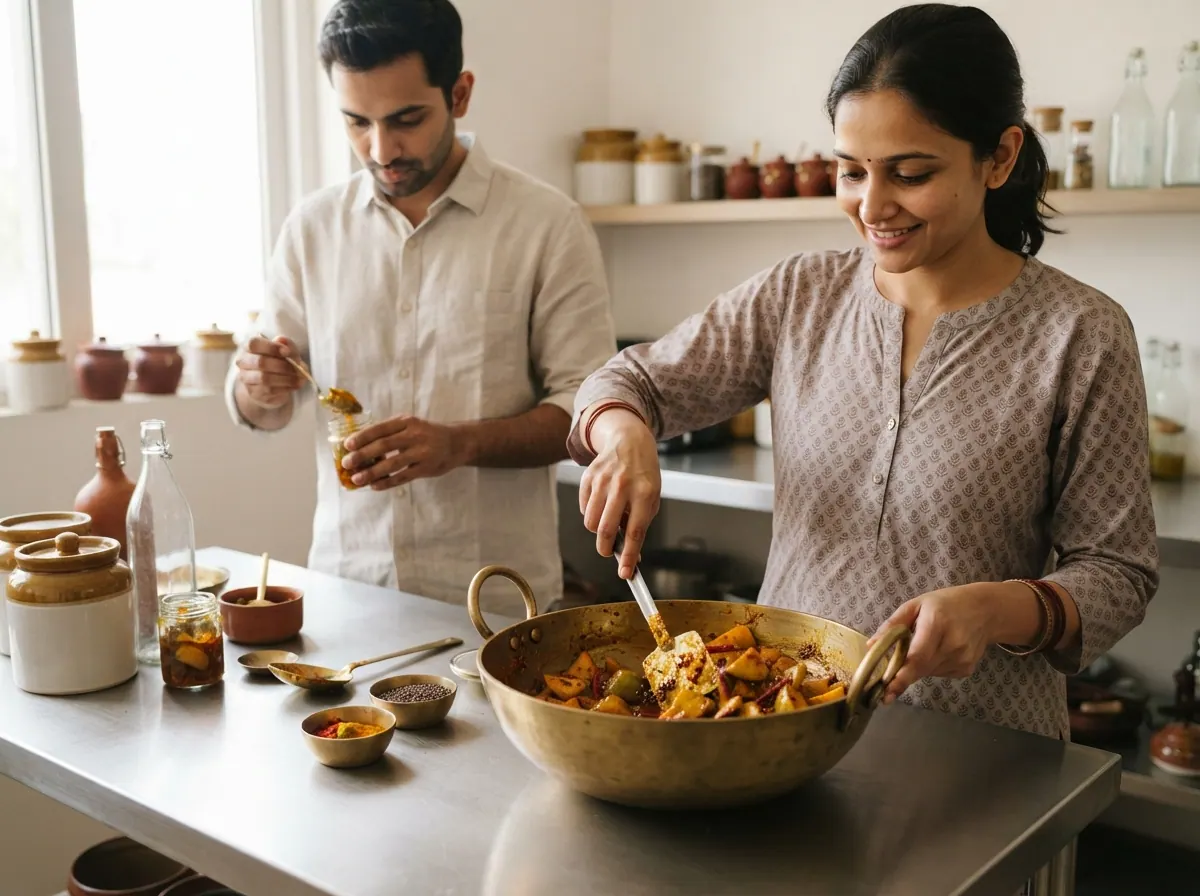
भारत में अचार का बिज़नेस शुरू करने के लिए साफ़ रसोई या छोटी यूनिट, ऐसी रेसिपी जो टिके, अच्छे जार, FSSAI रजिस्ट्रेशन और घर से शुरू करने के लिए करीब ₹10,000–25,000 चाहिए। किराये की छोटी यूनिट में करीब ₹1 लाख तक लग सकते हैं। कमाई दोबारा आने वाले ग्राहकों और प्रति किलो अच्छे margin से होती है, लेकिन एक बार फफूँद लगा बैच दुकान खो सकता है।
यहाँ सब आँकड़े अंदाज़े हैं। पैसा लगाने से पहले अपने इलाके के भाव पूछ लें।
कितना खर्च आएगा?
| चीज़ | घर से शुरुआत | छोटी यूनिट |
|---|---|---|
| पहले बैच के लिए कच्चा आम, नींबू, मसाले | ₹3,000–6,000 | ₹10,000–20,000 |
| सरसों या मूँगफली का तेल | ₹3,000–5,000 | ₹8,000–15,000 |
| चीनी मिट्टी की बरनी, स्टील के बर्तन, चाकू | ₹2,000–5,000 | ₹8,000–15,000 |
| काँच के जार या फ़ूड-ग्रेड डिब्बे, ढक्कन | ₹2,000–4,000 | ₹8,000–15,000 |
| आम काटने की मशीन या कटाई की मदद | ₹0–2,000 | ₹5,000–12,000 |
| लेबल और कार्टन | ₹1,000–2,000 | ₹3,000–6,000 |
| FSSAI रजिस्ट्रेशन और ज़रूरी जाँच | ₹1,500–4,000 | ₹3,000–8,000 |
| तराज़ू, दस्ताने, टोपी | ₹1,500–2,500 | ₹3,000–6,000 |
| कुल | करीब ₹10,000–25,000 | करीब ₹50,000–1 लाख |
तेल चुपचाप सबसे बड़ा खर्च है, क्योंकि अच्छा अचार तेल में डूबा रहता है। दूसरा बड़ा खर्च काँच के जार का है, जो प्लास्टिक से महँगे हैं पर ग्राहक उन पर भरोसा करते हैं।
कौन से अचार से शुरू करें?
दो-तीन फ्लेवर से शुरू करें जो हर बार एक जैसे बनें:
- आम का अचार: सीज़न छोटा होता है, इसलिए कई लोग कच्चे आम थोक में लेकर नमक लगाकर साल भर के लिए रख लेते हैं।
- नींबू का अचार: आसान है, साल भर बिकता है, मीठा और तीखा दोनों के ग्राहक हैं।
- मिक्स सब्ज़ी और हरी मिर्च: सर्दियों के लिए अच्छा।
- लहसुन, आँवला और लाल मिर्च: बिक्री कम, पर पक्के ग्राहक।
इलाके के खास अचार तभी बनाएँ जब सही बनाना आता हो। तेलुगु ग्राहक तुरंत पकड़ लेगा अगर आपका आवकाया सही नहीं है।
कितनी कमाई हो सकती है?
घर से चलने वाली यूनिट जो महीने में 200 किलो अचार दुकानों और पड़ोसियों को करीब ₹260 किलो में बेचती है।
बिक्री
- 200 किलो × ₹260 = ₹52,000
हर महीने का खर्च
- कच्चा आम, नींबू, सब्ज़ी: ₹5,600
- तेल, करीब 40 लीटर × ₹150: ₹6,000
- नमक और मसाले: ₹4,000
- जार और ढक्कन, 400 जार × ₹12: ₹4,800
- लेबल और कार्टन: ₹1,200
- एक हेल्पर: ₹8,000
- गैस, ढुलाई और छोटे खर्च: ₹3,000
- कुल = ₹32,600
बचत: ₹52,000 − ₹32,600 = करीब ₹19,400 महीना।
डिस्ट्रीब्यूटर के ज़रिए बेचने पर भाव पाँचवाँ हिस्सा या ज़्यादा कम हो सकता है। WhatsApp या मेले में सीधे बेचने पर किलो के ज़्यादा पैसे मिलते हैं पर आपका समय ज़्यादा लगता है। आम के सीज़न में कुछ हफ़्तों में ही सारा काम आ जाता है और कच्चे माल में पैसा फँसने से हाथ तंग हो सकता है।
शुरू करने से पहले क्या चाहिए?
- टिकने वाली रेसिपी। एक ही अचार तीन बार बनाएँ और हर एक का जार कई महीने रखें। वज़न, तेल और नमक ठीक-ठीक लिख लें।
- सूखी, साफ़ जगह। पानी अचार का दुश्मन है। जार, चम्मच, चाकू और हाथ पूरे सूखे होने चाहिए।
- भरोसे का कच्चे आम का सप्लायर, और उस हफ़्ते की योजना जब सारे आम एक साथ आ जाएँ।
- लीक न होने वाली पैकिंग, क्योंकि कार्टन में एक जार टपके तो बाकी भी ख़राब होते हैं।
कदम-दर-कदम
- छोटे बैच बनाएँ और दस परिवारों को खिलाकर सच्ची राय लें।
- FSSAI रजिस्ट्रेशन के लिए अर्ज़ी दें और पूछें कि लेबल पर क्या छपना ज़रूरी है।
- जार का साइज़ तय करें, आम तौर पर 250 ग्राम, 500 ग्राम और 1 किलो, और हर का दाम रखें।
- सही समय पर आम खरीदें। मंडी के व्यापारियों से पूछें कि आपके यहाँ अचार के लिए कौन सी किस्म अच्छी है।
- टुकड़ों को ठीक से सुखाएँ अगर रेसिपी में ज़रूरी है, और सूखे, साफ़ जार इस्तेमाल करें।
- हर जार पर लेबल लगाएँ: नाम, वज़न, तारीख, सामग्री और FSSAI नंबर।
- पहले किराना, मिठाई की दुकान और पड़ोस में बेचें, रेसिपी पक्की होने के बाद ऑनलाइन और प्रदर्शनी आज़माएँ।
कौन से लाइसेंस लगते हैं?
- FSSAI रजिस्ट्रेशन या लाइसेंस पैक करके बेचे खाने के लिए। कौन सा, यह आपके साइज़ पर है, फ़ूड सेफ्टी दफ़्तर से पूछें।
- उद्यम रजिस्ट्रेशन लोन में काम आ सकता है, पर पूछकर पक्का करें।
- GST बिक्री बढ़ने पर लग सकता है। CA से पूछें।
- पंचायत या नगरपालिका की इजाज़त अगर किराये की जगह से चला रहे हैं।
- लेबल के नियम पैक खाने के लिए सख़्त हैं। लेबल छपवाने से पहले लाइसेंस दफ़्तर से पक्का कर लें।
क्या-क्या गड़बड़ हो सकती है?
- अचार के ऊपर फफूँद। गीले जार, गीले चम्मच या कम तेल आम वजह हैं। बैच ख़राब हो तो फेंक दें।
- ख़राब या घटिया तेल। ग्राहक स्वाद से पकड़ लेते हैं और अचार जल्दी बिगड़ता है।
- जंग लगे या ढीले ढक्कन। बिना लाइनिंग के धातु के ढक्कन अचार के एसिड से ख़राब होते हैं।
- ढुलाई में लीकेज। एक टपकता जार पूरा कार्टन बिगाड़ देता है।
- सीज़न में ज़रूरत से ज़्यादा आम खरीद लेना और जार, तेल और मज़दूरी के लिए पैसा न बचना।
- दुकानों में उधार जो वापस नहीं आता। छोटी दुकानें देर से देना पसंद करती हैं।
ये हालात आपके सामने आएँगे
आप क्या करेंगे? हर फ़ैसले की एक क़ीमत है।
शुरुआत
A mandi trader offers a full load of raw mangoes cheap at the end of the season. Your kitchen is small and jars are few.
- Buy the full load: Cheap, cash tied up in stock
- Buy only what you can pack: Less profit, no waste
A dealer offers loose mustard oil well below the branded price. Pickle needs a lot of oil and buyers notice the taste.
- Use branded mustard oil: Costs more, steady taste
- Use cheaper loose oil: Costs less, buyers may notice
Glass jars look better and feel safe to buyers. Plastic tubs are lighter and do not break in transit.
- Order glass jars: Higher cost, trusted look
- Order food-grade tubs: Cheaper, looks plainer
Neighbours already ask to buy. FSSAI registration takes a few weeks and some fees.
- Register before selling: Fee and wait, safe later
- Take advance orders only: Small advance, deliveries wait
Your mother makes lovely pickle but never measures. A big batch would need exact amounts of salt and oil.
- Test and write the weights: Three trial batches, steady taste
- Scale up by eye: Saves trials, batches may differ
पहला महीना
Two weeks after filling, a barni of lemon pickle shows white fungus on top. A wet spoon was used last week.
- Throw the batch away: Lose the batch, learn the habit
- Clean and dry every tool: Costs a day, protects next batches
A few jars delivered to a shop show rust on the metal lids. The shopkeeper sends photos.
- Swap all lids, lined ones: Costly, buyers trust you
- Replace only the shop's jars: Cheaper, others may leak too
Salted mango pieces are on the terrace and clouds are coming. Drying indoors is slower and you need the batch.
- Dry indoors with fans: Slower, some power cost
- Wait for clear sun: Delays the batch, less cost
A neighbourhood kirana will stock 40 jars but wants to pay after a month. Their shelf is busy.
- Give 40 jars on credit: Sales, but money waits
- Give 15 jars, cash first: Slow, safe money
Your first labels have a name and photo but no date or ingredients. The licence office wants more printed.
- Reprint full labels: Reprint cost, label is correct
- Stick a date sticker on: Cheap, still missing details
रोज़ का काम
After a poor harvest, lemon prices climb. Your best-selling lemon pickle has a fixed price on shop shelves.
- Raise the price a little: Margin holds, some buyers drop
- Hold the price and absorb it: Buyers stay, margin thin
The rainy season makes salt and masala damp. Packing area walls are sweating.
- Buy a dehumidifier, dry the spices: Costly, steady batches
- Pause making for two weeks: No cost, lose sales
A family wants 150 small jars in gift boxes in ten days. It means extra jars, boxes and late nights.
- Accept and hire helpers: Rush cost, good profit
- Offer 60 jars only: Easier, smaller order
A college hostel mess wants bulk pickle at a low price per kilo, paid monthly.
- Accept at their price: Big volume, thin margin
- Ask a higher price: Better margin, may lose order
A distributor reports four leaking jars in one carton. Oil has stained the other jars and labels.
- Replace the carton fully: Costs a carton, builds trust
- Replace only the leaked jars: Cheaper, stained jars remain
A weekend food mela offers a stall for a fee. Many visitors taste before they buy.
- Take the stall, give tastings: Fee and samples, good sales
- Skip it, sell to regulars: No fee, no new buyers
Several buyers ask for garlic pickle. It needs peeling by hand and extra oil, and the first test batch may fail.
- Test a small garlic batch: Test cost, a new product
- Stay with your two flavours: No risk, no growth
Fresh amla is cheap for only a few weeks. Buying a lot means a lot of cutting, boiling and jars.
- Buy for a big amla batch: Cash and labour, new range
- Buy a small amla lot: Less risk, small sales
जब मुश्किल आए
A shop sends back six jars with mould that formed after three months. The batch had the same recipe as the others.
- Recall that batch from shops: Big loss, trust kept
- Replace only the six jars: Cheaper, other jars at risk
An officer arrives unannounced. The floor is clean but your records of batch dates are missing.
- Start a batch register: Time and effort, safe records
- Promise to fix it later: No effort, weaker standing
A neighbour starts selling pickle with a label very much like yours at a lower price.
- Improve your label and pack: Design cost, stand apart
- Cut your price to match: Keeps buyers, hurts margin
A kirana owes ₹12,000 for old stock and wants a new supply. They say money is tight.
- No new stock until paid: Safe, may lose the shop
- Send a small fresh order: Keeps shop, more at risk
The woman who cuts mangoes quickest quits in the middle of mango season. Orders are piling up.
- Hire two helpers, pay extra: Higher wages, season saved
- Work longer yourself: No cost, slower and tired
The spice roasting and oil heating must be done the same day. The cylinder is empty and the refill is two days away.
- Buy a commercial cylinder: Costs more, work continues
- Delay the batch: No extra cost, late orders
बढ़ाना
An orchard owner will sell raw mangoes directly each season if you commit to a minimum amount.
- Sign for a fixed quantity: Steady supply, advance paid
- Keep buying at the mandi: Flexible, price swings
An online platform will list your pickle. They take a share of each sale and need leak-proof packing.
- List with sealed packing: Packing cost, new buyers
- Stay with WhatsApp orders: No fee, slower growth
A large store asks for a lab report before stocking your pickle. The test costs money and may need recipe changes.
- Pay for the lab test: Costly, opens bigger shops
- Stay with small shops: No cost, smaller reach
Orders have outgrown your kitchen. A small shed nearby is available on monthly rent.
- Rent the shed, add racks: Rent and setup, higher output
- Stay home, add one shift: Cheaper, limited growth
A distributor offers to cover three nearby towns but wants a large cut of the price.
- Accept, supply 300 jars: More volume, thinner margin
- Sell direct to shops yourself: Better margin, more travel
A self-help group offers to cut and pack for you at a rate per kilo. Your recipe stays with you, but quality needs watching.
- Work with the group: Wages and training, more output
- Keep it in-house: Control quality, slower growth
क्या यह आपके लिए ठीक है?
अचार का काम आपके लिए ठीक है अगर आप सूखी, साफ़ रसोई में काम कर सकते हैं, थोक में बनाना पसंद है और नाम बनने का इंतज़ार कर सकते हैं। अगर जल्दी पैसा चाहिए तो कम ठीक है, क्योंकि पहले ग्राहक आपको परखेंगे और अच्छे ग्राहक अचार पकने के बाद ही लौटेंगे।
आसान टेस्ट: पड़ोस और रिश्तेदारों को 50 जार बेचें और गिनें कि कितने दोबारा माँगने आते हैं। ज़्यादातर आएँ तो FSSAI और कुछ दुकानों की तरफ़ बढ़ें।