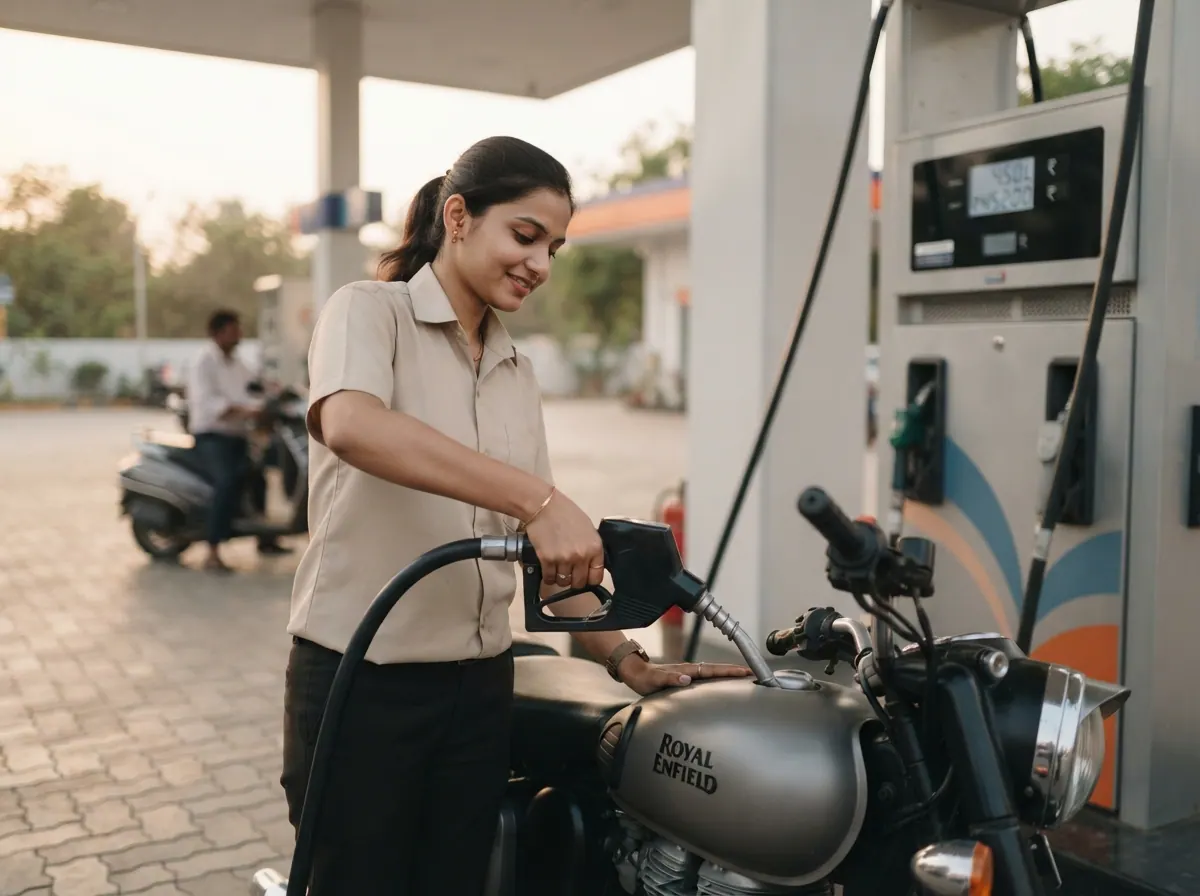
भारत में पेट्रोल पंप शुरू करने के लिए आपको ऑयल कंपनी की चिह्नित जगह पर ज़मीन, कंपनी की प्रकाशित प्रक्रिया से मिली डीलरशिप, सुरक्षा मंज़ूरियाँ, और इमारत, उपकरण और पहले ईंधन स्टॉक के लिए लगभग ₹25 लाख से ₹1 करोड़ चाहिए, ज़मीन की क़ीमत छोड़कर। यह बिज़नेस हर बिके लीटर पर कमीशन कमाता है, इसलिए बिक्री की मात्रा और नोज़ल पर ईमानदारी किसी भी और बात से ज़्यादा मायने रखती है।
यहाँ दिए सारे आँकड़े अंदाज़े हैं। खर्च करने से पहले कंपनी का विज्ञापन पढ़ें और रकम कंपनी से पक्की कर लें।
इसमें कितना खर्च आता है?
| मद | छोटा आउटलेट | बड़ा आउटलेट |
|---|---|---|
| फ़ोरकोर्ट, कैनोपी, ऑफ़िस और शौचालय | ₹12 लाख | ₹35 लाख |
| टैंक, डिस्पेंसर और पाइप (कुछ कंपनी दे या बाँट सकती है) | ₹8 लाख | ₹25 लाख |
| आग बुझाने, बिजली और सुरक्षा की फ़िटिंग | ₹3 लाख | ₹8 लाख |
| ईंधन स्टॉक और चालू नकद (ईंधन आने से पहले चुकाना पड़ता है) | ₹3 लाख | ₹12 लाख |
| मंज़ूरियाँ, ड्रॉइंग और कंसल्टेंट | ₹1 लाख | ₹3 लाख |
| साइनेज, यूनिफ़ॉर्म, ट्रेनिंग | ₹1 लाख | ₹3 लाख |
| आकस्मिक खर्च | ₹1 लाख | ₹4 लाख |
| कुल (ज़मीन के बिना) | लगभग ₹29 लाख | लगभग ₹90 लाख |
ज़मीन अलग है। शहरों और हाइवे पर वह ऊपर के सब खर्चों से ज़्यादा हो सकती है, और लीज़ इतनी लंबी चाहिए कि कंपनी मान ले। हर कंपनी के अपने नियम हैं कि आप क्या बनाएँगे और वह क्या देगी, इसलिए असली रकम विज्ञापन से पता चलती है।
कमाई कितनी हो सकती है?
मान लीजिए एक आउटलेट महीने में लगभग 1,00,000 लीटर ईंधन बेचता है। यह उदाहरण है, वादा नहीं।
आमदनी
- कमीशन: लगभग ₹3 प्रति लीटर × 1,00,000 लीटर = ₹3,00,000
- लुब्रिकेंट, हवा और छोटा सामान: लगभग ₹25,000
- कुल = ₹3,25,000
हर महीने का खर्च
- छह स्टाफ़ × ₹12,000 = ₹72,000
- बिजली, रखरखाव और मरम्मत = ₹30,000
- बीमा, हिसाब और दूसरे खर्च = ₹25,000
- लगभग ₹40 लाख के लोन की किस्त = ₹55,000
- कुल = ₹1,82,000
बचत: ₹3,25,000 − ₹1,82,000 = लगभग ₹1,43,000 महीना।
प्रति लीटर मार्जिन छोटा है, इसलिए यह आँकड़ा बिक्री की मात्रा के साथ हिलता है। सड़क का डायवर्ज़न, सामने नया पंप या हड़ताल रातों-रात लीटर पाँचवां हिस्सा घटा सकते हैं, जबकि स्टाफ़ और लोन की किस्त वही रहती हैं।
शुरू करने से पहले क्या चाहिए?
- कंपनी की योजना में फ़िट होने वाली ज़मीन। जगह, सड़क की चौड़ाई और आकार मायने रखते हैं। कंपनी शॉर्टलिस्ट करने से पहले इन्हें जाँचती है।
- शुरुआती महीनों के लिए रखा पैसा। ईंधन आने से पहले चुकाना पड़ता है, और कार्ड वाले पैसे बाद में आते हैं।
- साफ़ रिकॉर्ड। कंपनी आपकी पृष्ठभूमि और पैसों की जाँच करती है।
- सुरक्षा की सोच। आप गाड़ियों की भीड़ के पास हज़ारों लीटर ज्वलनशील तरल पर बैठे होते हैं।
- भरोसेमंद स्टाफ़। आप हर नोज़ल पर नहीं रह सकते, इसलिए डिस्पेंसर पर खड़े लोगों पर निर्भर रहते हैं।
कदम-दर-कदम
- ऑयल मार्केटिंग कंपनियों का विज्ञापन पढ़ें, जगह, कैटेगरी, ज़मीन और ज़रूरी पैसे के लिए। फ़ीस लेकर पक्की डीलरशिप का वादा करने वाले की बात न सुनें।
- अपनी ज़मीन को कंपनी की शर्तों से मिलाएँ, किसी भी चीज़ पर पैसा देने से पहले।
- आवेदन करें और चयन प्रक्रिया का पालन करें, जैसा कंपनी बताती है।
- चयन के बाद निर्माण की योजना बनाएँ, कंपनी की मंज़ूर ड्रॉइंग और लाइसेंसी ठेकेदार के साथ।
- मंज़ूरियाँ लें स्टोरेज, फ़ायर, प्रदूषण, स्थानीय निकाय और माप के लिए।
- स्टाफ़ को ट्रेनिंग दें सुरक्षित फ़िलिंग, सही माप और नकद संभालने की।
- शुरू करें और हर लीटर का हिसाब रखें: रोज़ का स्टॉक, डिप रीडिंग, नकद और कार्ड सेटलमेंट।
एक आम दिन कैसा होता है?
पंप शिफ़्टों में चलता है, और डीलर का दिन जाँचों का होता है। खुलने से पहले स्टाफ़ हर टैंक की डिप रीडिंग लेता है और हर डिस्पेंसर का मीटर लिखता है। दिन भर कोई नोज़ल, नकद और कार्ड मशीन पर नज़र रखता है, और रात को स्टॉक का बिक्री से मिलान होता है। टैंकर की डिलीवरी उतारने से पहले मात्रा और गुणवत्ता जाँचनी होती है, और कोई शक हो तो तुरंत कंपनी को बताया जाता है। जो डीलर ये आँकड़े रोज़ पढ़ता है वह गड़बड़ी जल्दी पकड़ लेता है, और जो अनदेखा करता है उसे ऑडिट में पता चलता है।
कौन-से लाइसेंस लगते हैं?
सही लिस्ट कंपनी और आपके लोकल दफ़्तर देते हैं, जो राज्य के हिसाब से बदलती है:
- डीलरशिप एग्रीमेंट ऑयल मार्केटिंग कंपनी के साथ।
- पेट्रोलियम रखने का लाइसेंस सुरक्षा प्राधिकरण से, मंज़ूर नक़्शों के साथ।
- फ़ायर, प्रदूषण और स्थानीय निकाय की अनुमतियाँ, और जहाँ आउटलेट हाइवे से जुड़ता है वहाँ सड़क पहुँच की अनुमति।
- तौल-माप की जाँच आपके डिस्पेंसर की।
- शॉप और GST रजिस्ट्रेशन, किसी भी दुकान या लुब्रिकेंट बिक्री के लिए।
क्या गलत हो सकता है?
- कम माप की शिकायतें। एक साबित हुई कमी आपके लाइसेंस और नाम को नुकसान पहुँचा सकती है।
- गाड़ी में गलत ईंधन। डीज़ल कार में पेट्रोल एक आम गलती है जिससे पैसा और भरोसा दोनों जाते हैं।
- टैंक में पानी। बारिश या ख़राब सीलिंग से ईंधन में पानी आ सकता है, जिससे गाड़ियाँ रुक जाती हैं।
- नकद और स्टॉक का रिसाव। स्टाफ़ की गलतियाँ और चोरी आम चुपचाप होने वाले नुकसान हैं।
- फ़्लीट के देर से भुगतान। ट्रांसपोर्टर उधार पर लेते हैं और धीमे हो सकते हैं।
- सुरक्षा में चूक। ईंधन के पास फ़ोन, सिगरेट और चिंगारी गंभीर ख़तरे हैं।
ये हालात आपके सामने आएँगे
आप क्या करेंगे? हर फ़ैसले की एक क़ीमत है।
शुरुआत
A highway site sells large volumes to trucks but is far from home. A city road site has steady cars and bikes at a higher land cost.
- Choose the highway site: More litres, longer shifts
- Choose the city road site: Steady cars, costly land
Owning land is the safest base but ties up a lot of money. A long lease costs less now but needs company approval.
- Buy the land: Heavy spend, full control
- Take a long lease: Lower spend, landlord risk
Fire, pollution, safety and local approvals have many forms. A consultant charges a fee and knows the offices.
- Hire a licensed consultant: Fee now, fewer delays
- Do it yourself: Cheaper, slower with errors
A larger loan keeps your savings free for fuel stock. Monthly payments will be heavy until volume builds.
- Take a bigger loan: Fees and interest, savings kept
- Use more savings: No big payment, less cash left
Staff who worked at pumps know safe filling and cash handling but want more pay. Fresh hires cost less and need training.
- Hire experienced staff: Higher pay, fewer mistakes
- Hire and train fresh staff: Cheaper, early mistakes
The minimum fire kit is approved. Extra extinguishers, sand buckets and staff drills add cost but lower the risk.
- Add extra safety and drills: Costly, a safer pump
- Stay with the minimum: Cheaper, thin margin of safety
A small store with cold drinks and snacks can earn extra but needs stock, a counter and a helper.
- Open a small store: Spend, extra income
- Keep the forecourt simple: Focused, no side income
पहला महीना
A nozzle boy filled petrol into a diesel car. The driver has already started the engine and the car has stalled.
- Pay for draining and checks: Costly, trust kept
- Argue it was the driver's call: No cost, a loud dispute
Half of today's sales were on cards, and the money reaches your account two days later. Your next fuel load must be paid for tomorrow.
- Draw a short bank overdraft: Interest cost, keep fuel coming
- Order a smaller fuel load: No interest, risk of dry-out
A customer says the nozzle gave less than 5 litres. The official measure can be tested on the spot.
- Test with the 5-litre measure: Proof and goodwill
- Refuse and ask them to leave: Quick, a rumour spreads
A rival pump nearby gives free tyre air and a windshield wipe to every customer. You can match it with a helper and supplies.
- Offer free air and wipe: Costs staff time, wins loyalty
- Charge for extra services: Covers cost, fewer takers
Your night staff say strangers hang around after midnight. Cash is kept in a drawer.
- Add cameras and a guard: Wages and cost, safer nights
- Bank the cash every few hours: Cheap, still exposed
Customers ask for engine oil while they fill. Stock is costly and a company offers a display unit with a minimum order.
- Take the display and the lot: Cash locked, extra margin
- Stock a few popular grades: Smaller risk, less income
रोज़ का काम
A truck owner with twelve trucks wants diesel on credit and will pay at the end of the month. It would be your biggest buyer.
- Give a limited credit line: Big volume, slow money
- Offer a fleet card with prepayment: Safer, may go elsewhere
The diesel load is late by a day and your tank has only a few hours left. Trucks are queuing up.
- Ration to loyal customers: Lose some sales, protect loyal ones
- Keep selling until dry: More sales now, an angry queue
More customers ask for an alternative fuel option. The equipment and approvals cost money and take months.
- Add an EV charging bay: Costly, a new customer type
- Wait and watch the market: No spend, slower to change
Drivers want a rest area with toilets and a tea stall. It brings loyal trucks, but costs land use and cleaning.
- Build the rest area: Spend, loyal truck traffic
- Leave the space empty: No cost, trucks pass by
Daily cash is short by a few hundred rupees each night. It could be a counting error, a mistake or someone taking money.
- Install shift reconciliation: Cost and effort, clear records
- Warn the whole team: Free, losses may continue
The pump across the road gives points on every fill that can be used on car services. Your regulars ask about it.
- Start your own loyalty offer: Costs margin, keeps regulars
- Focus on service and speed: No cost, lose some regulars
Weddings bring long lines of cars and buses on weekends. You need extra staff and extra stock to avoid running dry.
- Hire extra hands and order more: Costs wages, more sales
- Run with the usual team: No cost, long queues
An inspector will check the dispensers soon. A pre-check by a technician finds one nozzle slightly off.
- Pay a technician to recalibrate: Fee now, a clean report
- Wait for the inspection: Free, risk of a notice
जब मुश्किल आए
After heavy rain, a dip test shows water at the bottom of the diesel tank. Two trucks have already complained.
- Stop sales and clean the tank: Costly, a safe fix
- Call the company technician first: Fee and a day lost, safe fix
Two men tried to snatch the cash drawer at 2 am. Nobody was hurt, but the night staff are shaken.
- Report it and upgrade security: Cost, a safer team
- Move night cash to a safe: Cheaper, a smaller change
Rumours of a strike send people queuing for fuel. Supply may be short for two days.
- Limit litres per vehicle: Fair, a few grumble
- Sell freely until it runs out: Big sales now, empty tanks
A customer lit a cigarette beside a dispenser while filling. Your staff stopped it just in time.
- Retrain staff and fix signage: Cost, a safer forecourt
- Give a verbal warning: Free, risk remains
Your big transporter owes ₹3 lakh and says the money is stuck in its own account. It wants more diesel today.
- Stop credit until cleared: Lose volume, protect cash
- Keep selling a little: More owed, buyer stays
A company audit shows your stock differs from the book by a small percentage. You must explain it.
- Review dip logs and meters: Effort and a fix, clean records
- Blame measurement error: Free, a notice may follow
बढ़ाना
Customers stop for snacks and basics. A bigger store with a helper would earn more but needs space and stock.
- Build a bigger mart: Spend, higher income
- Keep the small store: Low risk, small income
The company advertises another location in your district. It would double your commitments and your work.
- Apply and arrange funds: Heavy spend, bigger business
- Improve the first pump: Smaller spend, steady growth
The canopy is large and sunny. Solar panels would cut your power bill but cost a lot upfront.
- Install solar panels: Heavy spend, lower power bills
- Skip it for now: No spend, same bill
क्या यह आपके लिए ठीक है?
पेट्रोल पंप आपके लिए ठीक है अगर आप सालों के लिए बड़ी रकम लगा सकते हैं, शिफ़्टों में काम करने वाली टीम चला सकते हैं, और हर दिन सुरक्षा नियमों को गंभीरता से ले सकते हैं। अगर आप छोटा और तेज़ पैसा चाहते हैं, या आउटलेट पर नहीं रह सकते और स्टाफ़ पर भरोसा नहीं कर सकते, तो कम जँचेगा।
एक अच्छा टेस्ट: एक हफ़्ता किसी व्यस्त आउटलेट को फ़ोरकोर्ट से देखें। एक घंटे में गाड़ियाँ गिनें, देखें कि स्टाफ़ नकद और कार्ड कैसे संभालता है, और मालिक से पूछें कि वे पंप पर कितने घंटे बिताते हैं। अगर यह अब भी ठीक लगे, तो ज़मीन में पैसा लगाने से पहले कंपनियों के विज्ञापन पढ़ें और किसी भरोसेमंद डीलर से बात करें।