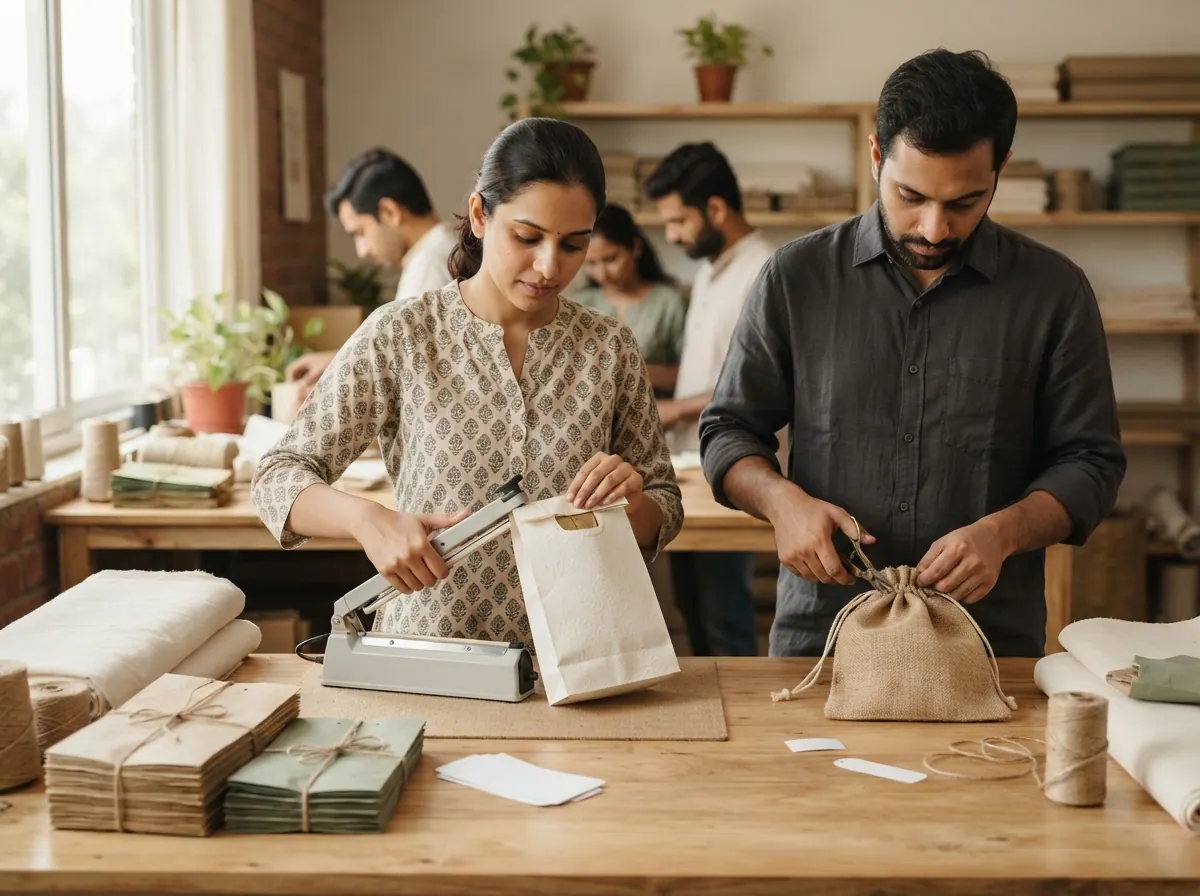
भारत में पेपर बैग का बिज़नेस शुरू करने के लिए आपको बैग बनाने की मशीन (या शुरू में हाथ से मोड़ने का सेटअप), क्राफ़्ट पेपर का पक्का स्रोत, गोंद और प्रिंटिंग का रास्ता, सूखी वर्कशॉप और करीब ₹2–15 लाख चाहिए। पैसा छोटे मार्जिन पर बहुत सारे बैग बेचने से बनता है, इसलिए कागज़ का खर्च, बर्बादी और दुकानों के दोबारा ऑर्डर मुनाफ़ा तय करते हैं।
यहाँ के सारे आँकड़े अंदाज़े हैं। खर्च करने से पहले अपने इलाके के दाम ज़रूर देख लें।
कितना खर्च आता है?
| सामान | छोटी, सेमी-ऑटोमैटिक शुरुआत | प्रिंटिंग के साथ ऑटोमैटिक यूनिट |
|---|---|---|
| बिजली वाला किराए का शेड | ₹15,000–40,000 डिपॉज़िट | ₹40,000–1 लाख डिपॉज़िट |
| बैग बनाने की मशीन | ₹1–3 लाख | ₹5–9 लाख |
| प्रिंटिंग (फ़्लेक्सो या सादी) | शुरू में बाहर से | ₹2–4 लाख |
| शुरू के कागज़ के रोल | ₹30,000–1 लाख | ₹1.5–3 लाख |
| गोंद, हैंडल, स्याही और पुर्ज़े | ₹10,000–30,000 | ₹40,000–1 लाख |
| पैकिंग, कार्टन और तराज़ू | ₹10,000–20,000 | ₹20,000–50,000 |
| बिजली कनेक्शन और वायरिंग | ₹15,000–40,000 | ₹40,000–1 लाख |
| रजिस्ट्रेशन और सैंपल टेस्ट | ₹5,000–15,000 | ₹15,000–40,000 |
| कुल | करीब ₹2–5 लाख | करीब ₹10–15 लाख |
मशीनों की साइज़ रेंज बहुत अलग होती है। छोटे फ़्लैट बैग की मशीन बड़े चौकोर तले वाले शॉपिंग बैग नहीं बना सकती, इसलिए मशीन उसी बैग के हिसाब से लें जो आपके खरीदार असल में इस्तेमाल करते हैं।
कौन सा बैग बनाएँ?
- छोटे सामान के लिए फ़्लैट बैग। बेकरी, मिठाई की दुकान, फ़ार्मेसी और किराना में इस्तेमाल होते हैं। बनाना आसान और अक्सर खरीदे जाते हैं।
- चौकोर तले वाले बैग। कपड़े की दुकानों और गिफ़्ट बेचने वालों के लिए। इनके लिए बेहतर मशीन और भारी कागज़ चाहिए।
- हैंडल वाले प्रिंटेड बैग। ब्रांड और बुटीक के लिए। भाव ज़्यादा, पर प्रिंटिंग और हैंडल से खर्च बढ़ता है।
- कपड़े या नॉन-वोवन बैग। सिलाई या अलग मशीन और ज़्यादा कुशल मज़दूर चाहिए।
कितनी कमाई हो सकती है?
मान लीजिए एक मशीन वाली यूनिट फ़्लैट और चौकोर तले के बैग बनाती है, रोज़ करीब 5,800, 26 दिन, यानी महीने के करीब 1,50,000 बैग। ये मोटे आँकड़े हैं।
हर महीने
- प्रति बैग मार्जिन (बिक्री भाव करीब ₹3.40, घटाएँ कागज़, गोंद और स्याही करीब ₹2.30): करीब ₹1.10
- मार्जिन: 1,50,000 × ₹1.10 = ₹1,65,000
- चार मज़दूर: 4 × ₹11,000 = ₹44,000
- बिजली: ₹10,000
- किराया: ₹15,000
- डिलीवरी: ₹15,000
- बचत: ₹1,65,000 − ₹44,000 − ₹10,000 − ₹15,000 − ₹15,000 = करीब ₹81,000
यह मानकर कि सारे बैग बिकें और खरीदार समय पर पैसा दें। क्राफ़्ट पेपर का भाव प्रति बैग ₹0.20 बढ़े तो महीने का मार्जिन करीब ₹30,000 घटता है। कागज़ गलत लगने और खराब गोंद की बर्बादी चुपचाप नुकसान करती है, इसलिए रोज़ रिजेक्ट गिनें।
शुरू करने से पहले क्या चाहिए?
- कागज़ की सप्लाई। दो कागज़ डीलर जानें, वज़न के हिसाब से रेट और डिलीवरी में कितना समय लगता है।
- खरीदारों की सूची। वे दुकानें जो रोज़ बैग इस्तेमाल करती हैं, और उनसे कहाँ मिलें, जैसे बाज़ार, मॉल या अस्पताल।
- सैंपल रेंज। खरीदारों को दिखाने के लिए तीन साइज़ और दो कागज़ वज़न।
- सूखा कमरा। कागज़ के रोल नमी खींचते हैं और सीलन वाले कमरे में गोंद ठीक से नहीं जमता।
- प्रिंट कराने का तरीका। तय करें कि शुरू में प्रिंटिंग बाहर से कराएँगे या नहीं। स्याही और सुखाने से खर्च और समय बढ़ता है।
कदम दर कदम
- दो यूनिट देखें और पूछें कि कौन से साइज़ सबसे ज़्यादा बिकते हैं और कितना कागज़ बर्बाद होता है।
- अपना पहला बैग चुनें अपने पास की दुकानों के हिसाब से।
- सेटअप करें: मशीन, रैक पर कागज़ के रोल और सूखी पैकिंग टेबल।
- टेस्ट बैग चलाएँ और गोंद, मोड़ और वज़न उठाने की ताक़त जाँचें।
- गिनकर पैक करें पचास या सौ के बंडल में, लेबल के साथ।
- दस दुकानों को सैंपल दें और पूछें कि कौन सा साइज़ और वज़न चाहिए।
- छोटे पहले ऑर्डर लें और समय पर डिलीवरी करें।
कौन से लाइसेंस लगते हैं?
नियम राज्य के हिसाब से बदलते हैं, इसलिए हर एक अपने स्थानीय ऑफ़िस से पक्का करें:
- Udyam रजिस्ट्रेशन लोन और स्कीम के लिए।
- GST, अगर आपकी बिक्री पर लगता है। अपने CA से पूछें।
- वर्कशॉप के लिए स्थानीय इजाज़त, और कमर्शियल बिजली कनेक्शन।
- प्लास्टिक के नियम। अगर आप कोई प्लास्टिक या नॉन-वोवन बैग बनाते या बेचते हैं, तो मोटाई और रोक के नियम प्रदूषण बोर्ड और नगर निगम से पूछें।
- खाने से छूने के नियम। अगर बैग खाने के लिए हैं, तो फ़ूड सेफ़्टी ऑफ़िस से पूछें कि कागज़ और स्याही पर क्या लागू होता है।
- लोन और स्कीम। छोटे निर्माता अपने ज़िला उद्योग केंद्र से पूछ सकते हैं कि अभी क्या खुला है।
क्या गलत हो सकता है?
- कमज़ोर बैग। पतला कागज़ या कमज़ोर गोंद हैंडल या तले पर फटता है, और दुकानें दोबारा ऑर्डर नहीं देतीं।
- कागज़ के भाव का उतार-चढ़ाव। भाव बढ़ने से मार्जिन तुरंत घटता है, और खरीदार ऊँचे भाव का विरोध करते हैं।
- मशीन की सेटिंग की दिक्कत। साइज़ की गलत सेटिंग से कागज़ के रोल बर्बाद होते हैं।
- प्रिंटिंग का फैलना। जो स्याही न सूखे वह बैग पर दाग डालती है और ऑर्डर बिगाड़ देती है।
- नम कागज़। भीगे रोल मुड़ जाते हैं और मशीन जाम करते हैं।
- देर से पैसा देने वाले। दुकानें और ब्रांड के खरीदार अक्सर हफ़्तों बाद देते हैं।
ये हालात आपके सामने आएँगे
आप क्या करेंगे? हर फ़ैसले की एक क़ीमत है।
शुरुआत
Flat bags sell to bakeries and grocers. Square-bottom bags suit garment shops but need a costlier machine.
- Start with flat bags: Cheaper machine, low price
- Start with square-bottom bags: Costlier, better price
One machine makes only small bags. A wider range costs much more, and you do not yet know what buyers want.
- Buy the narrow-range machine: Cheaper, limited sizes
- Buy the wide-range machine: Costly, more sizes
A mill agent gives a lower rate for rolls in bulk. A local dealer sells small lots at a higher rate.
- Buy bulk from the agent: Cheaper, cash tied up
- Buy small local lots: Dearer, little cash tied
Thin paper costs less per bag but tears under weight. Thicker paper makes stronger bags at a higher price.
- Use thicker paper: Higher cost, strong bags
- Use thin paper: Cheaper, may tear
A branded glue holds well and costs more. A cheap glue dries quickly but peels in humid weather.
- Buy the branded glue: Costs more, bags hold
- Buy the cheap glue: Cheaper, peels in damp
Shops want their names on bags. A printing unit is a big spend, but outsourcing adds delay and cost.
- Outsource printing at first: No machine cost, delays
- Buy a printing set: Big spend, own control
The cheaper shed has a wall that seeps in rain. Paper rolls and glue do badly in damp air.
- Rent the drier shed: More rent, dry paper
- Take the damp shed: Cheap, jams and peeling
पहला महीना
Test bags have crooked folds and the bottom opens. The machine size setting may be wrong.
- Adjust and rerun: Waste paper, learn the setting
- Sell them as seconds: Little cash, weaker name
A grocer tests your bag with a kilo of sugar and the handle gives way.
- Switch to stronger paper: Higher cost, bags hold
- Recommend it for light items: No cost, narrower market
A bakery will order regularly if its logo is printed. A small run needs a plate and setup cost.
- Pay for the printing plate: Setup cost, steady orders
- Offer plain bags with a stamp: Cheap, less appeal
Small shops want tiny orders. Setting up the machine for each size wastes time and paper.
- Set a minimum order: Efficient, lose small shops
- Accept small orders: More sales, more waste
A garment shop will order a thousand bags monthly but wants thirty days to pay.
- Give 15 days only: Safer cash, may lose the shop
- Give the 30 days: Keep the shop, cash tied up
Paper trimmings pile near a socket and a worker has spotted a loose wire.
- Clear offcuts, fix wiring: Cost now, safer shed
- Call an electrician, sell offcuts: Mid cost, wiring checked
रोज़ का काम
The paper rate goes up. Shops resist a price rise and compare you with others.
- Raise your price slightly: Protect margin, lose a few shops
- Hold the price: Keep shops, thin margin
A local drive against thin plastic bags sends shops to you. Orders double for a few weeks.
- Run an extra shift: Wages, catch the demand
- Make only what the machine allows: Safe quality, lose orders
Garment and sweet shops want gift bags with handles before the festivals. Handles slow the machine.
- Buy handle material and hire hands: Cost now, higher price
- Offer only handle-less bags: No cost, lose gift orders
A batch of printed bags has smudged logos. The ink needed more drying time.
- Reprint the batch: Heavy loss, keep the client
- Offer a discount instead: Cheaper, client unhappy
A rival sells thinner bags at a lower price. Some shops ask you to match.
- Match the price for big buyers: Lower margin, keep buyers
- Stress strength and finish: Some shops leave
Small online brands want low-quantity branded bags. They pay more per bag but order in small lots.
- Offer a small custom service: Setup cost, better price
- Stay with shop orders: No spend, steadier orders
The operator who knows the machine settings leaves for another unit in a busy week.
- Hire and train quickly: Wages, slow week
- Run the machine yourself: Save wages, less selling
A group of pharmacies wants small plain bags in huge numbers at a very low price, ordered every month.
- Take the pharmacy order: Low margin, steady volume
- Quote a higher price: Better margin, may be refused
जब मुश्किल आए
The roof leaks and three rolls get damp. The edges curl and jam the machine.
- Discard the damp rolls: Loss, clean output
- Dry and test a small lot: Time, may save some
A feed roller wears out and the machine jams. The mechanic needs a part from another city.
- Pay for express delivery: Costly, quick restart
- Wait for the normal part: Cheaper, lose output
A shop returns three thousand bags because the handles peel off. The glue may have failed in damp weather.
- Replace the lot, change glue: Heavy cost, trust kept
- Offer partial refund: Cheaper, trust falls
A brand that takes many bags keeps delaying payment. The paper dealer wants money now.
- Stop supply until paid: Lose volume, protect cash
- Supply smaller lots: Sales hold, risk stays
Orders drop sharply for weeks. Rent and wages continue and the store has stock.
- Offer discounts to shops: Cash comes in, lower margin
- Run fewer shifts: Save power, idle workers
बढ़ाना
Orders have outgrown the semi-automatic machine. An automatic one makes far more bags but is a big spend.
- Buy the automatic machine: Big spend, more output
- Add a second small machine: Lower spend, more labour
Outsourced printing causes delays and costs. Your own printing unit costs a lot, but brings control.
- Buy a printing set: Big spend, faster orders
- Keep outsourcing: No spend, delays continue
Customers ask for reusable bags too. They need stitching or a separate machine and new skills.
- Add a reusable bag line: Spend now, wider range
- Stay with paper: No spend, no new range
A retail chain wants a yearly contract for printed bags at a fixed price, with slow payment terms.
- Sign the contract: Steady volume, paper price risk
- Offer shorter contracts: Less risk, may lose them
क्या यह आपके लिए ठीक है?
पेपर बैग यूनिट आपके लिए ठीक है अगर आप कई छोटी दुकानों को बेच सकते हैं, एक मशीन और कुछ मज़दूर सँभाल सकते हैं और नकद सँभाल सकते हैं। अगर आपको हर बैग पर ऊँचा मार्जिन चाहिए, या दुकानों पर जाने और पैसे की वसूली के लिए समय नहीं दे सकते, तो यह कम ठीक बैठेगा।
एक अच्छा टेस्ट: तीन साइज़ के बैग के सैंपल दस दुकानों पर ले जाएँ और पूछें कि वे कितना देंगे। अगर कुछ दुकानें ऑर्डर देने की बात करें, तो छोटी मशीन लें और उन्हीं साइज़ से शुरू करें जो उन्होंने माँगे।