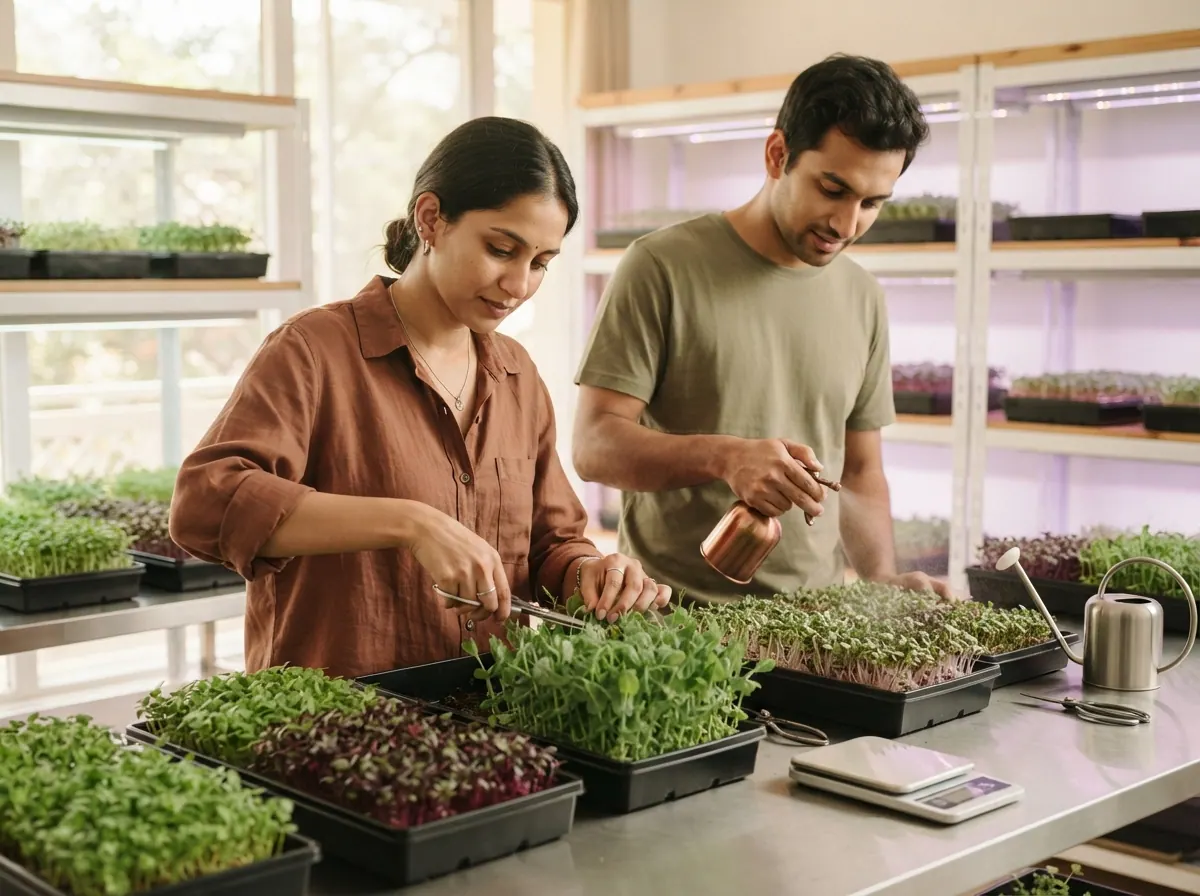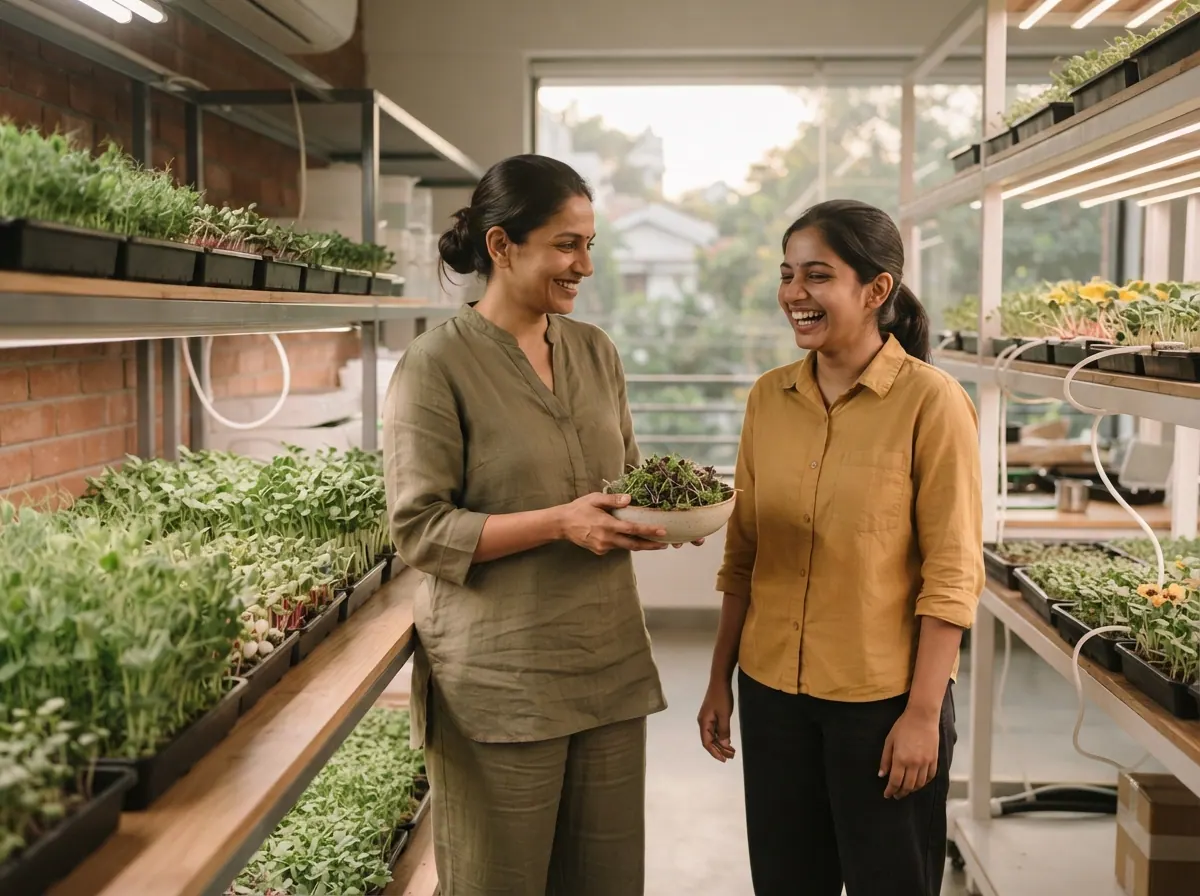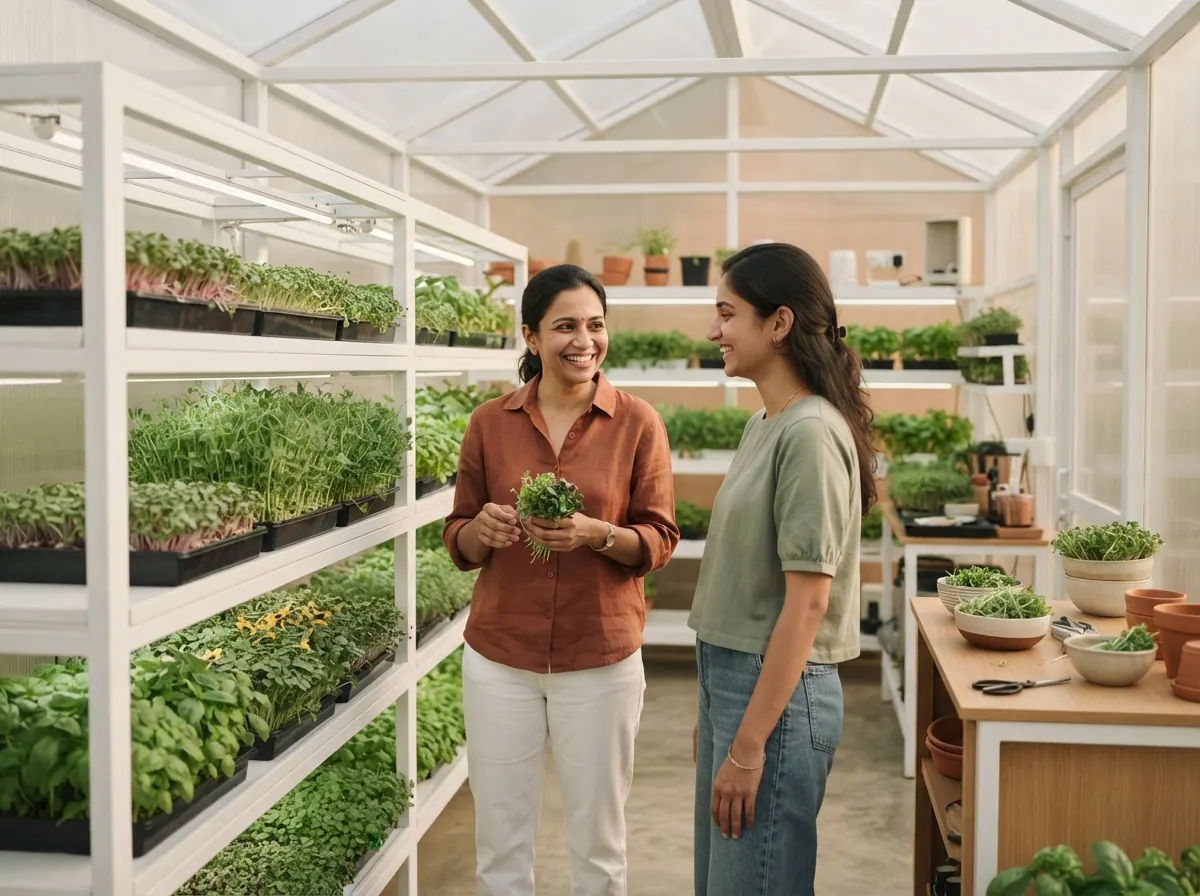
भारत में माइक्रोग्रीन्स बिज़नेस शुरू करने के लिए एक साफ़, ठंडी, अंदर की जगह, रैक, ग्रो लाइट या अच्छी रोशनी, ट्रे, कोकोपीट जैसा माध्यम, बीज और घर के सेटअप के लिए लगभग ₹20,000–60,000 या छोटी यूनिट के लिए ₹1.5–3 लाख चाहिए। आप एक ख़ाली कमरे में शुरू कर सकते हैं। कमाई रेस्तरां, कैफ़े और सेहत का ध्यान रखने वाले घरों को हर हफ़्ते छोटे डिब्बे बेचकर होती है, और पहली बिक्री बुवाई के दो हफ़्ते के भीतर आ सकती है।
यहाँ सारे आँकड़े अंदाज़े हैं। खर्च करने से पहले अपने इलाक़े के दाम ज़रूर देख लें।
इसकी लागत कितनी है?
| चीज़ | घरेलू सेटअप, लगभग 60 ट्रे | छोटी यूनिट, लगभग 300 ट्रे |
|---|---|---|
| रैक (स्टील या पाउडर-कोटेड, 4–5 मंज़िल) | ₹6,000–15,000 | ₹30,000–60,000 |
| ग्रो लाइट या ट्यूब लाइट, टाइमर | ₹4,000–12,000 | ₹25,000–50,000 |
| ट्रे (छेद वाली और बिना छेद वाली) | ₹2,000–6,000 | ₹10,000–25,000 |
| कोकोपीट और स्प्रेयर या मिस्ट बोतल | ₹1,500–4,000 | ₹8,000–20,000 |
| कई किस्मों के पहले बीज | ₹2,000–5,000 | ₹10,000–25,000 |
| पंखा, डीह्यूमिडिफ़ायर या छोटा कूलर | ₹3,000–8,000 | ₹15,000–40,000 |
| डिब्बे, लेबल, छोटा फ़्रिज | ₹3,000–8,000 | ₹15,000–35,000 |
| कुल | लगभग ₹20,000–60,000 | लगभग ₹1.5–3 लाख |
जो आप उगाते हैं उसे बेच पाने से पहले आयातित मैट और महँगे उपकरण न ख़रीदें। शुरुआती महीनों के लिए ट्रे, कोकोपीट और अच्छा बीज काफ़ी हैं।
क्या-क्या उगा सकते हैं?
- मूली: तेज़, तीखी और रेस्तरां की पसंदीदा।
- सूरजमुखी: मोटी और हल्की मीठी, पर बीज को ठीक से भिगोना और दबाना पड़ता है।
- सरसों और मेथी: तेज़ स्वाद, जल्दी उगती हैं और भारतीय ग्राहकों के लिए जानी-पहचानी हैं।
- मटर के शूट: मीठे और कैफ़े में अच्छे बिकते हैं।
- चुकंदर और चौलाई: लाल रंग से प्लेट सुंदर लगती है, पर ये धीमे उगते हैं और नाज़ुक होते हैं।
स्प्राउटिंग या माइक्रोग्रीन्स के लिए बने बीज भरोसेमंद विक्रेता से लें। खेत में बोने के लिए रसायन से उपचारित बीज इसके लिए ठीक नहीं है।
कमाई कितनी हो सकती है?
यह ऐसी यूनिट का हिसाब है जो हफ़्ते में लगभग 60 ट्रे उगाकर बेचती है, शुरुआती कुछ महीनों के बाद।
बिक्री
- 60 ट्रे हफ़्ता × 4 हफ़्ते = महीने में 240 ट्रे
- हर ट्रे से लगभग 250 ग्राम कटाई = 60,000 ग्राम, यानी महीने में 60 किलो
- 100 ग्राम के डिब्बों में = 600 डिब्बे
- लगभग 85% बिकते हैं (बाक़ी ख़राब कटाई, बिना बिके या सैंपल में जाते हैं) = 510 डिब्बे
- 510 डिब्बे × लगभग ₹70 = लगभग ₹35,700 महीना
हर महीने का खर्च
- बीज: 240 ट्रे × लगभग 40 ग्राम = 9.6 किलो × लगभग ₹350 किलो = लगभग ₹3,400
- कोकोपीट और घिसने वाली ट्रे = ₹1,500
- डिब्बे और लेबल: 600 × ₹6 = ₹3,600
- ख़रीदारों तक डिलीवरी = ₹4,000
- बिजली, पानी और लाइट = ₹3,000
- पार्ट-टाइम हेल्पर = ₹6,000
- कुल = लगभग ₹21,500
बचत: ₹35,700 − ₹21,500 = लगभग ₹14,200 महीना।
यह ख़रीदारों को बनाए रखने पर निर्भर है। एक बड़े रेस्तरां का ऑर्डर छूटने से आँकड़ा एक-तिहाई गिर सकता है। अगर आप सारा काम खुद करें तो ₹6,000 वापस जोड़ लें। जो कैफ़े हफ़्ते की जगह 30 दिन बाद पैसा देता है, वह भी पैसा अटका देता है।
शुरू करने से पहले क्या चाहिए?
- साफ़, हवादार कमरा। गरम, नम और ठहरी हवा में फफूँद उगती है। छोटा पंखा और ट्रे के बीच जगह ज़रूरी हैं।
- साफ़ पानी। बीज धोने और ट्रे में पानी देने के लिए साफ़ पानी लें, क्योंकि ये कच्चे खाए जाते हैं।
- मात्रा बढ़ाने से पहले ख़रीदार। पाँच शेफ़ और दो ऑर्गेनिक दुकानों को पहले मुफ़्त सैंपल दें। पूछें कि वे हर हफ़्ते क्या ख़रीदेंगे।
- कटाई के बाद ठंडा रखना। डिलीवरी तक डिब्बों को ठंडा रखने के लिए छोटा फ़्रिज।
कदम-दर-कदम
- चार हफ़्ते का ट्रायल करें, दो-तीन किस्में, हर एक की 10 ट्रे। हर ट्रे की उपज और कितनी ट्रे फ़ेल हुईं, नोट करें।
- भिगोएँ और बराबर बोएँ। बीज की पतली, बराबर परत। पहले कुछ दिन ऊपर से ट्रे और वज़न रखकर ढकें, फिर रोशनी में लाएँ।
- नीचे से पानी दें या हल्का मिस्ट करें, और हवा चलने दें ताकि फफूँद न लगे।
- साफ़ कैंची से सही ऊँचाई पर काटें, जब पहली असली पत्तियाँ दिखें, ज़्यादा देर न करें।
- हरी पत्तियाँ हल्के से सुखाकर साफ़ डिब्बों में पैक करें, लेबल पर तारीख़ के साथ। गीली पैक न करें।
- डिब्बे ठंडे रखें और जल्दी पहुँचाएँ। एक-दो दिन में गुणवत्ता गिरती है, इसलिए ज़्यादातर बिक्री कटाई के 24 घंटे में होती है।
- जिस ट्रे से बदबू आए या सफ़ेद रोएँदार फफूँद दिखे, उसे फेंक दें। उसे बेचें नहीं, और कोकोपीट दोबारा इस्तेमाल न करें।
- अंदाज़े से नहीं, ऑर्डर से बोएँ। पक्के ऑर्डर और थोड़े बफ़र के हिसाब से बुवाई करें।
कौन-से लाइसेंस लगते हैं?
- फ़ूड-सेफ़्टी रजिस्ट्रेशन। चूँकि यह खाने की चीज़ है, आपके पैमाने और बेचने के तरीक़े के हिसाब से बेसिक FSSAI रजिस्ट्रेशन लग सकता है। अपने ज़िले के फ़ूड सेफ़्टी दफ़्तर से पूछें।
- GST, बिक्री बढ़ने पर, और अगर आप ऐसे बिज़नेस को बेचते हैं जिन्हें GST बिल चाहिए। CA से पूछें।
- स्थानीय अनुमति, अगर यूनिट घर की जगह दुकान या इमारत में है। अपनी नगरपालिका से पूछें।
- लोन और योजनाएँ। कुछ राज्यों ने छोटी बाग़वानी यूनिट को मदद दी है, पर नियम अक्सर बदलते हैं। बाग़वानी विभाग से पूछें कि अभी क्या चालू है।
क्या गड़बड़ हो सकती है?
- फफूँद। सबसे बड़ी समस्या। ज़्यादा नमी, कम हवा और ज़्यादा घना बीज इसकी वजह बनते हैं।
- असमान उपज। जो ट्रे तीसरे दिन ठीक दिखती है, दसवें दिन पतली निकलती है। अपने आँकड़े पता होने तक रिकॉर्ड रखें।
- कम किस्में बेचना। अगर रेस्तरां सिर्फ़ मूली चाहता है और एक हफ़्ते आपकी मूली फ़ेल हो जाए, तो वह ग्राहक छूट जाता है।
- डिलीवरी में देरी। बंद थैले में गरम बाइक बॉक्स में हरी पत्तियाँ मुरझा जाती हैं।
- देर से पैसा देने वाले ग्राहक। जो कैफ़े हर हफ़्ते ऑर्डर करते हैं पर महीने बाद पैसा देते हैं, वे छोटी यूनिट का दम घोंट सकते हैं।
- बीज के दाम में उछाल। सूरजमुखी और मटर के बीज के दाम अचानक बढ़ सकते हैं। बिक्री पक्की होने पर थोक में ख़रीदें।
ये हालात आपके सामने आएँगे
आप क्या करेंगे? हर फ़ैसले की एक क़ीमत है।
शुरुआत
A seed shop sells sprouting seed at a high price. A cheaper bag nearby is meant for field sowing and is chemically treated.
- Buy sprouting-grade seed: Costs more, safe to eat
- Order from a microgreens supplier: Shipping fee, wider range
A carpenter offers wooden shelves at half the price of steel racks. Wood stays damp in a humid room.
- Buy steel racks: Costly, easy to clean
- Use wooden shelves: Cheaper, mould harbours
Grow lights give even growth but cost a lot. Common tube lights are cheap and your first trays are not many.
- Buy grow lights: Costly, even healthy trays
- Start with tube lights: Cheap, pale and leggy greens
Your only free room faces the sun and reaches 34 degrees in the afternoon. Microgreens do better when cooler.
- Add a cooler and fan: Power bill, healthier trays
- Grow only in the morning hours: Cheap, fewer trays a week
A hotel chef will try your greens for two weeks free. You have only 20 trays and need them for orders.
- Give free samples: Lose some sales, win a name
- Offer paid sample boxes: Some income, chef may refuse
Branded boxes with labels cost much more at your small volume. Plain clear boxes are cheap but look ordinary.
- Order branded boxes: Costly, looks professional
- Use clear boxes and stickers: Cheap, plain look
पहला महीना
Eight trays show white fuzz near the roots. It looks like roots but smells slightly musty.
- Bin the trays, add airflow: Lose trays, safe greens
- Bin them, pause new sowing: Lose a week, fix the room
Half the sunflower seeds sprouted late and the tray looks patchy. The seed was soaked only a short time.
- Resow and soak properly: A week lost, better trays
- Cut it anyway, sell cheap: Some money, weaker look
The municipal supply is smelly and cloudy this week. Your trays are drinking this water.
- Buy filtered water: Cost per week, safe trays
- Use it after settling: Free, slower growth
A cafe owner wants fresh boxes six days a week at the same price. It means going out each morning.
- Agree to daily supply: More fuel and time, steady buyer
- Offer twice a week: Less effort, buyer may leave
A six-hour power cut stopped the fan and lights. The room is warm and still, and tomorrow is a delivery day.
- Buy a small inverter: Costly, protects trays
- Open windows, cut early: Cheap, lighter yield
रोज़ का काम
A restaurant that orders 30 boxes a week says another grower sells at a lower price. They want a discount.
- Give a small discount: Thin margin, keep the order
- Hold the price, show quality: Keeps margin, may lose them
A shop will stock your boxes only on consignment and pay after they sell. Unsold boxes come back wilted.
- Accept consignment: New buyer, unsold waste
- Insist on paid orders: Safe cash, smaller reach
Neighbours and a health group ask for one or two boxes at a time. Small deliveries take up your day.
- Start weekly home boxes: Better rate, more delivery
- Sell only to businesses: Less hassle, fewer sales
Your supplier raises sunflower seed price by a third. It is your biggest seller.
- Buy in bulk now: Cash locked, lower unit cost
- Raise your box price: Cover cost, some buyers grumble
Boxes delivered by bike in the afternoon arrive limp. A chef complains and wants fresh stock.
- Buy an insulated bag: Small cost, fresher boxes
- Deliver only before 9 am: Free, fewer buyers served
Chefs say colourful greens look better on plates. These need more care and grow slowly.
- Add colourful varieties: Seed cost, higher price
- Stay with easy varieties: Low risk, plain range
Every cut tray must be scrubbed and sanitised. A helper could do it, but cost eats into profit.
- Hire an evening helper: Wage cost, cleaner trays
- Do it yourself: No cost, long days
A caterer wants three times your usual volume for a fortnight of weddings. You would need more trays quickly.
- Add trays and take the order: Seed and rack cost, big sales
- Supply a smaller share: Safe, miss some sales
जब मुश्किल आए
After three humid days, mould has spread across four trays on two levels. Orders for tomorrow are ready to cut.
- Discard all affected trays: Miss orders, safe product
- Discard and buy from a friend: Cost more, orders met
A cafe owner says a customer felt sick after eating a salad with your greens. It may not be your product.
- Pause, check, tell the cafe: Lose sales, protect trust
- Pay for a lab check: Fee and delay, clear answer
A hotel that took a third of your volume has switched to a supplier in the city. You have trays already growing.
- Find new buyers fast: Samples and fuel, uncertain
- Cut sowing to match: Saves seed, smaller income
A cafe owes ₹9,000 and keeps asking for more boxes. They say the bill will be cleared next month.
- Supply only after payment: Risk losing the cafe
- Keep supplying: More owed, buyer stays
The compressor died overnight and you have 40 boxes packed for morning delivery.
- Rent cold space, repair fridge: Costly, order delivered
- Deliver as is, fast: Saves cost, wilting risk
Fungus gnats are breeding in damp cocopeat and flying around the room. Chefs visiting would notice.
- Change media, add sticky traps: Cost and cleanup, safe fix
- Pause the rack and clean fully: Lose a week, no chemicals
बढ़ाना
Orders now exceed your room. A small rented unit with a cooler would double output but need steady buyers.
- Rent and set up the unit: Big spend, double output
- Add racks in your room: Smaller spend, tight space
A city store wants weekly supply but pays after 45 days and wants a barcode and printed label.
- Accept the listing: Big volume, slow payment
- Stay with chefs and cafes: Faster cash, lower volume
A cafe owner suggests a kit of greens, dressing and seeds for homes. It means new packing and a short shelf life.
- Launch the salad kit: Design and packing cost
- Keep selling greens only: Simple, no new margin
Several people want to learn microgreens. Teaching brings fee income but creates new competitors nearby.
- Run a paid workshop: Extra cash, more rivals
- Do not teach: Keep your edge
A hotel group asks for your food-safety registration and GST invoice before placing a large standing order.
- Register and invoice properly: Fees and CA, big orders
- Stay small, cash buyers: No paperwork, lose big accounts
क्या यह आपके लिए सही है?
माइक्रोग्रीन्स आपके लिए ठीक है अगर आपको बारीकी पसंद है, रोज़ कमरा साफ़ रख सकते हैं और शेफ़ और दुकानदारों को बेचने में सहज हैं। अगर आप कई-कई दिन बाहर रहते हैं तो कम सही है, क्योंकि ट्रे को छोड़ा नहीं जा सकता, या अगर आपको जल्दी बहुत बड़ी आमदनी चाहिए, क्योंकि हर ट्रे थोड़ा ही देती है।
एक अच्छी परीक्षा: एक महीने 10 ट्रे चलाएँ और पाँच ख़रीदारों को बेचें। अगर कम से कम तीन हर हफ़्ते की सप्लाई चाहते हैं, तो रैक धीरे-धीरे बढ़ाएँ और उतना ही लें जितना आपके सबसे अच्छे ख़रीदार ऑर्डर करें।