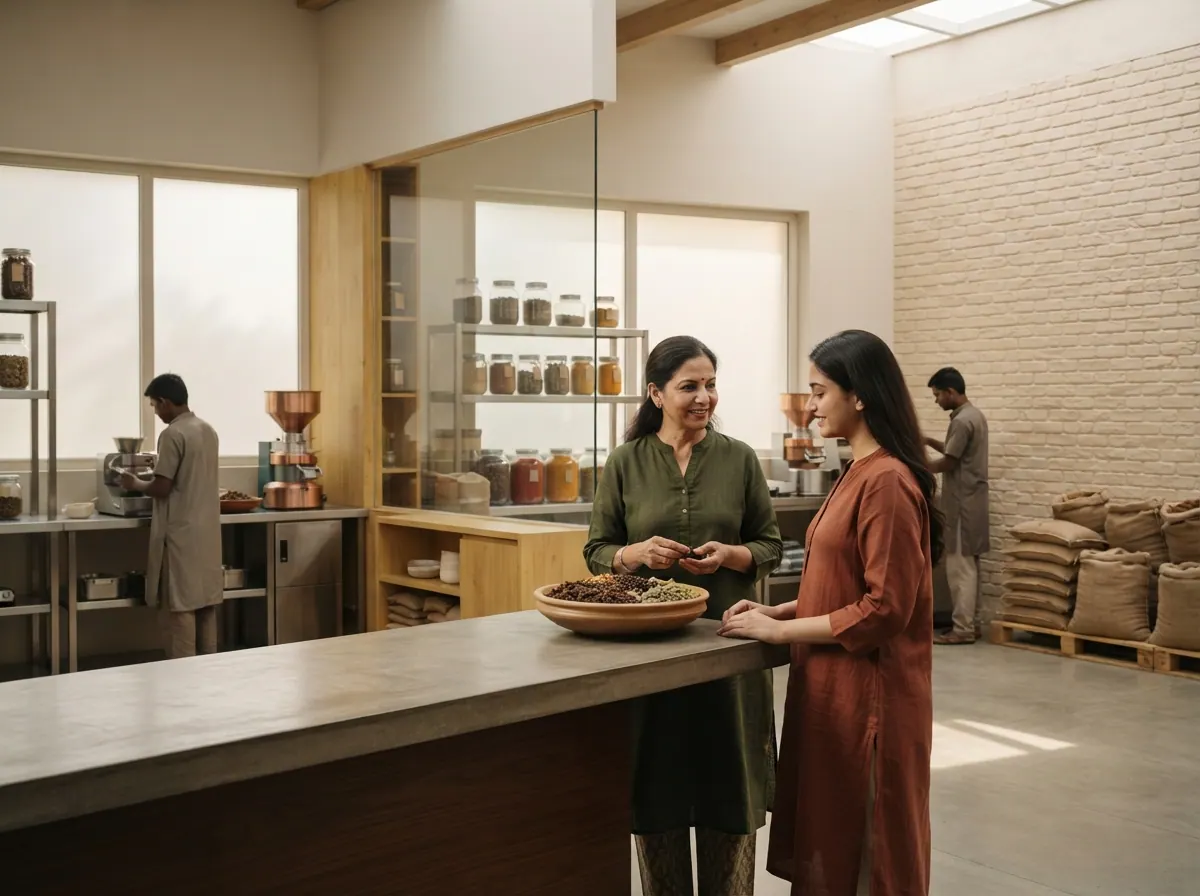
भारत में मसाला बिज़नेस शुरू करने के लिए आपको पल्वराइज़र, रोस्टर, सीलिंग और वज़न की व्यवस्था, साफ़ कच्चे मसाले, FSSAI रजिस्ट्रेशन, सही लेबल और छोटी यूनिट के लिए करीब ₹2.5–10 लाख चाहिए। घरेलू स्तर पर, स्थानीय चक्की में छोटे लॉट पिसवाकर, करीब ₹1 लाख में शुरुआत हो सकती है। तीन बातें तय करती हैं कि कमाई होगी या नहीं: मिर्च, हल्दी और धनिया कितने में मिलते हैं, हर बैच का स्वाद एक जैसा है या नहीं, और दुकानें कितनी देर में पैसे देती हैं।
यहां के सारे आंकड़े अंदाज़े हैं। पैसा लगाने से पहले अपने इलाके के दाम देख लें।
कितना खर्च आएगा?
| चीज़ | अंदाज़ा |
|---|---|
| मोटर के साथ पल्वराइज़र | ₹40,000–1.2 लाख |
| रोस्टर | ₹30,000–1 लाख |
| छन्नी और ब्लेंडर | ₹20,000–60,000 |
| पाउच सीलर और वज़न कांटा | ₹10,000–50,000 |
| छपे पाउच और लेबल, पहली खेप | ₹20,000–60,000 |
| कच्चे मसाले, पहला माल | ₹50,000–2.5 लाख |
| वायरिंग, शेड का काम, धूल का इंतज़ाम | ₹20,000–1 लाख |
| रजिस्ट्रेशन और पहली लैब जांच | ₹5,000–20,000 |
| दुकानों के उधार का पैसा | ₹50,000–2.4 लाख |
| कुल | करीब ₹2.45–10 लाख |
बहुत से नए लोग आखिरी लाइन पर कम सोचते हैं। दुकानों को बेचने पर पैसा हफ़्तों बाद लौटता है, पर मंडी को आज नकद चाहिए।
machine खरीदने से पहले बिजली का इंतज़ाम देखें। बड़े पल्वराइज़र को अक्सर थ्री-फ़ेज़ connection चाहिए, और किराए की जगह पर इसमें समय लग सकता है। बेचने वाले से अपना सैंपल सामने पिसवाएं, और पाउडर घर ले जाकर अगले दिन सूंघकर देखें।
कितनी कमाई हो सकती है?
1,000 किलो मिले-जुले मसाले (हल्दी, मिर्च, धनिया और थोड़ा गरम मसाला) बनाने वाली छोटी यूनिट का सामान्य महीना:
बिक्री
- 1,000 किलो × करीब ₹300 किलो औसत थोक दाम = ₹3,00,000
खर्च
- कच्चे मसाले: 1,040 किलो × करीब ₹170 किलो (सफ़ाई और पिसाई में करीब 4% कम होता है) = ₹1,76,800
- पैकेट और लेबल: 1,000 किलो × ₹14 किलो = ₹14,000
- दो मज़दूर = ₹24,000
- किराया = ₹15,000
- बिजली = ₹6,000
- डिलीवरी = ₹8,000
- जांच, मरम्मत और छोटे खर्च = ₹3,000
- कुल = ₹2,46,800
बचा: ₹3,00,000 − ₹2,46,800 = महीने के ₹53,200।
अब देखिए कितना जल्दी बदलता है। अगर कच्चा मसाला ₹20 किलो महंगा हो, तो खर्च 1,040 × ₹20 = ₹20,800 बढ़ता है, यानी profit का करीब 39%। अगर दुकानें 30 दिन में पैसे दें, तो करीब ₹3 लाख हमेशा बाज़ार में फंसा रहता है। इसीलिए अच्छी खरीद का मौसम और नियमित वसूली स्वाद जितनी ही ज़रूरी हैं।
शुरू करने से पहले क्या चाहिए?
- छोटी सूची। वही शुरू करें जो रसोई में रोज़ लगता है: हल्दी, मिर्च, धनिया और एक गरम मसाला जिस पर आपको गर्व हो। सांभर, चाट, पाव भाजी और दूसरे ब्लेंड बाद में आ सकते हैं, हर एक की अपनी रेसिपी और शेल्फ़ की जगह चाहिए।
- कच्चे मसालों के स्रोत। जाने-माने व्यापार केंद्रों में मिर्च के लिए गुंटूर, रंगदार मिर्च के लिए कर्नाटक का ब्याडगी, जीरे के लिए गुजरात का ऊंझा, हल्दी के लिए इरोड और सलेम, और धनिया के लिए राजस्थान व मध्य प्रदेश हैं। शुरुआत में अच्छे स्थानीय व्यापारी से लेना ठीक है, पर नमी, रंग, पत्थर और खुशबू जांचना सीखें।
- धूल पर काबू वाली जगह। मिर्च की धूल से खांसी और पड़ोसियों की शिकायत जल्दी आती है। एग्ज़ॉस्ट वाला अलग कमरा और मज़दूरों के लिए मास्क कम से कम चाहिए।
- वज़न के साथ लिखी रेसिपी। अंदाज़े से बना ब्लेंड हर बैच में बदलता है, और दुकान वाले पहचान लेते हैं।
कदम दर कदम
- अपना ब्लेंड परखें, 20 घरों और दो ढाबों पर। पूछें कि इसे लेने के लिए कौन-सा मसाला छोड़ेंगे, और कितने दाम पर।
- हर पैकेट की लागत मिलाएं, आसपास शेल्फ़ पर रखे ब्रांड से। छोटा ब्रांड बड़े नामों से दाम में कम ही जीतता है, इसलिए ताज़गी, इलाके के स्वाद या किसी खास खरीदार पर जीतें।
- FSSAI रजिस्ट्रेशन कराएं, सही श्रेणी में। बनाना और पैक करना रिटेल जैसा नहीं है।
- यूनिट लगाएं: सफ़ाई, पिसाई, छनाई, मिलाई, वज़न, सीलिंग, इसी क्रम में, ताकि कच्चा मसाला तैयार मसाले के पास न आए। हल्दी और मिर्च के बैच अलग रखें और बीच में machine साफ़ करें।
- पिसाई का ताप कम रखें। गर्मी से खुशबू उड़ जाती है। छोटे दौर में पीसें, machine को आराम दें, और पैकिंग से पहले मसाला ठंडा होने दें।
- लेबल ध्यान से छपवाएं। लेबल के कानूनी नियम हैं, और गलत छपाई पूरा पैसा बर्बाद करती है।
- डिस्ट्रीब्यूटर से पहले खुद 20–30 दुकानों को बेचें। अपनी बिक्री की फेरी बताती है कि आपके माल में क्या कमी है।
- हर हफ़्ते नमी और कीड़े देखें, खासकर बरसात में, और माल ज़मीन से ऊपर रखें।
कौन-से लाइसेंस लगते हैं?
- FSSAI रजिस्ट्रेशन या लाइसेंस। श्रेणी आपके टर्नओवर और काम पर निर्भर है। FoSCoS पोर्टल पर देखें, और पैकेट पर अपना FSSAI नंबर छापें।
- लीगल मेट्रोलॉजी के पैक माल के नियम बताते हैं कि लेबल पर क्या होना चाहिए, जैसे कुल वज़न, MRP और पैकर का ब्योरा। स्थानीय लीगल मेट्रोलॉजी दफ़्तर से पूछें कि पैकर रजिस्ट्रेशन चाहिए या नहीं।
- GST, टर्नओवर बढ़ने पर या बड़े खरीदारों के मांगने पर। अपने माल की दर CA से पूछें।
- उद्यम रजिस्ट्रेशन मुफ़्त है और बैंक loan में मदद कर सकता है।
- प्रदूषण और फ़ैक्ट्री के नियम आपकी machine, स्टाफ़ और जगह पर निर्भर हो सकते हैं, इसलिए स्थानीय दफ़्तर से पूछें।
- लैब जांच समझदारी है, चाहे अभी कोई न मांग रहा हो। मान्यता प्राप्त लैब की रिपोर्ट सैंपल पर सवाल उठने पर आपका बचाव बनती है।
- AGMARK और स्पाइसेज़ बोर्ड रजिस्ट्रेशन के बारे में पूछ लें, अगर क्वालिटी मार्क चाहिए या एक्सपोर्ट की योजना है।
क्या-क्या गलत हो सकता है?
- सस्ता कच्चा माल। कम दाम के धनिया या मिर्च में भूसी, पत्थर या मिलाया हुआ रंग आ सकता है। सैंपल फ़ेल हो तो पैकेट पर नाम आपका ही है।
- बरसात में गांठें और कीड़े। नमी से पाउडर जमता है और धनिया में कीड़े लगते हैं। अच्छी सीलिंग और सूखा भंडार लौटे हुए लॉट से सस्ता पड़ता है।
- हर बैच का अलग स्वाद। इस महीने का गरम मसाला पिछले जैसा न हो तो दुकानों के ग्राहक टूट जाते हैं।
- उधार का हाथ से निकलना। एक डिस्ट्रीब्यूटर जो एक भुगतान में देर करे और फिर और माल मांगे, आपकी ज़्यादातर पूंजी रोक सकता है।
- गलत दाम पर बहुत माल लेना। मिर्च और हल्दी के दाम ऊपर-नीचे होते रहते हैं, और बहुत पहले भंडार भरना साल बिगाड़ सकता है।
- ज़्यादा गर्म पिसाई। पाउडर अच्छा दिखता है, पर महीने भर में खुशबू फीकी पड़ जाती है।
- पड़ोसी और मज़दूर। रिहायशी गली में मिर्च की धूल से शिकायतें आती हैं, और अंदर काम करने वालों को भी तकलीफ़ होती है।
ये हालात आपके सामने आएँगे
आप क्या करेंगे? हर फ़ैसले की एक क़ीमत है।
शुरुआत
A pulveriser gives you control, but it needs power and space. The chakki is cheap, but other people's spices go through it.
- Buy a 5 HP pulveriser: Big spend, your own control
- Grind at the chakki: Saves money, mixed flavours
The machine you want needs a three-phase connection. Getting it means fees and waiting, and a smaller machine would run today.
- Apply for three-phase: Fees and delay, bigger batches
- Buy a smaller machine: Start now, slow output
Your first home trial filled the lane with chilli dust. A family has complained to your landlord.
- Rent a small shed: Rent cost, no complaints
- Grind late at night: Saves rent, tempers rise
A trip to Guntur or Unjha gets you better lots and prices, but you need a big order. Your local trader gives small lots.
- Go to the source: Big purchase, better spices
- Stay with the local trader: Pay less now, plainer quality
An agent filled your form as a retailer because it was quicker. You actually grind and pack, which is manufacturing.
- Correct the category: Small fee, papers right
- Leave it as it is: Saves effort, trouble at inspection
Printed pouches look real but have a big minimum order. Plain pouches with stickers cost much less and can change often.
- Order printed pouches: Cash stuck, shelf-ready look
- Use stickers for now: Saves cash, looks homemade
Shopkeepers ask if you also have chaat and sambar masala. More products mean more stock, labels and recipes to get right.
- Start with four basics: Less stock, fewer sales
- Launch all fifteen: More stock, more for each shop
पहला महीना
A new lot of turmeric has ground pale and lost its rich colour. Your first customers know the earlier packets.
- Sell it cheap to hotels: Some money, a weaker name
- Blend with a better lot: Extra cost, colour steady
A customer says the new packet is not like the last one. You have been making batches by feel.
- Weigh and test each batch: Takes time, taste stays steady
- Keep going by taste: Faster, more complaints
Shops will keep your packets only if they can pay later. You have to pay for your chilli this week.
- Give 15 days' credit: Money stuck, more shelves
- Cash on delivery only: Money safe, fewer shops
Nobody in the colony knows your brand. A 50 g sample in every house costs real money, and most may go unused.
- Hand out the samples: Spends stock, new households
- Rely on shop shelves: Saves stock, slower start
A shop owner asks if your chilli has been lab tested. An accredited lab would charge per sample and take a while.
- Test each main product: Costs money, gives proof
- Test later on: Saves money, nothing to show
The air is damp and your packed coriander powder has formed lumps. It is already boxed for delivery.
- Dry and repack it: Costs work, quality kept
- Deliver it quickly: Cash in, some returns
रोज़ का काम
The distributor wants a good margin and 30 days to pay. You would no longer visit those shops yourself.
- Sign with the distributor: Lower margin, far more shops
- Keep your own route: Better margin, slow growth
The mandi is up sharply this month. You can load up now, or raise your prices when your stock runs out.
- Buy three months' stock: Big cash out, price locked
- Raise your MRP later: Keeps cash, shops complain
A row of highway dhabas want a monthly supply in plain bags. It is steady, but the price is far below your packets.
- Accept the bulk order: Steady money, thin margin
- Stay with branded packets: Better margin, less volume
A trader offers coriander well below the market price. It has a lot of husk, and it smells a bit old.
- Buy clean coriander: Costs more, taste kept
- Buy the cheap lot: Saves money, sample risk
Running the machine hard gets orders out on time, but the powder comes out hot. Slower runs keep the aroma but cost more power and hours.
- Slow down the runs: Higher cost, better aroma
- Keep running hard: More output, flatter smell
Your 200 g pack is too costly for many customers. Small pouches sell faster but need new packing and earn less per kilo.
- Add small pouches: Packing cost, more buyers
- Stay with 200 g: Better margin, fewer buyers
Raw mango season is close and families will be making pickle. A special blend needs its own batch and label.
- Make the achar masala: Extra stock, seasonal sales
- Stay with regular masalas: No risk, miss the season
Your two workers complain of burning eyes and cough on chilli days. The small exhaust is not coping.
- Fit dust extraction: Big spend, a safer room
- Buy better masks only: Cheap, dust remains
Your electricity bill has nearly doubled this month. A mechanic says the old motor needs rewinding.
- Rewind the motor: Pay now, lower bills
- Keep running it: No repair bill, breakdown risk
जब मुश्किल आए
A chilli powder sample from a shop was reported as below standard. The notice names your batch.
- Recall the batch: Heavy loss, shows honesty
- Argue and keep selling: Sales go on, bigger risk
You found weevils in the bags stored against a damp wall. Some of it is already cleaned for grinding.
- Throw away the bad bags: Heavy loss, clean stock
- Sieve it and use it: Saves stock, risk to your name
A bad sealer setting has left weak seals. The smell has spread across the delivery cartons.
- Repack the whole lot: Costs a day, shop trust kept
- Ship them today: Keeps delivery date, returns likely
The Legal Metrology inspector says your label is missing required details. You have 5,000 printed pouches left.
- Reprint the pouches: Costly, label correct
- Hand-stamp the details: Cheap, looks poor
Your biggest distributor says it is a short-term problem and wants another lot. Half your market goes through them.
- Stop supply, collect dues: Some money back, shops empty
- Keep supplying on a plan: More at risk, shelves stay full
बढ़ाना
A local supermarket chain wants you to pack masala under its name. The volumes are good, but your name stays off the shelf.
- Pack for the store: Steady orders, no brand gain
- Stay with your brand: Less volume, name grows
Customers from other cities ask where to order your garam masala. Online selling needs GST, courier packing and a return plan.
- List your best masalas: Fees and packing, new buyers
- Stay local for now: Simple, a smaller market
You keep running out at festival time. An automatic packing line needs a loan, while a second shift needs more staff and supervision.
- Buy the packing line: Big loan, more output
- Add a second shift: Less cost, harder to supervise
क्या यह आपके लिए सही है?
मसाला बिज़नेस आपके लिए ठीक है अगर आपकी स्वाद और खुशबू की पकड़ अच्छी है, बैच का रिकॉर्ड ध्यान से रखना पसंद है, और पहले साल दुकान-दुकान घूमकर बेचने में दिक्कत नहीं। पारिवारिक रेसिपी या ऐसा क्षेत्रीय स्वाद, जिसे बड़े ब्रांड ठीक से नहीं देते, असली ताकत है।
अगर आप राष्ट्रीय ब्रांड से दाम पर लड़ना चाहते हैं, या उधार वसूलना पसंद नहीं, तो यह कम ठीक है। पहले यह करके देखें: 50 किलो बनाएं, अपनी निगरानी में साफ़ चक्की पर पिसवाएं, ज़रूरी रजिस्ट्रेशन के बाद सादे पाउच में पैक करें, और देखें कौन-सी दुकान दोबारा मांगती है। दोबारा ऑर्डर घरवालों की तारीफ़ से ज़्यादा बताता है।