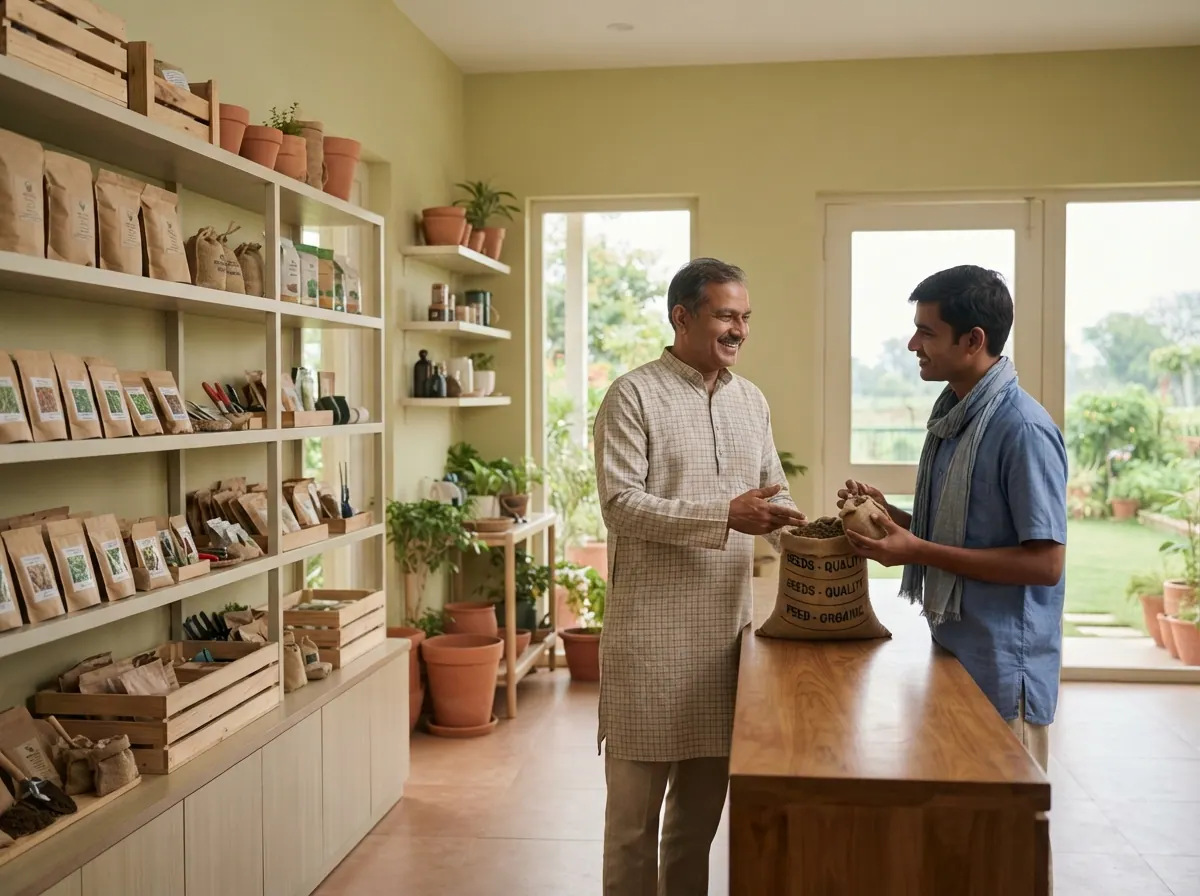
भारत में खाद और एग्री-इनपुट की दुकान खोलने के लिए खाद, कीटनाशक और बीज के डीलर लाइसेंस, एक सूखा गोदाम, उधार देने वाला सप्लायर और छोटी दुकान के लिए लगभग ₹3–6 लाख या बड़ी के लिए ₹8–15 लाख चाहिए। ज़्यादातर पैसा स्टॉक में जाता है, फ़र्नीचर में नहीं। दुकान बहुत बिक्री पर थोड़ा मार्जिन कमाती है, और सबसे बड़ा ख़तरा वह उधार है जो आप किसानों को फ़सल कटने तक देते हैं।
यहाँ सारे आँकड़े अंदाज़े हैं। खर्च करने से पहले अपने इलाक़े के दाम ज़रूर देख लें।
इसकी लागत कितनी है?
| चीज़ | छोटी खाद-बीज दुकान | गोदाम वाली बड़ी दुकान |
|---|---|---|
| शुरुआती स्टॉक (यूरिया, DAP, NPK, बीज, फ़सल सुरक्षा) | ₹1.5–3.5 लाख | ₹5–9 लाख |
| दुकान-गोदाम का डिपॉज़िट और फ़िटिंग | ₹40,000–1 लाख | ₹1–2.5 लाख |
| रैक, पैलेट, तराज़ू | ₹15,000–30,000 | ₹40,000–80,000 |
| लाइसेंस, ट्रेनिंग और काग़ज़ात | ₹10,000–30,000 | ₹20,000–50,000 |
| बिलिंग कंप्यूटर और सॉफ़्टवेयर | ₹15,000–30,000 | ₹30,000–60,000 |
| बोर्ड, छोटी गाड़ी या टेम्पो किराया | ₹10,000–40,000 | ₹40,000–1 लाख |
| किसानों को उधार के लिए नक़द | ₹40,000–1 लाख | ₹1.5–3 लाख |
| कुल | लगभग ₹3–6 लाख | लगभग ₹8–15 लाख |
आपका सप्लायर अक्सर दुकान जितना ही मायने रखता है। जो होलसेलर बिकने के बाद पैसा लेने देता है, वह उसी दुकान को कम नक़द में चलाना संभव बना देता है। कुछ भी किराए पर लेने से पहले उधार की शर्तें पूछ लें।
क्या-क्या बेचते हैं?
- खाद: यूरिया, DAP, पोटाश और मिक्स NPK, जो तय अधिकतम दाम पर भारी मात्रा में बिकती है, इसलिए हर बोरी का मार्जिन कम होता है।
- बीज: सब्ज़ी, मक्का, कपास, धान वग़ैरह, आपके इलाक़े के हिसाब से। बीज पर मार्जिन ज़्यादा हो सकता है, पर पैकेट की तारीख़ निकलने के बाद बिना बिके बीज की कीमत गिर जाती है।
- फ़सल सुरक्षा के सामान: कीटनाशक, फफूँदनाशक और खरपतवारनाशक, जिनके लिए लाइसेंस और सावधानी से रखना ज़रूरी है।
- बायो-इनपुट और छोटे औज़ार: वर्मीकम्पोस्ट, जैव-उर्वरक, स्प्रेयर, मल्च और ड्रिप के सामान। मार्जिन बेहतर, बिक्री कम।
- चारा और मिनरल मिक्सचर: डेयरी वाले इलाक़ों में पशु आहार और मिनरल मिक्स ऑफ़-सीज़न में दुकान को चालू रखते हैं।
कमाई कितनी हो सकती है?
यह खेती वाले इलाक़े की छोटी दुकान का दूसरे साल का हिसाब है, पूरे साल पर औसत।
बिक्री और मार्जिन
- महीने की औसत बिक्री = ₹8,00,000 (बुवाई के महीनों में ज़्यादा, बीच में कम)
- खाद, बीज और फ़सल सुरक्षा पर मिलाकर लगभग 8% मार्जिन
- ₹8,00,000 × 8% = ₹64,000 महीना सकल मार्जिन
हर महीने का खर्च
- दुकान और गोदाम का किराया = ₹8,000
- दो हेल्पर × ₹11,000 = ₹22,000
- बिजली, फ़ोन, ढुलाई = ₹5,000
- लाइसेंस नवीनीकरण, सॉफ़्टवेयर और छोटे खर्च = ₹3,000
- जो किसान पैसा नहीं देते उनसे नुकसान, साल पर औसत = ₹10,000
- कुल = ₹48,000
बचत: ₹64,000 − ₹48,000 = लगभग ₹16,000 महीना।
यह कम मुनाफ़ा है, और एक ख़राब बारिश का साल बहुत चोट करता है क्योंकि उधार अटक जाता है। अगर आप खुद काउंटर पर रहें और एक ही हेल्पर चाहिए, तो लगभग ₹11,000 वापस जोड़ लें। जो दुकान सबको उधार देती है, उसका डूबा हुआ पैसा दोगुना हो सकता है, और वह पूरा मुनाफ़ा खा जाएगा।
शुरू करने से पहले क्या चाहिए?
- लाइसेंस, इस क्रम में। ज़िले के कृषि दफ़्तर में अर्ज़ी दें। काग़ज़ हाथ में आने से पहले माल न मँगाएँ।
- सूखा गोदाम। खाद नमी खींचकर गाँठ बन जाती है। कीटनाशक खाने, बीज और चारे से दूर रखें।
- होलसेलर या कंपनी से जुड़ाव। व्यस्त हफ़्तों में खाद की सप्लाई तंग हो सकती है, और अच्छे संपर्क वाले डीलर को माल मिलता है जबकि बाक़ी इंतज़ार करते हैं।
- स्थानीय फ़सलों की जानकारी। जानें कि आपके इलाक़े में क्या, कब बोया जाता है और आम कीट कौन-से हैं। किसान सलाह पूछते हैं, और ग़लत सलाह ग्राहक छीन लेती है।
कदम-दर-कदम
- दूसरे गाँवों की तीन चालू दुकानों से बात करें। पूछें कि उनकी भीड़ कब होती है और वे कितना उधार रखते हैं।
- ऐसी जगह चुनें जो किसानों की आम सड़क पर हो, मंडी या बस स्टॉप के पास हो, और जमी हुई पुरानी दुकान के ठीक बगल में न हो।
- कृषि विभाग से लाइसेंस के लिए अर्ज़ी दें: खाद, कीटनाशक और बीज, जो लागू हो। कीटनाशक के लिए ट्रेनिंग लग सकती है।
- सीज़न का स्टॉक लें, साल भर का नहीं। बुवाई के हिसाब से किश्तों में मँगाएँ और पहला ऑर्डर छोटा रखें।
- उधार का नियम लिखकर रखें। जैसे: हर किसान की सीमा, कटाई के बाद देय, और रजिस्टर में दस्तख़त या एंट्री।
- हर बिक्री का बिल रखें, बीज और कीटनाशक पर बैच नंबर के साथ। ग्राहक शिकायत करे तो यह आपको बचाता है।
- खेतों पर जाएँ। हफ़्ते में कुछ खेत देखने से किसान पक्के ग्राहक बन जाते हैं।
कौन-से लाइसेंस लगते हैं?
- खाद डीलर लाइसेंस, उर्वरक नियंत्रण के नियमों के तहत, राज्य के कृषि विभाग से।
- कीटनाशक डीलर लाइसेंस, कीटनाशक क़ानून के तहत, राज्य के कृषि विभाग से। कई राज्य कोई योग्यता या छोटा कोर्स माँगते हैं।
- बीज डीलर रजिस्ट्रेशन, बीज के नियमों के तहत। बीज के पैकेट पर सही लेबल होना ज़रूरी है।
- GST रजिस्ट्रेशन, जब बिक्री सीमा पार करे, और रजिस्टर होने पर बिल पर GST।
- शॉप एंड एस्टैब्लिशमेंट और स्थानीय ट्रेड लाइसेंस, नगरपालिका या पंचायत से।
नियम और फ़ीस राज्य के हिसाब से अलग हैं और समय के साथ बदलते हैं, इसलिए खर्च से पहले ज़िले के कृषि दफ़्तर से मौजूदा सूची पूछ लें। GST और हिसाब-किताब के लिए CA से पूछें।
क्या गड़बड़ हो सकती है?
- बहुत ज़्यादा उधार। किसान कटाई के बाद देते हैं, और ख़राब साल में बिल्कुल नहीं देते। ज़्यादातर नई दुकानें इसी से डूबती हैं।
- डेड स्टॉक। तारीख़ निकले बीज और न बिके कीटनाशक पैसे का नुकसान हैं। सीज़न के हिसाब से मँगाएँ।
- गीला या मिला-जुला भंडारण। नम गोदाम में खाद जम जाती है, और चारे या बीज के पास रखा कीटनाशक सुरक्षा और क़ानून का जोखिम बनता है।
- नक़ली या घटिया माल। एक ख़राब बैच नाम डुबो देता है, इसलिए जानी-मानी कंपनियों से ही लें और हर बिल रखें।
- ऐसी फ़सल-सलाह जिसका आपको पक्का पता नहीं। ग़लत स्प्रे या ग़लत मात्रा फ़सल बर्बाद कर सकती है, और किसान आपके काउंटर पर लौटकर आएगा।
- व्यस्त हफ़्तों में खाद की कमी। सप्लायर से जुड़ाव न हो तो आप अपने सबसे अच्छे हफ़्ते खो देते हैं।
ये हालात आपके सामने आएँगे
आप क्या करेंगे? हर फ़ैसले की एक क़ीमत है।
शुरुआत
A wholesaler offers a good opening lot of fertilizer at a discount if you order this week. Your dealer licence is still being processed.
- Wait for the licence: Miss the offer, stay legal
- Ask wholesaler to hold the rate: Pay a booking fee, order later
A shop near the grain mandi costs more rent. A cheaper one on the highway is away from where farmers gather.
- Rent near the mandi: Higher rent, steady footfall
- Rent on the highway: Lower rent, fewer farmers
The only godown you can afford shows damp patches in the rains. Fertilizer cakes in wet air.
- Fix the walls, add pallets: Costly, dry storage
- Use only the dry corner: Cheap, less stock space
One wholesaler offers lower rates but wants payment at delivery. Another gives 30 days credit at slightly higher rates.
- Pay cash for lower rates: Ties up cash, better price
- Take the 30 day credit: Keeps cash, thinner margin
The district office says the pesticide dealer needs a short certificate course. It takes weeks and costs a fee.
- Join the course: Fee and weeks lost, legal
- Skip pesticides for now: Lose a big product line
A printer offers a big board and 1,000 leaflets with seed rates for the season. Nobody in the village knows your shop yet.
- Big board and leaflets: Costly, wide reach
- Small board, word of mouth: Cheap, slower start
पहला महीना
A farmer you do not know wants fertilizer and seed worth ₹30,000 on credit, to be paid after harvest.
- Give it with a written note: Win a customer, risk the cash
- Offer a smaller credit limit: Safer, the farmer may go elsewhere
A box of vegetable seed packets has two months left on the date. Farmers are not asking for it yet.
- Sell at a discount now: Small loss, cash back
- Wait for the sowing rush: Risk it expires unsold
A chilli farmer describes curled leaves and asks which spray to use. You are not sure what the problem is.
- Send the farmer to the officer: Lose the sale, keep trust
- Suggest a common spray: Sale made, could be wrong
Word has spread that urea arrived. Forty farmers are waiting, and you have only 80 bags at the stated price.
- Limit to 2 bags each: Fair, some are unhappy
- Serve regular customers first: Loyalty, others complain
Your bills are in a notebook. A software seller offers batch-wise billing for a yearly fee.
- Buy the billing software: Fee, clean records
- Keep the notebook: Free, weak records
रोज़ का काम
The monsoon came a week early. Farmers want seed and fertilizer now, but you stocked for next week.
- Rush a top-up order: Costly, catch the demand
- Sell what you have: No extra cost, lose some sales
Your supplier sends only half your DAP order in peak week. A trader offers more, at a higher rate.
- Buy from the trader: Thin margin, farmers served
- Share your half fairly: No extra cost, some go empty
A seed company rep offers a high margin on a new maize hybrid but wants a big order up front. Farmers know your old brand.
- Order a big lot: Better margin, unsold risk
- Take a small trial lot: Safe, smaller margin
Your area has many dairy farmers who ask for feed and mineral mix. It sells all year, but the bags are bulky.
- Add cattle feed: Space and cash, steady sales
- Stay with crop inputs: Simple, quiet off-season
Sowing is over and the counter is empty. Rent and wages still have to be paid.
- Offer drip and sprayer sales: Needs stock, brings visits
- Cut hours, wait it out: Saves effort, slow months
A local lab will test soil samples at a discount if you gather farmers in your shop yard.
- Host the camp: Cost and effort, trust grows
- Skip it: No cost, no new customers
Many farmers owe you money. Some come to pay, others avoid your shop since their crop price was low.
- Visit each farmer yourself: Time and fuel, money returns
- Wait for them to come: No effort, slow returns
A new khad-beej shop opens opposite yours and cuts rates on urea and seed for the first month.
- Match on a few items: Thin margin, keep customers
- Hold prices, give advice: Keeps margin, may lose some
जब मुश्किल आए
Eight farmers say a seed lot from your shelf germinated poorly. The company says storage in your godown may be to blame.
- Replace seed, claim from company: Costs now, trust kept
- Blame the company, no refund: No cost, lose name
An agriculture officer visits and asks for purchase bills and batch numbers for pesticides on your shelf.
- Show full records: Records ready, stay clear
- Ask for a few days: Time to fix files, scrutiny
A crop-protection bottle has spilled on the shelf next to seed packets and cattle feed.
- Clear, clean, discard spoiled: Loses stock, safe godown
- Isolate the spot, call the supplier: Mid cost, the spill is handled safely
A farmer with ₹80,000 owed lost the crop to hail. The farmer asks for time and more credit for the next season.
- Give time, no new credit: Keeps goodwill, delayed money
- Give time and new credit: More risk, the farmer stays loyal
A trader offers a bag at half the price of a known brand. The bill is plain and shows no batch number or licence details.
- Refuse, buy from the brand: Lower margin, safe name
- Ask for papers, then decide: Time lost, trader may walk
Sowing was patchy and farmers are buying less. Your godown still holds stock bought for a normal season.
- Cut orders, run discounts: Lower margin, clears stock
- Hold stock for next season: Cash locked, expiry risk
बढ़ाना
A landlord offers a shop in a bigger farming town. It would double your stock and need a trusted manager.
- Open the second shop: Big spend, more sales
- Strengthen the first shop: Small spend, steady
A farmer producer group wants a bulk deal on fertilizer and seed with payment after their harvest.
- Supply on group credit: Large sales, risk of delay
- Ask for 30 percent advance: Safer, smaller deal
A local operator offers to spray crops for your customers if you promote them and sell the product.
- Tie up with the operator: New income, shared risk
- Stay a product seller: Simple, no new income
A supplier offers to pack organic manure under your shop name. Margins are better, but you are liable for quality.
- Launch your own brand: Packing cost, higher margin
- Keep selling known brands: No risk, lower margin
You keep running out of room in rush weeks. A bigger godown costs real money but lets you buy stock in bulk.
- Build the larger godown: Big loan, better buying
- Rent a second small room: Smaller spend, tight space
क्या यह आपके लिए सही है?
खाद-बीज की दुकान आपके लिए ठीक है अगर आपको खेती की अच्छी समझ है, उधार को लेकर धीरज है और रोज़ किसानों से मिलना पसंद है। अगर आपके पास पैसा कम है, पैसे माँगने से बचते हैं, या बुवाई की भीड़ की सुबहों में दुकान पर नहीं रह सकते, तो यह कम सही है।
एक अच्छी परीक्षा: अपनी दुकान खोलने से पहले एक सीज़न किसी चालू खाद-बीज दुकान में काम करें। देखें कि उधार कैसे चलता है और कौन से ग्राहक चुकाते हैं। फिर भी इच्छा हो तो छोटा शुरू करें, उधार जान-पहचान के किसानों तक सीमित रखें और नक़द बढ़ने के साथ स्टॉक बढ़ाएँ।