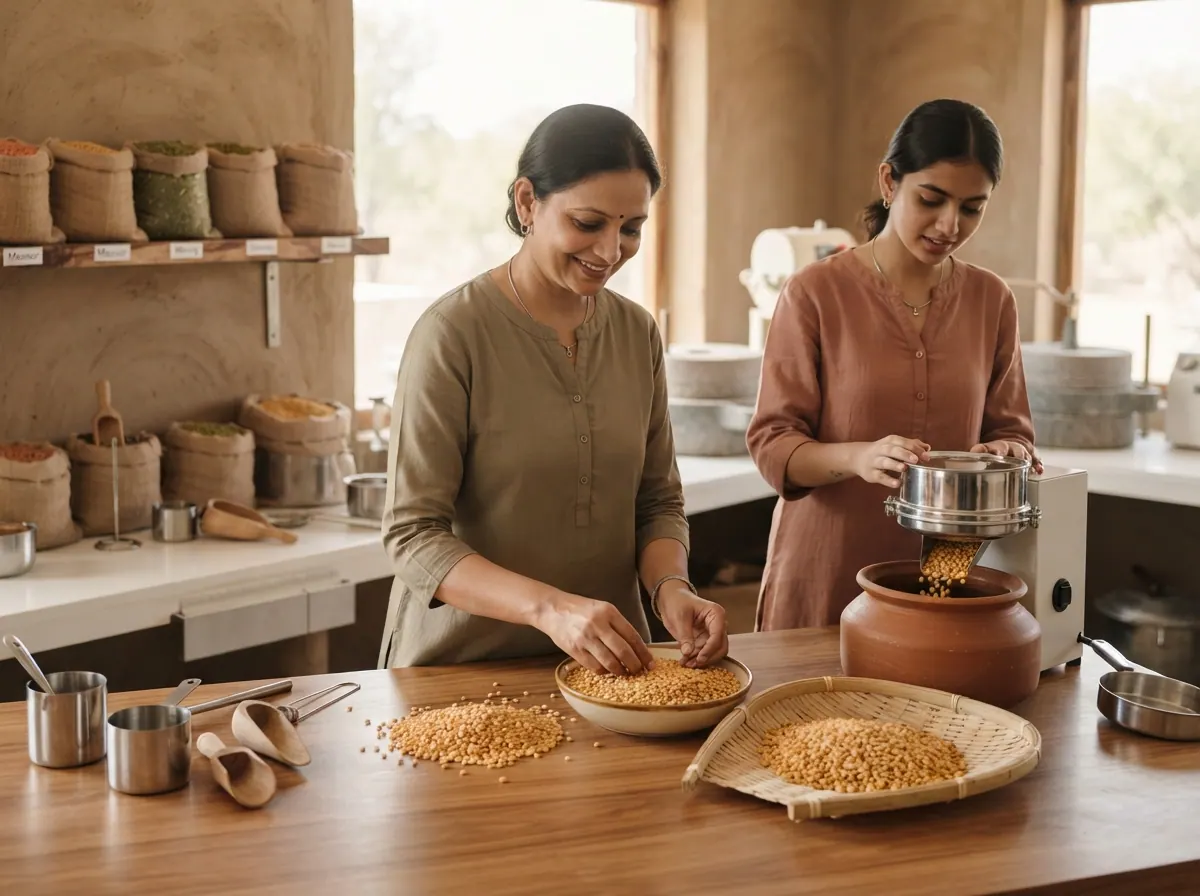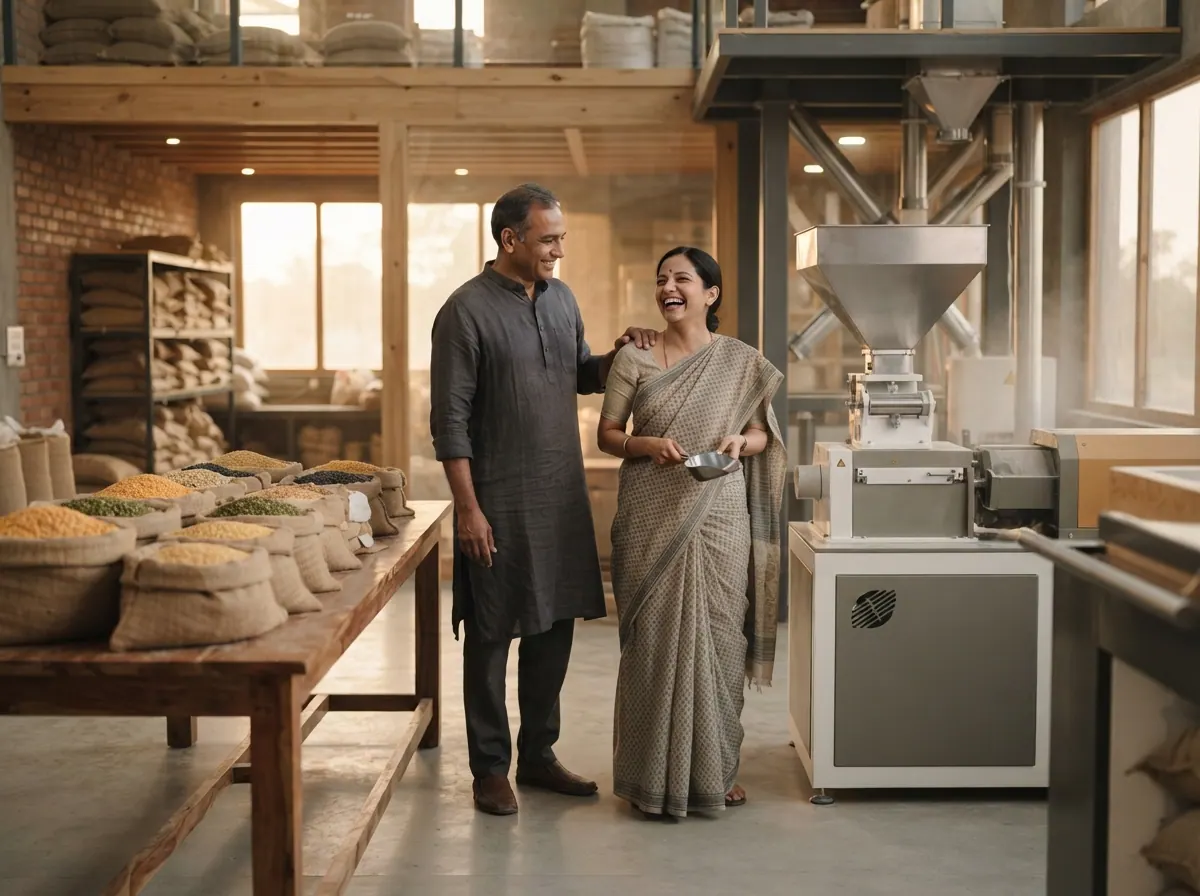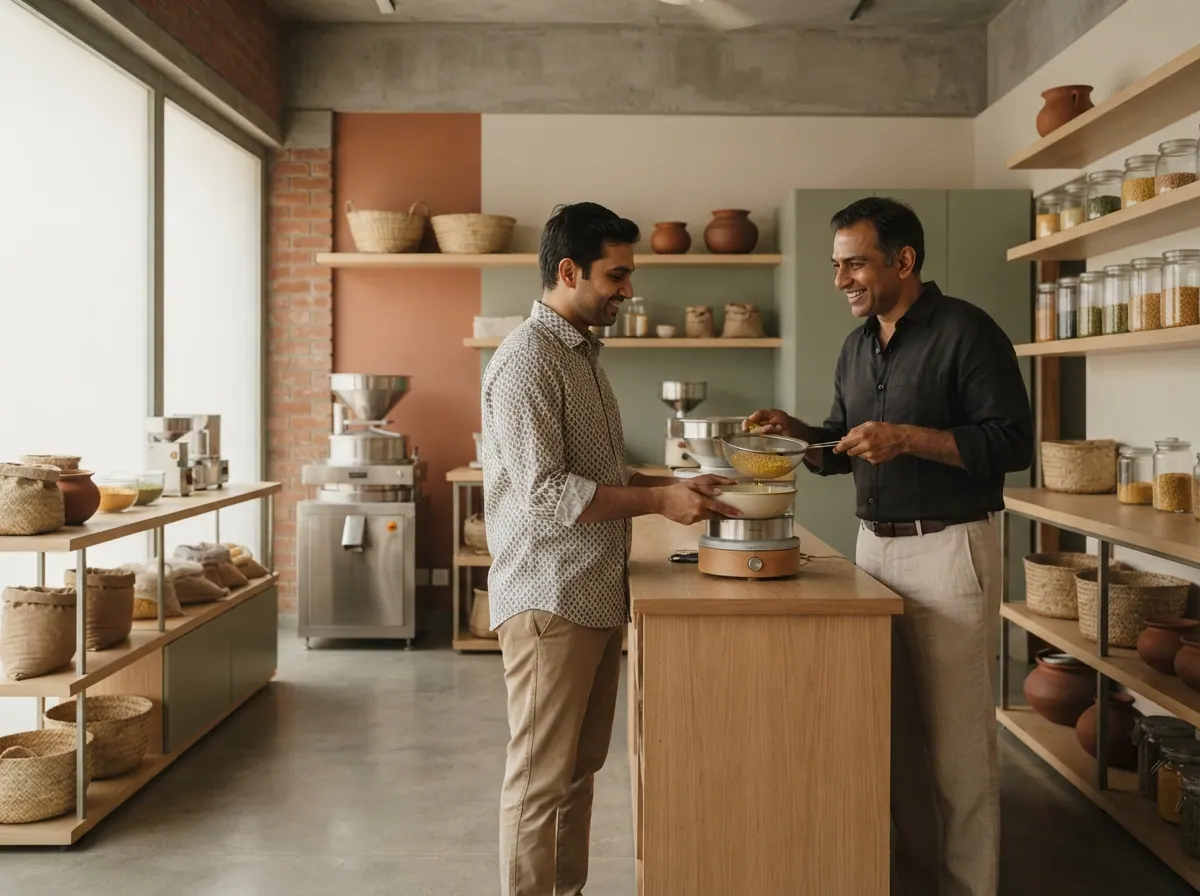
भारत में दाल मिल शुरू करने के लिए थ्री-फ़ेज़ बिजली वाला शेड, मिनी मिल सेट (क्लीनर, हलर या स्प्लिटर और पॉलिशर), तराज़ू, दलहन का स्रोत, FSSAI रजिस्ट्रेशन और मिनी मिल के लिए करीब ₹3–6 लाख चाहिए। पूरी यूनिट में करीब ₹15 लाख तक लगते हैं। अंदर आने का सबसे आसान तरीका किसानों और व्यापारियों के लिए जॉब वर्क है। बड़ी कमाई अपनी दलहन खरीदने से हो सकती है, पर उसमें बहुत ज़्यादा पैसा लगता है और भाव का जोखिम रहता है।
यहाँ सब आँकड़े अंदाज़े हैं। पैसा लगाने से पहले अपने इलाके के भाव पूछ लें।
कितना खर्च आएगा?
| चीज़ | मिनी मिल | पूरी यूनिट |
|---|---|---|
| क्लीनर और ग्रेडर | ₹40,000–1 लाख | ₹1.5–3 लाख |
| हलर, स्प्लिटर और पिटिंग मशीन | ₹1–2 लाख | ₹2.5–5 लाख |
| पॉलिशर | ₹30,000–60,000 | ₹1–2 लाख |
| मोटर, वायरिंग, पैनल | ₹40,000–80,000 | ₹1–2 लाख |
| शेड और फ़र्श | ₹50,000–1.5 लाख | ₹2–4 लाख |
| तराज़ू और प्लेटफ़ॉर्म | ₹20,000–40,000 | ₹50,000–1 लाख |
| Working capital: पहली दलहन | ₹30,000–1 लाख | ₹2–4 लाख |
| बोरे, FSSAI, डिपॉज़िट | ₹30,000–60,000 | ₹60,000–1.5 लाख |
| कुल | करीब ₹3–6 लाख | करीब ₹10–15 लाख |
मिल एक-दो दालों के लिए सेट होती है, क्योंकि तुअर, मूँग और चना की दाल बनाने की सेटिंग अलग-अलग होती है। मशीन बनाने वाले से पूछें कि आपके इलाके की दाल पर क्या आज़माया है।
कौन सी दलहन पीसें?
- तुअर (अरहर): ज़्यादातर घरों की सबसे बड़ी दाल, पर छिलका सख़्त होता है और पीसने से पहले कंडीशनिंग लग सकती है।
- चना: चना दाल के लिए स्प्लिट और बेसन के लिए पीसना।
- मूँग और उड़द: छिलके के साथ या बिना, स्प्लिट और पॉलिश।
- मसूर: जल्दी बनती है और खूब बिकती है।
उससे शुरू करें जो आपका इलाका उगाता है। किसान भरोसे की मिल पर अपनी दलहन लाते हैं।
कितनी कमाई हो सकती है?
जॉब वर्क करने वाली मिनी मिल। किसान और छोटे व्यापारी अपनी दलहन लाते हैं और प्रति क्विंटल चार्ज देते हैं। मिल स्टॉक नहीं रखती, इसलिए नकद का जोखिम कम है।
बिक्री
- 300 क्विंटल महीना × करीब ₹400 क्विंटल = ₹1,20,000
हर महीने का खर्च
- बिजली: ₹30,000
- तीन कारीगर × ₹12,000: ₹36,000
- किराया: ₹12,000
- मरम्मत और पुर्ज़े: ₹10,000
- बोरे, लोडिंग और छोटे खर्च: ₹8,000
- कुल = ₹96,000
बचत: ₹1,20,000 − ₹96,000 = करीब ₹24,000 महीना।
अपनी दलहन खरीदने वाली मिलें ज़्यादा कमा सकती हैं, पर भाव में उतार-चढ़ाव बड़ा होता है। एक महीने में दलहन का भाव आपके पूरे मिलिंग चार्ज से ज़्यादा हिल सकता है। आज़माना हो तो अपनी क्षमता के छोटे हिस्से से शुरू करें और स्टॉक कम समय रखें।
शुरू करने से पहले क्या चाहिए?
- स्थिर वोल्टेज की थ्री-फ़ेज़ बिजली और कटौती की योजना।
- पक्के फ़र्श, अच्छी हवा और जगह वाला शेड बोरों, चूनी और ट्रकों के लिए।
- धूल की योजना। दलहन की धूल फेफड़ों और पड़ोस के घरों में जाती है।
- किसानों और व्यापारियों से रिश्ता जो दलहन लाएँगे।
- चूनी का खरीदार, अक्सर डेयरी वाले और चारा बनाने वाले।
कदम-दर-कदम
- दो चालू मिनी मिलें देखें और पूछें कि हर दलहन से कितनी दाल निकलती है और जॉब वर्क का क्या चार्ज लेती हैं।
- पहली दलहन चुनें इस पर कि आपके पास के किसान क्या उगाते हैं और बाज़ार क्या खाता है।
- मशीनें लेने से पहले बिजली कनेक्शन और शेड तैयार करें।
- प्रशिक्षित फ़िटर से लगवाएँ और तीन-चार किसानों की खेप से ट्रायल चलाएँ।
- प्रति क्विंटल चार्ज तय करें और लिखकर लगाएँ, और अंदर आई दलहन और निकली दाल दोनों तौलें।
- चूनी और दाल अलग रखें और दलहन बदलते समय लाइन साफ़ करें।
- पैक दाल तभी जोड़ें जब लाइसेंस हो और कुछ दुकानें खरीदने को तैयार हों।
कौन से लाइसेंस लगते हैं?
- FSSAI रजिस्ट्रेशन या लाइसेंस बेची जाने वाली दाल के लिए।
- यूनिट का रजिस्ट्रेशन स्थानीय उद्योग दफ़्तर में, और लोन व योजनाओं के लिए उद्यम।
- बिजली की मंज़ूरी आपके लोड के लिए।
- स्थानीय इजाज़त और प्रदूषण के नियम धूल और शोर के लिए। स्थानीय दफ़्तर से पूछें।
- वज़न और माप: तराज़ू की आम तौर पर जाँच और मोहर चाहिए।
- GST: CA से पूछें।
क्या-क्या गड़बड़ हो सकती है?
- ख़राब दलहन के लॉट से कम दाल निकलना, और किसान का सोचना कि आपने धोखा दिया।
- नई दलहन के लिए मशीन की ग़लत सेटिंग, जिससे दाने टूटते हैं और बहुत पाउडर बनता है।
- मिले हुए लॉट। एक किसान की दाल दूसरे से मिल जाती है और भरोसा टूटता है।
- दलहन के भाव में उतार-चढ़ाव, जो अपना स्टॉक रखने पर भारी पड़ता है।
- रखी दलहन में घुन और नमी।
- पड़ोसियों की धूल की शिकायतें।
ये हालात आपके सामने आएँगे
आप क्या करेंगे? हर फ़ैसले की एक क़ीमत है।
शुरुआत
Farmers nearby grow tur and chana. Tur needs more machine steps, while chana splitting is simpler.
- Set up for tur: More steps, bigger market
- Set up for chana: Simpler, smaller margin
A machine maker offers a mini line at a low price, but has not tested it on your local tur.
- Ask for a tur trial: Trip cost, safer purchase
- Buy the cheap line now: Saves money, risky yield
A shed with a dust hood and vent costs more. Without it, dust drifts to the neighbours' houses.
- Build with dust hood: Costly, cleaner air
- Build a plain shed: Cheaper, complaint risk
The power office says your load needs approval. A neighbour offers shared power at an extra rate.
- Wait for your own approval: No extra cost, idle weeks
- Rent a diesel set: Fuel cost, start sooner
A kirana owner wants 1 kg packs of your dal this week. Your FSSAI registration is not through yet.
- Wait for registration: Lose weeks of sales
- Do job work only until then: No packed sales, safe
A farmer brings 20 quintals and asks you to promise the same dal yield as the next mill.
- Promise only what you measure: Honest, they may leave
- Promise a range after a test: Honest, may lose the job
पहला महीना
A farmer's tur gives less dal than usual and they think you kept some. Part of the lot was shrivelled.
- Show them husk and weight: Time, builds trust
- Give them a small refund: Costs money, ends dispute
The splitter is set too tight for a new moong lot, so the dal is full of powder and broken pieces.
- Call the fitter to reset: Visit cost, better dal
- Sell it as broken dal cheap: Small cash, trust dips
The hopper was not emptied between two lots, so some of one farmer's dal got into the other's bags.
- Tell both and adjust the weights: Honest, a small loss
- Tell the farmer who lost: Small refund, honest
Husk and powder from tur pile up in the shed. A dairy farmer offers a low rate and a feed maker offers a little more.
- Sell to the dairy farmer: Easy, lower rate
- Hold for the feed maker: Better rate, store space
रोज़ का काम
A shortage lifts tur prices sharply. A trader asks you to buy a stock in your own name for a quick gain.
- Buy a small stock: Cash tied up, price risk
- Stick to job work: No risk, no upside
After harvest, farmers queue with trolleys for days. Your line can run only so many hours.
- Run a second shift: More wages, much more work
- Serve in order, let some wait: Calmer, some leave
A lot waiting for a farmer's pickup has weevils. Fumigation costs money and needs a trained person.
- Call a licensed pest service: Costly, safe stock
- Mill at once, return it: Cheaper, farmer may be unhappy
Many farmers bring urad. Your line is set for tur, and a new screen set costs money.
- Buy an urad screen set: Cost now, a new service
- Stay with tur and chana: No cost, lose urad work
A trader brings 100 quintals for job work and says they will pay after selling the dal.
- Take half the charge in advance: Safer, trader may go elsewhere
- Mill on credit: A big job, cash waits
Shops ask for 1 kg packs of polished dal. It needs packing, labels and your own pulse stock.
- Start a small packed line: Cost and stock risk
- Keep doing job work: No stock risk, small income
Some shops want green moong with skin, others want split yellow dal. Each needs a different set.
- Offer both, change settings: Setting time, more buyers
- Offer only the split yellow: Simple, lose half the shops
The mill is dusty before harvest rush. A full clean stops the line for a day and costs wages.
- Stop for a full clean: A day lost, cleaner dal
- Clean in short gaps: No lost day, dust remains
जब मुश्किल आए
A motor spark lit some dust near the polisher. A worker beat it out and nobody is hurt.
- Clean daily, fit extinguisher: Time and cost, safer
- Clean it once and carry on: Cheap, risk remains
Several motors run together and the panel trips often. The power office says your load is higher than sanctioned.
- Apply to raise the sanctioned load: Fees and wait, legal power
- Run the motors in turns: Free, lower output
A family says husk dust is coming into their house and they will go to the panchayat.
- Add a bag filter and cyclone: Costly, cleaner air
- Run only in the daytime: Free, less output
A farmers' group says your mill gives lower yield than the mill in the next town. They will move their lots.
- Let them watch a test lot: Time and effort, proves it
- Offer a lower charge: Keeps them, thin margin
An inspector finds your platform scale reads a little low. You must fix and stamp it, and some farmers heard about it.
- Fix, stamp and tell farmers: Fee, a clean record
- Fix quietly: Cheaper, doubts remain
A larger mill offers a lower job-work charge and free pickup of farmers' lots.
- Offer pickup yourself: Truck cost, keeps farmers
- Stay on quality and trust: Margin kept, may lose some
बढ़ाना
A better polisher gives a brighter dal that sells at a higher price. It costs a lot to install.
- Buy the better polisher: Costly, premium dal
- Keep the old polisher: No cost, plain look
Prices are lowest at harvest. Storing your own stock ties up cash but may earn more later.
- Buy a fixed stock: Cash tied up, price risk
- Keep doing job work: No risk, small income
Local sweet shops want fresh besan. A pulveriser costs money and needs separate cleaning.
- Buy a pulveriser: Cost, extra income
- Skip, stay with dal: No cost, narrower work
A colour sorter removes stones and discoloured grains, and big stores pay more. It is very costly.
- Install the sorter: Heavy cost, bigger buyers
- Hand-sort a small lot: Cheap, small and slow
A bank officer offers a working capital loan if you keep stock and sales records for a few months.
- Prepare records with a CA: Fees now, funds for growth
- Run on your own money: No fee, slower growth
A farmers' producer group wants you to mill all their pulses for a season at a fixed charge.
- Sign the season contract: Steady work, fixed rate
- Stay open to all farmers: Flexible, uneven work
क्या यह आपके लिए ठीक है?
दाल मिल आपके लिए ठीक है अगर आपको मशीनें पसंद हैं, किसानों और व्यापारियों से ईमानदारी से निपट सकते हैं और पतले margin में धैर्य रखते हैं। अगर दलहन में पैसा फँसाना मुश्किल है या धूल-शोर वाला काम पसंद नहीं तो कम ठीक है।
आसान टेस्ट: किसी चालू मिल में दो हफ़्ते रहकर देखें कि हर लॉट से कितना निकलता है और किसान अपनी दाल तौलते समय कैसे प्रतिक्रिया देते हैं। जॉब वर्क से शुरू करें, और अपना स्टॉक कुछ महीनों के पक्के भरोसे के बाद ही सोचें।
हर लॉट लिखकर रखें: किसान का नाम, दलहन, अंदर आया वज़न, निकली दाल, चूनी और तारीख। जब कोई किसान निकासी पर सवाल उठाए तो आपके अपने रिकॉर्ड का साफ़ पन्ना किसी बहस से जल्दी मामला निपटा देता है, और समय के साथ वही पन्ने बताते हैं कि हर दलहन आपकी मशीनों में कैसा बर्ताव करती है।