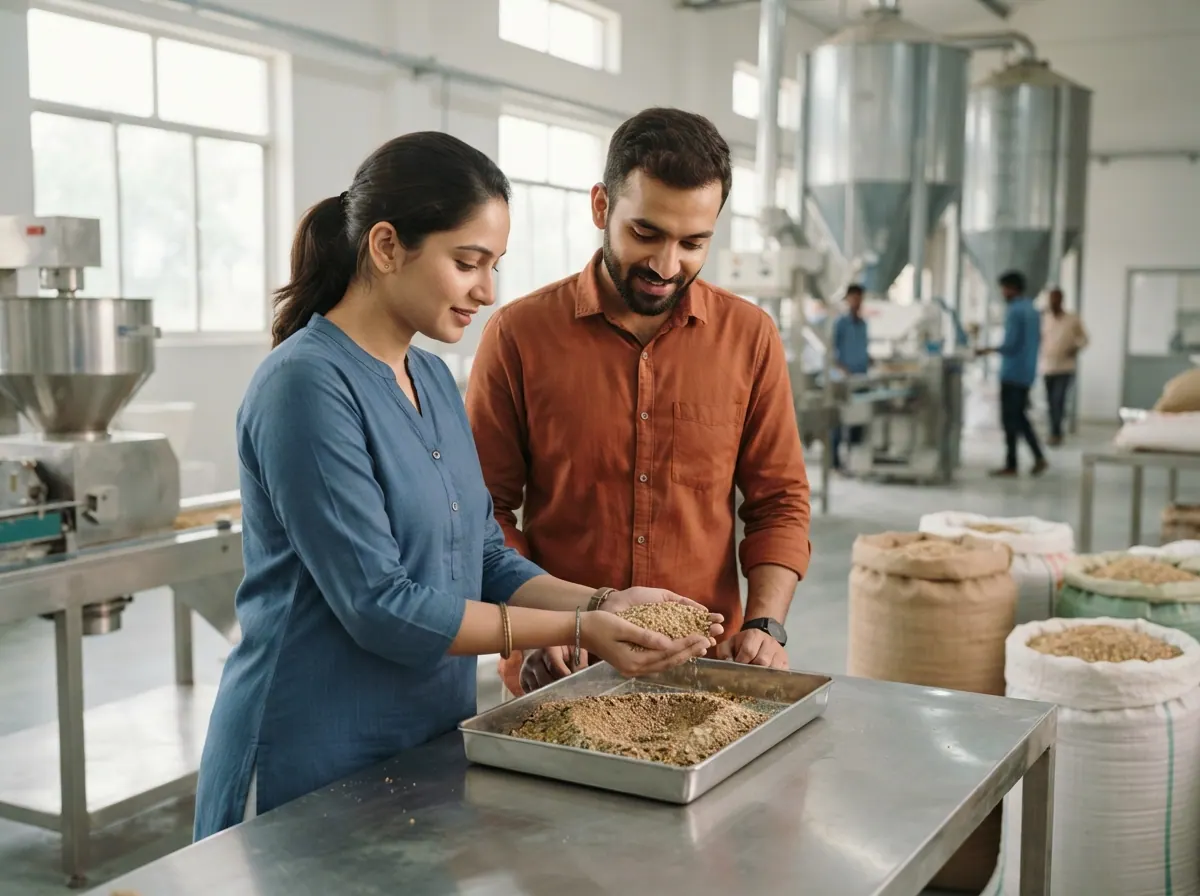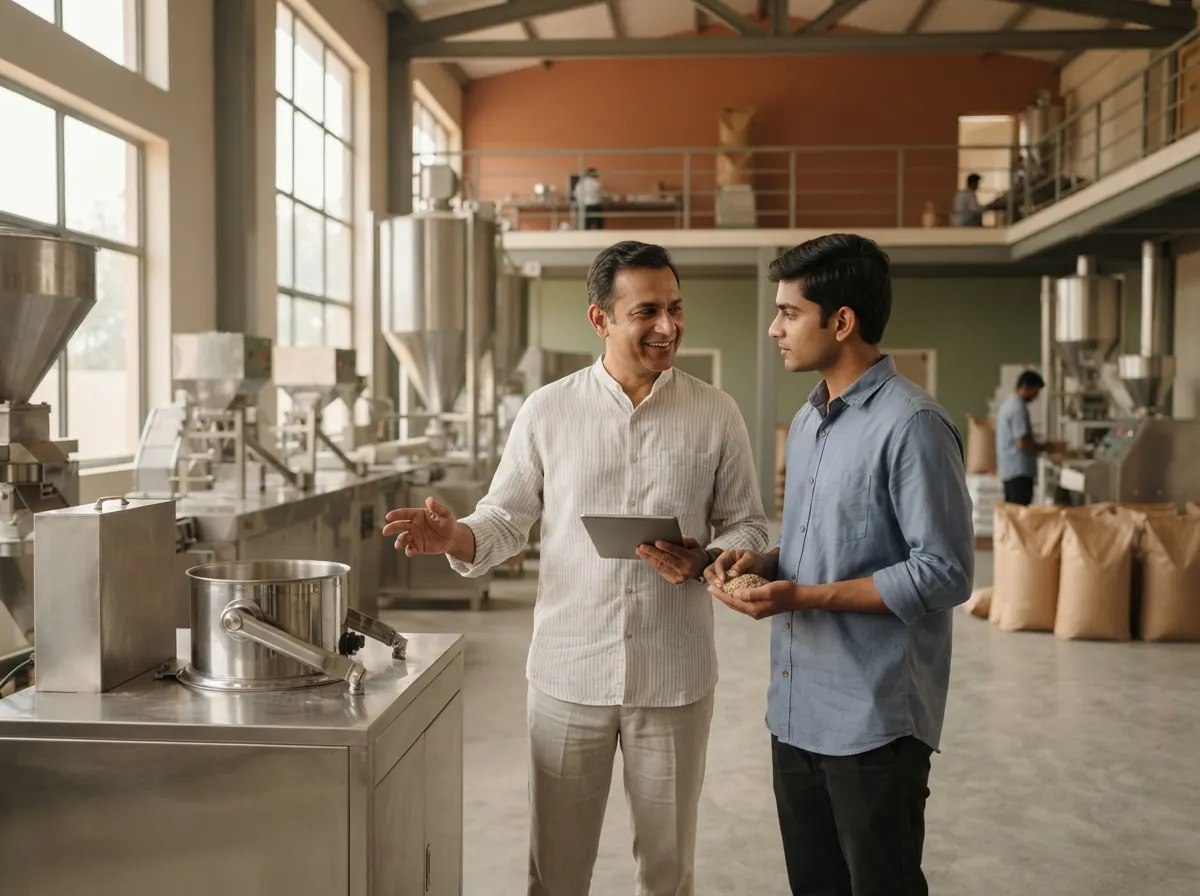
भारत में कैटल फ़ीड यूनिट शुरू करने के लिए आपको हैमर मिल (ग्राइंडर), मिक्सर, बैगिंग और सिलाई मशीन, सूखा गोदाम, डीलरों का नेटवर्क और करीब ₹5–25 लाख चाहिए। कमाई कम मार्जिन पर ज़्यादा टन बेचने से होती है, इसलिए मुनाफ़ा कच्चे माल की खरीद, फ़ीड की क्वालिटी और डीलर कितनी जल्दी पैसा देते हैं, इन पर टिका है।
यहाँ के सारे आँकड़े अंदाज़े हैं। खर्च करने से पहले अपने इलाके के दाम ज़रूर देख लें।
कितना खर्च आता है?
| सामान | छोटी मैश यूनिट | पैलेट वाली बड़ी यूनिट |
|---|---|---|
| गोदाम और ऊँचे फ़र्श वाला शेड | ₹1.5–3 लाख | ₹3–6 लाख |
| हैमर मिल (ग्राइंडर) | ₹60,000–1.5 लाख | ₹1.5–3 लाख |
| मिक्सर (रिबन या पैडल) | ₹70,000–1.5 लाख | ₹1.5–3 लाख |
| पैलेट मशीन और कूलर | ज़रूरत नहीं | ₹3–6 लाख |
| तराज़ू, बोरी सिलाई मशीन, कन्वेयर | ₹40,000–1 लाख | ₹1–2 लाख |
| बिजली कनेक्शन और वायरिंग | ₹30,000–1 लाख | ₹1–2 लाख |
| शुरू का कच्चा माल और बोरियाँ | ₹1.5–4 लाख | ₹3–6 लाख |
| रजिस्ट्रेशन और लैब टेस्ट | ₹15,000–40,000 | ₹30,000–60,000 |
| कुल | करीब ₹5–12 लाख | करीब ₹15–25 लाख |
थ्री-फ़ेज़ बिजली कनेक्शन में समय लग सकता है, इसलिए जल्दी आवेदन करें। जैसे-जैसे बिक्री बढ़ती है, कच्चे माल का स्टॉक सबसे तेज़ बढ़ने वाला खर्च बन जाता है, क्योंकि आप सप्लायर को पहले पैसा देते हैं और डीलर बाद में देते हैं।
कितनी कमाई हो सकती है?
महीने में 26 दिन रोज़ 5 टन बनाने वाली छोटी यूनिट का मतलब 130 टन। ये मोटे अंदाज़े हैं।
प्रति टन
- बिक्री भाव: करीब ₹26,000
- कच्चा माल: करीब ₹23,000
- खर्चों से पहले मार्जिन: करीब ₹3,000
हर महीने
- मार्जिन: 130 टन × ₹3,000 = ₹3,90,000
- पाँच मज़दूर: 5 × ₹13,000 = ₹65,000
- बिजली: ₹40,000
- बोरी और धागा: 130 टन × 20 बोरी × ₹12 = ₹31,200
- डीलरों तक ढुलाई: 130 टन × ₹300 = ₹39,000
- किराया या लोन ब्याज: ₹30,000
- कुल चलने का खर्च: ₹2,05,200
- बचत: ₹3,90,000 − ₹2,05,200 = करीब ₹1,85,000 महीना
यह तब है जब आप जो बनाएँ सब बिके और डीलर पैसा दें। मक्का या खली का भाव बढ़ जाए और आप बिक्री भाव न बढ़ा पाएँ, तो पूरा मार्जिन जा सकता है। एक डीलर का एक महीने की बिक्री का पैसा अटक जाना भी यही करता है।
शुरू करने से पहले क्या चाहिए?
- भरोसे का फ़ॉर्मूला। कैटल फ़ीड प्रोटीन और एनर्जी पर बिकता है। जिन जानवरों के लिए बना रहे हैं उनका फ़ॉर्मूला किसी पशु पोषण विशेषज्ञ या वेटरनरी कॉलेज से लें, सेल्समैन से नहीं।
- कच्चे माल के स्रोत। मक्का, चोकर और खली के लिए मिल और व्यापारी ढूँढें, और जानें कि किस फ़सल के महीनों में भाव सबसे कम होता है।
- सूखा गोदाम। नमी वाला फ़ीड जल्दी फफूंद पकड़ता है, जो जानवरों को बीमार करता है और आपका नाम खराब करता है।
- टेस्ट कराने का तरीका। बढ़ाने से पहले नमी और प्रोटीन की लैब जाँच कराएँ।
- पैसा देने वाले डीलर। पहली बिक्री से पहले उधार की सीमा तय करें।
कदम दर कदम
- जानवर और फ़ीड का रूप तय करें। डेयरी पशुओं का मैश सबसे आसान शुरुआत है। पोल्ट्री फ़ीड में फ़ॉर्मूला और तीखा चाहिए, और पैलेट में निवेश ज़्यादा लगता है।
- दो चालू यूनिट देखें और पूछें कि वे असल में कितने टन बेचते हैं, मशीन क्या कर सकती है यह नहीं।
- फ़ॉर्मूला लें और कच्चे माल की सूची मोटे दामों के साथ बनाएँ।
- गोदाम, ग्राइंडर, मिक्सर और तराज़ू लगाएँ, धूल इकट्ठा करने की सही व्यवस्था और कच्चे माल से बोरी तक साफ़ रास्ते के साथ।
- छोटा ट्रायल बैच बनाएँ और प्रोटीन व नमी के लिए सैंपल लैब भेजें।
- कुछ डेयरी किसानों के जानवरों पर आज़माएँ और कुछ हफ़्ते दूध का नतीजा देखें।
- 25 या 50 किलो की बोरी में पैक करें और लेबल पर सामग्री और तारीख़ लिखें।
- डीलर जोड़ें, एक इलाका एक बार में, उधार की शर्तें लिखित में।
कौन से लाइसेंस लगते हैं?
नियम राज्य के हिसाब से बदलते हैं, इसलिए हर एक अपने स्थानीय ऑफ़िस से पक्का करें:
- Udyam रजिस्ट्रेशन लोन और स्कीम के लिए।
- GST रजिस्ट्रेशन, जैसा आपका CA बताए।
- यूनिट के लिए स्थानीय इजाज़त, और औद्योगिक इस्तेमाल का बिजली कनेक्शन।
- प्रदूषण की मंज़ूरी। पिसाई की धूल के लिए कुछ साइज़ पर राज्य प्रदूषण बोर्ड की इजाज़त लग सकती है। उनसे पूछें।
- फ़ीड क्वालिटी के नियम। अपने ज़िला पशुपालन कार्यालय और BIS ऑफ़िस से पूछें कि आपकी यूनिट पर कोई क्वालिटी मार्क या राज्य का लाइसेंस लगता है या नहीं।
- लोन और स्कीम। बैंक और कुछ राज्य योजनाएँ पशु आहार यूनिट को सहारा देती हैं। अपने ज़िला उद्योग केंद्र से पूछें कि अभी क्या खुला है।
क्या गलत हो सकता है?
- फफूंद लगा कच्चा माल। फफूंद वाला मक्का या मूँगफली की खली ऐसे ज़हरीले तत्व रख सकता है जो जानवरों को नुकसान करते हैं। जाँच करें, खराब लॉट लौटाएँ और सूखा रखें।
- पैसा रोकने वाले डीलर। एक बड़ा डीलर छह हफ़्ते बकाया रखे तो आपकी कच्चे माल की खरीद रुक सकती है।
- भाव का उतार-चढ़ाव। मक्का चढ़े और आपका बिक्री भाव न चढ़े तो मार्जिन चला जाता है।
- गलत मिक्सिंग। मिक्सर ज़्यादा भर देने पर कुछ बोरियों में किसी एक चीज़ की मात्रा ज़्यादा हो जाती है, और किसान यह पकड़ लेते हैं।
- धूल और आग। फ़ीड की बारीक धूल और खराब वायरिंग ख़तरा है। सही फ़िटिंग लगाएँ और यूनिट साफ़ रखें।
- किसान कहें कि आपका फ़ीड कमज़ोर है। कुछ किसानों का दूध घट जाए तो बात गाँव में तेज़ी से फैलती है।
ये हालात आपके सामने आएँगे
आप क्या करेंगे? हर फ़ैसले की एक क़ीमत है।
शुरुआत
Dairy farmers near you want simple mash. Poultry farms pay more but ask for tighter formulas and faster delivery.
- Start with dairy mash: Simpler, lower price
- Start with poultry feed: Better price, harder to get right
A salesman offers a free formula if you buy raw material from the salesman. A livestock nutritionist charges a fee.
- Pay the nutritionist: Fee now, better milk results
- Use the free formula: No fee, tied to one supplier
A used grinder costs far less. The hammers and screens are worn and the power use is higher.
- Buy a new hammer mill: Costly, even grind, lower power
- Buy the used one: Cheaper, uneven grind
The builder offers a plain floor at the ground level. A raised floor with a damp-proof layer costs more.
- Build the raised floor: Costly, keeps feed dry
- Use the plain floor: Cheaper, damp risk in monsoon
The three-phase connection will take six more weeks. A generator can run the mill meanwhile.
- Rent a generator: Fuel cost, start on time
- Wait for the connection: Saves money, lose weeks
A dealer wants an invoice with your GST and Udyam details. Registering takes a few days and a small fee.
- Register first: Fee and wait, clean papers
- Hold the first sale: Lose a week, keep dealer waiting
Maize is at its lowest price right after harvest. Buying a season's stock needs a lot of cash and dry space.
- Stock up for six months: Big cash out, lower cost later
- Buy monthly: Less cash tied, price risk
पहला महीना
The lab report shows protein below your formula target. The mixer may not be mixing evenly.
- Fix the mixer, remake: Lose a batch, learn the fault
- Sell it at a lower price: Get some cash, weaker name
Five dairy farmers will try your feed if the first bags are free. They will compare it with the brand they use.
- Give free trial bags: Costs stock, builds word of mouth
- Sell at a small discount: Some income, slower trust
Small farmers prefer 25 kg bags. Dealers like 50 kg because it is cheaper to handle and stitch.
- Offer both sizes: More bags to stock, more buyers
- Only 50 kg bags: Simple, lose small farmers
The grinding area is full of fine dust. Workers cover their faces with cloth and several are coughing.
- Fit a dust collector and masks: Costly, healthier workers
- Give masks only: Cheap, dust still floats
A dealer in the next town can sell your feed to forty farmers. The dealer wants thirty days to pay.
- Give 15 days credit: Tight terms, smaller orders
- Give the 30 days: Big orders, cash stuck
A lab will test every tenth batch for moisture and protein. Each report costs money and a few days.
- Test every tenth batch: Steady cost, steady quality
- Test only on complaints: Saves fees, risk of bad lots
रोज़ का काम
A truck of maize smells musty and has dark patches. The trader says it will be fine once ground and mixed.
- Reject the whole truck: Argument and delay, safe feed
- Test it before deciding: Test fee, lose a few days
Groundnut cake rises sharply after a poor crop. Your selling price is already close to the market rate.
- Raise your price a little: Protect margin, lose some farmers
- Hold the price: Keep farmers, thin margin
A national brand offers farmers in your area a discount and free delivery for one month.
- Match with a small discount: Lose margin, keep farmers
- Hold price and push quality: Some farmers leave
A dairy asks for double the usual order by tomorrow. Filling the mixer to the top mixes unevenly.
- Run two smaller mixes: Late night, even feed
- Tell the buyer a day late: Late, even bags
A supplier sells mineral mixture at a much lower rate. It has no batch number and no lab report.
- Buy from the trusted supplier: Costs more, known content
- Ask for a lab report first: Delay, then decide
An officer says feed bags should show contents, weight and date. Your bags carry only a name stamp.
- Print proper labels: Printing cost, clear papers
- Keep the name stamp: Saves cost, warning likely
Farmers buy less and pay late in the busy farm months. Your godown fills with unsold bags.
- Offer a small cash discount: Cash comes in, lower margin
- Cut production for weeks: Save raw material, idle labour
जब मुश्किल आए
Rats have torn bags of bran and left droppings. Some stock looks fine but you cannot be sure.
- Discard damaged bags, pest-proof: Loss now, clean godown
- Hire a pest control service: Fee, slower fix
Four farmers say their cattle gave less milk after your last lot. You do not yet know if the feed is the cause.
- Test the lot and visit farms: Cost and time, find the cause
- Replace bags without testing: Quick, hides the cause
A dealer who takes a third of your feed owes you for six weeks and keeps asking for more stock.
- Stop supply until paid: Lose volume, protect cash
- Keep supplying a smaller lot: Sales hold, risk grows
A loose wire sparks near the grinder. There is no fire, but dust is thick in the room.
- Rewire and fit fire gear: Costly, much safer
- Tape the wire and carry on: Cheap, a fire risk remains
Your lab report shows a high toxin level in a cake lot you already bought and partly used.
- Stop using it, recall bags: Heavy loss, protects animals
- Return the rest to supplier: Partial refund, past bags remain
Dealer payments are late and the bank instalment is due. Raw material suppliers also want money.
- Ask the bank for more time: Extra interest, breathing room
- Sell stock cheaply for cash: Cash now, lower margin
बढ़ाना
Poultry farms and larger dairies ask for pellets. A pellet machine and cooler is a big purchase.
- Buy the pellet line: Big spend, higher price per kg
- Stay with mash: No spend, no new customers
A district two hours away has many dairies and no strong local brand. Delivery and credit will cost money.
- Appoint two dealers there: Spend on stock and delivery
- Stay in your own area: Safe, slower growth
Buying maize in bulk at harvest cuts your cost. A silo or bigger godown costs a lot to build.
- Build the extra storage: Large spend, cheaper maize
- Keep buying monthly: No spend, price swings
Larger dairy farms want a high-protein feed for their best cows and will pay more for it.
- Launch a premium line: Formula and testing cost, better rate
- Keep one standard feed: Simpler, no premium
क्या यह आपके लिए ठीक है?
फ़ीड यूनिट आपके लिए ठीक है अगर आप डेयरी या पोल्ट्री किसानों को जानते हैं, उधार को सावधानी से संभाल सकते हैं और मशीनों व रोज़ की बैगिंग में सहज हैं। अगर आपको जल्दी और आसान नकद चाहिए, या आप लंबा उधार माँगने वाले डीलर को मना नहीं कर पाते, तो यह कम ठीक बैठेगा।
एक अच्छा टेस्ट: किसी चालू फ़ीड मिल में एक हफ़्ता बिताएँ और हर बोरी जो निकले उसका पैसा कब आया, यह लिखें। फिर भी मन हो तो एक तरह के जानवर और छोटी क्षमता से शुरू करें, और पैसा देने वाला डीलर नेटवर्क बनने के बाद बढ़ाएँ।