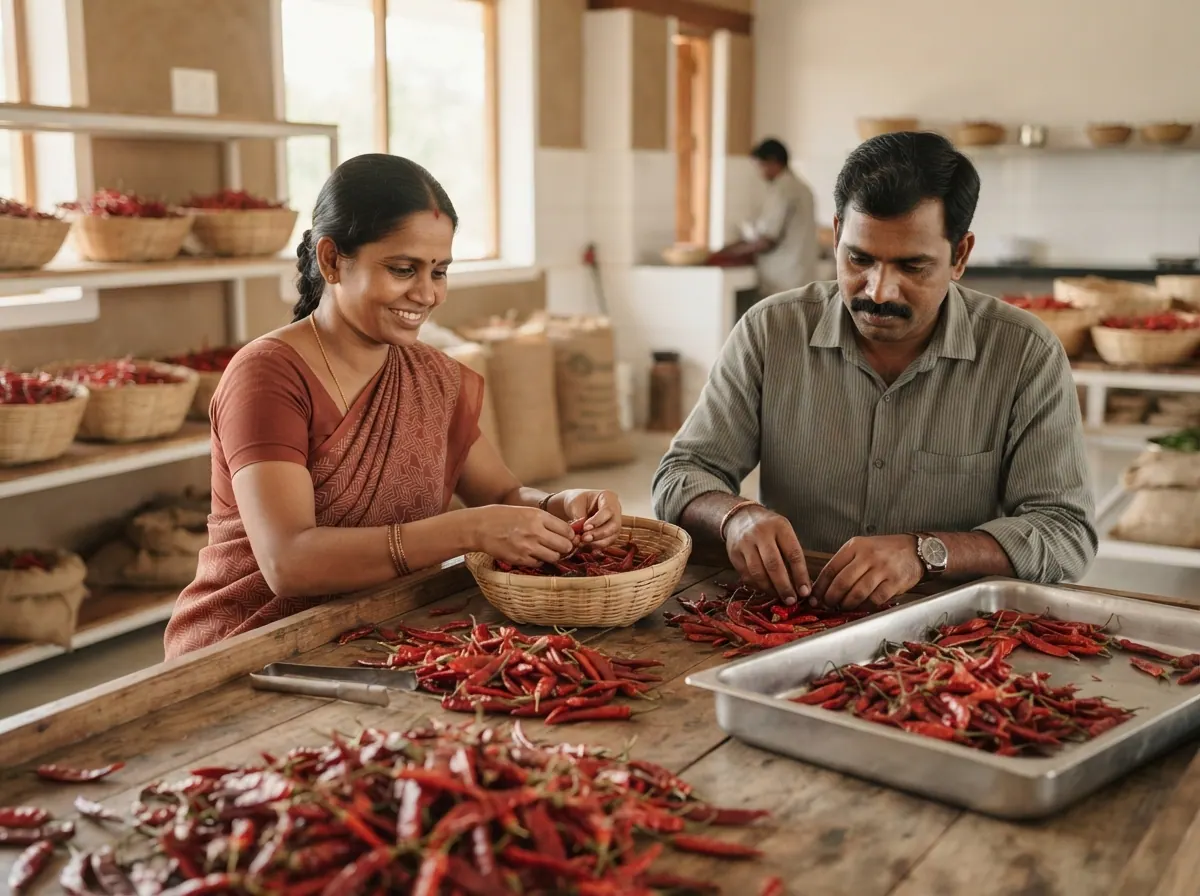
मल्च और ड्रिप के साथ मिर्च की खेती में प्रति एकड़ लगभग ₹75,000–1.45 लाख लगते हैं, और मुनाफ़ा ख़राब साल में नुकसान से लेकर अच्छे साल में लगभग ₹75,000 तक झूलता है। फ़सल फ़ायदेमंद है पर नाज़ुक: आपको नर्सरी की स्वस्थ पौध, छिड़काव और जल-निकासी की योजना, तुड़ाई के लिए बहुत मज़दूर और लगाने से पहले जाँचा हुआ बाज़ार चाहिए। हरी मिर्च की पहली तुड़ाई रोपाई के लगभग दो महीने बाद आती है।
यहाँ सारे आँकड़े अंदाज़े हैं। खर्च करने से पहले अपने इलाक़े के दाम ज़रूर देख लें।
इसकी लागत कितनी है?
| चीज़ (प्रति एकड़, ड्रिप और मल्च के साथ) | कम | ज़्यादा |
|---|---|---|
| खेत की तैयारी, गोबर की खाद | ₹6,000 | ₹10,000 |
| बीज या नर्सरी की पौध | ₹5,000 | ₹15,000 |
| मल्च शीट और ड्रिप (अगर पहले से नहीं है) | ₹15,000 | ₹25,000 |
| खाद | ₹10,000 | ₹15,000 |
| कीट और रोग के छिड़काव | ₹10,000 | ₹20,000 |
| रोपाई, निराई और तुड़ाई की मज़दूरी | ₹25,000 | ₹50,000 |
| सुखाने की चादर, बोरे, ढुलाई | ₹5,000 | ₹10,000 |
| कुल | लगभग ₹76,000 | लगभग ₹1.45 लाख |
हाइब्रिड बीज खुले परागण वाले बीज से काफ़ी महँगा होता है, पर उपज बहुत ज़्यादा दे सकता है। पुराना या साझा ड्रिप सिस्टम पहले साल की लागत घटा देता है।
कौन-सी मिर्च उगाएँ?
वह उगाएँ जो आपके ख़रीदार चाहते हैं, वह नहीं जो बीज वाला सुझाए:
- तेजा और दूसरी तेज़ किस्में: गुंटूर इलाक़े में सूखी लाल मिर्च के लिए लोकप्रिय, तीखी और पाउडर व निर्यात में माँग वाली।
- ब्याडगी: गहरे लाल रंग और कम तीखेपन के लिए जानी जाती है, मसाले में रंग के लिए इस्तेमाल होती है। यह कर्नाटक के इलाक़े में उगाई जाती है।
- संकेश्वरी और स्थानीय तीखी किस्में: महाराष्ट्र और कर्नाटक के कुछ हिस्सों में आम।
- हरी मिर्च के हाइब्रिड: आकार, रंग और टिकाऊपन के लिए चुने जाते हैं जब शहर की मंडी में ताज़ी बेचनी हो।
ख़रीदार से पूछें कि कौन-सी किस्म और रंग लेता है और क्या उसके लिए ज़्यादा देता है, फिर किसी जानी-मानी कंपनी का हाइब्रिड चुनें। अपने कृषि दफ़्तर से पूछें कि आपके पास कौन-से हाइब्रिड अच्छे चलते हैं।
कमाई कितनी हो सकती है?
यह एक एकड़ सूखी लाल मिर्च का हिसाब है, तीन तरह के साल के लिए। फ़सल नर्सरी से आख़िरी बिक्री तक लगभग आठ महीने चलती है।
खर्च: सीज़न के लिए लगभग ₹95,000 (तालिका का बीच का आँकड़ा)।
औसत साल
- उपज 10 क्विंटल सूखी मिर्च = 1,000 किलो
- 1,000 किलो × ₹120 = ₹1,20,000
- मुनाफ़ा = ₹1,20,000 − ₹95,000 = ₹25,000
- ₹25,000 ÷ 8 महीने = लगभग ₹3,100 महीना
अच्छा साल
- 12 क्विंटल = 1,200 किलो × ₹150 = ₹1,80,000
- खर्च थोड़ा ज़्यादा ₹1,05,000 (ज़्यादा तुड़ाई)
- मुनाफ़ा = ₹75,000, यानी लगभग ₹9,400 महीना
ख़राब साल
- 6 क्विंटल = 600 किलो × ₹80 = ₹48,000
- खर्च ₹90,000
- नुकसान = ₹42,000
इसीलिए जो किसान मिर्च में टिके रहते हैं वे कुछ पैसा अलग रखते हैं और पूरा लोन एक ही फ़सल में नहीं लगाते। घर की मज़दूरी, ख़ासकर तुड़ाई में, लागत घटा देती है।
शुरू करने से पहले क्या चाहिए?
- भरोसेमंद पानी। मिर्च को सूखे का तनाव भी नापसंद है और रुका पानी भी। ड्रिप मदद करता है।
- अच्छी जल-निकासी वाली मिट्टी। भारी काली मिट्टी जो बारिश के बाद पानी रोकती है, जड़ और फल सड़न बुलाती है।
- स्वस्थ पौध। अच्छी नर्सरी से लें, या जाली के नीचे खुद उगाएँ। कमज़ोर या संक्रमित पौध के साथ वायरस आ सकता है।
- तुड़ाई के मज़दूर। मिर्च हाथ से कई राउंड में तोड़ी जाती है। पहली तुड़ाई से पहले मज़दूर तय कर लें।
- ख़रीदार या मंडी। जानें कि हरी मिर्च उसी दिन कहाँ बेचेंगे, या लाल मिर्च कहाँ सुखाकर रखेंगे।
कदम-दर-कदम
- हाइब्रिड चुनें, ख़रीदार और कृषि दफ़्तर से बात करने के बाद।
- पौध तैयार करें, लगभग एक महीना नर्सरी में, या भरोसेमंद नर्सरी से लें।
- खेत तैयार करें, गोबर की खाद डालकर, ऊँची क्यारियाँ बनाकर और ड्रिप व मल्च बिछाकर।
- रोपाई करें, स्वस्थ पौध की, इतनी दूरी पर कि कतारों में हवा चले।
- समय पर पानी और खाद दें, एक बड़ी मात्रा की जगह ड्रिप से छोटी-छोटी मात्रा में।
- हर दो-तीन दिन खेत देखें, मुड़ी पत्तियों, थ्रिप्स और धब्बों के लिए। सिर्फ़ उतना छिड़कें जितनी समस्या हो, लेबल की मात्रा पर, और अनिश्चित हों तो दुकान या कृषि दफ़्तर से पूछें।
- राउंड में तोड़ें। हरी मिर्च रंग और आकार सही होने पर, और लाल मिर्च पूरी पकी हुई तोड़ें।
- साफ़ चादर पर सुखाएँ, मिट्टी, धूल और बारिश से दूर, बार-बार पलटते हुए जब तक सूख न जाए। साफ़ बोरों में भरें।
- योजना के मुताबिक़ बेचें। मंडी खुलने से पहले अपना न्यूनतम दाम जान लें।
कौन-से लाइसेंस लगते हैं?
अपनी ज़मीन पर मिर्च उगाने के लिए कोई ख़ास लाइसेंस नहीं लगता। कुछ बातें स्थानीय दफ़्तरों से पक्की कर लें:
- मंडी के नियम और शुल्क, अगर आप APMC मंडी में बेचते हैं।
- कीटनाशक का इस्तेमाल: सिर्फ़ मिर्च के लिए लेबल वाले उत्पाद, लेबल की मात्रा और प्रतीक्षा अवधि के साथ। ख़रीदार और निर्यातक अवशेष की जाँच कर सकते हैं।
- फ़सल बीमा और लोन: बैंक और फ़सल बीमा योजना कुछ ज़िलों में मिर्च को कवर कर सकती हैं। नियम और रक़म बदलते रहते हैं, इसलिए बैंक और कृषि दफ़्तर से पूछें।
- निर्यात और स्पाइसेज़ बोर्ड की मदद: स्पाइसेज़ बोर्ड के कार्यक्रम हैं, पर वे बदलते रहते हैं। ख़रीदार या बोर्ड से सीधे पूछें।
- टैक्स: अपनी बिक्री पर टैक्स कैसे लगेगा, CA से पूछें।
क्या गड़बड़ हो सकती है?
- पर्ण कुंचन (लीफ़ कर्ल) वायरस। मुड़े, ठिगने पौधे जो कम फल देते हैं। यह छोटे रस चूसने वाले कीड़ों से फैलता है, इसलिए स्वस्थ पौध और थ्रिप्स व सफ़ेद मक्खी पर जल्दी क़ाबू ज़रूरी है।
- गीले मौसम में फल सड़न और मुरझाना। जल-निकासी और ज़्यादा घना न लगाना मदद करता है।
- दाम का गिरना। जब सबकी हरी मिर्च एक साथ आती है, दाम आपकी लागत से नीचे जा सकता है।
- तुड़ाई में मज़दूरों की कमी। पौधे पर छूटे फल वज़न और रंग खो देते हैं।
- सुखाई ख़राब होना। नंगी ज़मीन पर या बारिश में सुखाई मिर्च गंदी और फफूँद वाली हो जाती है और लौटा दी जाती है।
- ज़्यादा छिड़काव। डर में छिड़कने से भारी छिड़काव बिल और अवशेष की समस्या आती है।
ये हालात आपके सामने आएँगे
आप क्या करेंगे? हर फ़ैसले की एक क़ीमत है।
शुरुआत
A roadside seller offers chilli seedlings at half the price of the registered nursery. The seller does not name the hybrid.
- Buy from the good nursery: Costs more, healthier seedlings
- Buy the cheap seedlings: Saves money, virus risk
Hybrid seed costs several times more than the open variety. The seed shop says it gives much higher yield if you spray on time.
- Buy hybrid seed: High cost, higher yield
- Use the open variety: Cheaper, lower yield
Your field has no drip. A fitter quotes a full drip line with mulch, and the borewell can also flood the rows.
- Install drip and mulch: Costly, saves water and weeds
- Flood the rows: Cheap, rot and weed risk
The crop is planned for dry red chilli but nobody has agreed to buy. A trader will quote at harvest.
- Visit the spice market first: Fuel and time, a buyer lead
- Plant and decide later: No cost now, price risk
One corner of the field stays wet for days after rain. Chilli dislikes wet feet.
- Make raised beds and a drain: Labour cost, healthier plants
- Plant the corner as usual: No cost, rot risk
You can raise seedlings in trays under net at home. It takes a month and care, but costs less than buying.
- Raise your own seedlings: Effort, healthy start
- Buy ready seedlings: Costs more, no extra work
पहला महीना
Three days after transplanting in hot sun, a third of the young plants have drooped.
- Shade and water lightly: Labour, most recover
- Replant the dead ones: Seedling cost, a late patch
You see tiny insects and silver patches on new leaves. Neighbours are already spraying every three days.
- Ask the agriculture office: Time, correct spray only
- Spray as the label directs: Moderate cost, dose and gaps as printed
Mulch only covers the beds, and weeds are crowding the gaps. Labour is scarce this week.
- Hire weeding labour: Wages now, cleaner rows
- Weed later by hand: Cheap, competes for food
A neighbour says double nitrogen gives big plants. Your plants look green but lush leaves can mean fewer flowers.
- Follow the recommended dose: Steady growth
- Double the nitrogen: Costs more, fewer flowers
A fruit and vegetable shop owner asks for steady supply once picking starts, but wants delivery to town.
- Promise weekly supply: Delivery cost, steady buyer
- Sell at the mandi gate: No delivery, variable price
रोज़ का काम
Fruits are big and glossy. Mandi price is good this week, but picking labour asks for a higher rate.
- Pay the higher rate: Wages up, sell at a good price
- Pick only half: Lower wages, lose some price
Women pickers say they will go to another farm unless they are paid every evening, not at the week end.
- Pay each evening: Cash needed daily, loyal team
- Keep weekly payment: Easier cash, pickers may leave
Fruits from every farm have reached the mandi together. Your chilli would sell below the cost of picking.
- Let the fruits turn red, dry: Wait, extra drying work
- Sell at the low price: Quick cash, thin return
Tonnes of red fruit are arriving. A tarpaulin on the road is easy but dusty, and a concrete yard is clean but not free.
- Rent a clean drying yard: Rent cost, clean colour
- Dry on tarpaulin near the field: Cheap, dust and rain risk
A mill owner wants deep red dried pods with low moisture and will pay a little extra.
- Dry carefully and grade: Extra work, better price
- Sell mixed grade to a trader: Quick sale, lower rate
Prices are low in the first weeks. A cold storage will keep your bags for a monthly fee, and prices may rise.
- Store for two months: Fee, a hoped better price
- Sell at once: Cash now, lower price
The first picking is thinning out. A top dose of fertiliser and a spray round may bring another flush of fruit.
- Feed and spray for a second flush: Cost now, more pickings
- Wind up the crop early: Saves cost, ends earlier
A neighbour's borewell has failed and the chilli is in flower. Sharing may lower your own water in hot weeks.
- Share for a fee: Some income, water risk
- Refuse politely: Safe water, a cold neighbour
जब मुश्किल आए
A quarter of your plants have curled, stunted leaves and few flowers. Whitefly are everywhere.
- Uproot sick plants, spray vectors: Labour and spray, saves the rest
- Spray everything repeatedly: Costly, plants stay sick
Black spots on fruits and rotting at the tips. Pickers are throwing away many pods.
- Remove rotten fruit, spray as advised: Labour cost, saves good fruit
- Skip picking until it dries: Saves work, more rot
A bigger farm pays more per kilo and your pickers go, leaving ripe fruit on the plants at peak.
- Raise the picking rate: Wages up, fruit saved
- Bring labour from another village: Transport cost, slower
A short hailstorm broke branches and flowers. Your crop insurance form was never filled.
- Prune, feed and nurse plants: Cost, partial recovery
- Remove the field and replant: Big cost, late crop
After taking your red chilli, a trader deducts for moisture beyond what you agreed and offers less.
- Insist on a retest: Delay and some argument
- Accept the lower payment: Quick money, a loss
The crop price is low and the bank wants an instalment. A money lender offers quick cash at high interest.
- Ask the bank for time: Penalty risk, safer interest
- Borrow from the money lender: Pays now, heavy interest
बढ़ाना
This year ended with a modest profit. A neighbour offers to lease an acre with a borewell.
- Lease and plant chilli: Lease and crop cost, more output
- Rotate with another crop: Less risk, less income
A dealer offers a fertigation tank so you can feed through drip. It saves labour and cuts waste.
- Install fertigation: Costly, steady growth
- Keep feeding by hand: No spend, more labour
A masala company offers a contract for dry red chilli at a fixed rate with strict grading and pesticide checks.
- Sign the contract: Steady price, strict rules
- Keep selling on open market: Free, price swings
Customers in town like your chilli. A small pulveriser lets you sell packs, but you need a food licence and labels.
- Buy a grinder and register: Costly, higher value
- Sell whole dry pods: Simple, lower margin
A college offers a two-day short course on chilli diseases and spraying. It costs a fee and two days of work.
- Attend the course: Fee and time, better control
- Skip it: Save time, keep guessing
क्या यह आपके लिए सही है?
मिर्च की खेती आपके लिए ठीक है अगर आपके पास भरोसेमंद पानी है, हर कुछ दिन खेत में जा सकते हैं और दाम गिरने वाला साल झेल सकते हैं। अगर आप एक सीज़न का नुकसान नहीं झेल सकते, या एक बड़े लोन पर निर्भर होंगे, तो यह कम सही है।
एक अच्छी परीक्षा: पहले सीज़न में आधा एकड़ लगाएँ, हर छिड़काव, तुड़ाई के दिन और बिक्री की डायरी रखें, और अपनी असली लागत प्रति किलो जानें। अगर आँकड़े टिकें, तो ज़मीन बढ़ाएँ।