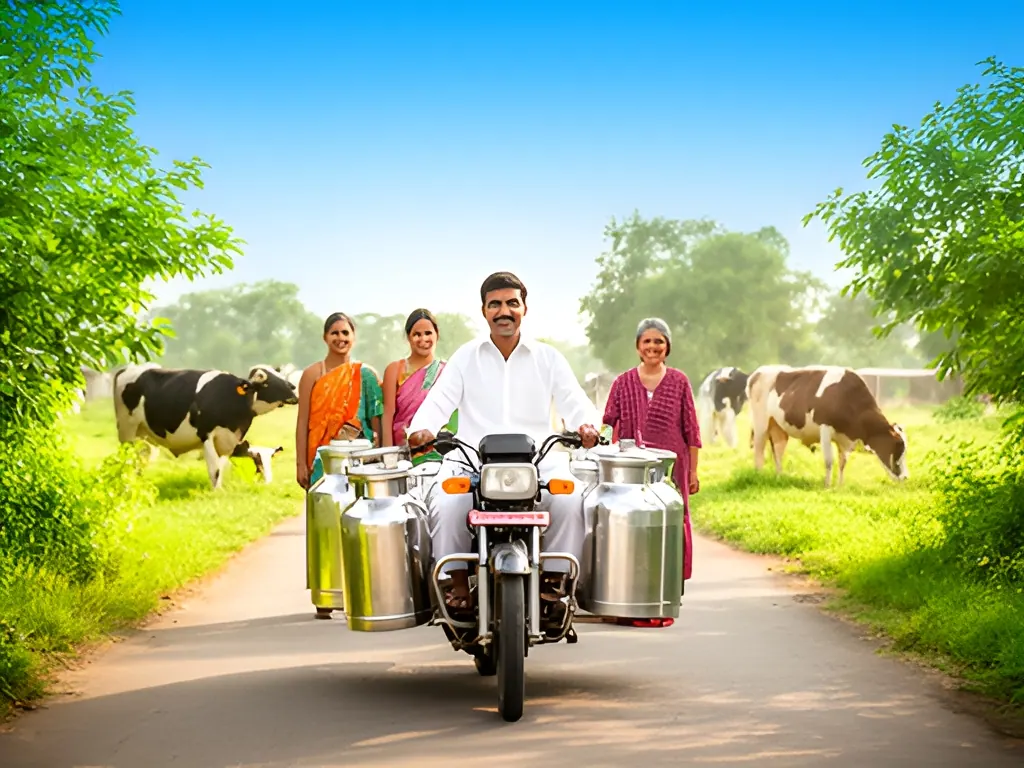
The village businesses that work most reliably in India are the ones that serve daily needs: a home-front kirana, a sabzi stall at the weekly haat, mobile repair, tailoring, a small dairy and a poultry shed, plus seasonal options like a sugarcane juice cart. A repair counter or kirana can start for ₹30,000–2 lakh. Dairy and poultry need more money (often lakhs) but can use the Kisan Credit Card at an effective 4% interest. Village income comes in waves, after the harvest and in the wedding and festival months, so plan for slow months as well as busy ones.
This guide covers what each option costs, what it realistically earns, the loans that fit (KCC, NABARD-model loans, Mudra) and how rural demand moves through the year.
What makes a village business different?
Three things shape every rural business:
- Low rent, often zero. Many village and home-front shops are on owned land, so your fixed costs are small. That is the biggest advantage over a city shop.
- Udhaar (credit) is everywhere. Customers buy on credit and pay after the harvest. A shop with too much udhaar runs out of cash for restocking. Balances older than about 60 days are usually bad debt.
- Cash still matters. UPI is common, but our research estimates only 30–50% of kirana transactions are digital in tier-3 towns and villages, against 50–70% in metros.
Here is how the main village options compare on setup cost and monthly profit in our tier-2 benchmark:
| Business | Setup from | Typical shop: setup | Typical shop: profit a month (tier 2 city) |
|---|---|---|---|
| 🥬 Vegetable shop | ₹20,000 | ₹20,000 | ₹17,500–₹39,000 |
| 📱 Mobile repair shop | ₹45,000 | ₹1.5 lakh | ₹24,000–₹69,500 |
| 🥤 Sugarcane juice business | ₹75,000 | ₹75,000 | ₹17,500–₹47,500 |
| 🧵 Tailoring shop or boutique | ₹40,000 | ₹2.3 lakh | ₹15,000–₹43,500 |
| 🛍️ Kirana store | ₹2 lakh | ₹4.5 lakh | ₹8,500–₹19,500 |
| 🐔 Poultry farm | ₹5 lakh | ₹22 lakh | ₹8,500–₹39,000 |
| 🐄 Dairy farm | ₹11.5 lakh | ₹13 lakh | ₹21,500–₹32,500 |
The table shows our modelled formats. Dairy is shown as a commercial unit of around 10 animals and poultry as a 1,000-bird shed, so a family starting with two buffaloes needs far less money and earns far less.
1. Small dairy: steady demand, thin margins at co-op prices
A Dairy farm is the classic village business. Five states (UP, Rajasthan, MP, Gujarat and Maharashtra) produce 54% of India's milk (DAHD, BAHS 2025).
Setup. Animals are the main cost. A lactating Murrah buffalo sells for about ₹0.9–2.5 lakh in 2026 (agrijob). The older NABARD model for a 10-buffalo unit totalled ₹6.54 lakh, but at 2026 animal prices a realistic 10-animal unit needs about ₹10–20 lakh. Starting with 2–3 animals on owned land is how most families begin.
Where the money is. Selling to the cooperative is safe but thin. From 1 June 2026, Amul pays ₹875 per kg of fat for buffalo milk, worth about ₹54 a litre at 6% fat, and ₹388.65 per kg of fat for cow milk, about ₹37 a litre at 3.5% fat (Indian Cooperative). A crossbred cow costs about ₹35–45 a litre to keep, mostly feed. Our research puts profit per milking animal at about ₹1,000–4,000 a month at co-op prices, and ₹4,000–10,000 with direct sales to households. Turning surplus milk into paneer or ghee adds more.
Risks. Lumpy skin disease killed over 97,000 cattle in 2022 and was back on alert in 219 districts in September 2026. Heat stress can cut a high-yielding cow's milk by 10–40%, and dry fodder prices can more than double in a bad year. Vaccinate, insure, and stock fodder before summer.
Try it free in the simulator: Dairy farm
Run a realistic week of this business in 5 minutes before you invest a rupee.
Try it free in the simulator →2. Poultry farming: big swings, or steady contract pay
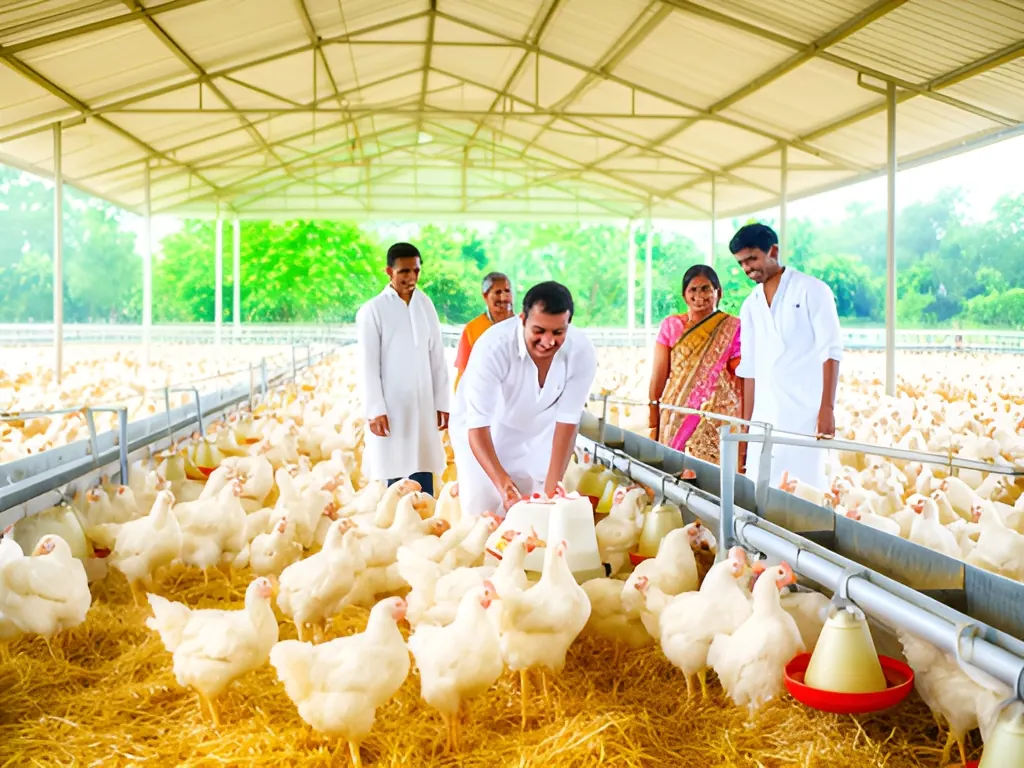
A broiler Poultry farm shed raises chicks to 2–2.5 kg in about 35–42 days, giving about six batches a year after cleaning breaks.
Two ways to run it.
- Open market. You buy chicks and feed and sell to traders. It costs about ₹105–115 to produce one kg of live bird in 2026, with feed 65–70% of that (Vajiram & Ravi). Farm-gate prices swing roughly ₹85–135 a kg and can move 40% in ten days, so some batches lose money.
- Contract farming. An integrator supplies chicks, feed and medicine; you supply the shed, labour, litter and power, and earn a growing charge of about ₹10–15 per kg. One 2,500-bird open shed built for ₹9 lakh netted about ₹58,000 a batch (Rural Voice).
Setup and rules. Open-sided sheds cost about ₹200–400 per sq ft at roughly 1 sq ft per bird. Below 5,000 birds you usually need only a panchayat NOC and local registration. Farms above 5,000 face siting rules (500 m from homes) in many states. The biggest dangers are summer heat (20 lakh birds died in one week in AP's Godavari districts in May 2026) and bird flu, which brings culling and a price collapse. Chicken demand drops in Shravan and Navratri and rises in winter.
3. Home-front kirana: the village's everyday shop
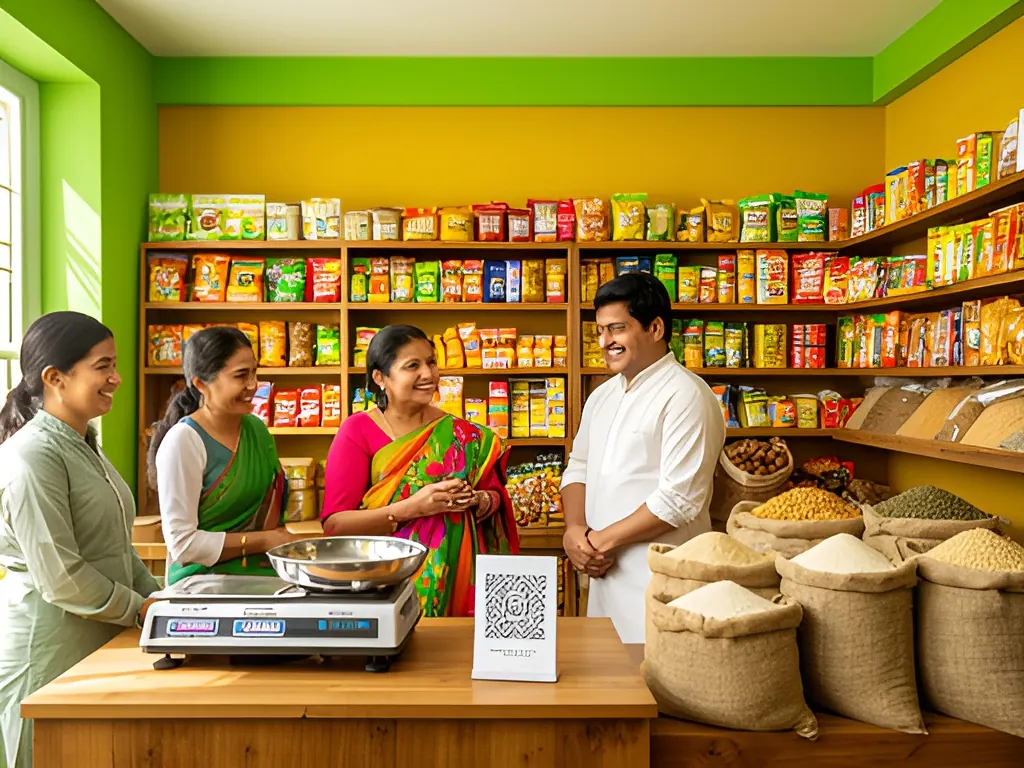
A Kirana store run from the front room of a house is the most common village business. Our tier-2 benchmark puts a home-front shop at about ₹2 lakh, most of it opening stock.
A real example. A village kirana in Jharkhand started with about ₹1.84 lakh: ₹1.2 lakh of stock and ₹49,000 of fixtures (freezer, cooler, counter). Monthly running costs were ₹14,600, including ₹6,000 for electricity and ₹5,000 for stock transport. It earned ₹10,000 a month at first and ₹20,000–25,000 after the owner added cosmetics, which carry 12–20% margins. Break-even took about 15 months (Rang De).
What to watch. Overall kirana margins are only about 8–15%. Branded staples and tobacco earn the least; loose goods and personal care earn the most. Most kiranas need only FSSAI basic registration (₹100 a year) and can stay below the ₹40 lakh GST threshold for goods.
Try it free in the simulator: Kirana store
Run a realistic week of this business in 5 minutes before you invest a rupee.
Try it free in the simulator →4. Sabzi stall or thela: tiny capital, daily skill
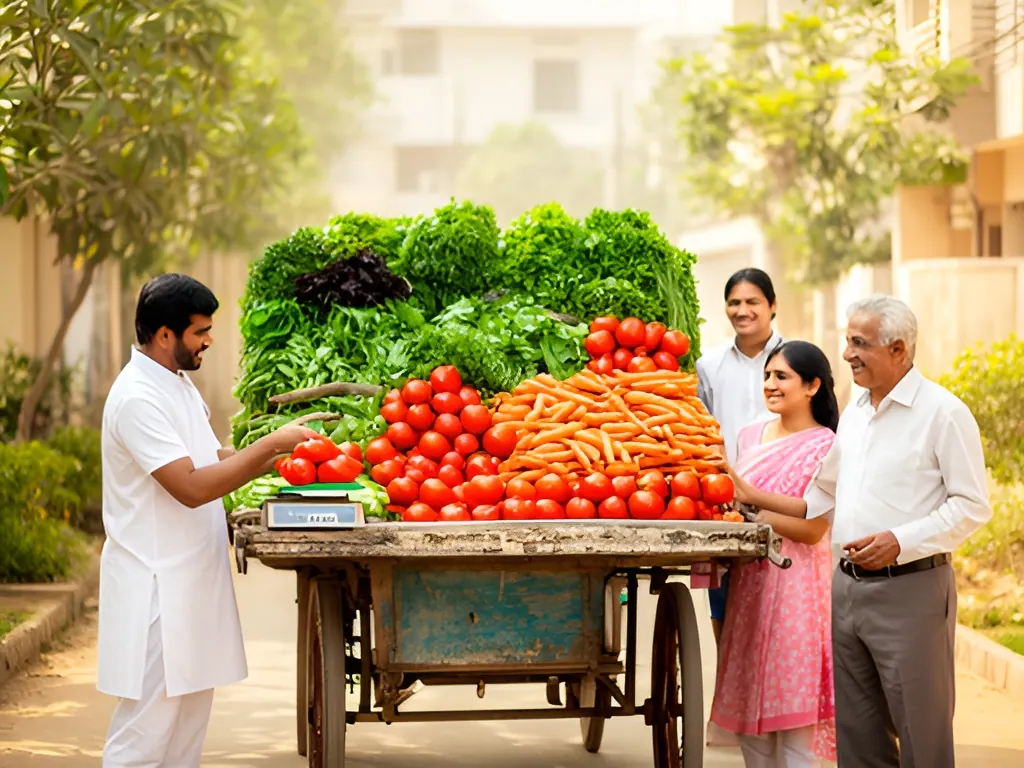
A Vegetable shop business needs very little money: our benchmark puts a thela at about ₹20,000 and a haat or footpath stall at about ₹37,500. You make money on the gap between mandi and retail prices, usually 30–50% on cost, and lose it on wastage of 5–15% (much more for leafy greens in summer).
Buying happens at the mandi between 3 and 8 am, where arhtiyas charge about 5–6% commission. In a village, the weekly haat is often your best selling day. Fasting days in Navratri, Shravan and Ekadashi lift demand for fruit and sweet potato. Get your weighing scale stamped every year, and if you sell from a cart in a town, apply for a vending certificate so you can use PM SVANidhi loans (₹15,000, then ₹25,000, then ₹50,000).
5. Tailoring: one machine, steady village demand
Village Tailoring shop or boutique can start with a manual machine at ₹6,000–12,000 or a domestic electric one at ₹12,500–20,000. Simple blouses fetch about ₹200–350 in small towns. Work is heavy before Diwali, Eid and the wedding months (21, 24, 25 and 26 November 2026 are popular muhurat dates) and thin in between. PM Vishwakarma offers darzi applicants a ₹15,000 toolkit voucher and a 5% loan of ₹1 lakh, then ₹2 lakh, but you can't use it if you have already taken a Mudra, PMEGP or SVANidhi loan.
6. Mobile repair: every village has phones, few have repairers
A Mobile repair shop repair counter costs about ₹30,000–60,000 in a tier-2 or tier-3 town: tools ₹5,000–15,000, parts stock ₹10,000–20,000, fit-out and a small cash buffer (IIFL). Training is short and cheap, ₹1,000–37,000 over one to three months.
Demand is solid: people now keep phones about 36 months, and 87% of users dropped a phone in the past year (Analytics Insight). The same IIFL guide puts a solo counter's first-year net at ₹10,000–25,000 a month. Monsoon brings water-damage jobs, and the festival season lifts accessory sales. Repairs and parts carry 18% GST, but you only need GST registration above ₹20 lakh turnover.
7. Sugarcane juice: a summer and mela business
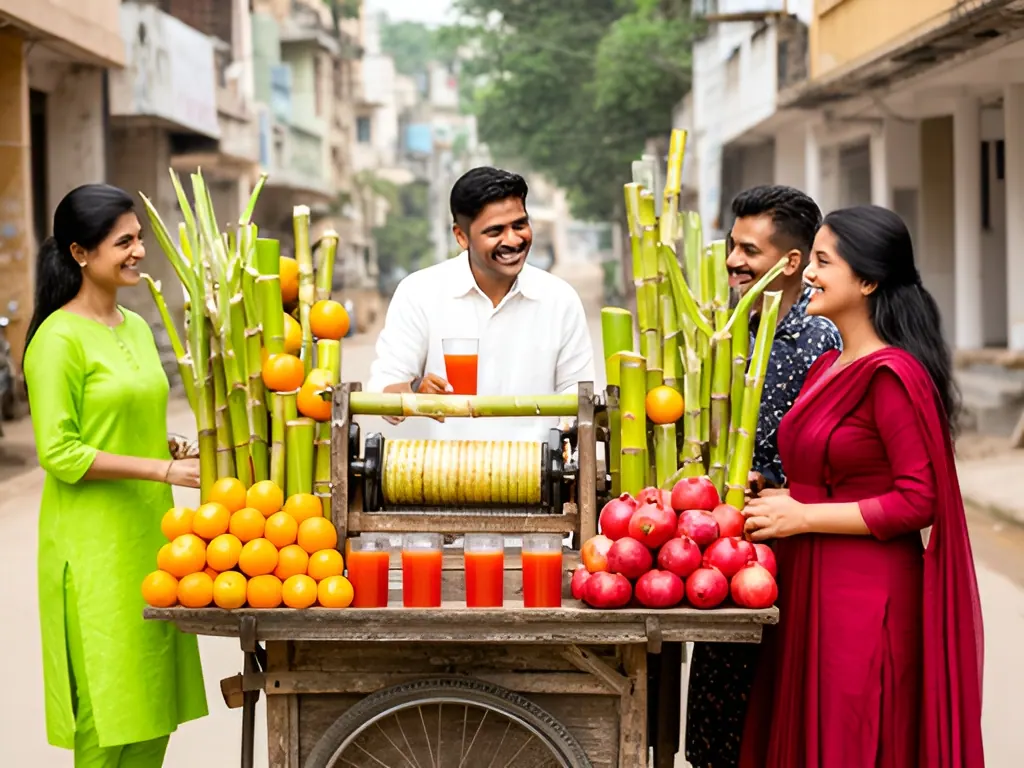
A Sugarcane juice business cart is cheap: a budget crusher costs ₹25,000–35,000, and an engine model (useful where there's no power point) about ₹58,000. Cane costs only ₹3–5 a glass, so gross margins are 70–80%. But volume halves outside summer, and many carts in north India shut in winter. It works best alongside another trade, or at melas, bus stands and haat days.
How does rural demand change through the year?
Village income is tied to the crop cycle, so demand moves in waves:
- After harvest. Kharif crops come in around October–November and rabi crops around March–May. Our research estimates village kirana demand rises 15–30% in the weeks after each harvest, and that is also when udhaar gets repaid.
- Festivals. Navratri, Diwali, Chhath, Eid and Holi lift sales of clothes, sweets, phones and accessories. Fasting days shift food demand.
- Weddings. November–February and April–May bring bulk orders for kiranas and caterers and a rush for tailors. In north India there are no Hindu wedding dates from mid-December to mid-January (Kharmas) or during Chaturmas (July to October–November).
- Lean months. The monsoon and the weeks before harvest are when cash is tightest. Keep stock lean and udhaar tight.
Which loans work for village businesses?
- Kisan Credit Card (KCC). For dairy, poultry and other animal husbandry: up to ₹3 lakh at 7%, with an allied sub-limit of ₹2 lakh. Prompt repayment brings it to an effective 4%. It is collateral-free up to ₹2 lakh, or ₹3 lakh where a milk union pays directly into your account (RBI).
- NABARD-model bank loans. For larger dairy and poultry units, banks follow NABARD's model projects: about 12% interest, 5–7 years to repay, and 10–25% margin money from you (Vikaspedia). The old DEDS dairy subsidy ended in April 2020, so don't plan on it.
- Mudra. For shops and services: Shishu up to ₹50,000, Kishor ₹50,000–5 lakh, Tarun ₹5–10 lakh. Collateral-free, with interest of roughly 9–14% depending on the bank.
- PMEGP. A 15–35% subsidy on project cost for new units, useful for a bigger shop or processing unit.
- Avoid daily-collection moneylenders. Street loans at 5–10% a month will eat your profit faster than any bad season.
Try before you invest
Before you buy animals or stock a shop, run the numbers in BizGame's free simulators. You can play a season of the Dairy farm business, handling fodder prices, a sick animal and the co-op-versus-direct choice, or a year of a Kirana store with udhaar and harvest spikes, in a few minutes. It is a learning game, not a way to make money, but it shows you where a village business makes or loses money before you put real savings on the line.