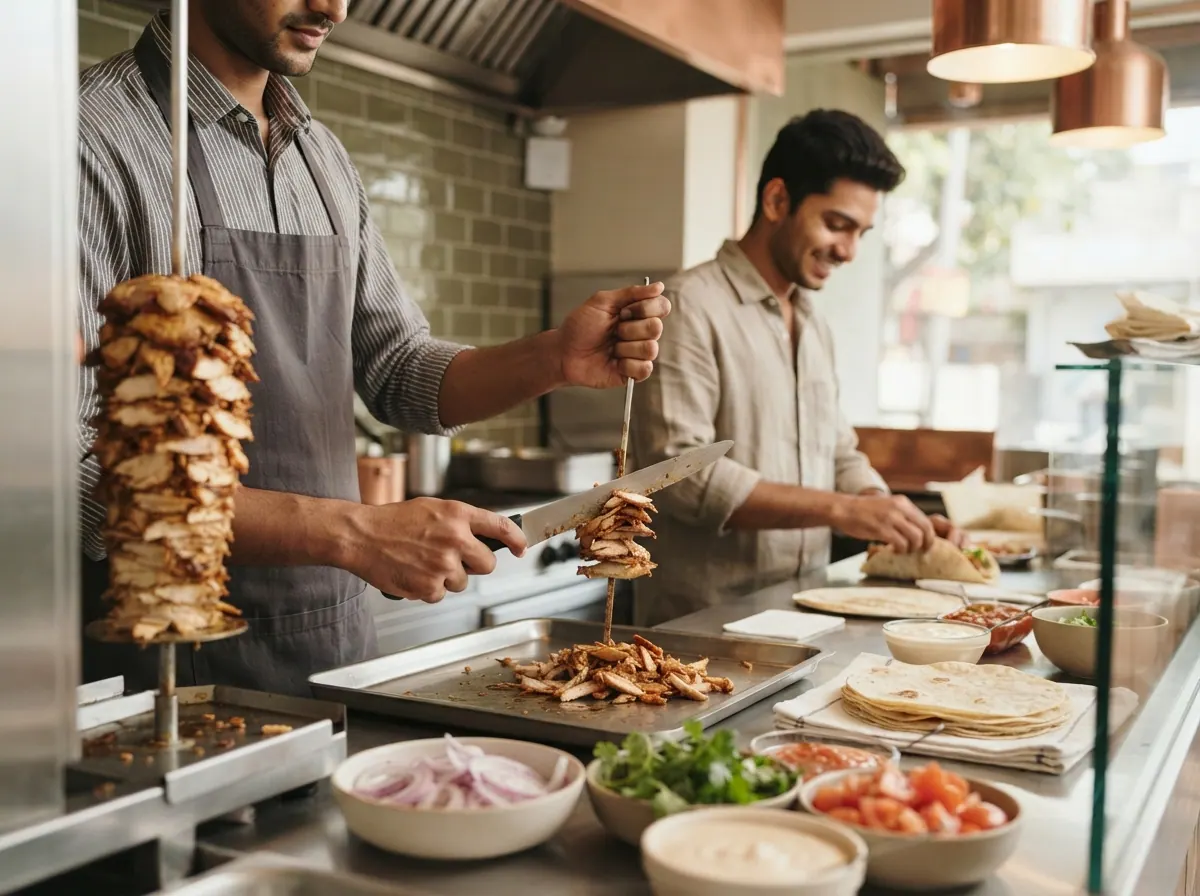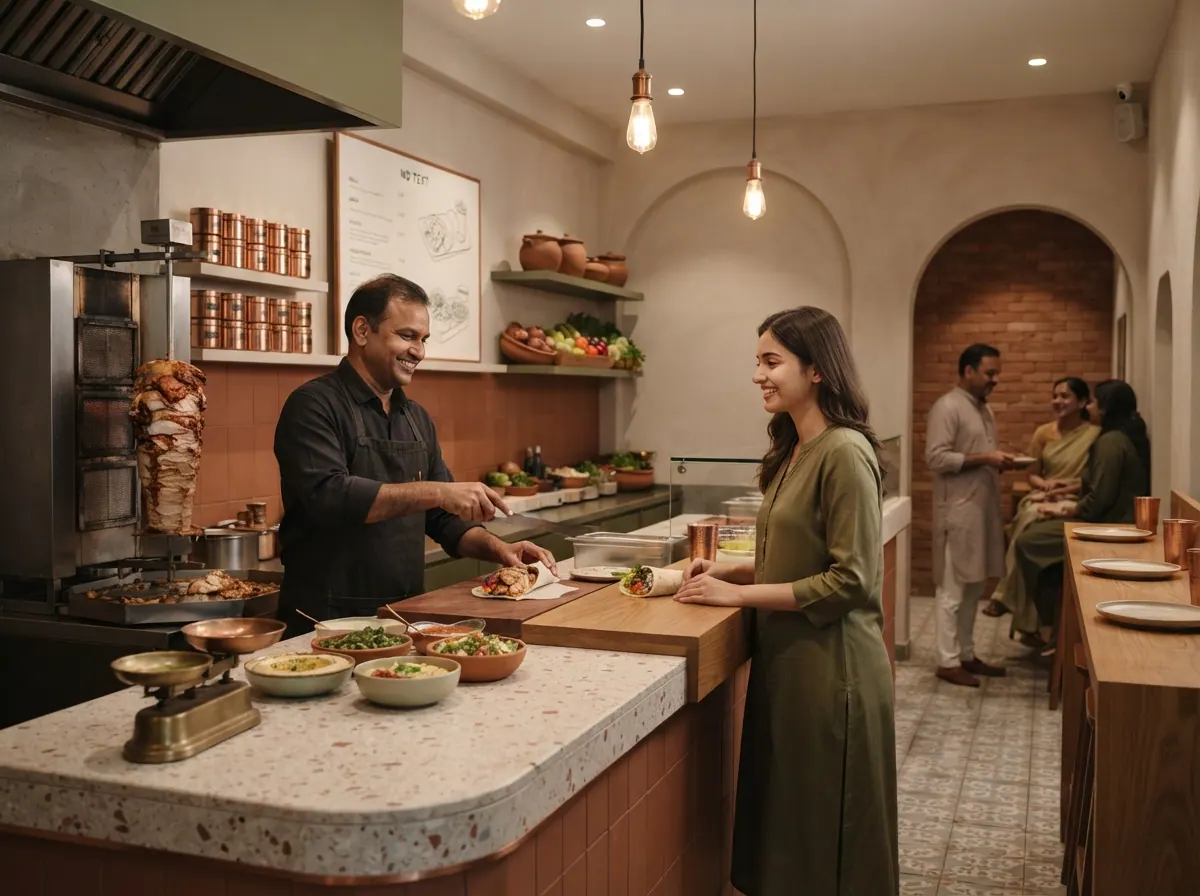
A shawarma business in India needs a proper small shop, a vertical grill with a good gas supply, a cold fridge for marinated chicken, a repeatable marinade, a sauce you can make safely, and about ₹2–10 lakh. A takeaway shop with one grill sits near the lower end. A shop with two grills, seating and a wider menu sits near the top. Shawarma sells well because the roll is filling and quick, but chicken price, spit control and food safety decide whether you profit.
All figures here are estimates. Check prices near you before you spend.
What does it cost?
| Item | Takeaway shop | Shop with seating |
|---|---|---|
| Rent deposit and shop fitting | ₹60,000–1.5 lakh | ₹1.5–3 lakh |
| Shawarma grill (1 or 2 spits) | ₹20,000–50,000 | ₹50,000–1.2 lakh |
| Gas bank or commercial setup | ₹10,000–25,000 | ₹20,000–40,000 |
| Fridge or chiller for marinated chicken | ₹25,000–50,000 | ₹50,000–90,000 |
| Skewers, knives, trays, cutting board | ₹8,000–20,000 | ₹15,000–30,000 |
| Exhaust, counter, signboard | ₹25,000–60,000 | ₹60,000–1.5 lakh |
| Bread, wraps and packing for first weeks | ₹10,000–20,000 | ₹15,000–30,000 |
| Licences | ₹5,000–15,000 | ₹10,000–25,000 |
| First stock and working money | ₹40,000–80,000 | ₹1–2 lakh |
| Total | about ₹2–4.7 lakh | about ₹4.7–10 lakh |
Buying a used grill can save money, but check it for gas leaks and burners that heat evenly.
What do you sell?
- Chicken shawarma roll: the core item, in a thin khubz or Arabic bread.
- Plate shawarma: chicken with salad, pickles, and garlic sauce on a plate, at a higher price.
- Kebab or tikka rolls: use the same breads and sauces.
- Mayo-based sauces: garlic sauce is the heart of the roll. Make it carefully, with pasteurised or egg-free mayo base.
- Fries and a cold drink: a common combo.
How much can it earn?
Here is a small takeaway shop in its third month, selling about 120 rolls a day, open 30 days.
Sales
- 90 regular rolls × ₹80 = ₹7,200
- 20 large or special rolls × ₹120 = ₹2,400
- 10 plates × ₹150 = ₹1,500
- Total per day = ₹11,100
- ₹11,100 × 30 days = ₹3,33,000 a month
Costs each month
- Chicken, bread, sauces, salad, oil: about 40% of sales = ₹1,33,200
- Rent = ₹30,000
- Two staff = ₹30,000
- Gas, power, water = ₹20,000
- Packing = ₹20,000
- Repairs and small items = ₹5,000
- Total = ₹2,38,200
Left over: ₹3,33,000 − ₹2,38,200 = about ₹94,800 before tax and your own pay.
In the first two months, you may sell closer to 50 rolls a day. That brings sales near ₹1,40,000 and leaves you close to zero, because rent and wages do not fall. Keep money in reserve for this.
What do you need before you start?
- A marinade and a sauce you can repeat. Time, salt and acid in the marinade change taste. Write the quantities down.
- A chicken supplier with a cold chain. Same-morning fresh chicken, kept chilled until it is marinated.
- Training on the spit. Stacking the chicken evenly, controlling the flame, and shaving the cooked layer takes practice.
- A busy spot after 5 p.m. Near colleges, markets, offices or busy roads where people stop on their way home.
Step by step
- Marinate and test at home, cooking small spits for friends. Note the time to cook through.
- Price every roll: chicken grams, bread, sauce, salad and packing, then price it at about 2.5 times.
- Take a proper shop, with room for the grill, a hood and a fridge, and a clear counter.
- Register with FSSAI and check the municipality's rules for trade licence and gas.
- Start with three items: a regular roll, a large roll and a plate. Add a veg or paneer roll later.
- Stack small spits for the first weeks so that nothing is left over.
- Track the end-of-day waste and adjust the next day's stack.
Which licences apply?
- FSSAI registration or licence according to your yearly sales, on the FoSCoS portal.
- Trade or shop licence from the municipality or panchayat, and shop establishment registration in many states.
- Gas and fire safety. Ask your local fire office what applies to a kitchen with a gas grill and a cylinder bank.
- GST once your sales pass the limit. Ask a CA.
- Meat sourcing rules. Buy from a licensed shop and keep the bills. Ask the food safety office what records you need.
- Rules differ by state and city, so confirm with the local office.
What goes wrong?
- Chicken left on a warm spit for hours. Meat that stays lukewarm is unsafe. Cook in small stacks and shave only cooked layers.
- Garlic sauce that spoils. Mayo-based sauces go bad in heat. Keep them chilled and make small lots.
- Dry, over-cooked meat. Flame too high or a stack too thin makes chicken tough. Watch the flame.
- Chicken price jumps. A fixed roll price can turn into a loss in a bad week.
- Gas leaks and fire. Hoses, regulators and the grill need regular checks. Keep an extinguisher near.
- Too many look-alike shops. In a lane with four shawarma shops, a small difference in sauce and bread can win or lose the crowd.
Situations you will face
What would you do? Each choice costs something.
Getting started
A gas grill is cheaper and common. An electric one holds steadier heat but your shop's power supply is weak.
- Buy the gas grill: Cheaper, flame needs watching
- Buy the electric grill: Costly, steady cooking
Your first marinade tastes sour. Another recipe uses less acid but takes a day longer to rest.
- Test another week: Waste chicken, better taste
- Open with the current one: Faster start, mixed reviews
Thin khubz from a bakery costs less. A thicker pita holds more filling but costs more per roll.
- Use thin khubz: Cheaper roll, can tear
- Use thicker pita: Higher cost, fuller roll
A raw-egg garlic sauce tastes great but spoils fast in heat. An egg-free mayo base keeps better.
- Use egg-free mayo base: Safer, slightly different
- Buy ready sauce tubs: Costs more, steady taste
A used chiller is available cheap. A new one costs much more but has a warranty.
- Buy a new chiller: Costly, dependable cold
- Buy a tested used one: Cheaper, repair risk
A fitter offers a cheap loose hose setup. A licensed fitter charges more for a fixed pipe and regulator.
- Use the licensed fitter: Costly, safe setup
- Ask for a safe cheaper setup: Lower cost, fewer safeguards
First month
A big stack looks impressive and feeds a crowd. On opening day you do not know how many will come.
- Stack small and add: Less waste, shorter waits
- Stack big to look busy: Looks good, waste likely
You sold less than expected. The leftover cooked chicken cannot be reheated and sold tomorrow.
- Discard, cut tomorrow's stack: Lose cost, learn demand
- Discard, keep the same stack: Same loss, never run out
The lane already has two shawarma shops. A buy-one-get-one offer would bring people but costs margin.
- Run the offer for a week: Crowd, thin margin
- Offer a free fries: Smaller crowd, lower cost
Your flame is high and the stack is thin. Several rolls came out chewy.
- Lower flame, rebuild stack: Wasted stack, juicier meat
- Add more sauce: Cheap fix, same problem
One helper packs generous rolls and another is stingy. Customers notice.
- Weigh the chicken per roll: Small cost, steady rolls
- Let helpers decide: Easy, uneven value
Students in the area say they would order after 10 p.m. Late hours need staff and more gas.
- Open till midnight: Wage and power, more sales
- Close at 10 p.m.: Rest, miss late orders
Running it
Chicken costs much more this week. Your roll prices are fixed on the board.
- Raise roll price by ₹10: Margin safe, fewer orders
- Hold price, reduce filling: Keeps buyers, quality drops
Several customers ask for a paneer or veg roll. It uses separate prep and clean tools.
- Add a paneer roll: New buyers, separate prep
- Stay chicken only: Focused, miss some buyers
A crowd of students arrives at once. One person shaves and rolls, and the queue grows.
- Hire a roll-maker for evenings: Wage, faster service
- Pre-roll and hold: Free, soggy rolls
A combo with fries and a drink would raise the bill. Fries need a fryer and oil.
- Launch a combo: Higher bill, fryer cost
- Sell rolls only: Simple, flat bills
On a hot afternoon the garlic sauce tub on the counter looks thin and smells sour.
- Throw it, keep sauce chilled: Lose a tub, safe sauce
- Throw it, buy a small cooler: Bigger cost, steady quality
A nearby office wants 50 rolls for a team lunch tomorrow. They ask for a discount.
- Give a small discount: Big order, low margin
- Quote full price: Better margin, may refuse
Regulars ask where your chicken comes from and whether the supplier follows proper slaughter norms.
- Share supplier details: Takes effort, builds trust
- Avoid answering: No cost, doubt grows
During a festival fortnight, people eat out after prayers and shopping until late. Your cook is already tired.
- Hire extra late staff: Wages, much more sales
- Keep normal hours: No cost, miss the rush
When things go wrong
The thermometer reads warm. The marinated chicken from last night has been sitting warm for hours.
- Throw it, repair the chiller: Big loss, safe food
- Throw it, rent a backup chiller: Higher cost, no closed day
A customer messages that they had stomach pain after eating your chicken shawarma yesterday.
- Refund and review each step: Pay now, protect trust
- Ignore it: Free, rumours spread
Your helper reports a faint gas smell near the hose joint when the grill is lit.
- Shut off, call the fitter: Lose the evening, stay safe
- Shut off, replace hose and regulator: Higher cost, fixes the cause
The shawarma shop two doors away cuts the roll to ₹10 below yours.
- Launch a mini roll: Match price, lower margin
- Hold price, stress taste: Keep margin, lose some
Your main cook leaves for a Gulf job. They knew the stack and flame by feel.
- Hire a skilled cook, higher pay: High wage, quick fix
- Train a helper: Cheaper, a week of mistakes
Growing
On peak evenings one spit cannot keep up. A second grill costs money and floor space.
- Buy the second grill: Costly, faster peak service
- Stay on one spit: Saves money, queue limits
Customers ask to sit and eat plates. Seating needs furniture, cleaning and a server.
- Add six seats: Cost and staff, plate sales
- Stay takeaway: Lean, capped growth
A shop is free near the bus stand. You would need a cook, a chiller and a grill.
- Open the second shop: Big cost, more sales
- Improve the first shop: Safer, slower growth
A tie-up with a bakery for fresh daily khubz costs more but tastes better than packed bread.
- Tie up with a bakery: More per roll, fresher taste
- Keep packed bread: Cheaper, plain taste
Branded wraps and sauce cups cost more but help people remember and share your shop.
- Order branded packing: Costly, stronger recall
- Use plain packing: Cheaper, no recall
Is it right for you?
A shawarma business suits you if you like fast hands-on cooking at a hot grill, can work late evenings, and keep strict about food safety. It suits you less if you cannot manage cold storage and daily waste, because the cost of mistakes is high.
A good test: work two evenings at a busy shawarma shop. If you still like the rush, start with a takeaway shop, a short menu and a small stack, and add a second grill only when you sell out most evenings.