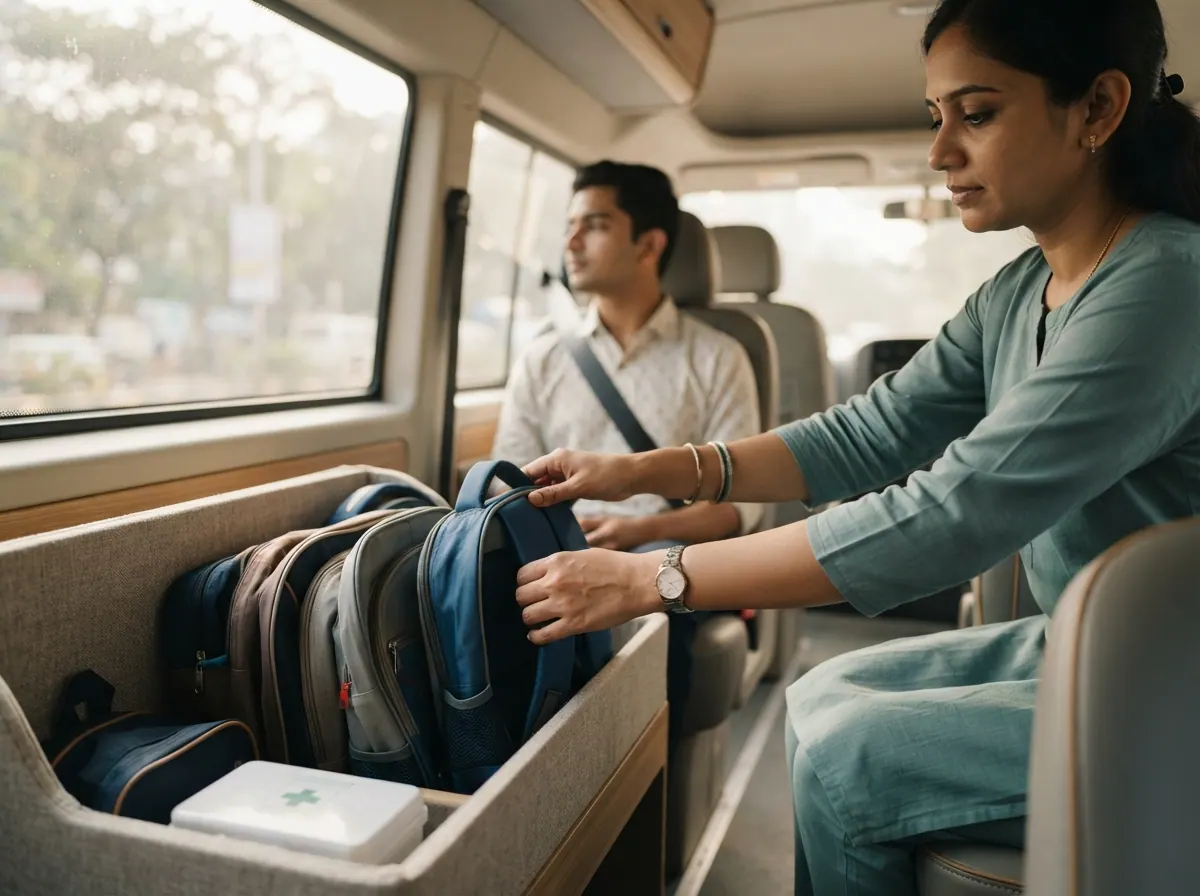
To start a school van business in India you need a commercial-registered van with a permit and fitness certificate, a trained driver, an attendant, insurance, safety fittings and about ₹5–12 lakh. The van earns a fixed monthly fee from each child, so the income is steady, but it comes with a heavy duty of care. Children's safety is the business, and the rules around it are strict.
All figures here are estimates. Check prices near you before you spend.
What does it cost?
| Item | Used small van | New van or mini bus |
|---|---|---|
| Vehicle | ₹3–6 lakh | ₹6–10 lakh |
| Commercial registration, permit, tax | ₹30,000–80,000 | ₹40,000–1 lakh |
| Insurance, first year | ₹20,000–40,000 | ₹30,000–60,000 |
| Safety items (first aid, fire extinguisher, seat belts, speed limit device, GPS where asked) | ₹15,000–40,000 | ₹20,000–50,000 |
| Seats, window grills, paint, school board | ₹15,000–40,000 | ₹20,000–50,000 |
| First 3 months of driver, attendant and fuel | ₹90,000–1.4 lakh | ₹1–1.6 lakh |
| Total | about ₹5–9 lakh | about ₹8–12 lakh |
A cheap van is not a bargain if it fails the fitness check or cannot be insured. Bring a mechanic and check every paper before buying.
Which vehicle should you buy?
- Small van (such as an Eeco-type): cheaper to run, but the number of children is limited, and rules may cap how many can sit.
- Tempo Traveller or similar: carries more children, costs more, and suits longer routes.
- Mini bus: for a school contract, but loans, permits and driver rules are heavier.
- Fuel type: CNG or diesel can lower the daily cost over petrol, but check what your area offers.
How much can it earn?
Take a van carrying 12 children on a morning and evening run, 25 days a month.
Monthly income
- 12 children × ₹1,800 average = ₹21,600
- If you run a second batch for another school and carry 10 more at ₹1,500 = ₹15,000
- Total = ₹36,600
Costs each month
- Driver = ₹12,000
- Attendant = ₹5,000
- Fuel, about 60 km a day × ₹7 per km × 25 = ₹10,500
- Repairs and tyres = ₹2,500
- Insurance, fitness and permit, spread out = ₹3,500
- Total = ₹33,500
Left over: ₹36,600 − ₹33,500 = about ₹3,100 a month, before any loan instalment.
That number is very thin. A single full van with only the first batch leaves a loss on these costs. Most owners do better by driving themselves, which saves about ₹12,000, or by filling a second route. The honest lesson is that this business needs full seats on two runs or an owner at the wheel.
What do you need before you start?
- A trusted driver with experience and a clean record, and a police check if your school or area asks for it.
- An attendant for younger children, who helps them on and off safely.
- Routes and timings that match the school bell and do not run more than about an hour per way.
- Cash for vacations. Many parents stop paying in summer break or pay less, while insurance and loan instalments continue.
Step by step
- Talk to two or three schools and parents in one colony about how many children need a ride and what they pay.
- Visit the RTO and learn the permit, fitness and safety rules for school vehicles in your state.
- Choose a vehicle that fits both the number of children and your route. Check papers and loan status if it is used.
- Fit the safety items and get the fitness certificate before the first day.
- Hire a driver and an attendant and write their duties: pickup lists, no stops, no phone use, no unknown adults.
- Make a fee list with the due date, the notice for leaving, and the holiday rule, and share it with every parent.
- Keep a daily list of children boarding and leaving, and a phone number for each parent.
Which licences apply?
Rules vary by state and city:
- Commercial registration and permit for carrying children for a fee.
- Fitness certificate and insurance kept valid at all times.
- Driver rules. The driver needs a commercial licence, and some states ask for years of driving experience and a clean record.
- Safety fittings. Many states ask for items such as a first aid box, a fire extinguisher, window grills and a speed limit device. Ask your RTO for the exact list.
- School approval. Many schools only allow vans on their approved list, so ask the school office.
- Loans and tax. Banks and finance companies give vehicle loans. Ask a CA about GST and income tax.
What goes wrong?
- A slow filling van. Costs start at the first day, and a half-empty van loses money.
- Missing papers. A lapsed fitness or insurance date can stop the van and make an accident far costlier.
- Overloading. More children than seats is unsafe and invites a fine.
- Parents who pay late or stop in vacation. Without a written rule, you absorb the loss.
- Driver trouble. Late arrivals, phone use or rough driving cost you families fast.
- An accident or breakdown on the route. You need a backup plan so children are not left waiting.
Situations you will face
What would you do? Each choice costs something.
Getting started
A used small van costs ₹3.5 lakh. A new bigger one costs ₹7 lakh and carries more children.
- Buy the used small van: Cheaper, fewer children
- Buy the new bigger van: Costly, room to grow
The seller says the old finance loan is almost cleared and will give the papers after you pay.
- Insist on a no-loan certificate: Delays the deal, safe papers
- Walk away from the deal: Lose time, avoid trouble
Parents are waiting and the permit is two weeks away. A neighbour says drive for now.
- Wait for the permit: Lose two weeks, stay legal
- Ask a licensed van to help: Share the fee, keep parents
The RTO lists a first aid box, fire extinguisher, window grills and a speed limit device. A fitter gives two quotes.
- Fit good quality items: Costs more, trusted by parents
- Fit the cheapest approved set: Saves money, plain finish
One has ten years of clean driving and asks ₹14,000. The other asks ₹9,000 and has two years.
- Hire the experienced driver: Higher pay, safer
- Hire the cheaper driver: Saves pay, less experience
Half your children are under eight. An attendant costs ₹5,000 a month.
- Hire an attendant: Costs monthly, safer boarding
- Pay a part-time attendant: Small monthly cost, safer boarding
First month
A few parents want the summer fee waived. You have not written any rule yet.
- Charge half in holidays: Fair, some income kept
- Waive the holiday fee: Goodwill, you carry costs
A family offers extra fee for a pickup that adds fifteen minutes each way.
- Add the stop with higher fee: More money, longer route
- Decline politely: Keep timings, lose a child
Three families have not paid this month and promise next week.
- Wait and send a reminder: Kind, cash is short
- Stop the ride after notice: Firm, children miss school
Visibility is poor on the highway stretch. Parents want the van to run as usual.
- Drive slowly, start earlier: Lose sleep, stay safe
- Skip the day with notice: Safe, fee dispute
A child says they feel dizzy while the van is on the way to school.
- Stop safely and call the parent: Delays the route
- Drive to the nearest clinic: Delays the route, child safe
A parent saw your driver using a phone at a signal. The driver says it was an emergency.
- Warn the driver in writing: Strict, driver may be upset
- Fit a phone holder, set rule: Small cost, safer driving
Running it
The school office says only vans with proper papers and a listed driver can enter the gate.
- Submit all papers: Time and small fees
- Drop children at the gate: Saves effort, parents upset
The fitness check is next week. A mechanic says tyres and lights need work first.
- Service before the check: Costs money, passes smoothly
- Go and fix after if rejected: Risk of rejection and a lost week
Fuel costs you ₹1,500 more a month. Parents are used to the old fee.
- Raise the fee by ₹100: Covers the cost, some grumble
- Absorb the rise: Keeps parents, thinner profit
A school across town starts ten minutes after yours. A second run fills your empty hours.
- Start the second run: More income, tighter timing
- Keep a calm single run: Less income, no rush
The mechanic says all four tyres need change before the rains. New tyres cost ₹16,000.
- Change all four: Costly, safe in rain
- Change two now, two next week: Moderate cost, no rain runs till then
A parent begs you to take their child and your seats are full. They offer extra money.
- Say no and offer a waiting list: Lose fee, stay safe
- Arrange a second van: Costs more, new child joins
Your attendant fell ill. Younger children need a helper on the van.
- Hire a temporary helper: Small pay, safe boarding
- Ask a parent to ride along: Free, depends on goodwill
A GPS device costs ₹5,000 and a small monthly fee. Parents can then see where the van is.
- Fit GPS tracking: Cost now, higher trust
- Share the driver's number: Free, less trust
Summer break starts. Loan and insurance still run while parents stop paying.
- Offer holiday camp rides: Some income, extra effort
- Rest and save: No income, costs run on
A child is missing at the usual stop and the parent's phone is off.
- Wait and call the school: Delays the route a bit
- Wait briefly, call parent, school: Short delay, child safe
When things go wrong
A scooter rider hits the van's side at a turn. No child is hurt but parents hear about it.
- Inform all parents and settle by insurance: Honest, slow
- Pay the rider and tell parents: Costs more, honest to parents
The clutch fails with eight children aboard. School bell rings in thirty minutes.
- Hire an auto for the children: Costs now, children reach school
- Call parents to collect: Free, parents upset
Your driver leaves on Sunday night. Monday morning parents expect the van.
- Drive the route yourself: Tiring, protects reputation
- Hire a temporary driver fast: Pay a premium, verify first
You notice the insurance expired. A renewal is possible online with a small penalty.
- Stop the van and renew first: Lose two days, stay legal
- Renew online before driving: Same day, small penalty
A parent says the van braked hard and the children fell forward. Other parents are listening.
- Meet the parent and retrain driver: Costs time, rebuilds trust
- Defend the driver: Quick, trust slips
A family move and a school change leave four seats empty in the same month.
- Advertise at nearby schools: Costs a little, may fill
- Wait for referrals: Free, slow
Growing
Your van is full and thirty children are waiting. A second van needs a driver and an attendant.
- Buy a second used van: Big spend, more income
- Keep one van, raise fee: Small gain, parents grumble
A small company wants a monthly contract for evening pickups of fifteen staff in your van.
- Take the staff contract: Steady pay, fixed hours
- Stay with schools only: Simple, one income type
Is it right for you?
This business suits you if you are reliable, comfortable with fixed early hours, and ready to take children's safety very seriously. It suits you less if you want to run it from a distance, because the driver and attendant are the face of the business.
A good test: before you buy, collect names of twelve families with a ready commitment for the next term. If you cannot, the van will not fill later.