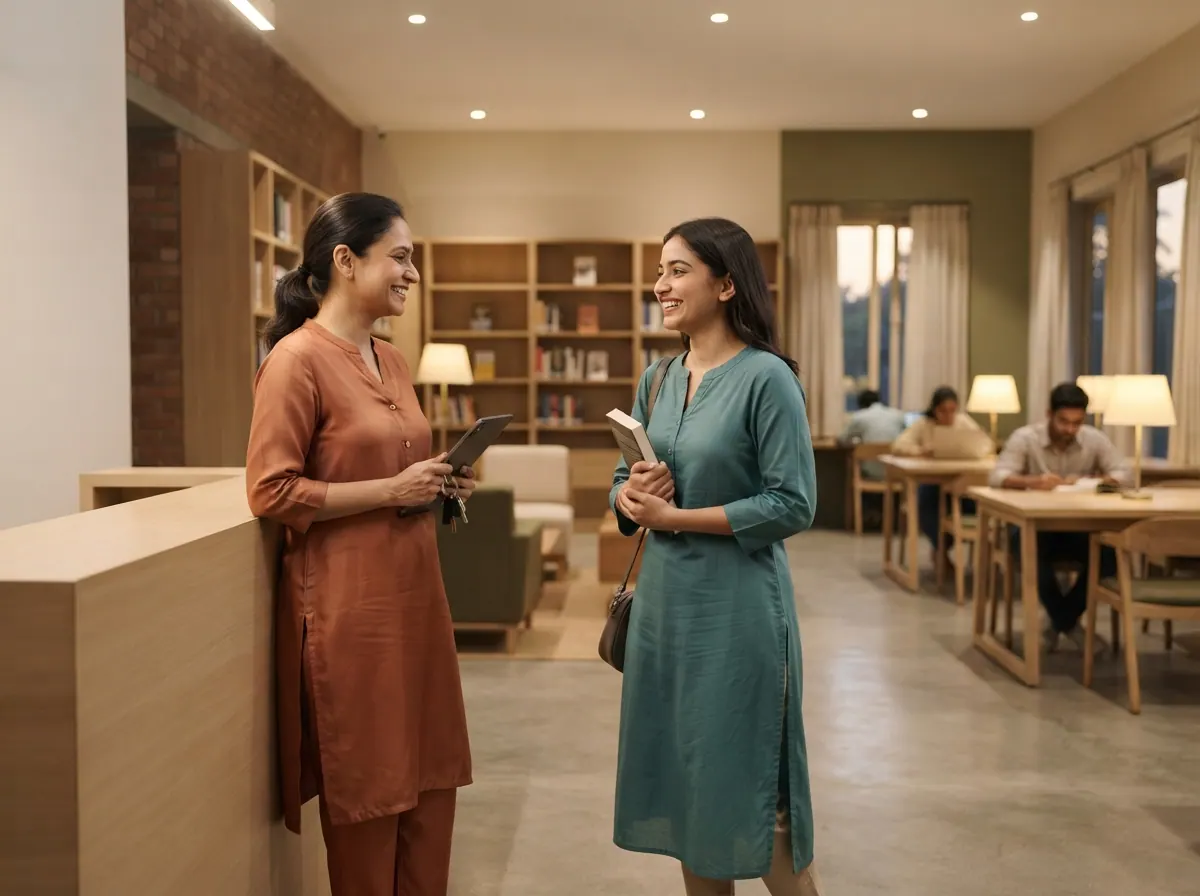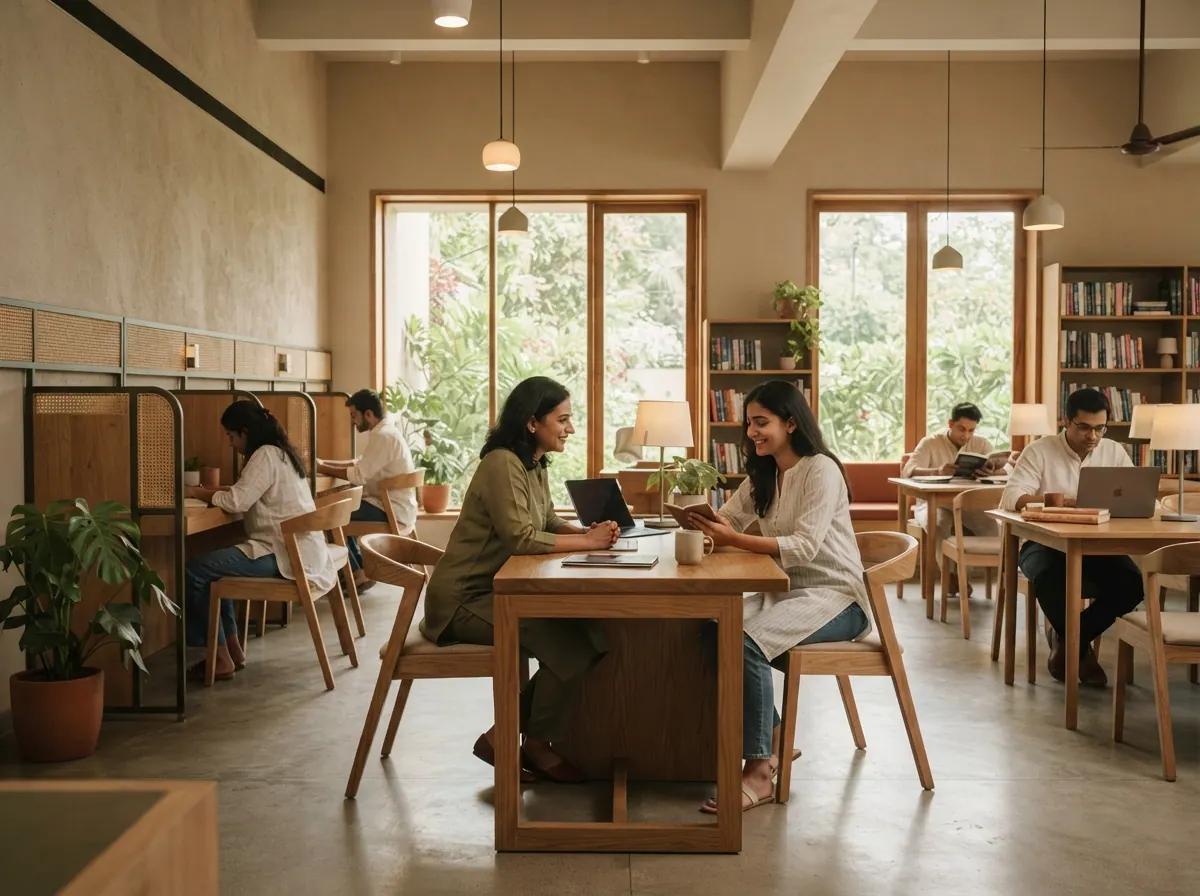
A self-study library in India is a quiet, rented hall with desks, light, power and often air conditioning, where students pay a monthly fee for a seat to study their own books. It costs about ₹3 lakh for a basic hall, and about ₹5–11 lakh for a 50-seat air-conditioned one. You are not lending books. You are selling a quiet place, a fixed seat and a routine to the student next door who cannot study at home.
All figures here are estimates. Check prices near you before you spend.
What does it cost?
For a 50–60 seat hall near a college or coaching lane:
| Item | Estimate |
|---|---|
| 50 study desks with chairs | ₹1.2–2 lakh |
| Partitions, lights, paint | ₹60,000–1.5 lakh |
| Air conditioning or coolers and fans | ₹60,000–1.5 lakh |
| CCTV and entry register or biometric | ₹30,000–60,000 |
| Wi-Fi, UPS or inverter | ₹40,000–80,000 |
| Newspapers, magazines, starter reference books | ₹30,000–80,000 |
| Lockers for bags | ₹30,000–60,000 |
| Rent deposit and lease papers | ₹60,000–2 lakh |
| Signboard, first advertising | ₹20,000–40,000 |
| Three months of cushion | ₹60,000–1.2 lakh |
| Total | about ₹5.1–11.4 lakh |
A hall of 20 desks with fans can start for about ₹3 lakh. Spend first on the desk and the light. A student chooses a library by sitting in it for ten minutes, so a good chair and a bright tube light matter more than a banner.
How much can it earn?
A library has fixed costs and one product. Use a fee of ₹800 for a full-day seat, a hall of 60 seats, rent ₹15,000 and a helper at ₹7,000.
A busy month (60 members, exam season)
- Income: 60 × ₹800 = ₹48,000
- Rent ₹15,000 + power ₹7,000 + helper ₹7,000 + Wi-Fi and newspapers ₹2,000 + repairs ₹1,500 + advertising ₹1,000 = ₹33,500
- Left over: ₹48,000 − ₹33,500 = ₹14,500
A slow month (35 members, holidays)
- Income: 35 × ₹800 = ₹28,000
- Rent ₹15,000 + power ₹5,000 + helper ₹7,000 + Wi-Fi and newspapers ₹2,000 + repairs ₹1,500 + advertising ₹500 = ₹31,000
- Left over: ₹28,000 − ₹31,000 = −₹3,000
Over a year (8 busy months, 4 slow)
- 8 × ₹14,500 = ₹1,16,000
- 4 × −₹3,000 = −₹12,000
- Total: about ₹1.04 lakh, or about ₹8,700 a month
If you sit at the desk yourself, you save the helper's ₹7,000 × 12 = ₹84,000, so the year comes to about ₹1.9 lakh, or about ₹15,700 a month. Set that against ₹5–11 lakh of setup: the money comes back slowly, in four to eight years at these numbers. A library works better with 80 or more seats, half-day and night fees, or low setup because the landlord's building is already good.
What do you need before you start?
- A neighbourhood full of serious students. Look for coaching lanes, a college, a government-exam crowd or a town with many boarding students.
- A room with natural light, a toilet and quiet, away from a main road, a marriage hall or a loudspeaker.
- Fixed seats. Many students will pay more for their own desk and a locker than for any free seat in a hall.
- A rule book. No calls, no talking, closing time, how long a seat may sit empty before it is given away.
- A clean power backup. A student who loses an hour of study to a power cut will not forgive it.
Step by step
- Visit three nearby libraries as a student, count the seats and note the fee, timing and what annoyed you.
- Take a lease that allows commercial use, with a rent rise written into it.
- Plan seats and aisles on paper before buying desks, so no desk faces a door or a wall that echoes.
- Fit the desk with a small lamp and a power socket where you can. Students with laptops will pay more.
- Fix fees: a full-day seat, a half-day seat, a night seat, and a refundable deposit or a registration fee.
- Write a one-page rule sheet and put it at the door.
- Start with a joining offer for the first twenty students, then ask each of them to bring one friend.
- Check the room every evening for noise, a dead light or a stuck door, since students raise it only by leaving.
Which licences and papers apply?
- Shop and establishment registration or trade licence from your local body.
- Fire safety. A closed hall with many people and an air conditioner may need extra fire safety. Ask your municipal or fire office.
- A proper rent agreement that names the use as a library or study room.
- GST only if your income crosses the limit. Ask a CA.
- Books and copying. Do not photocopy and sell textbooks. Buy the books you keep, and ask a lawyer or CA if unsure about copying rules.
What goes wrong?
- A cheaper library opens next door and takes twenty members in a week.
- Exams end. After a big recruitment date or board results, half your hall goes home.
- Noise. One loud caller can lose you three serious students.
- Seats held but not used. A student pays and comes twice a week, and a waiting student cannot sit.
- Power and heat. The electricity bill for the air conditioner can eat your whole profit in summer.
- Theft of phones and bags from open desks.
- Fee delays. Students say they will pay next week, and the month ends with nothing collected.
Situations you will face
What would you do? Each choice costs something.
Getting started
Students in your town ask first if there is AC. An AC hall costs far more to fit and run every summer month.
- Fit air conditioning: Big cost, higher fee possible
- Use fans and coolers: Saves money, sweaty summers
A full hall of fifty looks serious. Thirty desks cost less, and the extra floor space may sit empty for months.
- Buy fifty desks: Large bill, room to grow
- Buy thirty desks: Smaller bill, turn some away
A hall in the coaching lane has students walking by all day, at a higher rent. A quiet street is peaceful and cheaper.
- Rent in the coaching lane: Higher rent, many walk-ins
- Rent on the quiet street: Lower rent, fewer walk-ins
Students keep asking for a place to leave their books and a plug for the laptop. Both cost money you do not have spare.
- Fit lockers and sockets: Costly, students pay more
- Keep plain desks: Saves money, plain offer
The landlord wants six months of rent in advance and gives only an 11-month lease. A shorter advance means a smaller hall.
- Pay the large advance: Cash locked up, better hall
- Take the smaller hall: Less locked up, fewer seats
A neighbour says the municipal office checks halls with many people. Extinguishers and a second exit cost money.
- Fit extinguishers, open an exit: Costs now, papers in order
- Wait until someone asks: Saves now, risk later
The library next door charges ₹700. You have better chairs and want ₹900. Students compare quickly.
- Charge ₹900: Better margin, some walk away
- Charge ₹700: Fills fast, thin margin
First month
A free first week would fill early seats and start word of mouth. Some students will take the week and leave.
- Offer a free first week: Seats fill, little cash now
- Offer one free day pass: Cheap, slower to fill
One member talks loudly on the phone near other desks. Two serious students have complained quietly.
- Enforce the no-calls rule: May lose that member
- Let it pass this time: Keep the fee, risk quiet ones
Eight members pay but come twice a week. A waiting list of five students has no seat.
- Give half-day seats to waiters: More money, argument risk
- Keep seats for payers: Fair, waiters go elsewhere
Exam students want daily papers and some reference books. They cost every month and nobody pays extra for them.
- Subscribe to papers, buy books: Monthly cost, happier members
- Tell them to bring their own: No cost, plain image
Fifteen members say they will pay next week. Your rent is due, and one polite word has not worked.
- Ask fees in advance only: Cash steady, some leave
- Give a grace week: Keep everyone, cash is tight
A student says a phone was stolen from an open desk. You have no cameras in the hall yet.
- Fit cameras and lockers: Costly, members feel safe
- Put up a notice only: Cheap, risk remains
Running it
Some students want to study until midnight. You would pay for extra power and a night helper.
- Open a night shift: Extra fee, higher bills
- Keep the present hours: No extra cost, miss those students
Students preparing online want faster internet. A better line costs more every month and slows when everyone is on it.
- Get a faster line: Monthly cost, higher fee possible
- Keep the basic line: Saves money, some complaints
A new hall next door charges ₹200 less a month. Six of your members asked if you will match it.
- Cut your fee: Keep members, thinner margin
- Hold the fee, improve the room: Costs effort, some leave
The power bill doubled with the air conditioner on all day. Raising the fee mid-year may upset members.
- Add a small summer charge: Covers bill, some grumble
- Absorb the bill: Members happy, margin vanishes
A nearby coaching class wants its students to use your hall at a group rate. You get many members, each paying less.
- Accept the group rate: Full hall, low fee each
- Keep your normal fee: Better rate, fewer members
Students who work or study elsewhere want a cheaper morning-only seat. It could fill idle hours but split your desks.
- Offer half-day seats: More members, lower fee each
- Full-day seats only: Simple, empty afternoons
A major recruitment exam finished and the hall is half empty. Rent and power do not drop.
- Run an offer for new batches: Costs money, refills seats
- Wait for the next season: No cost, thin months
Six chairs have broken backs and students complain of sore necks. Better ones cost more than the cheap ones you bought.
- Replace with good chairs: Higher cost, happier members
- Patch the old ones: Cheap, complaints continue
When things go wrong
A socket burned near three desks in the evening. Nobody was hurt, but members saw the smoke.
- Rewire the hall properly: Costly, hall safer
- Replace the one socket: Cheaper, risk remains
The landlord plans to sell the building and asks you to leave in two months. You have just fitted lockers.
- Move to a new hall: Moving cost, members may leave
- Offer higher rent to stay: Pay more, stay for now
A shouting match over a seat scared other students. One of the two is a long-time member who pays on time.
- Warn both, fix the seat rule: Fair, may lose the old member
- Side with the old member: Keep the fee, others see bias
Ten students cleared a job exam and want the rest of their month back. Your rule sheet says no refunds.
- Refund part of the fee: Lose cash, win goodwill
- Stand by the no-refund rule: Keep money, hard feelings
The area lost power for two days in exam week. Your members are asking where else they can study.
- Rent a generator for the days: Costly, members stay
- Close until power returns: No cost, some leave
Growing
Your hall has a waiting list. A second hall across town doubles your seats and needs another helper.
- Open the second hall: Big spend, doubled reach
- Add seats in the same hall: Smaller spend, crowded room
Some students will pay almost double for a closed cabin. Building them removes a few open desks.
- Build six cabins: Cost now, higher fee each
- Keep open desks: Simple, no new income
A software vendor offers attendance and fee reminders for a monthly charge. It saves chasing, but some parents dislike it.
- Subscribe to the app: Monthly cost, fewer fee delays
- Keep the paper register: No cost, chasing fees by hand
Members leave to buy tea. A small counter would keep them inside, but food means more papers and more cleaning.
- Open a tea counter: New income, mess and papers
- Let them go outside: No cost, lose some time and income
Is it right for you?
This suits you if you like order, can say a polite no to loud students, can sit in the room long hours, and live where many students are preparing for exams. It helps if you once studied that way yourself and know what a good seat feels like.
It suits you less if you want quick returns, or a lot of customers every day. Before you sign a lease, stand outside three libraries in the evening for a week and count how many students walk in. That count tells you what your hall could hold.