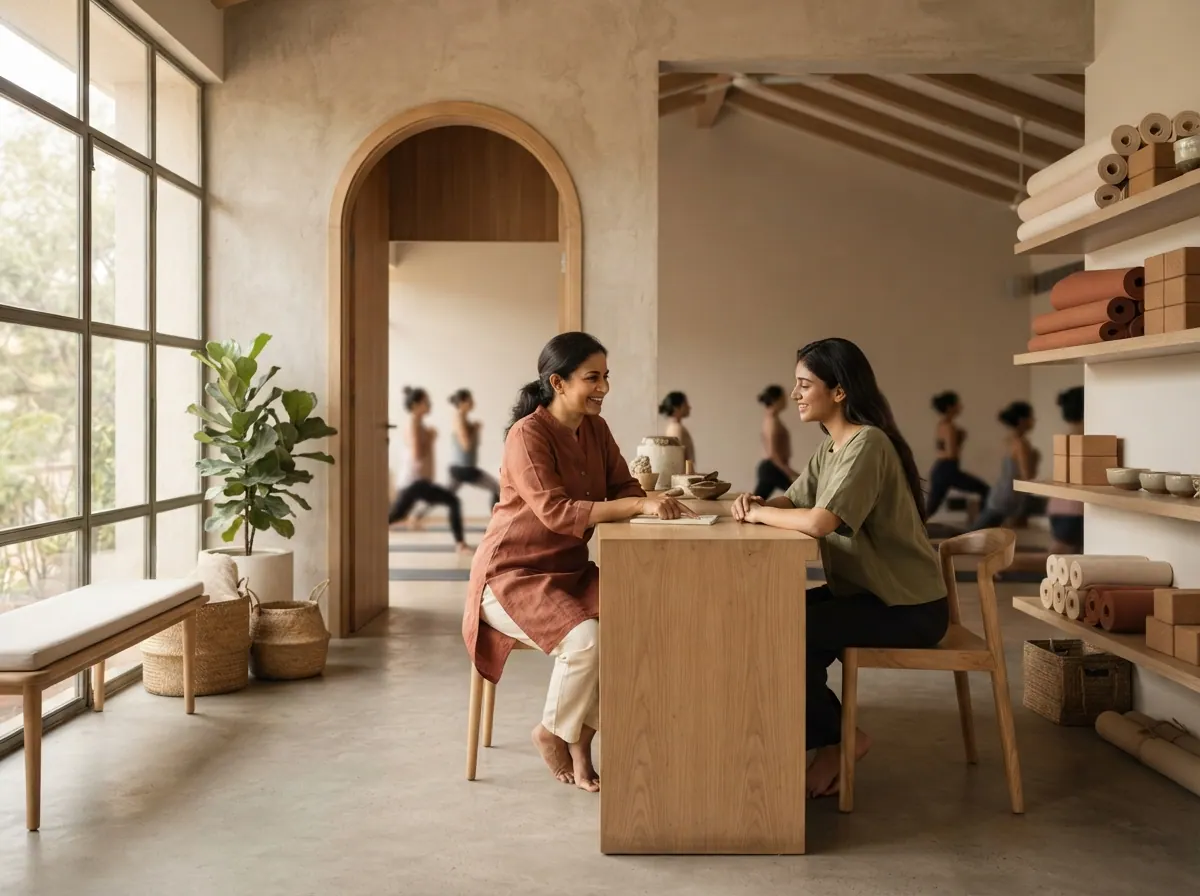
To start a yoga studio in India you need a clean, quiet hall of about 400 to 800 sq ft, flooring that is kind to joints, a teaching certificate people trust, and about ₹50,000–1.5 lakh for a simple rented room or ₹3.5–6 lakh for a full studio with rent reserve. The money comes from monthly memberships, so the real task is not opening the door. It is keeping 40 or 50 people coming back for months.
All figures here are estimates. Check rent, equipment and fees near you before you spend.
What does it cost?
| Item | Simple room (15 students) | Full studio (30 students) |
|---|---|---|
| Rent deposit | ₹40,000–1 lakh | ₹1–1.5 lakh |
| Flooring (wooden or vinyl over a firm base) | ₹10,000–30,000 | ₹60,000–1.2 lakh |
| Yoga mats, blocks, straps, bolsters | ₹15,000–30,000 | ₹40,000–70,000 |
| Sound system, fans, curtains | ₹8,000–15,000 | ₹25,000–50,000 |
| Changing room and shoe rack | ₹5,000–15,000 | ₹30,000–60,000 |
| Signboard and opening promotion | ₹5,000–10,000 | ₹15,000–30,000 |
| Teacher course, if you still need one | ₹15,000–40,000 | ₹15,000–40,000 |
| Float for the first 3 months of rent | ₹30,000–50,000 | ₹60,000–1 lakh |
| Total | about ₹1.3–2.9 lakh | about ₹3.5–6.2 lakh |
You can spend much less by renting a community hall or a society clubhouse by the hour, and many studios start that way. The totals above include rent cushions, which is why they can sit above the cheapest start.
Do not buy everything at once. Start with mats, a few blocks and a good floor. Add props when your students ask for them.
How much can it earn?
Here is a settled studio with 45 paying students in its second year, charging an average of ₹1,800 a month.
Income each month
- 45 students × ₹1,800 = ₹81,000
- Add 4 weekend workshops with 12 people each at ₹500 = 48 × ₹500 = ₹24,000
- Total income = ₹1,05,000
Costs each month
- Rent = ₹35,000
- One part-time teacher for two batches = ₹15,000
- Electricity, cleaning, laundry of covers = ₹6,000
- Marketing and software for bookings = ₹4,000
- Total = ₹60,000
Left over: ₹1,05,000 − ₹60,000 = about ₹45,000 a month.
If you teach every batch yourself and skip the part-time teacher, you keep about ₹60,000. The risky part is that students drop out in the monsoon and after exam season. A studio that loses ten students in a month loses ₹18,000, which is more than a third of its profit.
What do you need before you start?
- A trustworthy teaching background. Parents and older students ask where you trained. Keep your certificate and your teacher's name ready to show.
- A floor that is quiet and cool. Noise from a gym next door, or a tin roof in May, can empty a room faster than a high fee.
- Clear rules on health. Ask every new student about injuries, pregnancy, blood pressure and surgery before the first class. Do not promise to cure any condition, and ask students with a medical issue to check with their own doctor first.
- A booking and fee method. UPI plus a simple register is enough. Collect the month's fee in advance.
Step by step
- Teach a trial batch first in a hall or a terrace for 4 to 6 weeks. See who comes, which hour fills, and what students ask for.
- Choose the room. Look at it at the hour of your batch. Check where the sun falls, how loud the road is, and whether there is a toilet and a changing space.
- Fix the floor. A smooth tile under a mat is hard on wrists and knees. Spend on the floor before the decor.
- Set prices. Offer a monthly pass, a 3-month pass at a small discount, and a drop-in class. Keep a free or cheap first class so people can try.
- Plan the week. For example: two morning batches, one midday ladies' batch, two evening batches, and a weekend workshop. Add a beginners' batch separately, because beginners feel lost in an advanced class.
- Build trust in the neighbourhood. Offer a free class at a nearby society, a park group or an office. Many studios fill from one such group.
- Track attendance. If a regular student has missed two weeks, call them. It costs nothing and often brings them back.
Which licences apply?
Rules differ by city and by what you do, so ask the local office before you start.
- Shop and establishment registration with your state or municipal body is common for a commercial studio.
- Trade or business licence from the municipal corporation or panchayat may apply for your premises.
- GST registration becomes compulsory when your yearly turnover crosses the limit set for services. Ask a CA what applies to you.
- Fire safety. A room with 20 or more people needs clear exits and an extinguisher. Ask the fire department what your building needs.
- Music licence. Playing recorded film or commercial music in a paid class can need permission from the music licensing bodies. Ask them, or use music that is licensed for this use.
- Insurance. A public liability policy covers a student who slips or is hurt. Ask an insurance agent for a quote.
What goes wrong?
- A big first-month crowd that disappears. January and post-festival rushes fade by March. Keep a plan for lean months.
- Hurting a student. A forced backbend or a long headstand with a beginner leads to injury, a bad name and sometimes a claim. Keep class sizes manageable and give easier options.
- Rent that is too high. A fancy address with a rent of ₹70,000 needs 40 students just to break even.
- One teacher doing everything. If you fall ill or travel, the whole studio closes. Train a second teacher early.
- Health claims. Saying yoga will cure diabetes, thyroid or back pain can get you into trouble. Say yoga can support wellbeing, and send medical questions to doctors.
- Cold, damp or smelly rooms. Mats that are never cleaned push students away quietly.
Situations you will face
What would you do? Each choice costs something.
Getting started
A good hall is available, but the owner wants a one-year lease and a big deposit. You have not yet tested your batches.
- Sign the lease: Big deposit, locked in
- Rent by the hour first: Lower risk, less polish
The hall has smooth tiles. A mat on tile is hard on wrists and knees, but proper flooring costs a lot.
- Lay vinyl over a base: Costly, students stay comfortable
- Use thick mats only: Cheaper, complaints from stiff joints
Parents of teenage students ask where you trained. Your course was short and not widely known.
- Do a recognised course: Fees and weeks of study
- Rely on your experience: No cost, some parents hesitate
You can buy 20 studio mats, or ask students to bring their own. Shared mats need cleaning every day.
- Buy 20 studio mats: Costly, easier for beginners
- Ask students to bring mats: No cost, fewer first-timers
Their music comes through the wall during your morning relaxation. Soundproofing is expensive.
- Fit sound panels: Costly, calmer classes
- Shift to a quieter hour: Free, loses some regulars
A rival studio charges ₹1,200. Your hall and training cost more, and you want to charge ₹2,000.
- Charge ₹2,000: Better margin, slower filling
- Match at ₹1,200: Fills fast, thin margin
First month
A society secretary offers 40 residents for one open morning if you give a free class.
- Give the free class: Time and printouts, new faces
- Offer a ₹200 trial: Small income, fewer come
Meena pushed too far into a forward fold and Meena's back hurts. Meena has not asked for anything.
- Pay for Meena's check-up: Costly, Meena trusts you
- Only say sorry: Cheap, Meena may leave and talk
A new batch joins. A health form takes five minutes each, and some people dislike filling it.
- Insist on the form: Safer, a few walk away
- Ask the questions aloud: Quicker, nothing on paper
A new student, Rita, asks if classes will cure thyroid trouble. A big promise would win a year's fee.
- Say it may help wellbeing: Honest, Rita may hesitate
- Send Rita to a doctor first: Fee waits, Rita values honesty
You have ₹5,000 left for promotion this month. Posters reach the lane, WhatsApp reaches friends of students.
- Print and stick posters: Costs money, local faces
- Use WhatsApp referrals: Cheap, slower reach
Fans stop and the room warms up. Twelve students are there and the inverter is not bought yet.
- Buy an inverter: Costly, fewer lost classes
- Open windows and carry on: No cost, a hot class
Running it
Heavy rain and flooded lanes keep students home. Attendance has dropped by a third for two weeks.
- Start an online batch: Camera and effort, keeps fees
- Offer a rain-season discount: Lower fee, more come
Anita has taken a job at a bigger studio. Two of your evening batches depended on Anita.
- Hire a replacement: Salary and training time
- Teach every batch yourself: Saves salary, you get tired
Sunita is five months pregnant and wants to continue. You have no training for prenatal classes.
- Ask the doctor, then train: Course fee, a new batch
- Refer Sunita to a prenatal teacher: Lose the fee, stay safe
A licensing body writes about the recorded songs you play in classes. A yearly licence costs money.
- Pay for the licence: Yearly fee, fully legal
- Switch to licensed music: Small cost, quieter class feel
Twelve homemakers want a midday women-only batch. The room is empty then, but you would need to be there.
- Start the batch: New income, long day
- Keep batches mixed: Easier for you, some leave
The room fits 30 comfortably. People now touch mats and you cannot watch everyone's posture.
- Split into two batches: More work, safer classes
- Keep adding people: More fees, poor attention
A company nearby will pay for one lunch-hour class a week, but you must travel with mats.
- Accept the contract: Steady income, travel time
- Decline to protect your batches: No income, more rest
When things go wrong
The new rent is ₹8,000 more a month. Your 40 students pay about ₹1,800 each.
- Raise fees by ₹150: Covers it, a few leave
- Absorb the increase: Keeps students, thin profit
Kavya slipped near the changing room where the floor was wet. Kavya is sore but can walk.
- Pay treatment, fix the floor: Costly, shows care
- Mop and say nothing: Cheap, risk of a complaint
A new studio with a smoothie bar and a famous teacher starts two streets away with a launch offer.
- Offer a loyalty month: One month free, keeps regulars
- Focus on small batches: No cost, you may lose some
A student wrote that the class was too fast for beginners. Others are reading it.
- Add a slow beginners' batch: Extra hours, answers the point
- Reply angrily online: Free, looks bad
Ten regulars are two weeks past their fee date. Calling them feels awkward, but it adds up to ₹18,000.
- Call each one politely: Awkward, money comes in
- Let it slide this month: Keeps goodwill, loses cash
The big studio offers Anita a higher salary. Many students come only for that class.
- Match the pay: Higher costs every month
- Let Anita go: Saves salary, students may follow
An officer says your studio needs an extinguisher and a clear second exit. Boxes block the door.
- Fix exits and buy extinguisher: Cost now, safe room
- Ask for more time: Free for now, risk of notice
Growing
A neighbourhood across the city has no good studio. A hall there costs less than your first.
- Open a second room: Big deposit, more students
- Rent hours there first: Small cost, slower growth
Your students ask to learn to teach. A course brings income but needs planning and a proper syllabus.
- Launch a 4-week course: Good income, heavy workload
- Keep teaching classes only: Simple, no extra income
A farmhouse offers a weekend stay for your students. You would collect fees and pay the host and food.
- Host a 20-person retreat: Profit if full, risk if not
- Skip it this year: No risk, no gain
People abroad and in other cities ask for live classes. You need a camera, a light and a steady line.
- Set up a proper online batch: Equipment cost, new fees
- Record and sell videos: Cheap, few buyers
Is it right for you?
A yoga studio suits you if you teach well, are patient with beginners and stiff older bodies, and like early mornings. It suits you less if you want fast money, or if you dislike chasing students for monthly fees.
A good test: for two months, run three morning batches in a hall you rent by the hour. If at least 15 people still come in the second month, take a longer lease. If not, change the timing or the audience before you pay a big deposit.