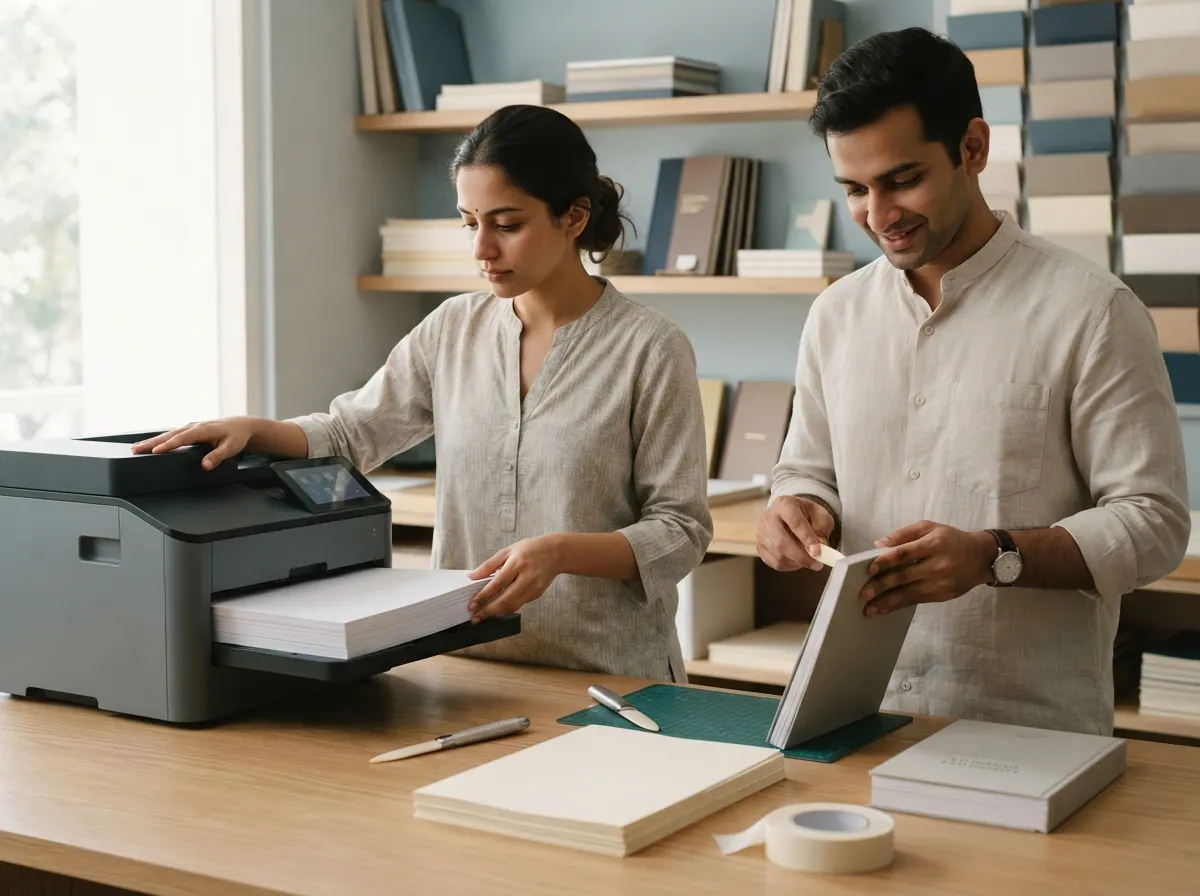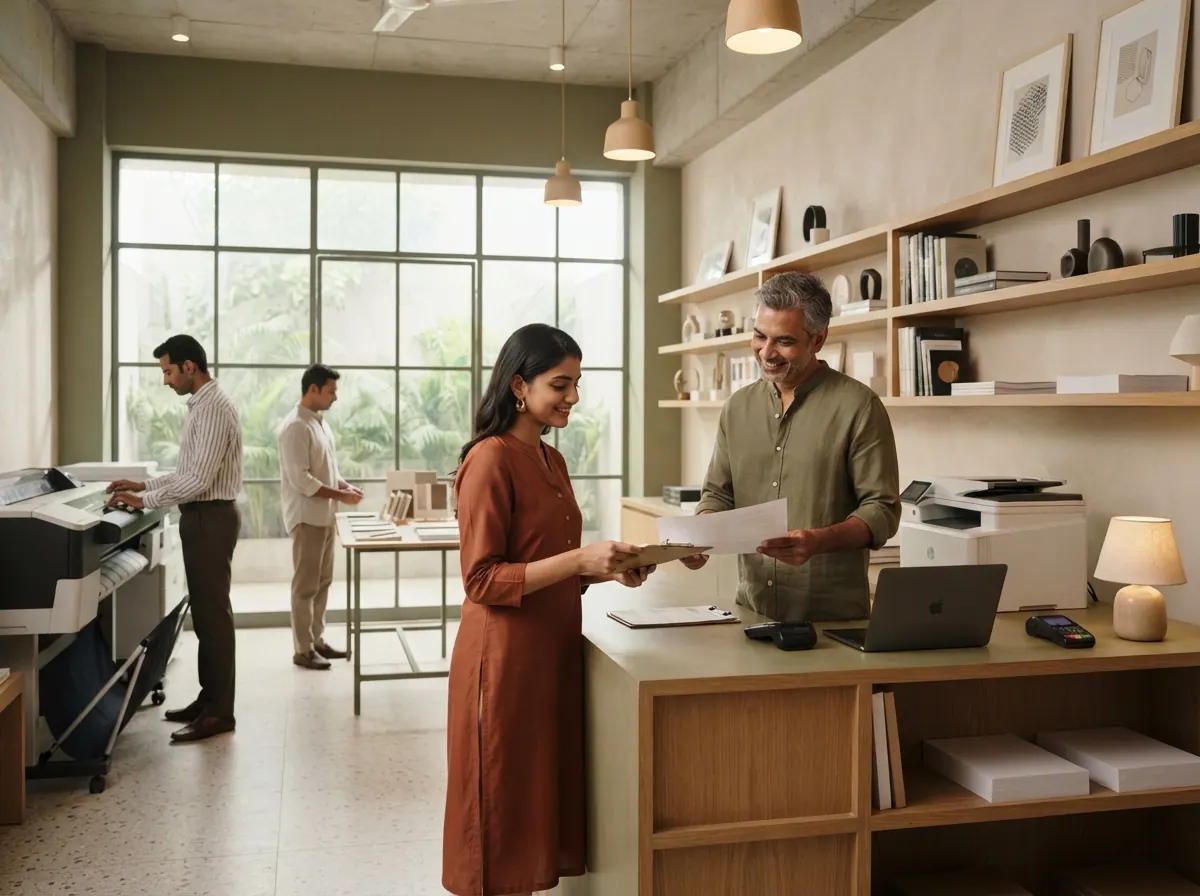
To start a xerox shop in India you need a small shop near people who need copies every day, a photocopier and a printer, a steady supply of paper and toner, and about ₹1–4 lakh. A single copy earns very little, so the money comes from volume and from adding print, scan, lamination and binding work.
All figures here are estimates. Check prices near you before you spend.
What does it cost?
| Item | Basic shop (about ₹1–1.5 lakh) | Better shop (about ₹3–4 lakh) |
|---|---|---|
| Rent advance and set-up | ₹25,000–50,000 | ₹60,000–1 lakh |
| Photocopier (reconditioned or new) | ₹40,000–70,000 | ₹1.2–1.8 lakh |
| Printer and scanner | ₹10,000–15,000 | ₹25,000–50,000 |
| Lamination and spiral binding machine | not at start | ₹10,000–20,000 |
| Computer for typing and printing | ₹20,000–30,000 | ₹30,000–45,000 |
| UPS, table, rack, signboard | ₹10,000–20,000 | ₹20,000–35,000 |
| Paper, toner and drum stock | ₹10,000–20,000 | ₹25,000–40,000 |
| Total | about ₹1–1.5 lakh | about ₹3–4 lakh |
The machine's running cost matters more than its price. Ask the dealer what a toner, a drum and a service visit cost, and how long each one lasts, before you choose a model.
What do you earn from?
- Photocopies: the main traffic. A rupee or two a page, and a fair margin only at high volume.
- Printing from a pen drive or phone: higher rate per page, and a bit more time per customer.
- Scanning and emailing: small fees with almost no cost.
- Lamination and spiral binding: for certificates, notes and projects, with a good margin per item.
- Passport photos and ID forms: if you add a camera and printer.
- Stationery: pens, files and envelopes, which a customer often buys while waiting.
How much can it earn?
Take a small shop near a college in a town, working 26 days a month. The rates and costs are guesses, so use your area's rates.
Income per day
- 1,200 copies × ₹1 = ₹1,200
- 150 prints × ₹4 = ₹600
- Scanning, lamination, binding and others: about ₹250
- Total = ₹2,050 a day
- ₹2,050 × 26 days = ₹53,300 a month
Paper and toner cost per day
- Copies: 1,200 × about ₹0.40 = ₹480
- Prints: 150 × about ₹1.50 = ₹225
- Lamination pouches and binding items: about ₹80
- Total = ₹785 a day, or about ₹20,400 a month
Fixed costs each month
- Shop rent: ₹7,000
- Power: ₹2,000
- One helper: ₹8,000
- Machine service and repairs: ₹2,000
- Loan instalment on ₹1.5 lakh: about ₹4,000
- Total = ₹23,000
Left over: ₹53,300 − ₹20,400 − ₹23,000 = about ₹9,900 a month.
That is small. If you run the counter yourself, you keep the helper's ₹8,000 too, which brings it close to ₹18,000. Business drops during holidays, vacations and after exam season, so the best months are the ones when forms and admissions are open. A machine that goes down for a week in the busiest week can cost you more than a month's profit.
What do you need before you start?
- A location with daily need. Near a school, college, court, registrar's office or a government office.
- A machine dealer you can call. Quick service saves days of lost income.
- A clean, well-lit counter and a clear rate board.
- A reliable paper and toner supplier, so you do not run out on a busy day.
Step by step
- Count customers. Stand near the planned shop for a few days at busy hours and count the people who go to copy shops nearby.
- Compare dealers. Ask for the price of a machine and the cost of each toner and service, and ask to see it running.
- Take the shop and make the counter easy to see from the road.
- Buy the copier first, then a printer and scanner, and add lamination and binding when customers ask for them.
- Put your rates on a board: per copy, per print, scan, lamination and binding.
- Check every job before you hand it over, because a crooked or faint copy costs you the customer.
- Keep a stock book for paper, toner and drums, so you know what to reorder.
Which licences apply?
- Shop or trade registration with your local body.
- GST registration if your turnover needs it. Ask a CA.
- Rules on copying certain documents. Some offices have rules on copying certain records. Ask the local office rather than assuming.
- Customers' privacy. People leave ID cards and certificates with you. Do not keep copies or share them.
- E-waste and old toner. Ask your local pollution office how to dispose of used drums and cartridges.
- Loans. Banks may give small business loans. Confirm the terms with them directly.
What goes wrong?
- Machine jams and breakdowns. A cheap machine with no service support loses you the busiest days.
- Faint or dirty copies. If the toner or drum is old, customers will go to the next shop.
- Low rates from a rival. A new shop opens and charges half. A race to the bottom helps nobody.
- Wasted paper. Bad copies, double feeds and reprints add up across the month.
- No power backup. A power cut during an exam-form rush loses you hundreds of copies.
- Forgotten originals. Customers leave original documents on the glass. Keep a safe place and call them back.
Situations you will face
What would you do? Each choice costs something.
Getting started
A new copier costs ₹1.5 lakh. A reconditioned one costs ₹55,000 and has a six-month service promise.
- Buy the new copier: Costly, fewer breakdowns
- Buy the reconditioned one: Cheaper, more servicing
Two models look alike. One has a cheaper toner but a costlier drum.
- Compare total cost per copy: Takes time, saves money later
- Buy the cheaper machine: Save now, pay later
The college gate is busy in term time. The court has steady daily work.
- Rent at the college gate: Big rush, quiet holidays
- Rent near the court: Steady, smaller volume
A cheap paper jams often. A good brand costs ₹40 more a ream.
- Buy the good paper: Costly, fewer jams
- Buy cheap paper: Saves money, more jams
A rival charges ₹1. You could charge ₹1.50 and offer cleaner copies.
- Charge ₹1.50 for clean copies: More margin, fewer students
- Charge ₹1 like the rest: Many customers, thin margin
Many people ask for printing from phones and pen drives.
- Buy a laser printer: Costly, higher-rate jobs
- Wait until more ask: No cost, miss print jobs
Power cuts are common. A UPS lets you finish a copy run.
- Buy a UPS: Cost now, no lost jobs
- Skip it: Save money, jobs get ruined
First month
Customers are few. Your rate is the same as everyone's.
- Print flyers for colleges: Cost, more students
- Wait: No cost, slow growth
A student complains the copies are light. The toner is nearly empty.
- Replace the toner now: Cost now, copies good
- Run it until empty: Saves money, copies bad
A student left their original mark sheet on the glass and went away.
- Keep it safe and call them: Small effort, builds trust
- Put it in the drawer and forget: No effort, risk of loss
A customer says you counted 120 copies but they made 100.
- Recount with them: Takes time, keeps trust
- Insist your count is right: Saves money, annoys them
Running it
Students queue for 500 copies each of ID and forms on the last day.
- Hire an extra helper: Cost, serve all
- Serve until you are tired: No cost, long queue
The copier jams badly on the busiest morning. The technician is 40 km away.
- Pay the technician for same-day visit: Costly, back soon
- Wait for their normal visit: No cost, lost sales
Students ask for lamination for ID and certificates.
- Buy a laminator: Small cost, good margin
- Skip it: No cost, miss work
A coaching class wants notes copied at 60 paise a page.
- Take the order at 60 paise: Big volume, thin margin
- Ask for 80 paise: Better margin, they may go
A regular student asks for ₹600 of copies on credit.
- Give credit: Keeps them, risk of non-payment
- Ask for cash: Safe, they may go
A customer asks you to copy an official certificate in a way that looks like an original.
- Refuse and explain: Loses a small sale, safe
- Ask them for a certified copy: Loses a sale, they may be annoyed
Your helper leaves during the busiest week.
- Hire a temporary helper: Cost, queues move
- Work alone: Saves pay, slow queues
When things go wrong
The drum stops giving clean copies months before expected.
- Buy a new drum: Costly, clean copies
- Keep using it: Saves money, bad prints
A new shop copies at 50 paise to win students.
- Match on bulk orders: Keep volume, thin margin
- Keep rate, stress quality: Lose some, keep quality
Leaking roof damages three reams.
- Fix the roof and write off: Cost, safe stock
- Use the damp paper: Saves money, jams and bad copies
A stranger asks you for a copy of a customer's ID you made last month.
- Refuse politely: No income, safe
- Ask them to bring the customer: Takes time, protects privacy
Your landlord asks for ₹2,500 more each month.
- Pay the new rent: Stay, less profit
- Move to a cheaper shop: Lose footfall
A six-hour cut hits the day of an admission deadline.
- Rent a generator for the day: Cost, serve students
- Close for the day: No cost, lose the day
Growing
Queues form at peak time and your one machine runs all day.
- Buy a second machine: Costly, double capacity
- Extend working hours: No cost, tired team
Students and offices ask for colour prints.
- Buy a colour printer: Costly, higher rate
- Send colour jobs elsewhere: No cost, miss income
People buy pens and files while waiting.
- Add a small stationery rack: Small stock, extra income
- Stay with copying: No stock risk
A nearby office wants copies on a monthly bill at a lower rate.
- Take the account: Steady work, late payment
- Keep cash only: No delays, lower volume
Customers ask to send files in advance and pick up later.
- Start WhatsApp orders: Small effort, more orders
- Take walk-ins only: No effort, miss busy buyers
Another school has no copy shop within 500 metres.
- Open a second shop: Costly, new customers
- Focus on the first: Safe, limited growth
Is it right for you?
A xerox shop suits you if you have a good location near daily footfall, can stand at a counter for long hours, and are steady with small amounts of money. It suits you less if you want a big profit on every sale, because each copy earns very little.
A good test: sit at a busy copy shop for two days. Count the copies, see which add-on jobs get asked for, and notice how often the machine stops. Then decide if the volume at your location would be enough.