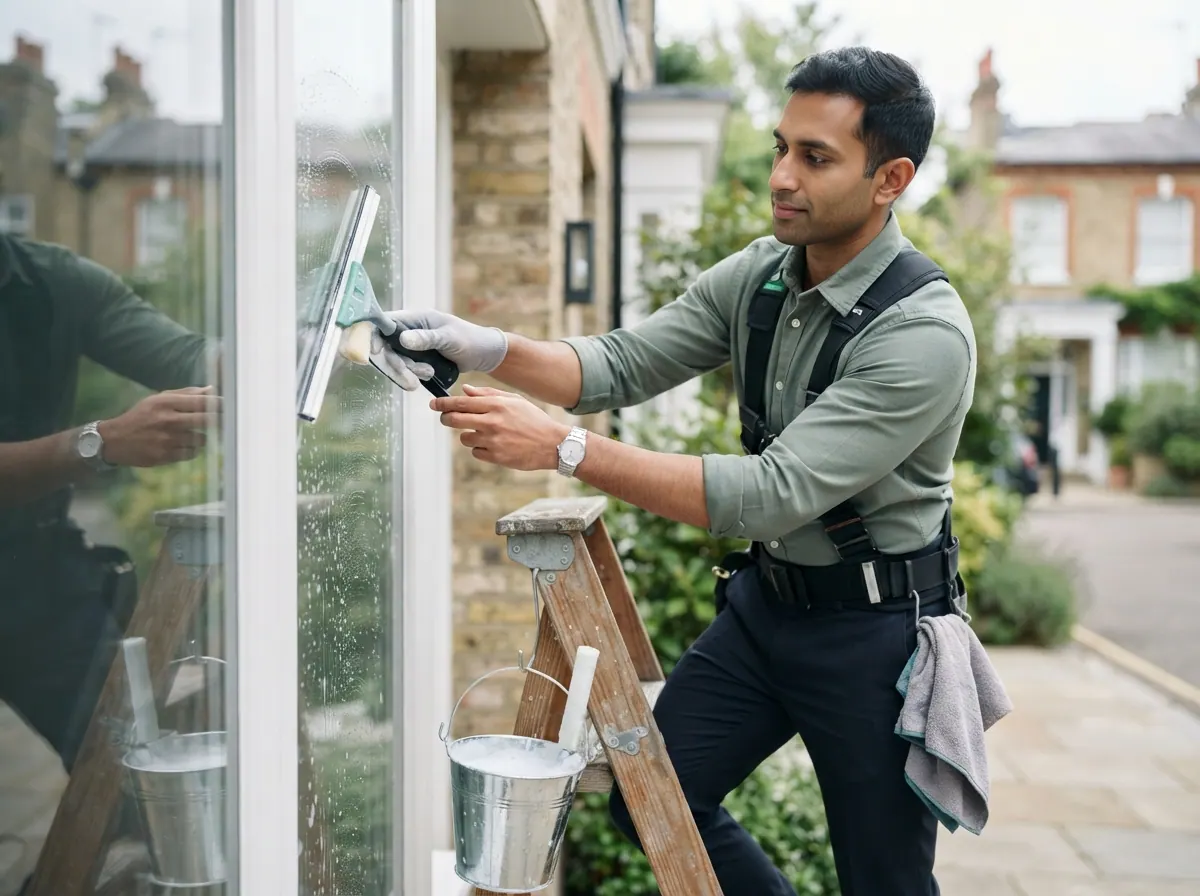
To start a window cleaning business in the UK you need a water-fed pole or a good squeegee and ladder kit, a van or reliable transport, public liability insurance, and a round of regular customers, for about £780 to £6,000. The low end is a bucket, squeegee, ladder and a car. The high end is a water-fed pole with a pure water tank, a van and a bought round. Your profit comes from how many houses you can do in a day on the same streets.
All figures here are estimates. Check prices near you before you spend.
What does it cost?
| Item | Basic start | Water-fed pole setup |
|---|---|---|
| Bucket, squeegees, scrim cloths, scraper | £60–150 | £60–150 |
| Ladders (extension and step) | £150–400 | £150–400 |
| Water-fed pole and brush | none | £250–900 |
| Pure water tank, pump and resin filter | none | £500–2,000 |
| Used van or van racking and storage | £0–1,500 | £1,500–3,000 |
| Public liability insurance (first year) | £70–200 | £100–300 |
| Leaflets, van sign, app or accounting | £80–250 | £150–400 |
| Buying an existing round (optional) | £0 | £0–3,000+ |
| Total | about £780–2,500 | about £3,000–6,000+ |
A water-fed pole is the biggest jump in cost, but it can reach upper floors without a ladder and cleans many windows quickly.
What do you sell?
- Domestic rounds: houses cleaned every four or eight weeks, outside only.
- Gutters, fascias and soffits: extra work that earns more per visit.
- Conservatories and roofs: higher price, but with more risk and height rules.
- Commercial rounds: shops, offices and care homes, cleaned weekly or monthly.
- One-off cleans: after building work or before selling a house.
Start with the houses on your own streets and add one new service at a time.
How much can it earn?
Here is one person working a four-weekly domestic round.
Income per four-week round
- 200 houses at about £15 each
- 200 × £15 = £3,000 per four weeks
- That is about 10 houses a day over 20 working days
Costs per four weeks
- Fuel = £250
- Insurance = £70
- Resin and supplies = £80
- Van upkeep = £150
- Phone and software = £50
- Accountant = £50
- Total = £650
Left over: £3,000 − £650 = about £2,350 per four weeks, before tax and before any pay for yourself.
That assumes you keep 200 customers, do not lose days to rain or illness, and are not paying for a round you bought. A bought round lowers your profit until it is paid off, and customers who leave after the sale cost you the price you paid.
What do you need before you start?
- A plan for working at height. Avoid ladders where you can, and learn safe practice before offering upstairs work.
- Insurance. One broken window or a ladder slip can cost more than your first year.
- Transport and storage. A van with room for the tank and pole keeps work organised.
- A way to take payment. Bank transfer and card readers are now common alongside cash.
Step by step
- Choose your patch. Pick two or three neighbourhoods near home where houses are close together.
- Buy your kit. Start with a squeegee kit, or a water-fed pole system if you can afford it.
- Get insurance. Ask a broker about public liability, and employers' liability if you will hire.
- Set a price list. Price by house size and number of windows, with a minimum charge.
- Win your first fifty customers with leaflets, door-knocking and a van sign.
- Keep a round book or app. Record each customer, price, frequency and payment.
- Follow the same route. Do one street per day to save time and fuel.
Which licences apply?
Rules vary, so confirm with the right offices:
- Business registration. Ask HMRC about self-employment and tax.
- Insurance. Public liability is standard, and employers' liability applies if you hire staff.
- Working at height. Health and safety guidance applies to ladder and pole work, even for a one-person business.
- Local rules. Some councils have rules about parking, signage and waste water.
What goes wrong?
- Buying a round that is not real. Customer lists can be out of date, so ask to meet the seller and check payments.
- Ladder falls. Many window cleaners are injured working at height.
- Frozen or dirty weather. Frost and heavy rain stop work.
- Unpaid customers. A customer who never pays turns your £15 clean into a loss.
- Damaged windows. Stone chips, scratches and failed seals on old frames lead to claims.
- Customers dropping off. Cheaper rivals knock on your doors.
Situations you will face
What would you do? Each choice costs something.
Getting started
A water-fed pole system costs far more but works from the ground. A ladder kit is cheap but slow upstairs.
- Buy the water-fed system: £1,800, faster and safer
- Start with ladder and squeegee: £350, slower and riskier
A retiring cleaner sells a 150-house round for £2,500. The list looks good but customers may not stay.
- Buy the round: £2,500, instant customers
- Build your own by knocking doors: £150 leaflets, slow start
The seller will let you shadow a day. It costs time but shows if customers pay and stay.
- Shadow two days first: Lose two days, safer deal
- Pay on the spot to secure it: Quicker, may buy dead names
One policy covers £2 million public liability. A cheaper one covers less and excludes some work at height.
- Buy the fuller cover: £190 a year, safer
- Buy the cheaper cover: £90 a year, gaps in cover
A used van holds the tank and poles neatly. Your car works, but kit is messy and takes time to load.
- Buy a used van: £2,500, tidy and professional
- Keep using the car: No cost, messy and slower
Leaflets reach many houses cheaply. Knocking doors is slower but people remember a face.
- Print 2,000 leaflets: £90, wide reach
- Knock doors on two streets: Free, better sign-up
A neighbour wants a one-bedroom flat cleaned for £8. It takes you ten minutes plus the drive.
- Set a £12 minimum: Fair, may lose small flats
- Accept £8 for a start: Low income, easy referrals
First month
Water freezes on the glass and your hoses are stiff. Your round for the day is 12 houses.
- Postpone and tell customers: Lose a day's income
- Do only ground floor with pure water: Partial income, tricky
An old window cracks as you squeegee it. It was already weak, but the owner blames you.
- Offer to pay half: £90, keep goodwill
- Say it was already cracked: Free, loses the customer
A customer asks you to clean back windows, but their dog barks and the gate is hard to close.
- Ask the owner to hold the dog: Slow but safe
- Skip the back windows: Quicker, smaller bill
A regular is on holiday and did not leave payment. Your sheet says three cleans are owed.
- Send a polite invoice: Money later, awkward
- Skip this clean until they pay: Protects income, may lose them
Your resin is used up and the glass dries with streaks. Customers are noticing.
- Replace the resin now: £70, spotless glass
- Run another week on the old resin: Free, poor results
A customer's windows have years of hard water marks that your normal clean will not shift.
- Sell a paid restoration clean: £50 extra, more time and product
- Do a normal clean and explain: Quicker, customer may be unhappy
Running it
A new cleaner leafleted your streets with cheap prices. Three customers ask if you can match.
- Hold price and show quality: Keeps margin, may lose three
- Match on those three: Keeps them, less profit
Gutter clearing pays more per job but needs ladders or a vacuum pole and takes longer.
- Buy a gutter vacuum pole: £650, higher income per house
- Stay with windows only: No spend, simple
A customer wants the conservatory roof cleaned. It is fragile and high, and it pays £60.
- Use a pole from the ground: Slower, safer
- Decline the roof: No risk, lost job
Cash collecting wastes time and some people are never in. Transfers are easier but need chasing.
- Switch to a payment app: £15 monthly, fewer unpaid
- Keep collecting cash: Free, slow and missed visits
Eight shop fronts on the high street want weekly cleans at a lower price each.
- Take the shop row: Steady £140 weekly, early starts
- Keep homes only: Better price per house
After a sunny week customers ask for extra visits. You can add a helper or work long days.
- Hire a helper for two weeks: £350, finish all jobs
- Work long days alone: Free, tired and slower
A regular has locked the side gate and is at work. Their back windows are the dirtiest.
- Clean the front, text them: Smaller job, goodwill kept
- Come back later in the day: Lose time and fuel, full job
When things go wrong
The ladder shifts on a damp path. You catch yourself, but your shoulder is sore.
- Stop, switch to pole work only: Lose upstairs jobs
- Use a stabiliser kit: £90, safer on slopes
The van needs repairs to pass. Without it you cannot reach your round.
- Pay the repairs: £780, back on the road
- Hire a van for a week: £250, jobs continue
The pump on your tank gives up mid-round. A replacement is not cheap.
- Buy a new pump: £220, finish round tomorrow
- Use the ladder kit today: Slower, safe ground floor
A customer says there are scratches in the glass after your visit. You are not sure.
- Inspect and discuss a settlement: £120, trust kept
- Deny and drop the customer: Free, negative reviews
Rain cancels most days. Customers still expect their usual visits and fuel costs continue.
- Offer discounted catch-up cleans: Less pay, keeps customers
- Wait for dry weather: Free, income gap
Growing
A second person could double the houses you clean. They need training, insurance and a van.
- Hire and train one cleaner: £1,200 monthly, more houses
- Raise prices a little: Keep solo, lose a few
A cleaner nearby wants to sell 120 houses for £2,000. It would add a new route.
- Buy the second round: £2,000, more customers
- Grow by leaflets only: £120, slower growth
Homes with solar panels want them cleaned. It pays more but needs care on roofs and warranties.
- Offer panel cleaning from the ground: £300 gear, higher price
- Stay with windows: No spend, simple
An office wants monthly cleaning of windows and frames at a fixed price. It needs a written agreement.
- Sign a monthly contract: Steady £180 a month
- Decline: Keeps time for homes
A signwriter offers a full van wrap. It makes you stand out but costs money.
- Wrap the van: £850, constant advert
- Use magnetic signs: £60, less impact
Is it right for you?
Window cleaning suits you if you like routine work outside, enjoy meeting customers and keep a steady schedule. It suits you less if you hate cold, wet mornings, or want a job with no physical risk.
A good test: clean the windows for 20 houses on one street, time each one, and see what you earn per hour after fuel. If it works, add streets one by one, and use your own customer list to decide whether buying a round is worth it.