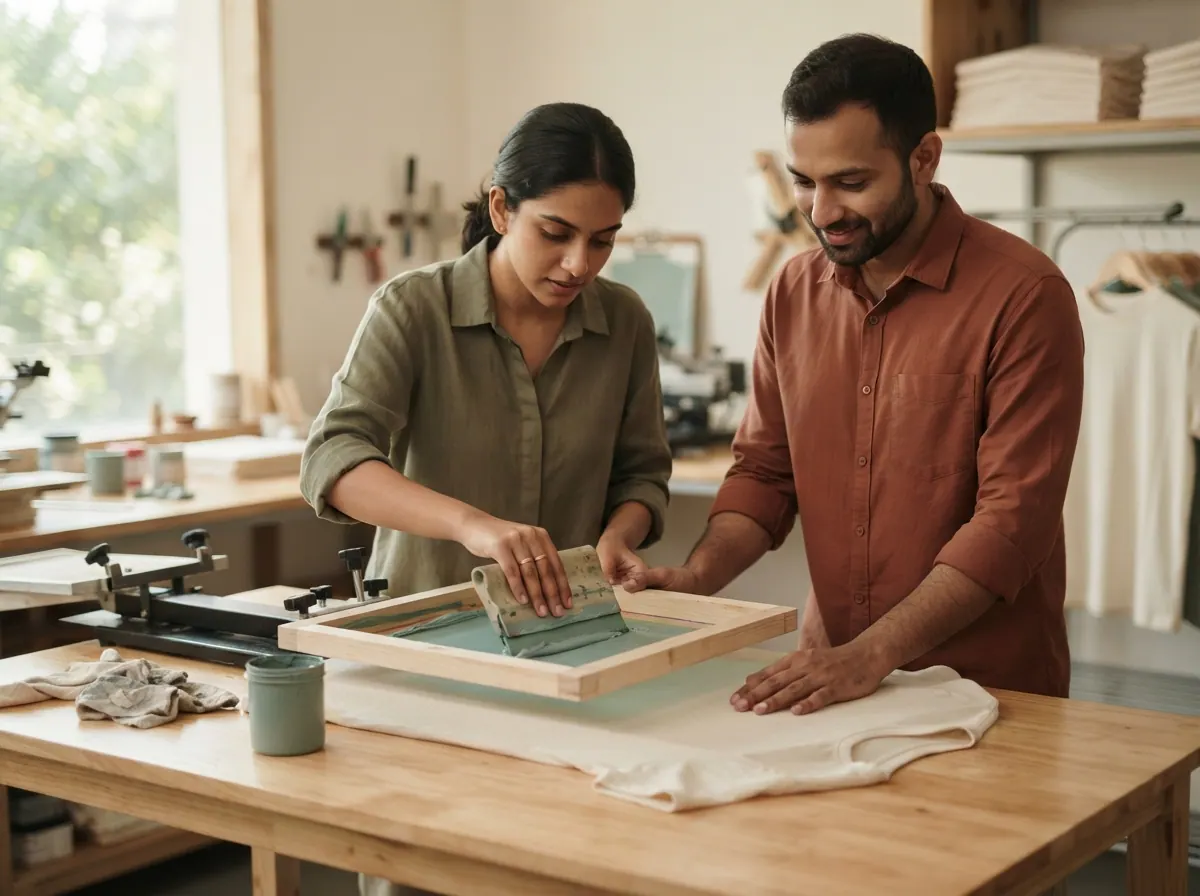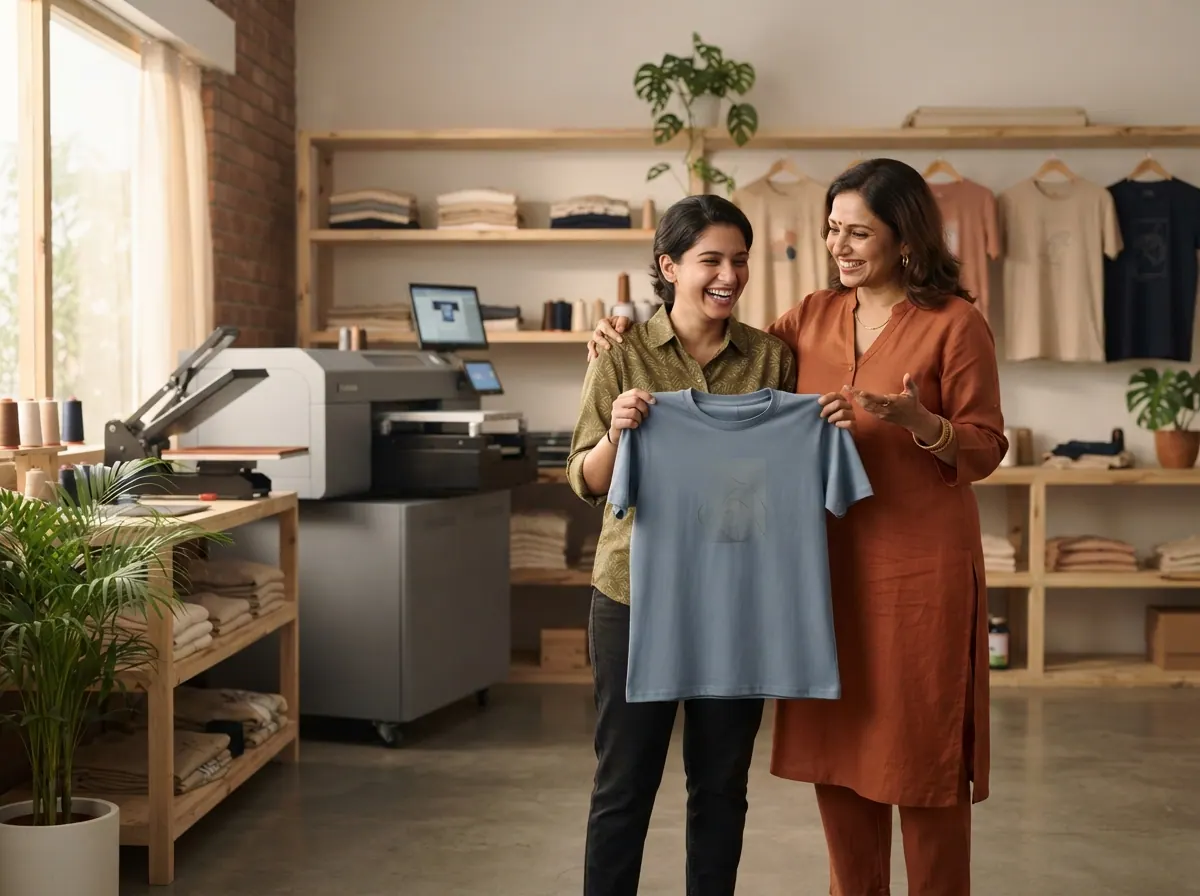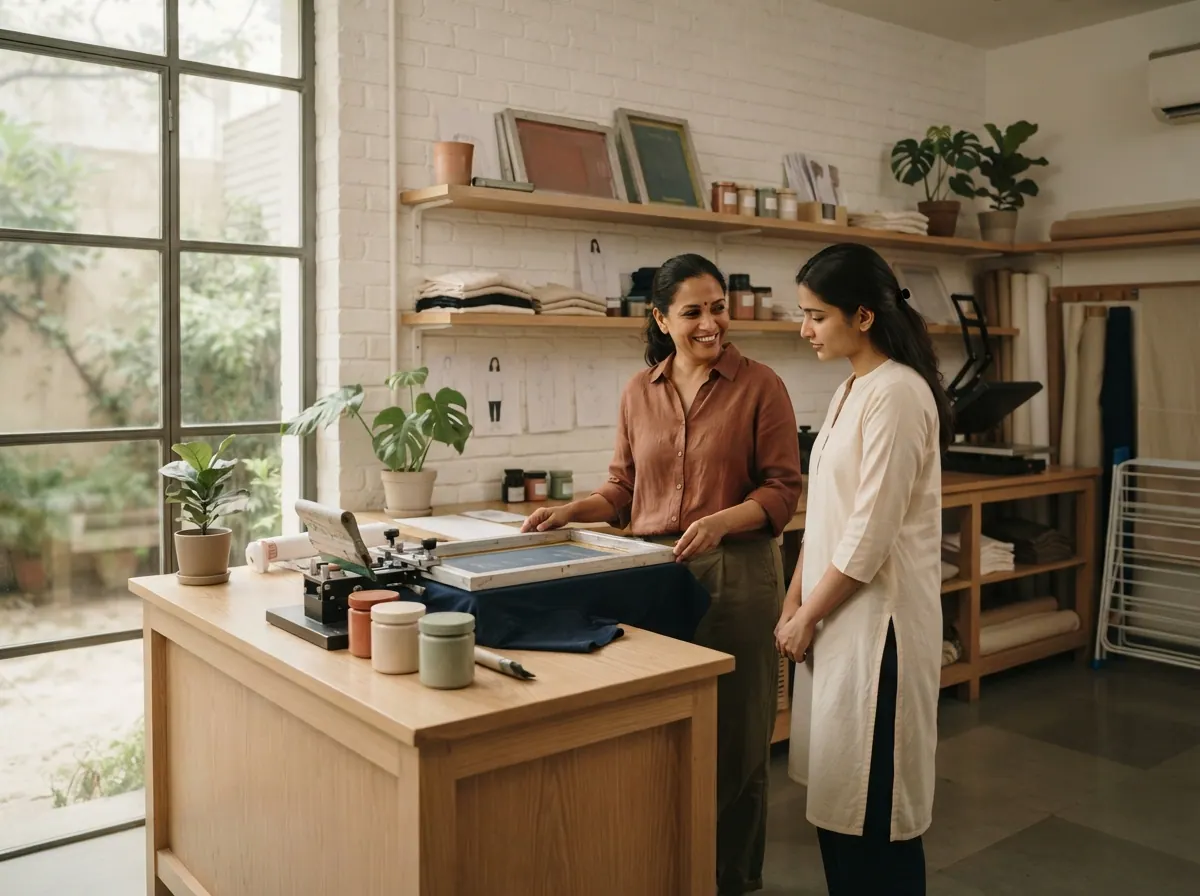
To start a T-shirt printing business in India you need a heat press, a computer with design software, a source of printed transfers or a DTF printer, blank T-shirts, and about ₹60,000–1.2 lakh if you start light, or ₹2.5–4 lakh with your own DTF printer and a small shop. You earn by printing names, photos, team shirts and bulk orders, and you can start from a spare room.
All figures here are estimates. Check prices near you before you spend.
What does it cost?
| Item | Start light | Own DTF printer |
|---|---|---|
| Heat press (flat, about 15 by 15 inch) | ₹8,000–25,000 | ₹15,000–30,000 |
| Computer and design software | ₹30,000–50,000 | ₹40,000–60,000 |
| DTF printer, film, powder, shaker or oven | not bought | ₹1.5–2.5 lakh |
| Bought-in transfers for first orders | ₹5,000–15,000 | not needed |
| Blank T-shirts: cotton, polyester, oversized | ₹15,000–30,000 | ₹30,000–60,000 |
| Packaging, bags, labels | ₹3,000–8,000 | ₹8,000–15,000 |
| Shop advance and fittings (if no home use) | none | ₹40,000–80,000 |
| Total | about ₹60,000–1.2 lakh | about ₹2.5–4 lakh |
DTF (direct to film) prints a design on a film, which you press onto the shirt, and it works on cotton and polyester. Sublimation works only on light polyester and on mugs and plates. Screen printing needs frames and a separate screen for each colour, so it suits bulk orders with one design. Ask three suppliers to show you samples after a wash.
How much can it earn?
Customers pay per shirt, usually with a lower rate for larger lots. Here is a month for a small shop with one helper.
Sales
- About 500 shirts × ₹300 average = ₹1,50,000
Costs
- Blank shirts, about ₹110 × 500 = ₹55,000
- Print costs (film, ink, powder, transfers), about ₹35 × 500 = ₹17,500
- Helper = ₹10,000
- Shop rent = ₹8,000
- Electricity = ₹3,000
- Online ads and delivery = ₹16,000
- Total = ₹1,09,500
Left over: ₹1,50,000 − ₹1,09,500 = about ₹40,500 a month, before your own pay.
If most sales come from single-piece online orders, delivery, returns and ads eat more. Bulk orders from colleges and events have lower prices per shirt but are cheaper to serve.
What do you need before you start?
- A product choice. Single custom shirts, team shirts in bulk, or your own designs sold online are three different businesses with different marketing.
- A good plain shirt source. The shirt decides how the finished product feels. Ask for GSM, cloth type and size charts, and wash a sample.
- Design skill. Many customers send a low-quality photo, and your fix makes or loses the order.
- A heat press you trust. Even heat and pressure matter. A press that heats unevenly leaves prints that peel in the first wash.
- Clear sizes and policies. Decide what you do for a wrong size, a typo and a late order, and write it down.
Step by step
- Print twenty test shirts in your chosen method, wash them ten times and see which design lasts.
- Pick a supplier for plain shirts in 3 or 4 common sizes and colours, and keep a small stock.
- Set a price list by quantity, with one price for a single shirt, one for 10 to 25 and one for 50 or more.
- Show a digital mock-up before printing and get a message confirming the name, size and design.
- Take a part advance for custom and bulk orders.
- Show your work on Instagram, WhatsApp and a Google listing, with photos of real shirts after washing.
- Approach groups: colleges, hostel batches, gyms, offices, coaching centres and event planners.
- Add products such as caps, mugs, tote bags and hoodies once shirts run smoothly.
Which licences apply?
Rules depend on your city, so ask locally:
- Shop or trade permission if you work from a shop, and home-business rules if you work from a flat.
- GST depends on turnover. Online marketplaces may also ask for it. A CA can advise.
- Udyam registration helps with loans and is free to apply.
- Brand and character prints. Printing a film star, cartoon or a famous brand logo without permission can bring legal trouble. Print only what the customer owns or what is free to use.
- Chemical and waste handling. Screen and some other methods use chemicals. Follow the supplier's safety advice and ask your local body about waste.
What goes wrong?
- Peeling prints. Low heat, low pressure or the wrong film makes the design crack after two washes, and the customer posts a bad review.
- Colour mismatch. A deep red on screen looks different on a black shirt. Test before promising.
- Wrong sizes. A customer orders a size from a chart and returns it. Print your size chart on every listing.
- Copyright takedowns. Selling film-star or brand prints online can get your shop removed from a marketplace.
- Thin margin on online orders. After ads, delivery, packing and returns, a ₹299 shirt earns very little.
- Machine downtime. DTF heads and film feeders clog if you do not print for days. Run a short test print daily.
- One big order eats your cash. You buy 200 plain shirts and the group delays payment.
Situations you will face
What would you do? Each choice costs something.
Getting started
A DTF printer costs a big chunk of your savings. Buying transfers from a supplier costs more per shirt but nothing upfront.
- Buy a DTF printer: Big spend, cheaper per shirt
- Buy transfers for now: Small spend, higher cost per shirt
A local press costs ₹8,000 and heats unevenly at the edges. A branded one with a pressure dial costs triple.
- Buy the branded press: Costly, even heat
- Buy the cheap press: Saves money, uneven prints
A wholesaler sells thin shirts cheap. Another sells heavier cotton at a higher price.
- Heavier cotton shirts: Costs more, feels premium
- Thin cheap shirts: Saves money, customers notice
You printed ten samples. After five washes two designs show small cracks. Customers are waiting.
- Fix heat and pressure first: Delay, better durability
- Take trial orders, say so: Small discount, honest start
A spare room works for starting. A shop near the college costs rent but customers can walk in.
- Rent a small shop: Rent and advance, more walk-ins
- Start from the spare room: Almost free, fewer walk-ins
Your friend offers a free copy of paid design software. A proper licence is a yearly cost.
- Buy a proper licence: Yearly cost, no legal risk
- Use a free alternative: No cost, fewer features
First month
A final-year batch wants the same shirt in mixed sizes. They ask for a big discount.
- Give a modest discount: Thin margin, good word of mouth
- Hold your normal rate: Better margin, may lose them
A group wants 40 shirts with each person's name. Names cannot be sold to anyone else if they walk away.
- Take half in advance: Safer, they may go elsewhere
- Print on trust: Wins the order, cash at risk
A birthday group notices one shirt says 'Rahull'. The spelling came from the customer's message.
- Reprint that shirt free: Small loss, trust kept
- Show the message, refuse: Right but unfriendly
A customer sends a tiny photo from WhatsApp and wants it printed large on a shirt.
- Warn and redraw the design: Takes time, clean result
- Print only with a signed note: Quick, customer agrees in writing
The deep blue logo almost vanishes on a black shirt. The customer expects the screen colour.
- Add a white base and reprint: Costs film and time
- Explain it will look dull: Cheap, upset customer
A marketplace takes a cut and wants fast delivery. Instagram orders are slower but you keep all the money.
- List on the marketplace: Fees, more orders
- Sell on Instagram only: No fees, fewer buyers
Running it
Buyers keep asking for shirts with a famous film hero or a cricket star. They sell well in your lane.
- Offer your own fan-style designs: Design effort, safe to sell
- Politely refuse these prints: No work, lose some buyers
A buyer ordered L and says the shirt is too tight. The listing had no size chart.
- Refund and add a size chart: Lose the sale, fewer returns
- Refuse the return: Saves money, bad review
A company wants embroidered-style logos on polo shirts, paid 30 days after delivery.
- Take it with 40% advance: Good order, slow balance
- Insist on full advance: Safe, they may refuse
Groups want matching festival shirts in two weeks. You can stock extra plain shirts but risk unsold stock.
- Stock 200 extra plain shirts: Cash locked, catch the rush
- Buy as orders come: Safer cash, miss some orders
Orders slowed for a week and the white ink line is blocked. Prints show white gaps.
- Run daily test prints and clean: Uses ink, steady output
- Print only when orders come: Saves ink, clogs again
An agency says paid ads will bring daily orders. Your single-shirt margin is already thin.
- Spend ₹15,000 on ads: More orders, thin margin
- Post free reels and photos: Time only, slower growth
Gift shoppers want printed mugs and cushions. It needs a sublimation printer and a mug press.
- Buy the gift add-on: Spend now, a new product
- Stay with shirts only: Focus, one product
When things go wrong
A customer posts photos of cracked prints on team shirts. Your press pressure was set low that week.
- Reprint all free: Costly, trust restored
- Offer a part refund: Cheaper, customer still upset
A listing is flagged because the design looks too close to a famous brand's logo.
- Remove it, redo the design: Lose sales, stay on platform
- Argue the point: Wastes time, store at risk
A hostel batch took 150 shirts and keeps promising payment after exams. You have already paid for the plain shirts.
- Hold the rest of their order: Pressure, may annoy them
- Wait and keep delivering: Keeps goodwill, cash stuck
Red polyester shirts from a new batch turn your white print pink in the heat press.
- Switch to a blocker film: Costs more per shirt, clean white
- Press at lower heat: Free, prints may not stick
The press was left hot and your helper touched the plate. It is a small burn but it hurts.
- Treat it, add a guard rule: Costs time, safer shop
- Add a warning sign, gloves: Small cost, safer shop
Your wholesaler is a week late and three orders are waiting. Another dealer has shirts at a higher price.
- Buy from the other dealer: Costs more, orders on time
- Ask customers to wait: Margin kept, some cancel
Sizes were swapped between two groups and nobody noticed until packing.
- Reprint the right sizes: Big loss, correct order
- Offer exchange later: Slow and messy
Growing
Design work fills your evenings. A part-time designer would free you to find bigger orders.
- Hire a designer: Monthly cost, more orders
- Keep designing yourself: Saves pay, you stay stuck
A few of your designs get praise online. A small own-brand line means stock and ads but better margins.
- Launch a 100-shirt drop: Cash in stock, higher margin
- Stay with order-based work: Safe, lower margin
Orders pile up on weekends and deliveries slip. A second press and helper double output.
- Add press and helper: Spend now, faster delivery
- Work longer hours: Cheap, tired and slow
A school wants house tees and sports shirts every year, with payment after delivery and strict colours.
- Quote and take the contract: Big steady order, slow payment
- Decline, keep small orders: Faster cash, smaller jobs
Is it right for you?
T-shirt printing suits you if you enjoy design and can learn the machine details, like fabric, heat and colour. It suits you less if you want a no-hassle business with fixed income, because orders depend on seasons, trends and social media.
A good test: print and sell fifty shirts for friends, a college group or a small event before you buy a bigger machine. Keep what you learn about repeat orders, then add a printer only when bought-in transfers cost you more than owning one.