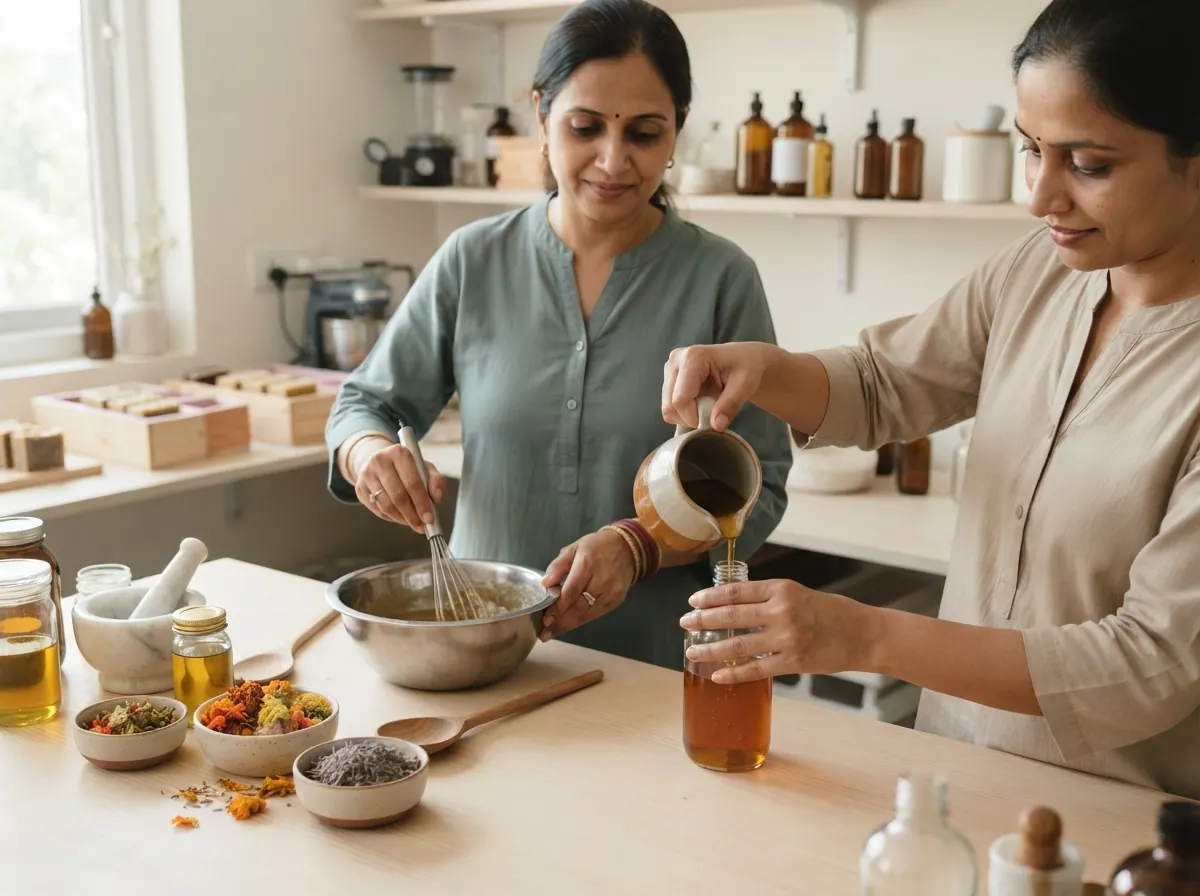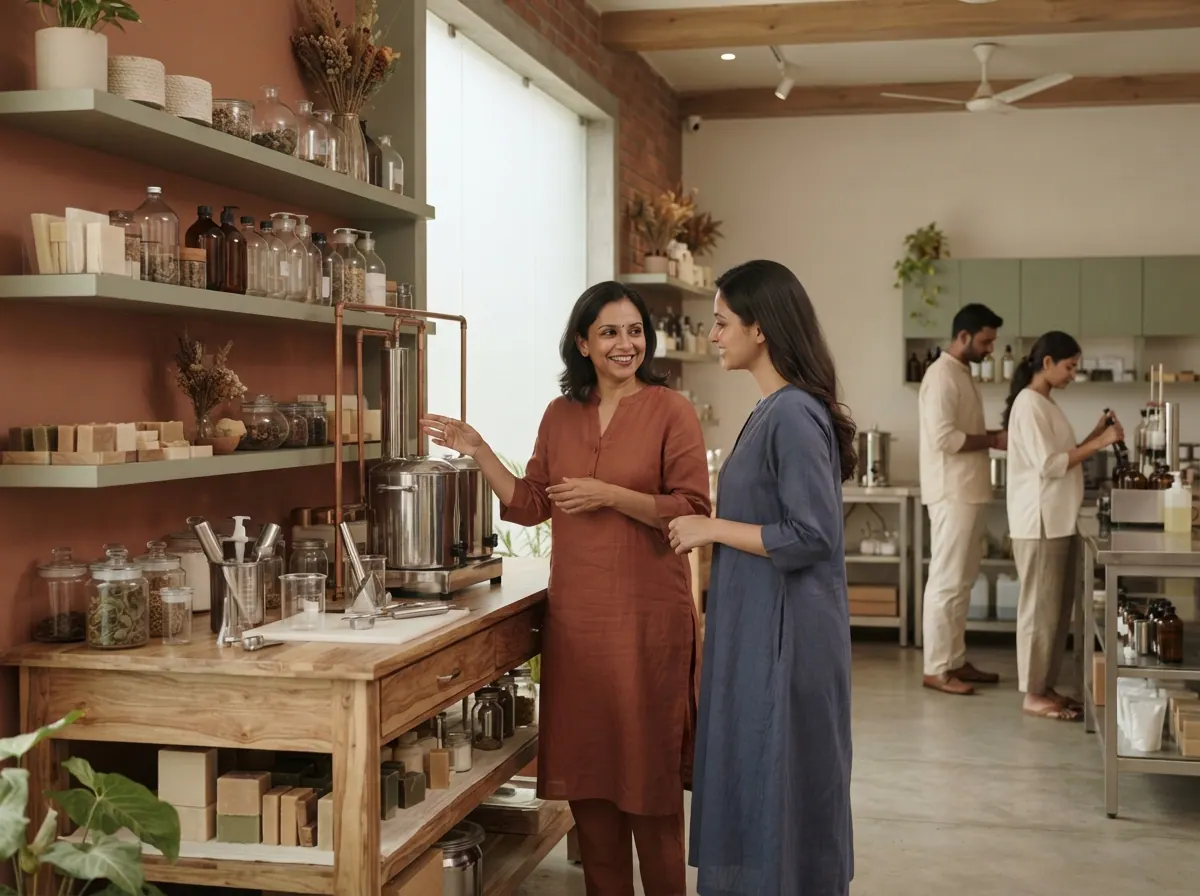
To start a soap and detergent business in India you need a clean workroom, a mixing tank and stirrer, bottles or moulds, a tested recipe, a safe way to handle chemicals, and about ₹30,000–3 lakh. Liquid products like handwash and dishwash gel are the easiest way in. Bar soap takes more skill, more time and more equipment.
All figures here are estimates. Check prices near you before you spend.
What does it cost?
| Item | Liquid products | Bar soap, small unit |
|---|---|---|
| Rented room with water and drain | ₹10,000–30,000 deposit | ₹20,000–50,000 deposit |
| Mixing tanks, stirrer and taps | ₹10,000–40,000 | ₹20,000–60,000 |
| Moulds, cutter and curing racks | not needed | ₹20,000–70,000 |
| Chemicals, base, colour and fragrance to start | ₹10,000–30,000 | ₹30,000–80,000 |
| Bottles, jars, caps and labels | ₹10,000–30,000 | ₹15,000–40,000 |
| Safety gear and first aid | ₹2,000–5,000 | ₹3,000–8,000 |
| Registration and product testing | ₹5,000–15,000 | ₹10,000–40,000 |
| Total | about ₹30,000–1.5 lakh | about ₹1–3 lakh |
Bottles and labels often cost nearly as much as the product inside. Compare prices for 1 litre bottles and 5 litre cans, because shops, hotels and offices buy in different sizes.
What can you make?
- Handwash and dishwash gel. The easiest start, sold in bottles and refill cans to shops, offices and schools.
- Floor cleaner and toilet cleaner. Used in homes, hostels and hotels, and bought again and again.
- Detergent liquid or powder. Strong competition from big brands, so you need a price or a niche.
- Bar soap from a soap base (melt and pour). Simpler, good for herbal and gift soaps.
- Bar soap from scratch (cold process). Needs caustic soda, careful measuring and weeks of curing.
How much can it earn?
Take a unit making dishwash gel and handwash, about 1,500 litres a month. These are rough numbers.
Each month
- Sales: 1,500 litres × about ₹65 a litre (mix of refill cans and bottles, to shops and offices) = ₹97,500
- Chemicals, colour and fragrance: 1,500 × about ₹18 = ₹27,000
- Bottles, cans and labels: 1,500 × about ₹8 = ₹12,000
- Two helpers: 2 × ₹10,000 = ₹20,000
- Transport, power, water and rent: about ₹12,000
- Left over: ₹97,500 − ₹27,000 − ₹12,000 − ₹20,000 − ₹12,000 = about ₹26,500
That is a thin number for a small unit, because you compete with big brands on price. If you sell in your own bottles to shops, the price is higher but so are packaging and delivery costs. Late payments from shops and institutions can make the real number worse.
What do you need before you start?
- A recipe tested by someone qualified. A wrong mix can be harsh on skin, foam badly or separate. Learn from a trained person, not only from videos.
- Safe chemical handling. Caustic soda and strong cleaning chemicals burn skin and eyes. Keep gloves, goggles, mask and clean water ready.
- A clean workroom. Use a room with a tap, a drain and good airflow, kept apart from your home kitchen.
- A buyer list. Hotels, schools, hostels, hospitals and offices buy cleaning supplies in bulk, so know them before you make a batch.
- A shelf-life check. Keep a sample from each batch and see how it looks after a few weeks.
Step by step
- Take a short training in liquid soap or bar soap from a trainer or a local institute.
- Decide your range. Start with one or two products you can make well.
- Set up the room with a washable floor, tanks, a stirrer, a scale and safety gear.
- Make small test batches and check feel, foam, smell and how it looks after a few weeks.
- Fill, seal and label with your name, address, contents, volume or weight and batch date.
- Take samples to shops, a hostel, a school canteen and an office manager.
- Start with small repeat buyers and add products as they ask.
Which licences apply?
Rules vary by product, so confirm with local offices:
- Udyam registration for loans and schemes.
- GST, if your sales need it. Ask a CA.
- Local permission for a workshop, and a commercial power and water connection.
- Pollution rules. Wastewater from washing tanks may need handling. Ask the district industries centre and the pollution board.
- Quality rules. Bar soap and detergents have quality standards, and cosmetic soaps may need a manufacturing licence. Ask the BIS office and the state drug authority what applies to your product.
- Loans and schemes. Small manufacturers can ask their district industries centre what is open now.
What goes wrong?
- Chemical burns. Caustic soda and strong cleaners cause serious burns. Never skip gloves and goggles.
- Bad batches. Soap that separates, turns thin, or goes cloudy has to be thrown away.
- Skin complaints. Harsh products cause rashes, and one complaint can cost you a shop.
- Pricing against big brands. If you copy their price you will not cover packaging and delivery.
- Leaky bottles and caps. Cheap caps leak in transport and ruin cartons.
- Late payments. Institutional buyers often pay slowly.
Situations you will face
What would you do? Each choice costs something.
Getting started
Handwash and dishwash gel are easy to mix and sell fast. Bar soap needs moulds, weeks of curing and more skill.
- Start with liquid products: Quick start, thin margin
- Start with bar soap: More spend, slower, higher price
A trainer charges a fee and shows you safe handling in person. Videos are free but cannot check your mix.
- Join the paid training: Fee now, safer recipes
- Learn from videos: Free, trial and error
A rented room with a tap and drain costs more. Your home store room is free but has no drain.
- Rent the room with a drain: Deposit and rent, safer
- Use the home store room: Free, spills and wet floor
The chemicals can burn skin and eyes. Good gloves, goggles and an eye wash cost more than cheap ones.
- Buy proper safety gear: Costs now, protects workers
- Buy mid-range gear: Cheaper, wears out sooner
A dealer in the city sells labelled, tested chemicals. A local shop sells loose, unlabelled ones for less.
- Buy from the labelled dealer: Costs more, known quality
- Buy loose from the local shop: Cheaper, unknown quality
A plastic drum is cheap but may react with some chemicals. A steel tank with a tap lasts longer and costs more.
- Buy the steel tank: Costly, lasts years
- Buy the plastic drum: Cheap, wears faster
A well-fitting pump bottle looks good but costs more per piece. A plain screw cap is cheap but often leaks.
- Buy pump bottles: Costly, premium look
- Buy plain screw caps: Cheap, leaks in transport
First month
A test batch of dishwash gel is watery and cloudy after a day. The mixing order may be wrong.
- Discard and remake with notes: Lose the batch, learn
- Rework with thickener, test again: Extra cost, saves the batch
A friend who tried your handwash for a week gets red patches on the hands. It may be the perfume or the mix.
- Stop, check the recipe: Delay, safer product
- Reduce the fragrance only: Quick, cause unknown
The shopkeeper offers to buy ten refill cans, but wants a lower price than planned and payment in a month.
- Accept the lower price: Order now, thin margin
- Hold your price: Better margin, may lose the shop
A buyer asks for contents, volume, batch date and your address on the bottle. Your label has a name only.
- Reprint full labels: Reprint cost, trusted packs
- Stick on a small sticker: Cheap, looks untidy
A hostel warden will test your floor cleaner for two weeks and may order monthly if it works.
- Give a free 20 litre sample: Costs stock, big order possible
- Offer a discounted first order: Some income, slower trust
A can of concentrate tips over and spreads across the floor. Workers are standing close by.
- Stop, rinse and ventilate: Lose time, safe room
- Buy a spill kit and train staff: Cost now, ready next time
Running it
A big brand offers a bigger bottle for less. Shops ask you to lower your price or lose the shelf.
- Lower the price a bit: Lower margin, keep shelves
- Hold the price, sell refills: Fewer shops, loyal buyers
A small hotel wants dishwash, floor cleaner and handwash every month, but pays after forty-five days.
- Accept the hotel contract: Steady volume, slow pay
- Ask for part advance: Safer cash, hotel may decline
A key ingredient costs far more than before. Your selling price is already near what shops accept.
- Raise the price a little: Protect margin, lose a few shops
- Hold the price: Keep shops, thin margin
Customers ask for neem or lemon handwash. It needs new ingredients, testing and a new label.
- Launch a small herbal range: Test and label cost
- Keep the current range: No spend, no new buyers
A carton of handwash bottles arrives wet because the caps leaked. The shop wants a refund.
- Refund and change the caps: Cost now, fewer returns
- Refund and keep the caps: Cheaper, may leak again
Neighbours see foam in the drain after you wash the tanks. A local officer may ask questions.
- Collect and treat the wash water: Cost and effort, safer
- Dilute and keep draining: Cheap, complaint likely
The helper who knows your mixing steps takes a job elsewhere. A new person must be trained.
- Hire and train a new helper: Weeks of slow work
- Do the mixing yourself: Save wages, less selling time
When things go wrong
Dishwash from last week has turned watery in shops. A few buyers have complained.
- Recall and replace the batch: Heavy cost, trust kept
- Replace only for those who complain: Cheaper, trust drops
A helper splashes concentrate on an arm while pouring. It stings badly and needs a doctor.
- Pay treatment and rest days: Cost, workers trust you
- Pay the clinic bill only: Cheaper, helpers talk
A school that takes forty litres a month has not paid for sixty days. The accountant keeps promising.
- Stop supply until paid: Lose the school, protect cash
- Keep supplying less: Keep the school, more risk
An officer asks for your registration, product details and how you handle chemicals.
- Show papers and fix gaps: Cost and time, safer unit
- Ask for more time: No cost, a notice may follow
Extra bottles you made for a festival sit in the store. Suppliers want their money.
- Sell stock at a discount: Cash now, lower margin
- Ask suppliers for more time: Time bought, strained trust
The dealer says the main surfactant will take three weeks. A shop wants its monthly stock in one week.
- Buy from a costlier dealer: Higher cost, keep the order
- Tell the shop to wait: No cost, a late delivery
Growing
Offices and shops want 5 and 20 litre refills. It saves bottles but needs a delivery route.
- Start a refill route: Van and wages, steady orders
- Sell bottles only: No spend, smaller orders
Gift shops ask for herbal bar soaps in nice boxes. It needs moulds, curing racks and a licence check.
- Add a small bar soap line: Spend now, higher price
- Stay with liquids: No spend, no gift buyers
Orders have outgrown your small tank, and you make small batches all week. A larger mixer saves time.
- Buy the bigger mixer: Big spend, more output
- Add a second shift: Wages, less spend
Shops would stock a branded range with good labels. Design and a quality test cost money first.
- Build the brand: Spend now, better price
- Keep selling unbranded: No spend, low rate
Is it right for you?
Soap and detergent making suits you if you can follow a recipe exactly, take safety seriously and sell to shops, schools and hotels in person. It suits you less if you want a quick high margin, or if you cannot spend money on training and testing.
A good test: join a short training, make one product, and give a sample to five buyers. Ask what they use now and what they pay. If the numbers work, start with one product and build from your repeat buyers.