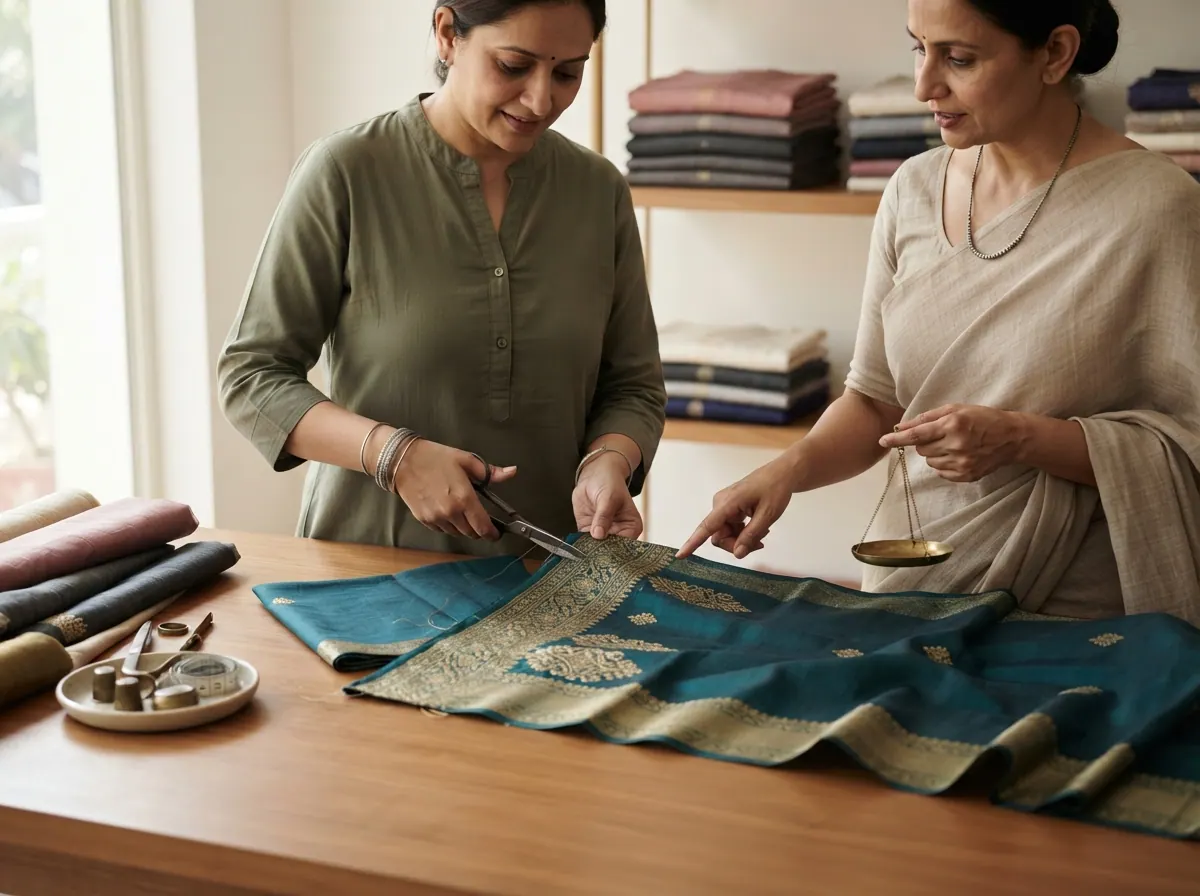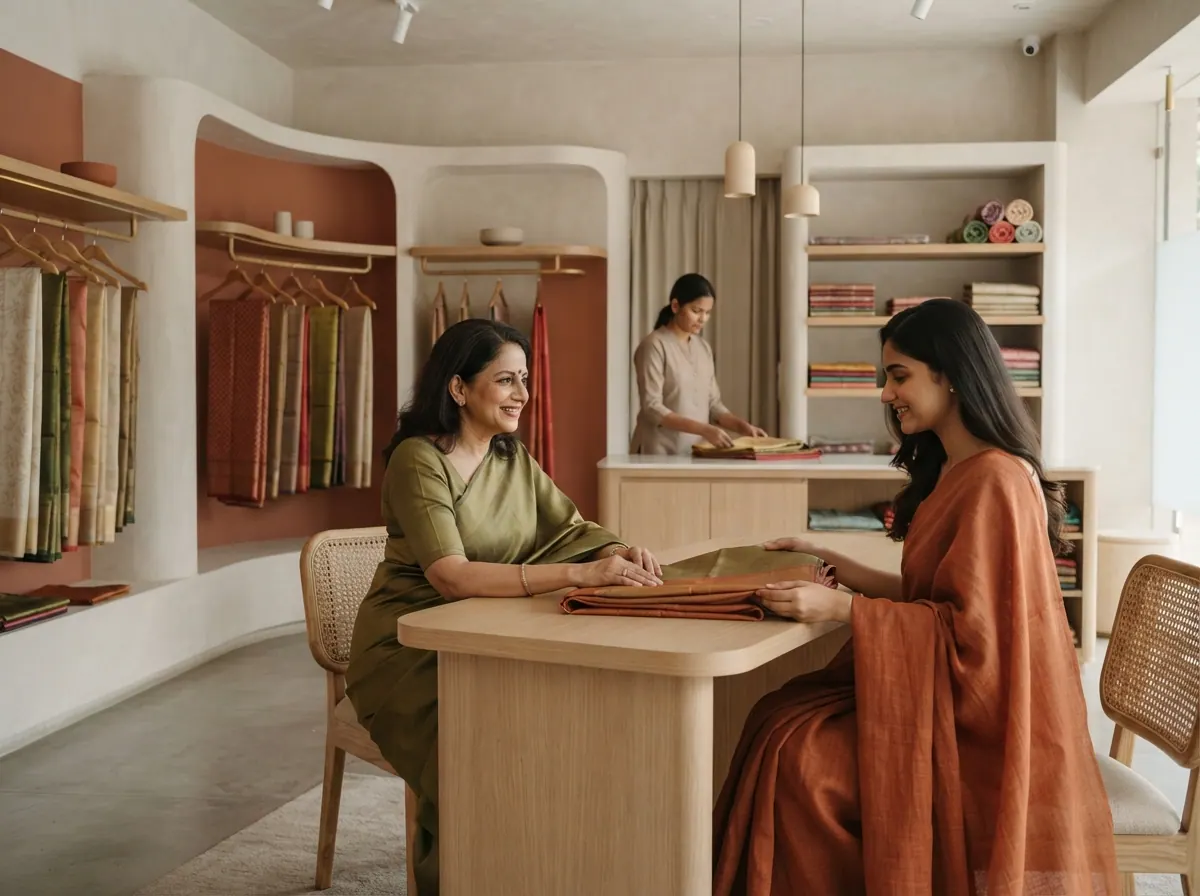
To start a saree business in India you need a good source of stock, an eye for what your town buys, a clean place to show sarees, and about ₹2–15 lakh. From home with a small catalogue, you can begin near ₹2 lakh. A rented shop with a full range of silk, cotton and fancy sarees takes much more, mostly tied up in stock. The money is made on the margin per saree and on repeat customers. It is lost in sarees that nobody wants after the wedding season.
All figures here are estimates. Check prices near you before you spend.
What does it cost?
For a rented shop of about 250–400 sq ft:
| Item | Estimate |
|---|---|
| Rent deposit (often 6–12 months' rent) | ₹1–2.5 lakh |
| Shelves, mattress seating, lights, mirror | ₹1.5–3 lakh |
| First stock of sarees | ₹4–7 lakh |
| Fall, pico and blouse stitching arrangement | ₹10,000–40,000 |
| Signboard, billing, packing covers, mannequin | ₹20,000–60,000 |
| Shop registration and paperwork | ₹5,000–15,000 |
| Money for the first slow months | ₹40,000–1.5 lakh |
| Total | about ₹7–15 lakh |
A home-based start skips rent and fit-out and can begin with ₹1–2 lakh of stock plus photography and packing. Do not put all your money into stock. Keep about a third for the second buying trip.
How much can it earn?
Here is a normal month for a small shop with two staff:
Sales
- 150 sarees × about ₹2,000 = ₹3,00,000
Costs
- Stock cost: 150 × about ₹1,400 = ₹2,10,000
- Two sales staff at about ₹15,000 each = ₹30,000
- Rent = ₹25,000
- Power = ₹4,000
- Covers, bags, ads and small things = ₹7,000
- Total = ₹2,76,000
Left over: ₹3,00,000 − ₹2,76,000 = ₹24,000 a month, and this has to pay you as well.
The ₹1,400 average cost includes the sarees you end up selling at a discount. Margins on plain sarees are usually thinner than on silk, and discounts in slow months bring the average down. In wedding and festival months the same shop can sell two or three times more, so what you stock before the season matters.
What do you need before you start?
- A clear customer. Daily wear cotton at ₹500–1,000, or party and bridal sarees above ₹5,000? These are two shops, with two kinds of stock and two kinds of customer.
- A wholesale route. Surat for synthetic and fancy sarees, and Varanasi, Kanchipuram, Pochampally or Chanderi if you want to sell those weaves. Local wholesalers and agents cost more per piece but let you buy less.
- An eye for quality. Learn to tell real silk from a blend, check zari work, and look at the pallu and border before you buy. Ask the seller to say clearly what the fabric is.
- A fall and pico arrangement. Most women expect the shop to get the fall, pico and blouse done. A tailor next door or a small counter inside is enough.
- A mattress and a mirror. Sarees sell when a woman can drape one over their shoulder and look in a mirror. Show them one at a time.
Step by step
- Visit three shops in your lane as a customer. Note which sarees get opened most and how much people bargain.
- Pick your price band and fabric, and write it down. One or two bands are enough at first.
- Do your first buying trip with a budget and a list. Take a bit of many designs and avoid big lots in one colour.
- Check each saree under daylight. Look at pallu, border, and any stains or loose threads. Do not trust only the photo.
- Price and tag the same day. Use a code only you understand for the cost price.
- Start a WhatsApp list. Send photos of new arrivals, and note who bought which colour at which price.
- Offer fall and pico on the spot, and a blouse stitching option. This brings customers back.
- Plan wedding, Diwali and Akshaya Tritiya stock early. The good pieces are gone by the time everyone is looking.
- Count your slow stock every month, and mark down anything older than one season.
Which licences apply?
- Shops and Establishments registration, and a local trade licence where your municipality asks for one.
- GST depends on your turnover and whether you sell through marketplaces. Registration is needed above ₹40 lakh of turnover. For garments the rate is 5% up to ₹2,500 a piece and 18% above it, and sarees are generally taken as 5%, but no official statement on sarees was found. Ask a CA about the rate for the price band you sell.
- Udyam registration is free and helps if you want a bank loan later.
- Handloom and silk labels. If you describe a saree as pure silk or handloom, be sure of what you are selling. Ask your supplier for a clear bill.
Confirm all of this with your local office or a CA, since rules vary by state.
What goes wrong?
- Buying what you like. You love a rich Kanchipuram border while your town buys ₹800 printed georgette. The first lot is a test.
- Dead stock after the season. Bridal and party sarees pile up after the wedding season ends, and money gets stuck.
- Selling blends as pure silk. A customer who finds out tells their whole family, and your name is gone.
- Credit to regular customers. Saree udhaar to a good customer is easy to give and hard to collect.
- Colour running and moth damage. Silk needs fresh air, not a damp cupboard. Fold and refold stock every few weeks.
- A rival who copies your catalogue. You cannot stop it. You can keep bringing new designs and give better advice.
- Too much money in an agent's credit lot. Heavy credit stock looks good on the shelf and bad on the day payment is due.
Situations you will face
What would you do? Each choice costs something.
Getting started
Surat has fancy sarees at low prices. A weaving town gives you real handloom, but costs more per piece.
- Buy fancy sarees in Surat: Cheaper, quick sales, thin margin
- Buy handloom from the weaver: Costs more, builds your name
Your friends say stock everything from ₹500 to ₹15,000 so no one leaves empty-handed. That ties up much more cash.
- Stock two price bands: Clear shop, fewer buyers
- Stock all price bands: More buyers, stuck cash
A mattress lets women sit and see sarees draped one by one. A wall display fits more stock but feels like a store.
- Mattress seating: Fewer pieces, better selling
- Wall display: More stock, less personal
Customers expect their saree ready with fall and pico. A tailor next door will do it but sometimes delays.
- Set up a counter inside: Costs a salary, ready in a day
- Send it to the tailor next door: No fixed cost, some delays
A Surat agent says take ₹1.5 lakh of sarees now and pay in 45 days. The prices are higher than for cash.
- Take the credit lot: Full shelves, higher price
- Buy a smaller lot in cash: Better price, thinner shelves
You can show sarees at home to people you know for free, or rent a shop and pay a deposit before a single sale.
- Start from home first: Low cost, fewer customers
- Take the shop now: Deposit and rent, more walk-ins
You are opening in a week and the registration is not done. Shopkeepers nearby say nobody asks.
- Register before opening: Small fee, papers in order
- Apply online, open on receipt: Opening may slip a few days
First month
A customer asks if the saree on the counter is pure silk. Your supplier called it silk, but the bill says blend.
- Tell them it is a blend: Lose a sale, keep trust
- Show the bill, offer blend price: Honest, a fair lower price
A customer wants a ₹3,200 saree for ₹2,400. Your cost is ₹2,300, and a good sale helps open the month.
- Accept ₹2,600: Thin margin, the customer tells friends
- Hold the price: Full margin, may lose the sale
While folding stock you find tiny holes in one silk saree from a new lot. Others are in the same cupboard.
- Check all, return damaged: Time and courier, stock safe
- Show the holes, sell discounted: Honest, lower price
Customers keep asking for photos of new sarees. Posting daily takes time, but only those who ask get to see them now.
- Post new sarees daily: Takes time, brings repeat buyers
- Only show in the shop: No effort, slower start
A good customer wants three sarees for a sister's wedding, worth ₹9,000, and will pay next month.
- Give it on credit: Cash stuck, keeps the customer loyal
- Ask for half now: Cash safer, a bit awkward
A woman returns a parrot-green saree because it looked different in daylight. You had no daylight corner.
- Exchange it happily: Lose a sale today, keep the customer
- Refuse, saying no returns: Keep the sale, lose the customer
Running it
Wedding season is six weeks away. Bridal sarees cost a lot and sit for months if not sold.
- Buy a big bridal lot: High risk, strong sales
- Buy a small lot: Safer, may run out
A local office wants 25 sarees as gifts at ₹1,200 each. They want a bulk price and an invoice.
- Give a bulk discount: Thin margin, big single sale
- Quote the full price: Better margin, may lose order
A rival is selling the same designs in the same colours, ₹200 cheaper. The fabric is slightly lighter.
- Match their price: Lower margin, keep crowd
- Bring exclusive pieces: Costs more, stays ahead
Many families buy a new saree on this day. Your best stock is thin, and the festival is ten days away.
- Restock with fresh designs: Spends cash, catches the day
- Sell what you have: No spend, fewer choices
A big marketplace invites you to list sarees. It needs a GST number, monthly filings, and returns at your cost.
- Get GST and list: Fees and filing, wider reach
- Stay with local sales: Simple, local customers only
Sixty sarees from last season have not sold. Their cost is ₹70,000, and you cannot buy new stock without space.
- Run a 40% clearance sale: Cash back, thin image
- Keep them for next season: Cash stays stuck
Your best saleswoman has regular customers who ask for the saleswoman by name. A bigger shop has offered more.
- Give a ₹3,000 raise: Higher cost, the saleswoman stays
- Let the saleswoman go: Saves pay, regulars may leave
Your tailor cut a fall too high and the zari border of a ₹6,000 saree is damaged. The customer is arriving in two hours.
- Replace the saree at cost: Heavy loss, customer kept
- Offer a repair and discount: Smaller loss, may still be upset
The rent goes up 12% from next month. A cheaper lane is a bit further from where women come to shop.
- Pay the higher rent: Higher cost, customers stay
- Move to the cheaper lane: Saves rent, fewer walk-ins
When things go wrong
A buyer shows a payment screenshot and leaves with a ₹4,500 saree. The money never reaches your account.
- Check bank alert every time: Slower billing, safe from now
- Chase the buyer, file a complaint: Time spent, may get money back
A customer returns a saree with a pinned fall mark and a faint perfume smell. The customer wants a full refund.
- Give store credit only: Safe cash, a complaint
- Take it back fully: Lose the sale, keep goodwill
The back cupboards smell musty and the zari on two sarees has dulled. More silk is stored in the same corner.
- Fix the damp, add silica: Costs money, protects stock
- Air it out and watch: Cheap, more damage possible
The agent's bill is ₹18,000 more than your count of sarees received. The agent insists the bill is right.
- Check every piece and dispute: Time spent, correct bill
- Pay the bill to avoid a fight: Peace, a big loss
A notice says your returns are late for two months. You thought you did not have to file.
- Hire a CA to file: Fee and fine, back in order
- Reply to the notice yourself: Free, mistakes possible
Growing
A weaver cluster can make 60 sarees in your own designs and colours, if you pay in advance.
- Order your own designs: Cash stuck, your name grows
- Keep buying from the market: Safe cash, same as others
A women's club runs a three-day sale at a hall. The stall fee is high and you will be out of the shop.
- Book the stall: High fee, many new faces
- Stay in the shop: Saves money, regular sales
A landlord offers a shop in a busier market. It means doubling your stock and trusting a manager.
- Open the second shop: Big spend, double the reach
- Strengthen the first shop: Safe, slower growth
Is it right for you?
A saree shop suits you if you enjoy talking to women about weddings and festivals, can judge fabric by touch, and are patient with customers who open twenty sarees before buying one. It also helps if you already know which weaves your town prefers.
It suits you less if you want fast cash. Stock sits for months, and seasons decide your year. Try this first: buy 30 sarees across two price bands, sell them from home to people you know and over WhatsApp, and see which ones go first. It will cost little and teach you what your shop should stock.