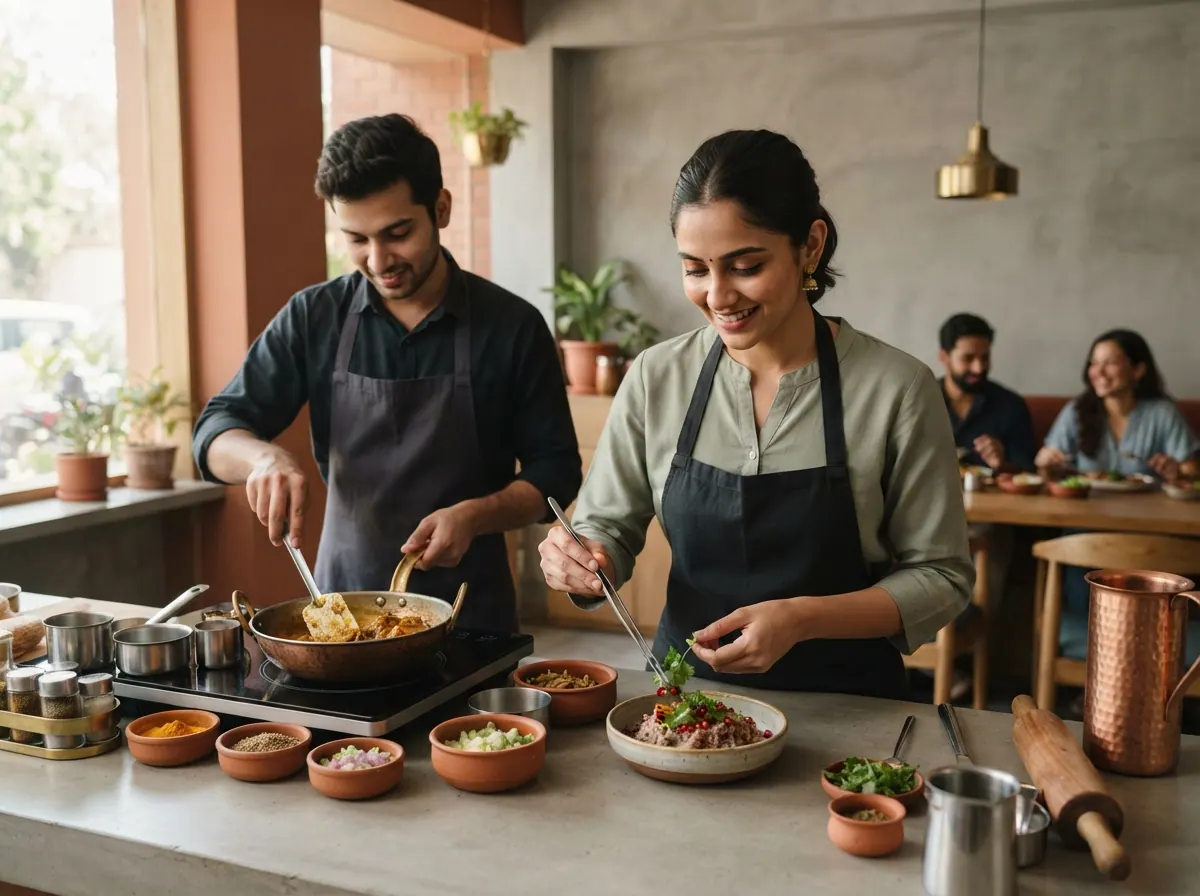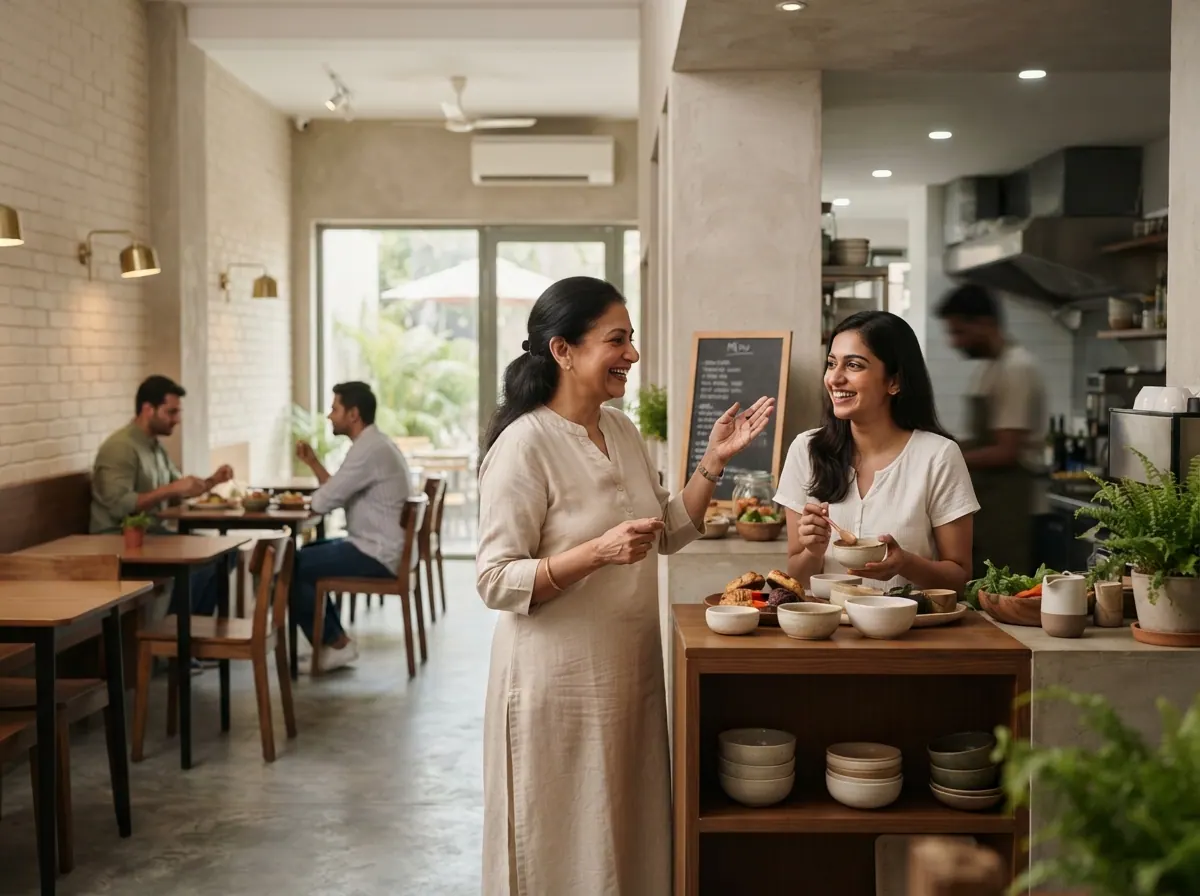
To start a small restaurant in India you need a rented space with a proper kitchen exhaust, a tested short menu, a cook you can rely on, a food registration and local licences, and usually between ₹10 lakh and ₹50 lakh. A 40-seat family restaurant often comes to about ₹15–30 lakh, including money to survive the first three slow months. The hard part comes after opening: keeping food cost near a third of sales, and filling tables on a Tuesday lunch as well as Saturday night.
All figures here are estimates. Check prices near you before you spend.
What does it cost?
For a 40-seat place of about 1,200 sq ft, rented, part air-conditioned:
| Item | Estimate |
|---|---|
| Rent deposit and advance | ₹2–4 lakh |
| Interiors, wiring, AC | ₹4–8 lakh |
| Kitchen: ranges, tandoor, fridge, deep freezer, steel tables | ₹3–6 lakh |
| Exhaust hood and duct, gas line, fire equipment | ₹1–2 lakh |
| Furniture, crockery, cutlery | ₹1.5–3 lakh |
| Billing system, signboard, licences, CA | ₹50,000–1 lakh |
| Opening stock and three months' running money | ₹3–6 lakh |
| Total | about ₹15–30 lakh |
A place that was already a restaurant can bring you close to ₹10 lakh, because the duct, gas line and kitchen layout exist. Before signing, ask why the last owner left. A full AC place in a bigger market can reach ₹50 lakh.
Check three things before you pay the deposit: whether smoke can legally go up the building, whether the landlord's use allows a restaurant, and whether the power load is enough for the AC and freezers. These are expensive to find out afterwards.
How much can it earn?
Here is one normal month for a 40-seat place, with no alcohol:
Sales
- 90 customers a day × ₹220 average bill = ₹19,800 a day
- ₹19,800 × 30 days = ₹5,94,000 a month (before GST)
Costs
- Food and ingredients at 35% of sales = ₹2,07,900
- Staff of about 8 (cook, helpers, waiters, cleaner) = ₹1,30,000
- Rent = ₹70,000
- Gas, power and water = ₹45,000
- Repairs, pest control, billing software, marketing = ₹30,000
- App cost (commission with GST, fees and discounts, about 35%): ₹60,000 of app sales × 35% = ₹21,000
- Total = ₹5,03,900
Left over: ₹5,94,000 − ₹5,03,900 = ₹90,100 a month, before any loan payment. A ₹15 lakh loan could take ₹30,000–35,000 of this, leaving about ₹55,000–60,000 for the owner.
Now look at how fragile that is. If you only get 70 customers a day, sales fall by ₹1.32 lakh a month. Food cost falls by about ₹46,000, but rent and staff stay the same, so about ₹86,000 of your profit is gone. The extra 20 customers make most of your money. That is why owners worry so much about weekday lunch.
What do you need before you start?
- A clear food idea. A 40-seat place does better known for a few things: a good thali, biryani, or North Indian gravies with a real tandoor. A menu of 25 dishes wastes much less than one of 60.
- Dish costing. Write out the cost of every dish down to the gram of paneer and spoon of ghee. Many new owners price by looking at the shop next door and only later learn that a popular dish loses money.
- A kitchen that can survive one cook leaving. Standard recipes and base gravies written down by weight. A head cook who holds every recipe in their head can name their own salary.
- A plan for the first three months. Few restaurants are busy on day one, and regulars take time.
Step by step
- Eat at the places you will compete with, at lunch and dinner, on a weekday and a weekend. Count covers and look at what is on most tables.
- Take the space only after checking the exhaust route, power load, water and permitted use.
- Apply for licences early, because some need the site to be ready. Fire and eating-house permissions can take longer than the interiors.
- Plan the kitchen with your cook: receiving and washing, cold storage, prep, hot line, pass. Keep a hand-wash station and a grease trap in the plan.
- Test the menu on friends and neighbours for a week at low prices. Time each dish. Anything taking too long on the hot line comes off the menu.
- Set up billing with kitchen order tickets. Handwritten orders leak money through mistakes and missed bills.
- Open on a slow weekday, not with a big crowd you cannot serve well. Bad first reviews stay on Google and the apps.
- Add delivery once dine-in is stable, with app prices set to cover commission and packing.
Which licences apply?
Requirements differ by state and city, so confirm with your municipal office or a CA:
- FSSAI registration or licence. Basic registration covers turnover up to ₹1.5 crore from 1 April 2026; above that the category changes. Check the current limits on the FoSCoS portal.
- Trade licence and, in many cities, an eating-house licence from the municipality or police.
- Shops and Establishments registration if you have staff.
- Fire clearance, depending on your seats, floor area and city.
- GST registration, if your turnover crosses the limit or the food apps require it. A standalone restaurant usually charges 5% without input tax credit; ask your CA what applies to yours.
- Liquor licence only if you serve alcohol. This is a separate and much longer process.
- Pollution or other clearances may apply in some cities. Ask locally about them.
What goes wrong?
- Rent too high for the seats. Good footfall does not save you if rent eats everything. In the example above, the place would struggle with rent at double the amount.
- Food cost creeping up without anyone noticing. Big portions, wastage and staff meals can take food cost past 40%, and that can wipe out the profit.
- Prepared gravies thrown away. A base gravy made for 40 orders on a day with 15 orders is pure loss. Learn your patterns and cook in smaller batches.
- The cook leaves before a festival, and quality falls overnight.
- Discounting on the apps to chase orders. Sales go up and profit goes down, and those customers often leave when the offer ends.
- Smoke and neighbours. A complaint about the chimney can stop your kitchen. Fixing it after opening costs far more.
- Cleanliness slips. One cockroach at a table, or a food-poisoning complaint, can end up online and bring an inspector.
Situations you will face
What would you do? Each choice costs something.
Getting started
Your rented space has no route for kitchen smoke. A proper hood and duct costs lakhs, and a wall fan costs little.
- Install hood and duct: Big bill, clean kitchen
- Fit a wall fan: Opens sooner, smoke and complaints
The cook says customers expect a big menu. You think 25 dishes would waste less stock.
- Keep it to 25: Less stock, fewer walk-ins
- Offer all 60: More wastage, wider appeal
The fire officer lists a gas leak alarm, extinguishers and a clear exit. Your opening date is close.
- Do the full list: Costly delay, proper clearance
- Only buy extinguishers now: Open sooner, still not cleared
Rotis and kebabs would pull in dinner crowds. A tandoor also needs a skilled tandoori cook and stronger exhaust.
- Hire a tandoor cook: Big salary, more dinner sales
- Skip the tandoor: Saves money, fewer dishes
A gas line with a bank of commercial cylinders costs more to fit. Changing single cylinders is cheap, but they can run out mid-rush.
- Fit a gas bank: Costly, steady supply
- Change cylinders by hand: Saves money, risky at rush
Rent has started but the eating-house licence has not come. Friends say to quietly open anyway.
- Wait for the licence: Rent burns, you stay legal
- Open before it arrives: Sales now, risk of closure
A hotel-trained cook wants well above your budget. A cheaper cook could follow your recipe cards.
- Pay the trained cook: High salary, better food
- Use recipe cards: Saves salary, plainer taste
First month
Opening week is quiet and your food is being thrown away. A 20% offer could bring people in.
- Run a 20% offer: Lower margin, more covers
- Hold your prices: Better margin, slow build
The apps can bring orders from far beyond your street. Commission and packing will eat most of the margin.
- List on the apps: Thin margin, more orders
- Take phone orders only: Keeps margin, smaller reach
You finally worked out the cost of your paneer butter masala. It barely covers the paneer, cream and gas.
- Raise the price: Better margin, some complaints
- Cut the portion size: Saves stock, regulars notice
Dishes made and dishes billed are different by thousands every week. Waiters still write orders on paper.
- Buy a billing system: Pay now, leakage stops
- Keep paper orders: No spend, leaks go on
You cooked for 40 orders and got 15. Smaller batches would cut waste but slow the kitchen at rush hour.
- Cook smaller batches: Less waste, slower service
- Cook full, serve fresh: Waste costs, fast and fresh
A customer writes that the dal was cold and the wait was 40 minutes. It is the first thing people see.
- Apologise, offer a free meal: Small cost, shows you care
- Leave it alone: Saves effort, review stays
Running it
Nearby offices ask for a ₹150 lunch thali. It would fill your empty noon tables with very little margin.
- Add the lunch thali: Thin margin, tables fill
- Keep the regular menu: Better margin, empty lunches
A family wants your whole hall for a birthday dinner. Your Saturday regulars will find no table.
- Take the party: Big bill, regulars turned away
- Decline and keep tables: Lose the money, regulars happy
Your gravies depend on tomato and the mandi rate keeps climbing. Menu prices are already printed.
- Absorb the cost: Lose margin, taste stays
- Push non-tomato dishes: Saves money, some disappointed
Dine-in has dropped in the heavy rain, but delivery orders are rising. Staff stand idle in the evenings.
- Push delivery combos: Packing cost, orders rise
- Cut one staff shift: Saves wages, unhappy staff
A customer saw it and took a photo. Your pest control visit was not due for weeks.
- Close a day, deep clean: Lose a day's sales, stay safe
- Spray tonight after closing: Keeps sales, problem may stay
The festival rush is two weeks away and your main cook knows it. A helper could step up, but not as well.
- Give the raise: Higher wages, kitchen steady
- Train the helper instead: Lower wages, quality dips
Your agreement is ending and the landlord knows you have spent lakhs on this kitchen. Moving is hard.
- Pay the higher rent: Costly, a stable location
- Hold out and negotiate: Saves rent, risk of notice
The food app wants you in its big sale, partly at your cost. Your rivals have already joined.
- Join the sale: Loss per order, more orders
- Stay out of it: Keep margin, fewer orders
A liquor licence would raise dinner bills. It is a long process, and your family crowd may not like it.
- Apply for a licence: Costly, higher dinner bills
- Stay family only: Saves money, smaller bills
When things go wrong
They were in hospital last night and have posted about it. A food safety officer has been told.
- Help them, check the kitchen: Costs money, shows responsibility
- Deny it and move on: Saves money now, looks bad
The inspector finds expired sauce bottles and no hand-wash point near the prep table. You get a notice to fix it.
- Fix everything this week: Costly, notice closed
- Clear only the sauces: Cheap, notice stays open
Flats above you have written to the municipality. The smell of your kitchen reaches their bedrooms.
- Install a smoke scrubber: Big bill, complaint ends
- Shorten tandoor hours: Cheap, fewer dinner orders
App sales were not matched with your filings for months. Correcting it will cost fees and late charges.
- Correct it now: Pay now, records clean
- Wait until next year: Keeps cash, bigger risk
Twenty kilos of chicken has been warm for hours. You cannot be sure when the freezer stopped.
- Throw all of it away: Heavy loss, no risk
- Throw it, tell the supplier: Lose the stock, safe food
Growing
Delivery orders are growing, and your weekend queue is long. You can fund only one of these this year.
- Open a cloud kitchen: Wider reach, split attention
- Add seats here: Smaller spend, known kitchen
A factory offers 80 lunches a day, paid 45 days later. Your kitchen can do it, but only by stretching.
- Sign the contract: Money stuck, steady orders
- Decline politely: Keeps cash, misses growth
A businessperson offers money to open under your restaurant's name in another town. You could not watch that kitchen daily.
- Sign the franchise: Money now, less control
- Not yet: No money, your name protected
Is it right for you?
It suits you if you enjoy feeding people, can stand long hours on your feet, and can be there every lunch and dinner, including festivals, when everyone else is off. Having worked in a restaurant helps a great deal, even for three months. If you have never done it, work a few weeks in someone's kitchen and on their floor first. It costs nothing and will tell you more than any plan.
It suits you less if you want a side business that staff can run. Most small restaurants that work have an owner on the floor. If your savings would only just cover the setup, wait, or start with a smaller place until you have three months of running money set aside.