To start a bike taxi business in India you need a bike with the right registration and insurance, a driving licence, two good helmets, a smartphone plan and about ₹80,000–1.5 lakh. A Rapido-style rider earns by short trips booked on an app, and what you keep depends on petrol, the bike's repairs and the share the app takes. First check your state's rules, because they are not the same everywhere.
All figures here are estimates. Check prices near you before you spend.
What does it cost?
| Item | Second-hand bike | New bike |
|---|---|---|
| Bike | ₹40,000–70,000 | ₹70,000–1.1 lakh |
| Transfer or registration, tax | ₹3,000–12,000 | ₹6,000–15,000 |
| Insurance, first year | ₹3,000–6,000 | ₹4,000–8,000 |
| Two helmets, rain gear, phone holder | ₹2,500–5,000 | ₹2,500–5,000 |
| Phone data and a small power bank | ₹2,000–4,000 | ₹2,000–4,000 |
| First service and reserve | ₹6,000–12,000 | ₹6,000–12,000 |
| Total | about ₹80,000–1 lakh | about ₹1.1–1.5 lakh |
A used bike is cheaper, but you need the owner's papers, a clean record of loans and a mechanic's check. A bike that breaks down daily wastes more than it saves.
Which bike should you use?
- A light commuter bike: the usual choice, cheap to run and easy to fix near you.
- A scooter: comfortable for passengers, but its parts may cost more.
- A bike with a service shop near you: more useful than a stronger bike with no spare parts nearby.
- Fuel use: a bike that gives a good distance per litre decides your daily profit, so ask riders what theirs gives in city traffic.
How much can it earn?
Take a full-time rider in a busy area, working about 26 days a month.
Daily earning
- About 14 trips × ₹70 average fare = ₹980
- The app takes its share. Assume about ₹200 goes to the app and fees, leaving ₹780
- ₹780 × 26 days = ₹20,280 a month
Costs each month
- Petrol, about ₹180 a day × 26 = ₹4,680
- Service, tyres, chain, repairs = ₹1,800
- Insurance and papers, spread out = ₹600
- Phone data = ₹400
- Total = ₹7,480
Left over: ₹20,280 − ₹7,480 = about ₹12,800 a month.
If you rent a bike at ₹300 a day instead of owning it, you pay ₹300 × 26 = ₹7,800 and the same fuel, so you keep about ₹20,280 − ₹4,680 − ₹7,800 = ₹7,800. If you own a bike and a loan instalment is ₹3,500, you keep about ₹9,300. A week of rain or a breakdown takes a quick bite out of all these numbers.
What do you need before you start?
- The right papers. Registration for commercial use where your state asks for it, insurance, and a valid licence.
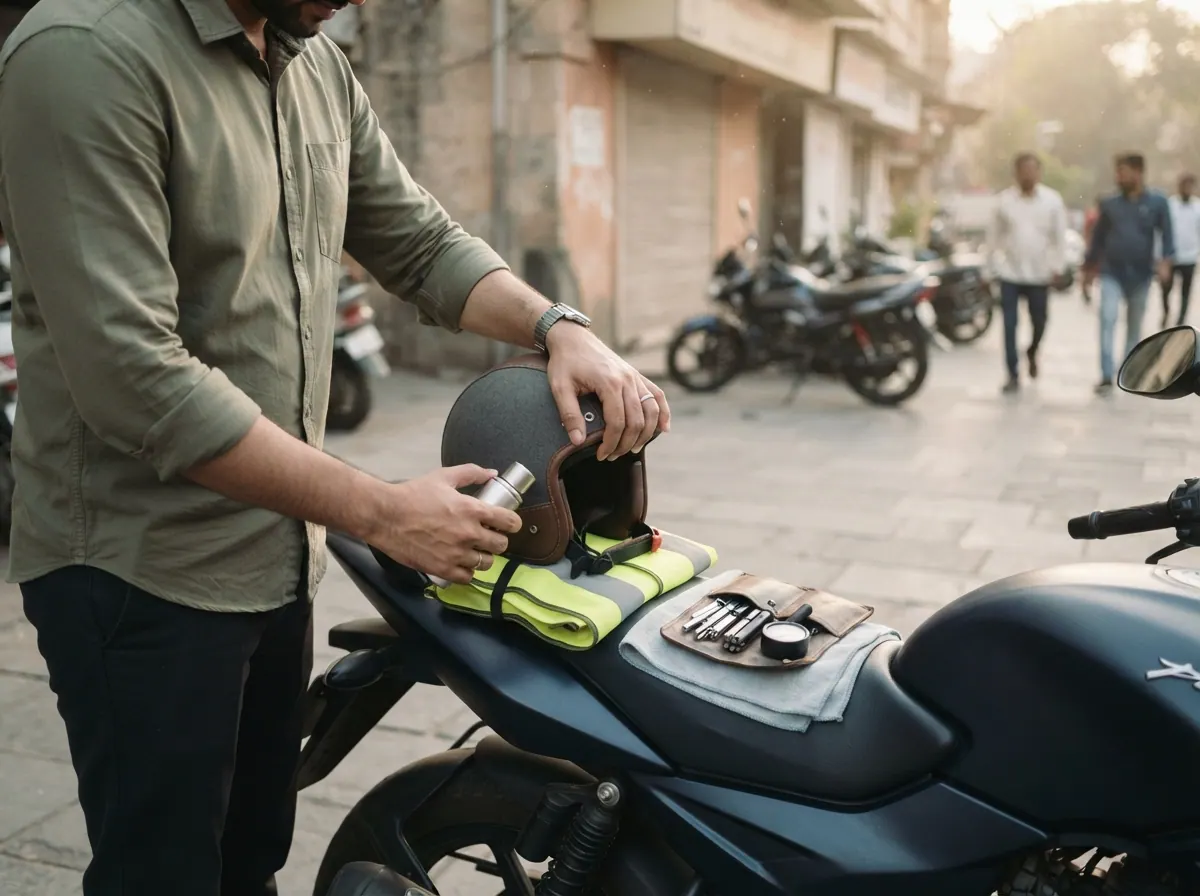
- Helmets. One for you and one for the passenger. A rider with no spare helmet loses fares and risks a fine.
- A phone that handles maps all day. A slow phone costs you trips.
- A rest and meal plan. Riding twelve hours with no break leads to accidents.
Step by step
- Ask the RTO whether bike taxis are allowed in your state, and what registration and badge they need.
- Ride as a passenger a few times at different hours to see waiting times and fares in your area.
- Choose a bike with a mechanic nearby, and have a used one checked before you buy.
- Register and insure it in the right category, keeping every receipt.
- Sign up on the app with the documents it asks for. Read its terms on fees, ratings and what happens if you cancel.
- Learn the hot spots: the metro station, the bus stand, office clusters, and the hours when each is busy.
- Write down daily: trips, fuel, repairs. After a month you will know your real number.
Which licences apply?
Rules vary a lot by state:
- Driving licence for the correct vehicle class.
- Registration and insurance in the category the state requires for paid rides. Ask whether a private bike is acceptable.
- State policy. Some states have set rules for bike taxis, others have limited them. Confirm with your RTO before you spend money.
- App checks. The app may want a police verification or other documents. Follow what the app and the local police ask.
- Loans. Banks and finance companies give two-wheeler loans. Check interest and what happens on a missed instalment.
- Tax. Ask a CA whether your earnings need filing.
What goes wrong?
- A state rule changes. A route that was allowed one month may be restricted the next. Keep another income option.
- Fuel and repairs eat the fare. Short, cheap trips can use more petrol than they earn.
- Accidents. A fall can stop you for weeks. A helmet and slow, steady riding matter more than speed.
- Low ratings. Cancelling rides or arriving late can reduce the trips the app sends you.
- Late night risks. Quiet roads and unknown places need extra care. You are allowed to decline a trip that feels wrong.
- Renting bikes out too soon. Unpaid rent and damaged bikes are common problems for new owners.
Situations you will face
What would you do? Each choice costs something.
Getting started
Friends say you can just sign up. The RTO says rules for paid bike rides depend on the state.
- Visit the RTO first: Costs a day, avoids fines
- Sign up on the app now: Quick start, risk of a fine
A used bike is ₹35,000 cheaper but has 40,000 km on it. A new one comes with a warranty.
- Buy the new bike: Costly, fewer breakdowns
- Buy used after a check: Cheaper, repair risk
The seller of a good-looking used bike will not let your mechanic look at it first.
- Walk away: Lose time, safer buy
- Pay a mechanic anyway: Small fee, informed choice
A good passenger helmet costs ₹1,500. A cheap one costs ₹400 and is not made to a proper standard.
- Buy a certified helmet: Costs more, safe passenger
- Buy two cheap ones: Saves money, poor protection
Third-party cover is cheaper. Full cover costs ₹3,000 more and covers your bike in a fall.
- Take full cover: Costly, protects the bike
- Take basic cover: Cheaper, repairs are yours
Your old phone freezes with the map and app open. A better phone costs ₹9,000.
- Buy a better phone: Costly, smoother trips
- Keep the old phone: Free, miss some trips
First month
Mornings and evenings are busy but crowded with riders. Midday is slow but calm.
- Ride only rush hours: Better fares, long pauses
- Ride the whole day: More trips, more fatigue
The app keeps sending 1 km trips. They cost petrol and pay little.
- Accept short trips: Keep ratings, low fare
- Decline some of them: Better fares, ratings may drop
Fares rise in the rain but roads are slippery and your rain gear is old.
- Ride with new rain gear: Spend, earn well
- Stay home today: Safe, no earning
You reach the pickup and the rider cancels. Waiting longer wastes fuel and time.
- Wait a few minutes: Lose time, keep rating
- Cancel and move on: Save time, rating dips
A passenger says the app route is long and a shortcut through a narrow lane is faster.
- Follow the app: Longer, safe
- Take the shortcut with care: Quicker, narrow lane risk
Your cheap raincoat tore in the first shower and your phone got wet.
- Buy a good rain suit: Costs more, dry rides
- Buy another cheap one: Cheap, tears again
Running it
Petrol goes up by ₹6 a litre. Fares on the app stay the same.
- Ride smoother, cut idling: Saves a little, slower rides
- Work longer hours: Make it up, more fatigue
A mechanic says the chain set and brake pads need change. It costs ₹2,200.
- Service it now: Costly, safer rides
- Service next month: Cash saved, risk on road
A booking comes at 11:30 pm from a quiet area. It pays well but the place feels unfamiliar.
- Decline the booking: Safe, lose a fare
- Accept and share your trip: Good fare, extra care
A passenger wants a long ride with a bag to the airport. It pays well but the return is empty.
- Take the long trip: Good pay, long empty return
- Stay on city rides: Steady small fares
A traffic officer asks for your papers and notices the insurance is a week old.
- Show the receipt and pay any fine: Costs a little, stay clean
- Argue about it: Lose the shift, fine remains
A passenger in a hurry says they will not wear a helmet and offers extra money.
- Refuse the ride: Lose the fare, stay safe
- Insist and wait a minute: Wasted time, rider may leave
Late pickups lowered your rating and the app sends fewer trips. A phone mount and earlier start could help.
- Start earlier, arrive on time: Tiring, ratings recover
- Ignore it: No effort, fewer trips
A regular passenger offers ₹4,000 a month for fixed morning and evening rides outside the app.
- Accept the regular rides: Steady money, fixed hours
- Stay on the app only: Flexible, uneven money
When things go wrong
You fall on wet tar. You are bruised but the bike has a bent footrest and a cracked mirror.
- Rest and repair properly: Lose days, costly repair
- Ride the next day: Quick, risk worse injury
A state rule on bike taxis may change soon. Riders in your area are worried.
- Ask the RTO and plan ahead: Time spent, clear picture
- Carry on and watch the news: Keep earning, may be caught out
Someone tried to take your bike from the lane. A lock costs ₹1,200 and safe parking costs ₹600 a month.
- Rent safe parking: Monthly cost, peace of mind
- Buy a strong lock: One-time cost, some risk
The engine heats up and stops. An overhaul costs ₹7,000, a patch costs ₹2,000.
- Overhaul it: Costly, dependable again
- Patch it for now: Cheap, may fail again
A week of rain left you ₹3,500 short for the instalment.
- Ask for a few days: Late fee, trust kept
- Borrow at heavy interest: Pays now, costs later
The app raises the share it keeps from each fare. Your daily earning drops.
- Ride on a second app too: More trips, more phone work
- Stay on one app: Simple, lower earning
Growing
You saved ₹70,000. A second bike can be rented to a rider, but you carry the risk of damage and late rent.
- Buy and rent it out: Daily rent, damage risk
- Keep saving: Safe, slower growth
A rider wants to rent your bike. A written agreement on rent, damage and papers takes time and a small fee.
- Write a clear agreement: Small fee, fewer disputes
- Shake hands only: Free, disputes likely
A local group runs a short safe riding class for ₹1,000. It means a lost half day.
- Join the class: Lose a half day, ride safer
- Skip the class: No cost, no learning
A friend asks to ride your bike on your off days and share the earning.
- Agree with a fixed share: Extra income, wear on the bike
- Say no: Bike stays yours
Is it right for you?
This business suits you if you like riding, know your city's lanes, and want a way to start earning with modest money. It suits you less if you need a fixed monthly income, because income moves with weather, demand and the app's rules.
A good test: ride as a passenger for a week and count how long each wait is and what each fare is. If the numbers do not look right for one rider, adding more bikes will only repeat the problem.