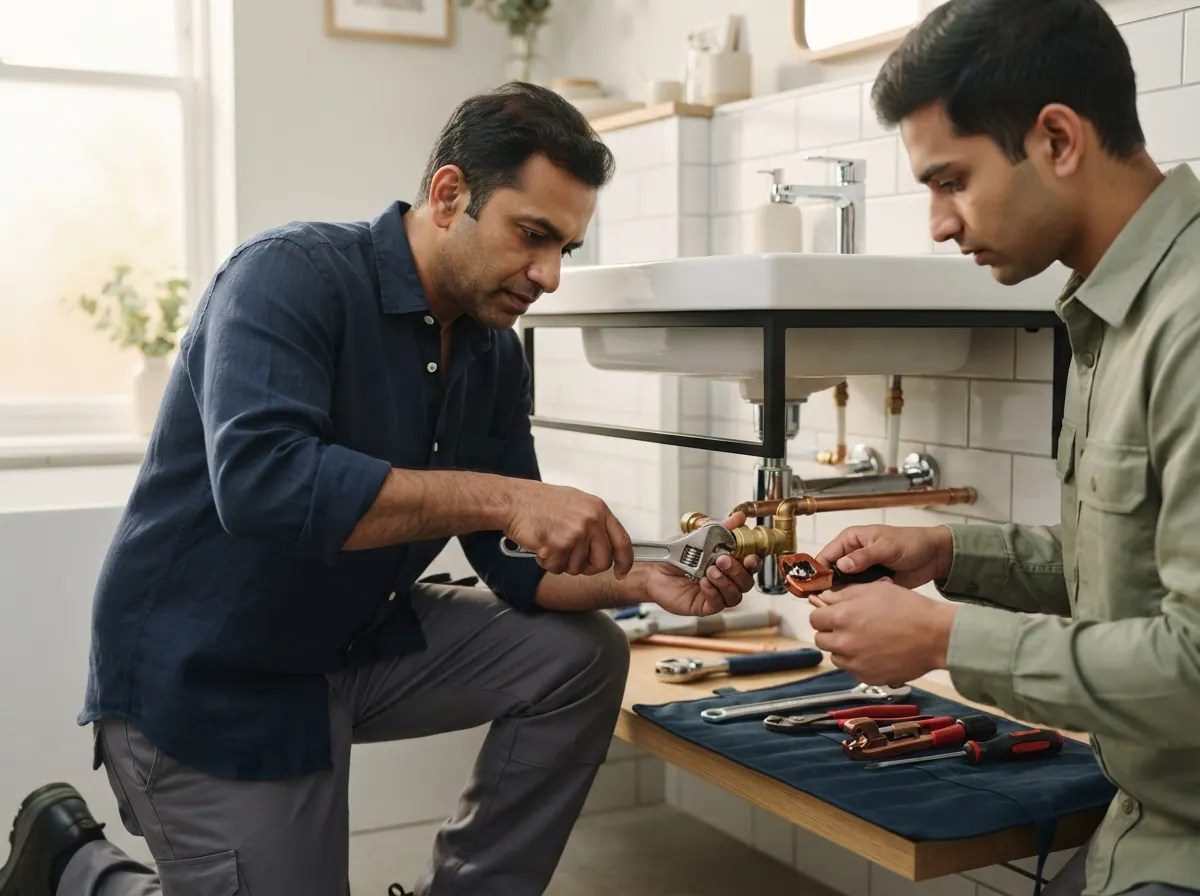
To start a plumbing business in India you need training under an experienced plumber, a tool kit with a pipe wrench and cutter, a phone and two-wheeler, a few reliable sources of work, and about ₹20,000–2 lakh. A plumber who already owns tools can start near the low end. Money comes from small repairs through the week and fitting jobs now and then. It is lost on hidden leaks that return, poor joints, unpaid bills and damage to a customer's wall or tiles.
All figures here are estimates. Check prices near you before you spend.
What does it cost?
For a home-based plumber working alone, with a helper added later:
| Item | Estimate |
|---|---|
| Tool kit: pipe wrenches, cutter, die set, spanners, hacksaw, tape | ₹6,000–40,000 |
| Welding or solvent-joint tools and a drain-cleaning machine | ₹3,000–35,000 |
| First stock of taps, fittings, washers, tape, solvent | ₹3,000–45,000 |
| Uniform, shoes, cards, phone listing | ₹1,000–5,000 |
| Training or course fees | ₹0–20,000 |
| Money for slow early weeks | ₹7,000–55,000 |
| Total | about ₹20,000–2 lakh |
A drain-cleaning machine or a leak detection tool raises the cost but also opens up higher-value jobs. Many plumbers rent or borrow these at first.
How much can it earn?
A normal month for a small plumber with one helper:
Income
- 90 small repairs (tap, flush tank, leak, blockage) × about ₹350 = ₹31,500
- Two bathroom or kitchen fitting jobs × ₹12,000 labour = ₹24,000
- Margin on fittings you supply = ₹7,000
- Total = ₹62,500
Costs
- Helper = ₹11,000
- Petrol and travel = ₹5,500
- Tool wear and consumables = ₹4,000
- Phone, listing, cards = ₹2,000
- Call-backs and small losses = ₹3,000
- Total = ₹25,500
Left over: ₹62,500 − ₹25,500 = ₹37,000 a month, and this has to pay you as well.
Some months are much better. In the first heavy rain, calls for leaking roofs, choked drains and overflowing tanks double. In summer, tank and motor work rise. Fitting jobs come in bursts when a flat is being done up.
What do you need before you start?
- Training under a good plumber. Learn how to join CPVC, how to fit a flush tank, how to trace a leak behind a wall and how to give a slope to a drain.
- Knowledge of materials. CPVC for hot and cold lines, uPVC and SWR for drains, and old GI pipe in older flats. Using the wrong pipe in the wrong place is the root of many call-backs.
- A neat habit. Cover the floor, collect the waste, and wipe the tiles before you go.
- A shop for fittings. A sanitary or hardware shop that gives fittings on credit and takes back unused pieces.
- A way to be reached fast. Most plumbing calls are urgent. A phone with WhatsApp and a quick reply helps more than a banner.
Step by step
- Work with an experienced plumber for a few months, and note how they find the cause before opening a wall.
- Buy a basic tool kit and add machines as work grows.
- Tell watchmen, society secretaries, electricians and painters that you take calls.
- Open an account with a sanitary and hardware shop and learn the fitting brands they stock.
- Quote in writing for larger jobs. List pipes, fittings, labour and time.
- Test every line under pressure and leave it for some hours before you close a wall.
- Take photos of before and after. They end arguments later.
- Give your number on a small sticker on the meter or tank, and ask for a Google review after good work.
Which licences apply?
- Plumber registration or licence. Some cities and water boards ask for it for larger or building work. Ask your municipality or water board.
- Udyam registration is free and helps if you take contracts or loans later.
- GST depends on your turnover and whether you supply material. Ask a CA.
- Building rules. Work on a society's common lines may need approval from the committee. Ask in advance.
Confirm all of this with your local office, since rules vary by state and city.
What goes wrong?
- Hidden leaks. A wall joint leaks after the tiles are fixed. Test the line under pressure before you close the wall.
- Wrong solvent or tape. A poor joint seeps for weeks before it fails. Use the right solvent and let it cure.
- Seepage blamed on you. A damp wall may come from the flat above or from an old line. Take a photo before you start so you are not blamed for old damage.
- Broken tiles and walls. Chipping a tile costs more than the job. Mark and cut carefully, and carry spare tiles if the owner has them.
- Bad slope in a drain. A drain that holds water or smells will be your name on the complaint. Check the fall with a level.
- Customer asks for the cheapest fittings. A thin tap or a weak flush tank lasts a few months. Explain what you fitted and write the brand on the bill.
- Not getting paid after a big job. Take part payment in stages for fitting work.
Situations you will face
What would you do? Each choice costs something.
Getting started
A full set with a die set and cutter costs ₹25,000. A basic kit costs ₹7,000 and handles small repairs.
- Buy the full kit: Costly, can take fitting jobs
- Buy the basic kit: Cheap, limited work at first
Blocked drain jobs pay well but need a cleaning machine. Buying costs ₹18,000; renting costs ₹500 a visit.
- Buy the machine: High cost, steady drain work
- Rent when needed: Small cost per job
The shop gives taps, cocks and fittings on credit for a month, but pushes its own brands.
- Take credit: Cash free, limited brands
- Buy cash from different shops: Free choice, uses cash
Three apartment watchmen will give your number to residents for ₹200 per call that turns into work.
- Agree to the small fee: More calls, small cost
- Give only cards, no fee: Free, fewer calls
An owner wants a full bathroom fitted. A detailed quote takes time, while a rough rate risks loss.
- Quote item by item: Slower, fewer arguments
- Quote a rough lump sum: Fast, risk of loss
Many new flats use CPVC for hot lines. A weekend course costs money but you would take new jobs.
- Take the course: Fees now, better work later
- Learn on the job: Free, mistakes will cost
You get more calls than one person can handle. A helper costs a wage and may need training.
- Hire a helper: More jobs, fixed wage
- Stay alone for now: No wage, lose some calls
First month
You fixed a flush tank last week and it leaks again. The owner is calling you to come back.
- Come back and fix it free: Costs time and parts
- Charge a fresh visit fee: Earns, upsets them
While removing an old pipe, a tile cracked. The owner has no spare and a replacement will cost more.
- Pay for the tile and fitting: Costs money, keeps trust
- Share the tile cost, explain: Some cost, honest
A wall in a flat turns damp a month after you fixed a bath line. The cause may be an old line behind it.
- Open and check at your cost: Time and tiles at risk
- Say it is not your line: Free, may be unfair
A landlord wants ₹150 taps for rental bathrooms. They will leak within months.
- Fit their choice, note on bill: Easy job, call-backs likely
- Suggest ₹350 taps, explain: Higher bill, they may refuse
Running it
Roof leaks and choked drains jump in one day. You can take only part of them.
- Hire a day helper: Extra pay, more calls handled
- Take only urgent calls: Calmer day, some lost
Tanks run dry and motors burn in April. Many calls need a day, but pay well.
- Take extra motor jobs: Good money, long days
- Stick to plumbing only: Easier, smaller income
A farmhouse wants a submersible motor pulled and fixed. You have never done one.
- Hire a specialist and learn: Cost shared, new skill
- Decline the job: No risk, lost income
An apartment society wants all plumbing calls handled for a fixed sum, with quick response promised.
- Take the yearly contract: Steady money, always on call
- Charge per call only: Free of duty, uneven income
A small builder wants ten bathrooms fitted in a month. The rate is low and payment comes in stages.
- Take at the builder's rate: Volume, thin margin
- Ask for a higher rate: They may refuse
Customers like plumbers who promise free repair of a joint for a year. It adds to your future calls.
- Offer the warranty: Trust, extra calls to bear
- No warranty: Less work, less trust
Customers pay in cash, UPI or later, and your notebook is behind. You miss two small payments this week.
- Use a simple billing app: Small cost, clean records
- Keep the paper notebook: Free, payments slip
When things go wrong
A customer's new taps are choked with salt within months. They blame the fittings you installed.
- Replace and advise a filter: Costs parts, shows care
- Tell them it is their water: Free, they may be unhappy
At midnight water is flooding a flat's floor. You are asked to come at once.
- Go and charge a night fee: Good income, no sleep
- Advise closing the main valve: Calm, they may call someone else
The bathroom is finished and they say the tiles are not to their taste, so they will pay later.
- Hold the shower fittings back: Firm, risk of dispute
- Keep asking politely: Gentle, money stuck
While fixing a pipe bracket, your helper drills into an electric cable inside the wall.
- Call an electrician, pay for repair: Costs money, safe fix
- Switch off, call the owner: Awkward, a day lost
The owner wants water on today. The solvent joint needs a few hours to cure properly.
- Wait and test later: Delay, safer joint
- Turn on water now: Quick, may leak later
A local plumber is taking small jobs at half your rate. Your calls dip in the colony.
- Offer a lower first visit: Wins calls, thin margin
- Keep rates, stress warranty: Some leave, trust builds
You bought many fittings for a brand that is going out of use. They are stuck on your shelf.
- Return at a loss: Loss now, cash back
- Use it slowly on jobs: Cash stuck, quality questions
Growing
A leak detector finds seepage without breaking walls. It costs ₹25,000 and brings in higher-fee jobs.
- Buy the detector: Costly, higher fees
- Keep tracing by hand: No spend, slower jobs
Many bathroom fittings come with seepage problems. A waterproofing partner offers to join you on jobs.
- Tie up on waterproofing: New income, shared risk
- Stay with plumbing only: Simple, lose bigger jobs
You are turning away work. A second plumber would work under your name and your quality rules.
- Hire a second plumber: More jobs, quality risk
- Raise your rates: Fewer jobs, higher pay
A friend says reviews bring calls. A small paid ad also costs per click.
- Ask for reviews, no ads: Free, slow build
- Run a paid ad: Costs money, fast calls
A small loading vehicle lets you carry pipes and fittings and take bigger jobs, but costs monthly.
- Buy a small loader: High cost, bigger jobs
- Use your scooter and shop delivery: Cheap, limits job size
Is it right for you?
Plumbing suits you if you can stay calm in a messy situation, like finding the root of a problem and do not mind working in tight, wet places. It helps to speak simply and honestly about what needs a repair and what only needs a washer.
It suits you less if you dislike getting dirty or are not ready for early or late calls. In the first year, you will take small jobs that pay little. Try this first: work as a helper for three months, and learn from a plumber who has done kitchens, bathrooms and tank work, before you take jobs on your own.