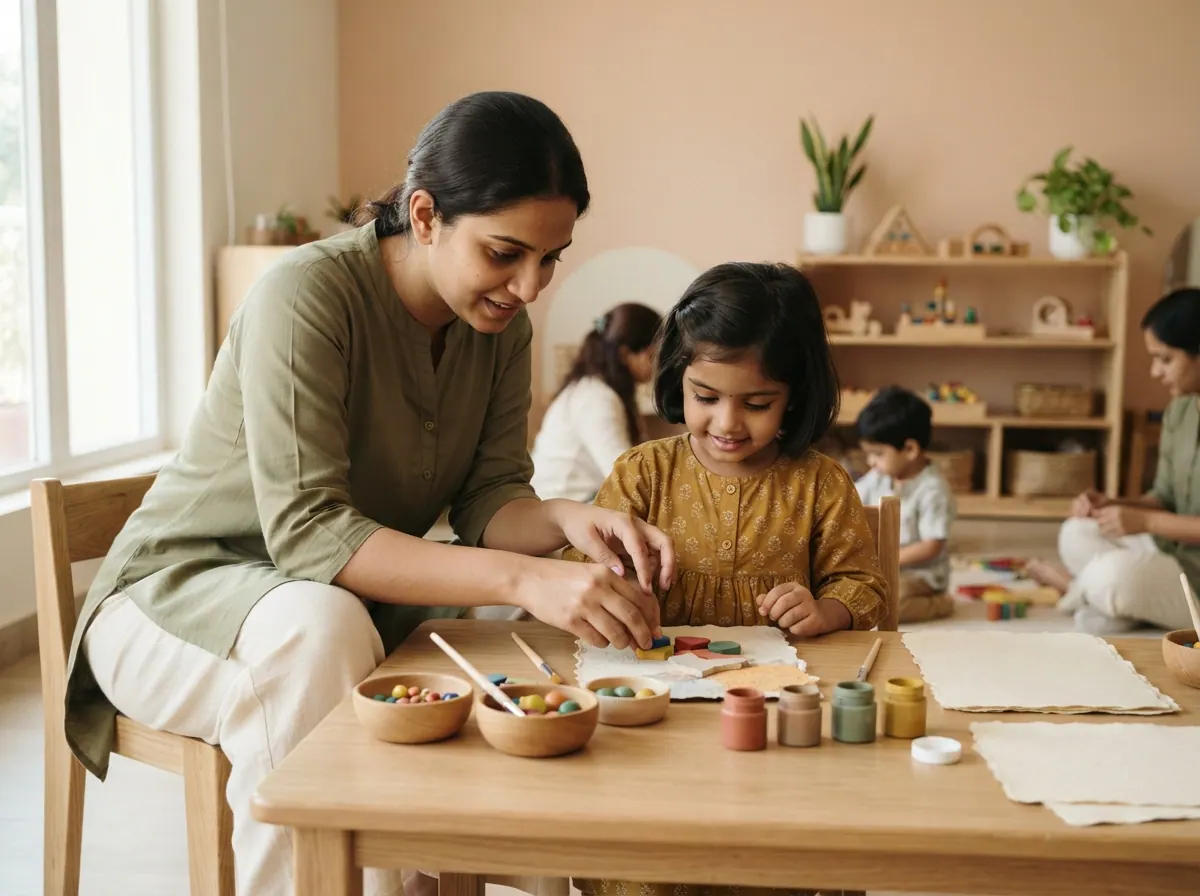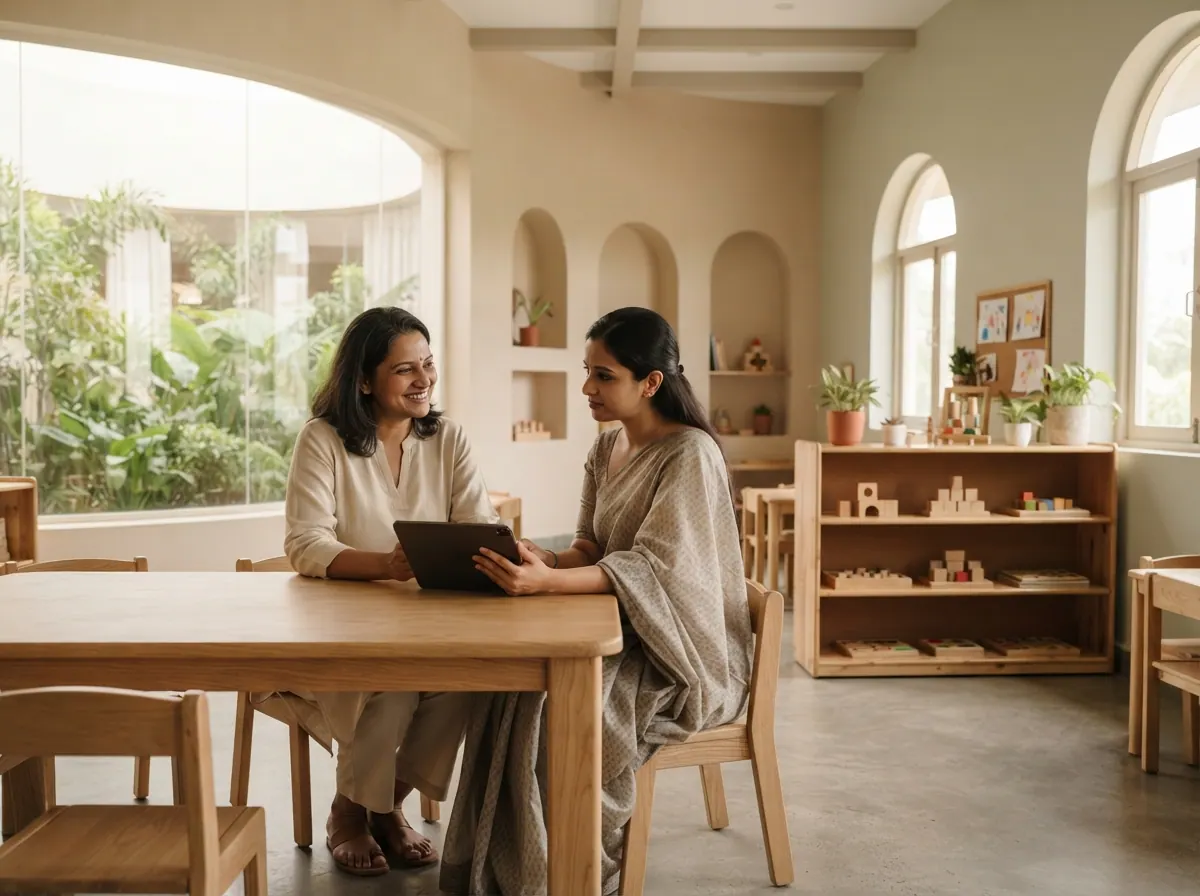
To start a play school in India you need a safe, ground-floor or well-railed premises of about 1,000 to 2,000 sq ft, trained teachers and helpers, child-safe furniture, a clear fee plan, and about ₹5–25 lakh. Rent, salaries and safety come first, and fees come later. The business works when parents trust you with their youngest children, so safety and honesty decide whether admissions fill.
All figures here are estimates. Check rent, salaries and fees near you before you spend.
What does it cost?
| Item | 30 children | 60 children |
|---|---|---|
| Rent deposit | ₹1.5–4 lakh | ₹3–8 lakh |
| Child-safe fit-out (flooring, rounded furniture, safe toilets, gates) | ₹1.5–3 lakh | ₹3–6 lakh |
| Furniture, mats, toys, books, art material | ₹1–2 lakh | ₹2–3.5 lakh |
| Outdoor play items and fencing | ₹50,000–1 lakh | ₹1–2 lakh |
| CCTV, fire extinguishers, first-aid kit | ₹40,000–80,000 | ₹70,000–1.2 lakh |
| Staff training and police verification | ₹15,000–30,000 | ₹25,000–50,000 |
| Registrations and admission promotion | ₹30,000–70,000 | ₹50,000–1 lakh |
| Reserve for 3 months of rent and salaries | ₹2–3.5 lakh | ₹4–7 lakh |
| Total | about ₹7.4–15.3 lakh | about ₹14.5–29.2 lakh |
A smaller home-based or society-based play school with 15 to 20 children can open for under ₹5 lakh, but rules on space and safety still apply.
The reserve is the item people skip. Parents pay quarterly or monthly, and a school with 20 children and full-sized rent can run a loss for the first term.
How much can it earn?
Here is a play school with 40 children in its second year, charging an average of ₹3,500 a month.
Income each month
- 40 children × ₹3,500 = ₹1,40,000
- Add an after-school day-care hour for 10 children at ₹1,000 = ₹10,000
- Total income = ₹1,50,000
Costs each month
- Rent = ₹40,000
- 3 teachers × ₹14,000 = ₹42,000
- 2 helpers × ₹8,000 = ₹16,000
- Snacks, art material, cleaning = ₹10,000
- Electricity, internet, transport = ₹7,000
- Total = ₹1,15,000
Left over: ₹1,50,000 − ₹1,15,000 = about ₹35,000 a month.
With 25 children, income falls to about ₹97,500 and the same costs leave a loss. That is why admissions in the first year decide whether the school survives. Annual fees such as admission and activity charges add to income, but are collected once a year, so do not spend them as monthly profit.
What do you need before you start?
- A safe building. Ground floor or a first floor with a safe stairway, railed balconies, no open water tank, no sharp edges and a toilet sized for small children.
- Trained and verified staff. Hire teachers with early childhood training, and do police verification for every adult, including drivers, helpers and cleaners.
- A clear child protection rule. Never leave a child alone with one adult in a closed room, keep toilets supervised, and keep CCTV in common areas. Know the law that protects children from sexual offences, and tell staff the rules in writing.
- A syllabus. Play-based learning, stories, rhymes, simple counting and motor activities. Parents will ask what your day looks like.
- A health plan. A first-aid kit, a list of parents' phone numbers and a nearby doctor. Ask about allergies on the admission form.
Step by step
- Visit five play schools as a parent. Note their fees, group sizes, staff behaviour and which ones feel calm.
- Choose the location. Look near housing colonies with many families, with no heavy traffic outside and a safe drop-off space.
- Fit the premises for children. Rounded corners, soft flooring, low sinks, locked gates and covered sockets are basic. Do this before the paint.
- Hire and verify staff. Check certificates, call previous employers, and run police verification.
- Set fees and rules. Decide monthly or quarterly payment, a refund policy, and illness and pick-up rules. Write them clearly.
- Open admissions early. Most parents decide for the new session months in advance, so start promotion before the session begins.
- Hold a trial week. Invite parents for a short open morning and let them see the rooms, the toilets and the staff.
Which licences apply?
Rules vary by state and city and change, so confirm with the local office.
- Registration of the school or play centre may be needed with your state education or women and child development department. Ask your district office what applies to preschools.
- Shop or trade licence from the municipal body for the premises.
- Fire safety clearance or an NOC may be needed for buildings with groups of children. Ask the fire department.
- FSSAI registration if you cook or serve meals and snacks.
- Building safety. Ask an engineer to check the structure, railings and electrical wiring.
- Vehicle rules. If you run a school van or hire one, the vehicle needs valid papers, a trained driver and an attendant.
- GST and taxes. Ask a CA how fees for early childhood education are treated.
What goes wrong?
- Too few children for the rent. A big building with 20 children loses money every month.
- Staff turnover. Teachers leave in the middle of the year, and children and parents notice.
- A child is hurt. Falls from furniture and fingers caught in doors are common. Strong rules, supervision and a first-aid plan matter more than decor.
- Overcrowding. Taking too many children to cover rent stretches teachers thin, and quality falls.
- Poor hygiene. Small children pass colds and stomach bugs quickly. Clean toys, wash hands and send sick children home.
- Promising too much. Do not promise that a three-year-old will read or write fluently. Parents leave when a promise is not kept.
Situations you will face
What would you do? Each choice costs something.
Getting started
A first-floor flat costs less rent, but it has stairs and a balcony. A ground-floor space costs more.
- Take the ground floor: Higher rent, safer for toddlers
- Take the first floor: Cheaper, needs railings and gates
Toddlers fall often. Foam mats over the tile cost real money, but tiles are hard on a child's head.
- Lay soft foam flooring: Costly, fewer scraped knees
- Use thin play mats: Cheaper, less cushion
A preschool brand offers a syllabus and training for a fee and a share of income. Your own brand is cheaper.
- Join the franchise: Big fee, brand and syllabus
- Start your own school: Cheaper, build trust slowly
A helper who comes recommended wants to start tomorrow. Police verification will take a week or two.
- Wait for verification: Delay, safe children
- Keep Kiran in the office meanwhile: Slower help, still safe
Parents ask about cameras. Cameras in common rooms cost money, and some staff find them intrusive.
- Fit cameras in common areas: Costly, parents feel safe
- Fit only at the gate: Cheaper, parents ask questions
The yard has an uncovered tank. A fitter says a proper lid and a lock cost money and take a few days.
- Cover and lock it now: Cost and delay, safe yard
- Fence the whole yard off: Cheaper, less play space
The session starts in two months and only eight children have joined. You can discount or hold an event.
- Hold an open morning: Costs snacks and effort
- Offer 20 percent off admission: Fewer fees per child
First month
A three-year-old feels hot at 11 am. The parents are at work and the phone is not answered.
- Keep Diya apart, keep calling: Staff time, safe approach
- Take Diya to a clinic: Doctor fee, quick care
One child has a nut allergy that the mother mentioned only briefly. Tomorrow's snack has peanut chikki.
- Change the snack for everyone: Small cost, no risk
- Give a separate safe snack: More work, risk of mix-up
Half the new class cries when parents leave. Some parents want to stay all morning in the room.
- Allow a short settling week: Disruption, calmer children
- Ask parents to leave quickly: Smooth classes, some upset
Eleven extra children want admission. Your rooms and staff fit 30 and you already have 28.
- Take them, hire another teacher: More fees and salary
- Start a waiting list: Stays safe, lose some admissions
A child soils their clothes. The aaya is busy and a teacher offers to take the child to the toilet alone.
- Follow the two-adult rule: Needs staff time, protects children
- Call a parent to come: Slower, the child waits
A parent finds a bruise on a child's arm and blames a teacher. You did not see what happened.
- Review the incident log and CCTV: Takes time, builds trust
- Say kids always get bruises: Quick, parent loses trust
Running it
Several parents ask you to teach full writing now, so their children are ready for big schools.
- Teach simple pre-writing games: Honest, a few parents leave
- Add daily writing homework: Keeps parents, tires small kids
A mother sends a bottle of syrup with a note. Staff are unsure about the dose and who should give it.
- Give only with doctor's note: Paperwork, parents grumble
- Ask the parent to come: Parent inconvenienced, no staff risk
Your teacher Neha leaves with a week's notice. Neha's class of fifteen is very attached.
- Hire a trained replacement: Salary and training time
- Merge the class into another: Saves salary, too many children
Parents love an annual day with songs and costumes. It costs money and weeks of rehearsal.
- Hold a full annual day: Costly, great for admissions
- Hold a small class show: Cheap, quieter buzz
Lice are found in three children, and many have colds. Some parents blame the school.
- Send a note and clean thoroughly: Cost and work, calmer parents
- Close for two days: Lost days, stops spread
A van would help working parents. It needs a licensed driver, an attendant and good insurance papers.
- Hire a verified van with attendant: Cost, more admissions
- Skip the van: No risk, lose some families
Working parents want care until 5 pm. You would need an extra staff member and a meal.
- Start day-care hours: Extra income, more cost
- Keep morning hours only: Simple, lose working parents
When things go wrong
Seven families have not paid. Salaries are due in a week, and sending the children home feels harsh.
- Send reminders and set a deadline: Awkward, money may come
- Wait another month: Kind, salaries strain
Boxes of art material block the back door. The officer warns you to fix it and fit an extinguisher.
- Clear exits and buy extinguishers: Cost now, safer school
- Move boxes, buy extinguisher later: Cheap, notice risk
A chain with a fancy building opens a km away. Four parents ask about switching.
- Hold a parent meeting, add perk: Cost, keeps families
- Stay quiet and trust your care: Free, some leave
A parent reports that a helper shouted and pulled a child's arm. The helper says the child was throwing things.
- Investigate, remove if true: Costly, protects children
- Give a warning only: Keeps staff, risks trust
A visitor says they have come for a child. The name is not on the pickup list and the parent cannot be reached.
- Refuse until a parent confirms: Awkward, safe
- Call the police helpline too: Awkward, most careful
Only 22 children joined, and rent for the full floor is due. A cheaper part-floor is available.
- Move to a smaller space: Moving cost, lower rent
- Stay and push admissions: High rent, hopeful
Growing
A recognised short course would improve your teachers' classroom skills. It costs fees and time off.
- Send all teachers on the course: Costly, better classes
- Send one lead teacher: Cheaper, slower spread
Parents like a safe play area with soft ground and age-fit equipment. It uses space and money.
- Build a safe play area: Costly, strong draw
- Use shared park hours: Cheap, supervision needed
Parents want the same school up to age six. A KG class needs a bigger room and a qualified teacher.
- Add a KG class: Fit-out and salary, more fees
- Stay with play group and nursery: Simple, children leave at four
A builder offers a ground-floor unit in a new colony. You would need a trusted head teacher.
- Open the second branch: Big deposit, big risk
- Perfect the first branch: Safer, slower growth
Is it right for you?
A play school suits you if you are patient with very young children, comfortable with strict safety routines and able to handle worried parents calmly. It suits you less if you want fast money, since the first year is often thin.
A good test: volunteer for two weeks at a play school at admission time and during a sick-child week. Then start with a small group, keep a strong staff ratio, and grow only when the existing children are settled.