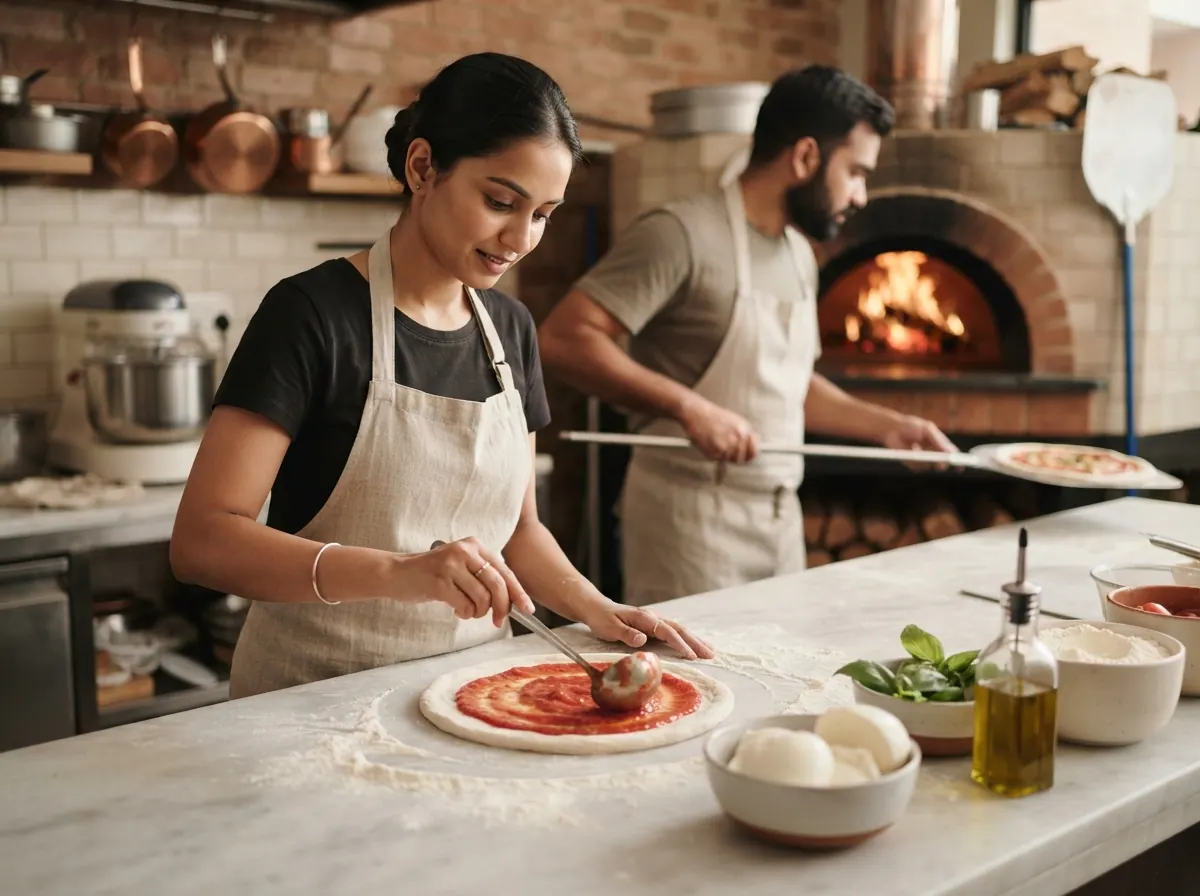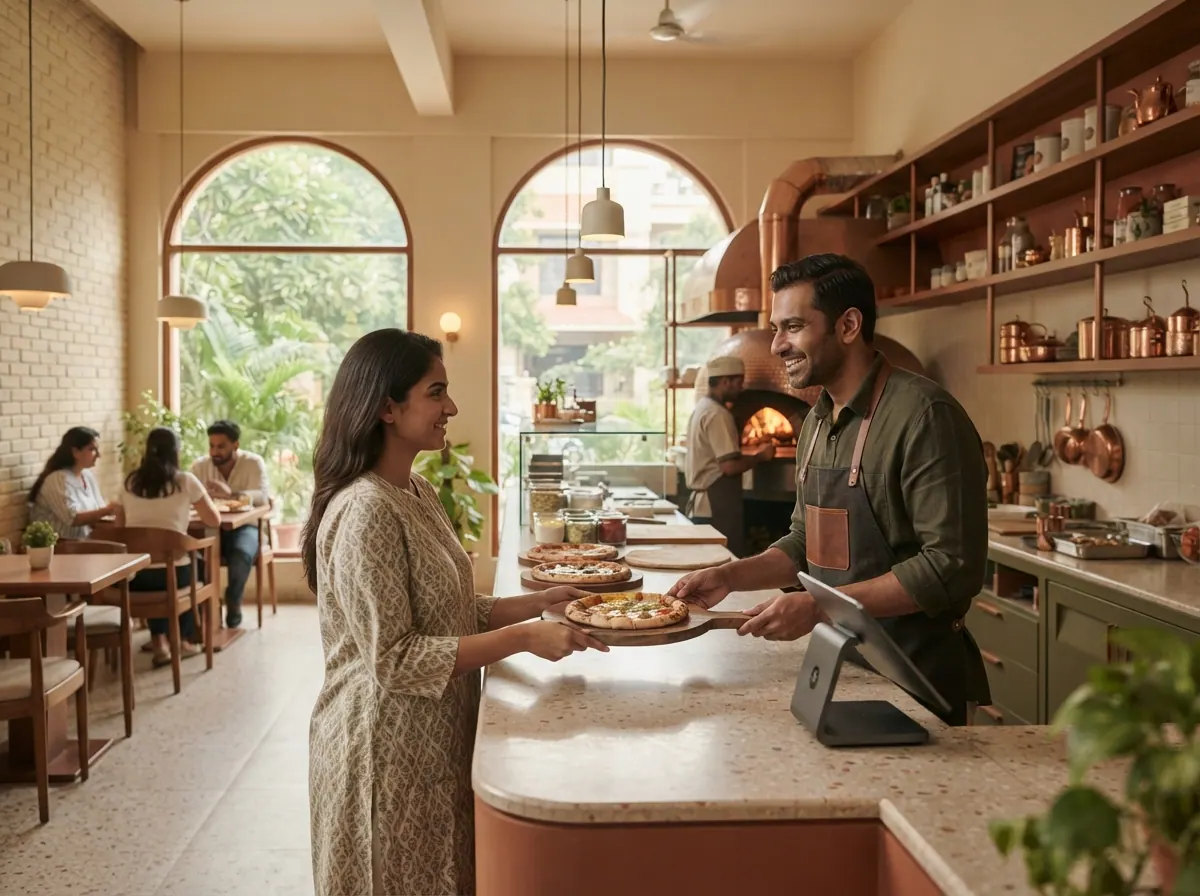
To start a pizza business in India you need a small shop with a proper kitchen, a deck oven, a dough mixer, a fridge for cheese and toppings, a base and sauce you can repeat every day, and about ₹3–15 lakh. A takeaway and delivery shop with one oven sits near ₹3–6 lakh. A shop with seating and a larger kitchen goes toward ₹15 lakh. Pizza sells at a good price compared with its ingredient cost, but cheese is expensive and wastage can ruin the margin.
All figures here are estimates. Check prices near you before you spend.
What does it cost?
| Item | Takeaway and delivery | Shop with seating |
|---|---|---|
| Rent deposit and shop fitting | ₹80,000–2 lakh | ₹2–4 lakh |
| Deck oven (gas or electric) | ₹50,000–1.5 lakh | ₹1.5–3.5 lakh |
| Dough mixer | ₹30,000–80,000 | ₹50,000–1.2 lakh |
| Fridge, make-table or pizza prep counter | ₹40,000–90,000 | ₹90,000–1.8 lakh |
| Pans, peels, cutters, trays | ₹10,000–25,000 | ₹20,000–40,000 |
| Exhaust, counter, signboard | ₹30,000–70,000 | ₹70,000–1.8 lakh |
| Boxes, packing, first month's printed menus | ₹15,000–30,000 | ₹20,000–40,000 |
| Licences | ₹5,000–15,000 | ₹10,000–25,000 |
| First stock and working money | ₹60,000–1.2 lakh | ₹1.5–3 lakh |
| Total | about ₹3.2–8 lakh | about ₹7.5–16 lakh |
You can begin with a smaller oven and buy a mixer later, but making dough by hand for 60 pizzas a day is very hard.
What do you sell?
- Veg pizzas: margherita, farmhouse, paneer or corn. These are the volume sellers.
- Chicken pizzas: tikka, BBQ or pepper chicken, at a higher price.
- Sizes: a small 7-inch for singles and a medium 9–10-inch for sharing keep prices friendly.
- Garlic bread and sides: low in cost and high in margin.
- Cold drinks and dips: a simple add-on at the counter.
- Cheese: mozzarella gives the best taste and stretch but costs more than processed pizza cheese, and many shops blend the two.
How much can it earn?
Here is a small takeaway and delivery shop in its third month, selling about 60 pizzas a day, open 30 days.
Sales
- 40 regular pizzas × ₹180 = ₹7,200
- 15 medium or chicken pizzas × ₹280 = ₹4,200
- 5 garlic bread and sides × ₹100 = ₹500
- Total per day = ₹11,900
- ₹11,900 × 30 days = ₹3,57,000 a month
Costs each month
- Flour, cheese, sauce, toppings, boxes: about 38% of sales = ₹1,35,700
- Rent = ₹35,000
- Two staff = ₹32,000
- Gas or power, water = ₹20,000
- Delivery commission and charges = ₹30,000
- Repairs, small items = ₹6,000
- Total = ₹2,58,700
Left over: ₹3,57,000 − ₹2,58,700 = about ₹98,300 before tax and your own pay.
At only 30 pizzas a day, sales are about ₹1,78,500, and the same rent and wages leave you near zero. The ovens and rent cost the same whether you sell 20 or 60 pizzas.
What do you need before you start?
- A dough and sauce you trust. Test your base for rise, crust and how it stays crisp in the box for 20 minutes.
- A supplier for cheese and toppings. Cheese is the biggest cost, so ask for a rate by the kilo and for storage advice.
- An oven you can control. Learn the hot and cold spots, and how long a pizza takes at your temperature.
- A delivery plan. Pizza should reach the customer warm. A few nearby lanes are better than a large area.
Step by step
- Perfect three pizzas and a garlic bread at home, then cost each one by gram.
- Price every pizza at about 2.5 times its food cost.
- Take the shop with space for the oven, a prep counter and a fridge, and fit a proper exhaust.
- Register with FSSAI and check the municipality's trade licence rules.
- Mix dough every morning, with a rest in the fridge, and plan the day's dough balls by sales.
- Launch with a short menu and add toppings only when you can keep them fresh.
- Join delivery apps once the counter is steady, and keep a direct phone number for regulars.
Which licences apply?
- FSSAI registration or licence, depending on yearly sales, on the FoSCoS portal.
- Trade or shop licence from the municipality, and shop establishment registration in many states.
- Fire and gas safety. Ask the local fire office what applies to a kitchen with a high-heat oven.
- GST once sales pass the limit. Ask a CA.
- Brand names. Choose your own shop name. Do not copy a famous chain's name or logo.
- Rules vary, so confirm each with the local office.
What goes wrong?
- Cheese cost creeping up. Putting an extra handful on each pizza can quietly wipe out profit. Weigh the cheese.
- Dough that does not rise. Weather, yeast and rest time all matter. Keep a record of each batch.
- Soggy pizza at delivery. Heat, steam and a sealed box make the base limp. Use proper boxes and short routes.
- Toppings that go bad. Cut vegetables and chicken must be kept cold. Prepare small lots.
- Oven problems at peak time. A broken thermostat or burner on a Saturday evening costs a day's sales. Know your technician.
- Delivery commission. Apps take a share of each order. Check what is left on a plate before you offer discounts.
Situations you will face
What would you do? Each choice costs something.
Getting started
A gas deck oven is cheaper to run. An electric deck oven holds steadier heat but your power load is tight.
- Buy a gas deck oven: Cheaper running, needs gas care
- Buy an electric deck oven: Costly, steady bake
Ready bases save time and mixer cost. Fresh dough made in-house tastes better and costs less per pizza.
- Buy a mixer, make dough: Costly, better crust
- Buy ready bases: Easy start, higher cost
Mozzarella gives stretch and taste. Processed pizza cheese costs much less per kilo.
- Use mozzarella: Higher cost, better taste
- Blend both cheeses: Lower cost, mild taste
Your own tomato sauce tastes fresh but needs daily cooking. A ready sauce is steady but costs more.
- Cook your own sauce: Cheaper, daily effort
- Buy ready sauce: Costs more, steady taste
A friend suggests a name close to a famous pizza chain for quick recognition.
- Choose your own name: Slower start, no legal risk
- Use a lookalike name: Fast notice, legal risk
The shop has no vent. The fitter quotes a full exhaust. A cheaper option is a smaller fan.
- Fit a full exhaust: Costly, cooler kitchen
- Fit a smaller hood: Cheaper, weaker pull
First month
Friends say list 15 pizzas so everyone finds a favourite. More toppings mean more wastage in a small shop.
- Start with six pizzas: Less waste, less choice
- List fifteen pizzas: More choice, more waste
On a cool morning your dough balls stay flat. You have 60 orders worth of dough planned.
- Bin it, mix a new batch: Lose cost, save the day
- Bake flat, call it thin: Saves dough, mixed reviews
Staff put cheese by eye. Some pizzas look heavy and some are bare. Your cheese use is high.
- Weigh cheese per pizza: Small cost, steady margin
- Keep it by eye: Faster, margin leaks
A buy-one-get-one offer would draw a crowd to a new shop but cuts margin hard.
- Run buy-one-get-one: Big crowd, thin margin
- Free garlic bread on orders: Smaller crowd, lower cost
Two food apps ask you to join. Orders will rise, but commission is high.
- List on one app: More orders, lower margin
- Own phone orders only: Keep margin, slower start
Customers say bases arrive limp. Vented boxes cost more and your delivery boy rides far.
- Switch to vented boxes: More per order, crisp pizza
- Cut delivery radius: Free, lose some orders
Running it
Orders pile up from 7 p.m. and delivery takes an hour. One oven cannot keep up.
- Add a prep helper: Wage, faster make time
- Stop taking app orders at peak: Free, lose sales
Your cheese supplier raises the rate sharply for the month. Menu prices are printed.
- Raise pizza prices by ₹10: Margin safe, fewer orders
- Hold price, reduce cheese: Keeps buyers, taste drops
A college hostel asks for a pizza and drink combo at a student price.
- Offer the combo: Volume, thinner margin
- Decline: Keep margin, miss crowd
Customers ask for pasta and garlic bread. These need a few new items and clean prep space.
- Add garlic bread only: Cheap, high margin
- Add pasta too: More cost, more prep
A family wants 20 pizzas at 7 p.m. on Sunday and asks for a bulk discount.
- Give a bulk discount: Big order, tight margin
- Quote full price: Better margin, may refuse
Many of your customers are strict vegetarians. Separate tools for veg pizzas cost money and space.
- Set separate veg prep: Cost, builds trust
- Share tools, clean often: Cheap, trust issue risk
The oven overheats and burns the first batch. A technician can come tomorrow.
- Pay a technician tonight: Extra fee, save the evening
- Close and repair tomorrow: Cheaper, lose the night
A company wants 40 pizzas by 1 p.m. for a team event. One oven bakes only six at a time.
- Take it, hire a helper: Wage cost, big order
- Offer 24 pizzas only: Safe load, smaller order
When things go wrong
A tub of cut capsicum and onion was left out on the counter on a hot afternoon.
- Throw the tub, prep fresh: Small loss, safe topping
- Throw it, buy cold prep rail: Bigger cost, fix the cause
A customer messages that they felt ill after eating your chicken pizza.
- Refund and review each step: Pay now, protect trust
- Ignore the message: Free, rumours spread
A famous pizza chain opens in the next market with big app offers.
- Run a local-taste special: Costs a bit, keeps loyalty
- Cut prices to match: Keeps crowd, hurts margin
An officer asks for your registration and checks cheese storage and hand-wash area.
- Fix issues and keep logs: Small cost, safe record
- Show paper only: Cheap, repeat visit risk
The helper who mixed dough every morning leaves. Dough timing was in their head.
- Hire an experienced baker: High wage, quick fix
- Train a helper: Cheaper, weeks of uneven dough
Growing
Peak evenings choke your single oven. A second deck oven needs money and floor space.
- Buy the second oven: Costly, faster peak service
- Stay on one oven: Saves money, queue limits
Families ask to dine in. Seating needs furniture, cleaning and a server.
- Add eight seats: Cost and staff, higher bills
- Stay takeaway: Lean, capped growth
A friend offers a shop in a new colony. You would need staff, an oven and a fridge.
- Open the second shop: Big cost, more sales
- Improve the first shop: Safer, slower growth
Branded boxes cost more but help customers remember your name and reorder.
- Order printed boxes: Costly, stronger recall
- Keep plain boxes: Cheaper, no recall
A distributor offers a better rate if you buy a month's flour and cheese in advance. Cheese needs good cold storage.
- Buy a month in advance: Cash locked, lower cost
- Buy weekly: Higher rate, cash stays free
Is it right for you?
A pizza business suits you if you like methodical work, are fine with early dough mixing and a hot oven, and can control portion sizes every day. It suits you less if you want something simple with a short routine, because dough, sauce and toppings all need care.
A good test: work a weekend at a busy pizza shop making dough and stretching bases. If you enjoy it, start with a takeaway and delivery shop, one oven and a short menu, and add seating only when the oven is busy most evenings.