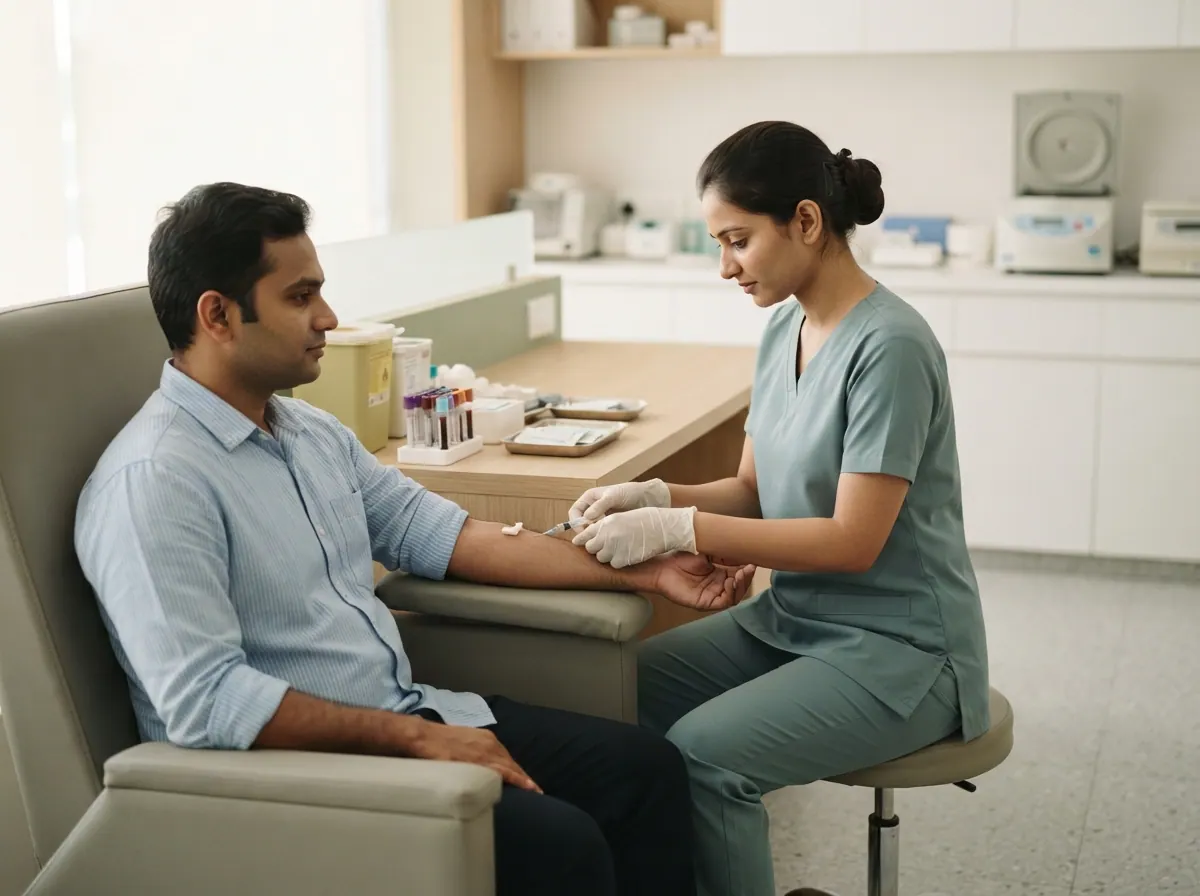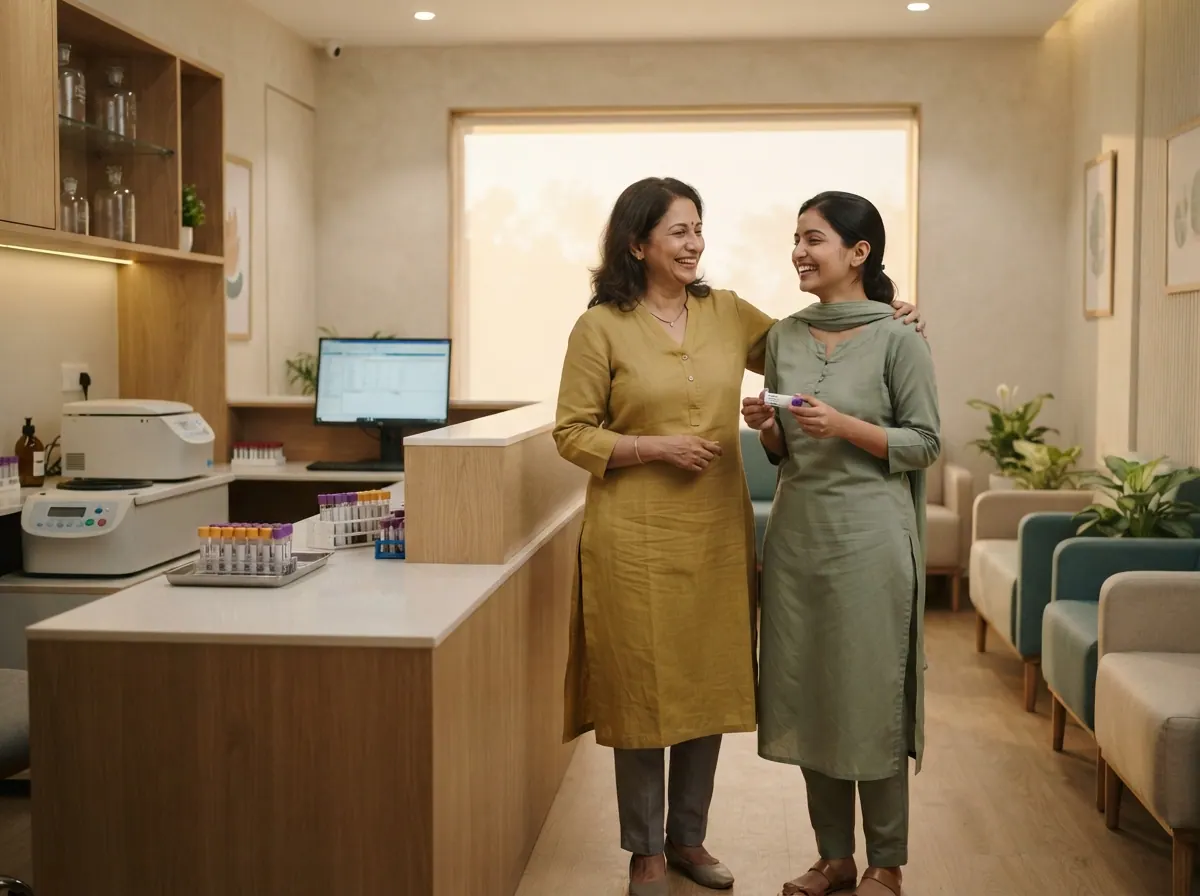
To start a sample collection centre in India you need a tie-up with a reputable main lab, a clean, well-placed room, a trained person to draw blood, and about ₹2.5–5.8 lakh. A small lab that runs its own tests needs analysers, a qualified pathologist and about ₹5.5–10 lakh. Most beginners start with a collection centre. The business is built on doctors and patients trusting your reports, so accuracy and hygiene matter more than any discount.
All figures here are estimates. Check prices near you before you spend. For clinical and legal matters, ask a pathologist, your state health department and the pollution control board.
What does it cost?
| Item | Collection centre | Small lab with analysers |
|---|---|---|
| Deposit and rent advance | ₹50,000–1.5 lakh | ₹80,000–1.5 lakh |
| Fit-out: counter, chairs, fridge, storage | ₹60,000–1.2 lakh | ₹1–1.8 lakh |
| Centrifuge and basic equipment | ₹30,000–60,000 | included below |
| Analysers (blood count, biochemistry) | None | ₹1.5–3 lakh |
| Tubes, needles, gloves, reagents | ₹30,000 | ₹60,000–1.2 lakh |
| Software, printer, reporting | ₹20,000–40,000 | ₹30,000–50,000 |
| Main lab tie-up deposit | ₹0–50,000 | None |
| Registrations and CA | ₹15,000–30,000 | ₹30,000–50,000 |
| Working capital | ₹50,000–1 lakh | ₹1–1.3 lakh |
| Total | about ₹2.5–5.8 lakh | about ₹5.5–10 lakh |
A qualified pathologist's fee or salary is a separate running cost if you run tests yourself.
What kind of lab will you run?
- Collection centre. You take samples and send them to the main lab by courier. Lowest cost, but you earn a share only.
- Basic in-house lab. Common tests done on your own analysers. More income per test, but you carry the equipment and staff cost.
- Home collection. A trained person visits patients. Popular with older people, and a good add-on to either type.
Most patients come from doctors who send them, so spend time near clinics and hospitals, not on adverts.
How much can it earn?
Take a collection centre, six months in, with a steady stream of patients.
Income
- 12 patients a day × 26 days = 312 patients
- Average bill = ₹500, so total billing = ₹1,56,000
- Your share, agreed with the main lab at about 40% = ₹62,400
- Home collection charges: 80 visits × ₹100 = ₹8,000
- Total income = ₹70,400
Monthly costs
- Phlebotomist = ₹14,000
- Rent = ₹12,000
- Tubes, needles and supplies = ₹4,000
- Electricity and internet = ₹3,000
- Biomedical waste and cleaning = ₹2,000
- Software = ₹1,500
- Sample transport = ₹3,000
- Total = ₹39,500
Left over: ₹70,400 − ₹39,500 = about ₹30,900 a month.
Your share can be much lower or higher depending on the agreement. At 6 patients a day, income is about ₹35,000 and you barely cover costs.
What do you need before you start?
- A main lab partner with a good name, fast report turnaround and a clear agreement on share, rates and who handles complaints.
- A trained phlebotomist who can draw blood safely and handle children and nervous patients.
- A room that looks clean: a waiting area, a sample collection corner, a hand wash, and cold storage for samples.
- Doctors who know you. Visit nearby clinics and explain your timings and report speed.
Step by step
- Visit three labs and collection centres to see how they handle patients and reports.
- Compare main lab partners on report time, error rates, reach and share.
- Read the agreement fully, and have a lawyer check it if the terms are unclear.
- Choose a location near clinics or a hospital, with easy parking.
- Ask your state health department which registrations apply to you.
- Apply for biomedical waste authorisation and set up safe disposal.
- Train your staff on labelling samples, patient ID and the cold chain.
- Open with a doctor visit programme and a clear price list.
Which registrations apply?
Rules differ by state. Ask the offices below and a CA before you begin:
- Clinical establishment registration, where your state's law covers labs.
- Biomedical waste authorisation from the state pollution control board.
- Shop registration and GST, if your turnover needs it.
- Qualified pathologist as the law requires for reports. Confirm who must sign.
- NABL accreditation is voluntary but builds trust, and many bigger labs have it.
- Doctor referral payments. Paying doctors for sending patients is an ethical and legal problem. Do not do it, and ask a lawyer if a doctor asks.
What goes wrong?
- Samples mixed up or mislabelled. One wrong label can mean a wrong report, so check ID twice.
- Spoiled samples from heat, delays or poor storage.
- Late reports. Doctors stop sending patients if reports come late.
- A doctor asks for a cut. This puts your business and name at risk.
- Cheap, low-quality supplies. A saving on tubes or reagents can ruin results.
- Waste disposed carelessly. Used needles and blood waste need proper handling, or you risk harm and penalty.
Situations you will face
What would you do? Each choice costs something.
Getting started
One lab offers you a high share but slow reports. Another gives a lower share and reports by evening.
- Choose the fast-report lab: Lower share, doctors trust you
- Choose the high-share lab: More share, late reports
The partner lab wants you to sign quickly. Some terms about rates and complaints are unclear.
- Have a lawyer read it: Fee now, clear terms
- Sign as it is: Fast, risk of surprises
A shop near a clinic cluster costs more rent. A side lane shop is cheaper but patients may not find it.
- Rent near the clinics: Higher rent, more patients
- Take the cheaper side lane: Lower rent, few patients
A trained phlebotomist asks for a higher salary. A friendly helper will learn on the job.
- Hire the trained person: Higher salary, calmer patients
- Hire a helper, train under watch: Cheaper, supervised for a month
Samples must stay cool until the courier arrives. A good fridge and thermometer cost money.
- Buy a lab fridge and thermometer: Costs now, safe samples
- Buy a used lab fridge: Moderate cost, safe samples
Used needles and blood waste need proper handling. Applying and tying up with a waste collector takes time.
- Apply and sign the waste contract: Fee and delay, you stay legal
- Delay opening until it is done: Lose two weeks, stay legal
First month
Nearby labs run big discounts. Matching them cuts your share, and holding firm may keep patients away.
- Follow the partner's price list: Steady share, fewer walk-ins
- Offer a package discount: More patients, lower share
Doctors are your main source of patients. Visiting takes time and a printed card with your timings.
- Visit 20 clinics: Time and printing, more referrals
- Wait for walk-ins: No cost, a slow start
A busy doctor says they will send 15 patients a day if you pay a share of each bill.
- Refuse politely: Lose those patients, stay clean
- Offer free home collection for patients: Legal, smaller reward
A rushed morning led to two tubes with similar names. You noticed before sending.
- Recollect both and apologise: Costs time, no wrong report
- Recollect and send a free home visit: Costly, patients impressed
A child cries and the parents are worried. Your helper has little practice with children.
- Send for a trained person: Delay, kind to the child
- Ask parents to return in the morning: Lose a visit, calmer child
A patient claims a result does not match what their doctor expected. The main lab says it is correct.
- Offer a free retest: Costs a retest, builds trust
- Refer to the main lab: No cost, patient frustrated
Running it
The courier is late in 42 degree heat. Several samples sat in a warm van.
- Recollect and apologise: Costs time and trust
- Ask the main lab if usable: Delay, honest answer
Reports from the main lab arrive after the doctor's clinic hours. Doctors start sending patients elsewhere.
- Hire your own rider: Cost each month, faster reports
- Complain and wait: No cost, may not improve
Elderly patients ask for blood to be drawn at home. It needs a rider, a kit and a clear price.
- Start home collection: Kit and rider cost, new patients
- Keep centre only: No cost, miss older patients
A company wants employee health checks done and needs a proper tax invoice.
- Register with a CA: Fee, new bigger clients
- Decline corporate work: Simple, lose a big client
A housing society wants a camp with basic tests at a low rate. It costs staff time and gives new patients.
- Run a camp with a discount: Low income, new patients
- Offer a card and skip the camp: No cost, fewer new patients
Patients sit near dustbins and a leaking tap. A deep clean and a proper bin system cost money.
- Fix the area and bins: Cost now, better image
- Tidy up quickly: Cheaper, patients notice
Fasting patients come early and queue up. Your one helper is overwhelmed.
- Call a second person for mornings: Wage cost, shorter queues
- Use token slots: Small cost, patients wait
Someone says they are a patient's brother and wants the report. The patient is not here.
- Give only to the patient or a signed person: Slower, protects privacy
- Ask for ID and the patient's call: Takes time, safe
When things go wrong
The power went out overnight and the sample fridge warmed. You must decide what to do with the samples inside.
- Recollect and buy a UPS: Costly, safer next time
- Recollect only: Cheaper, same risk later
A helper had a needle prick while clearing waste. The helper is worried and the rules say to act carefully.
- Send to a doctor right away: Costs money, correct care
- Arrange tests and paid leave: Higher cost, staff feel safe
A new supplier sells tubes at half price, but no brand or batch details are on the box.
- Stay with your trusted supplier: Costs more, safe results
- Ask for samples and test: Time, maybe a saving
Your partner lab changes its rates and cuts your share by a little. Another lab offers a better deal.
- Move to the new lab: Setup cost, better share
- Stay and negotiate: Share stays low, steady service
Growing
Bigger labs mention NABL accreditation. It builds trust but needs paperwork, training and a fee.
- Start the accreditation process: Costs and effort, higher trust
- Wait until volume grows: Saves cost, smaller clients
Common tests are sent out and cost you time. A machine and a qualified pathologist would keep more income.
- Buy the machine and hire a pathologist: Big spend, more income per test
- Stay a collection centre: No spend, smaller share
A busy clinic area wants a collection point. It needs rent, a phlebotomist and a clear partner agreement.
- Open a second point: Costly, double the reach
- Strengthen the first one: Safer, slower growth
A firm wants low-price check-up packages for 200 staff. It means volume but a smaller share per test.
- Take the corporate contract: Volume, lower share
- Decline the low rate: Keep margins, miss volume
Patients ask for reports on their phone. Setting it up takes software and care for privacy.
- Set up secure digital reports: Cost, happier patients
- Keep paper only: No cost, patients complain
Happy patients would write reviews if asked. It takes small effort and builds your name beyond doctors.
- Ask patients for reviews: Small effort, more trust
- Rely on doctors only: No effort, one source
Is it right for you?
This business suits someone who is careful, patient with nervous patients, and good at building trust with doctors over months. It suits you less if you want quick income or dislike strict rules, because accuracy, cleanliness and paperwork are the whole business.
A good test: spend two weeks at a busy collection centre. If you can handle the early-morning rush and the fear of needles, start with a collection centre, keep your partner lab agreement clear, and add testing only when your volume and a qualified pathologist are in place.