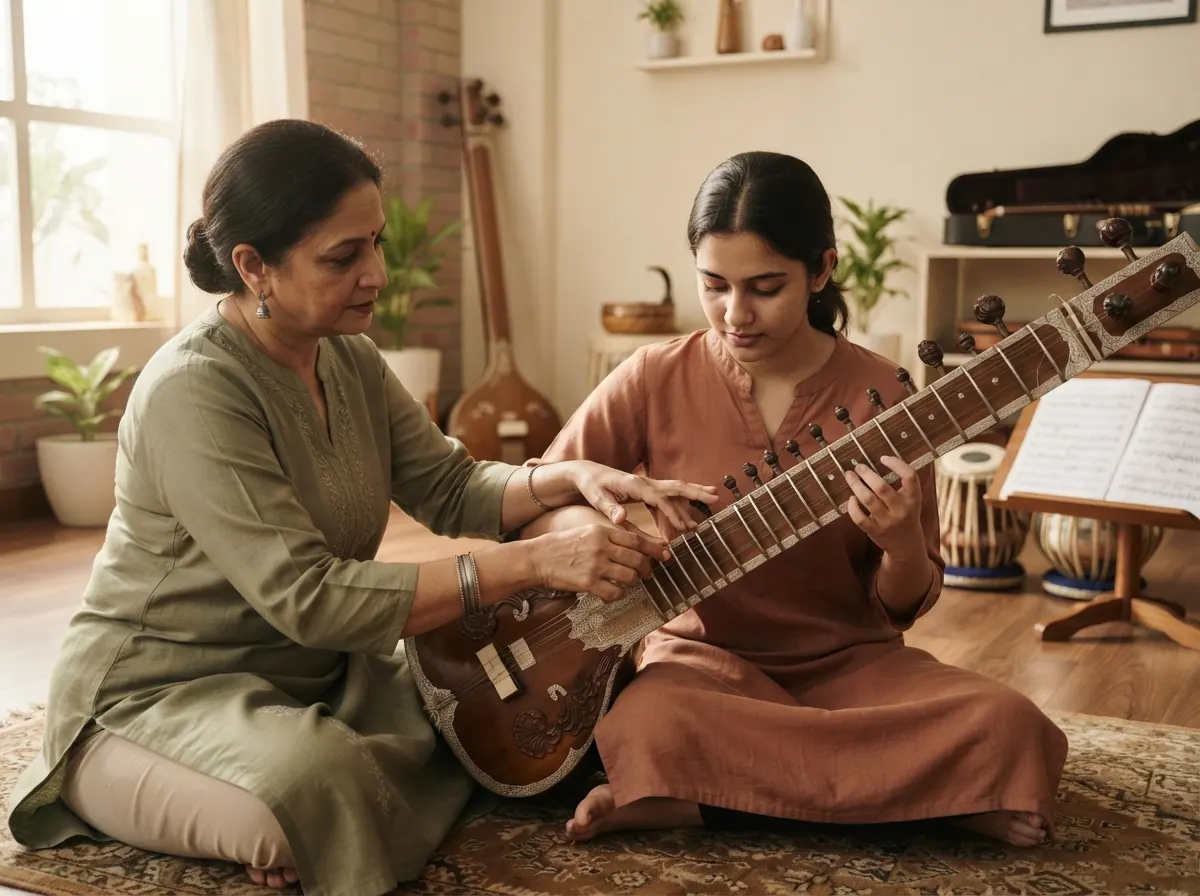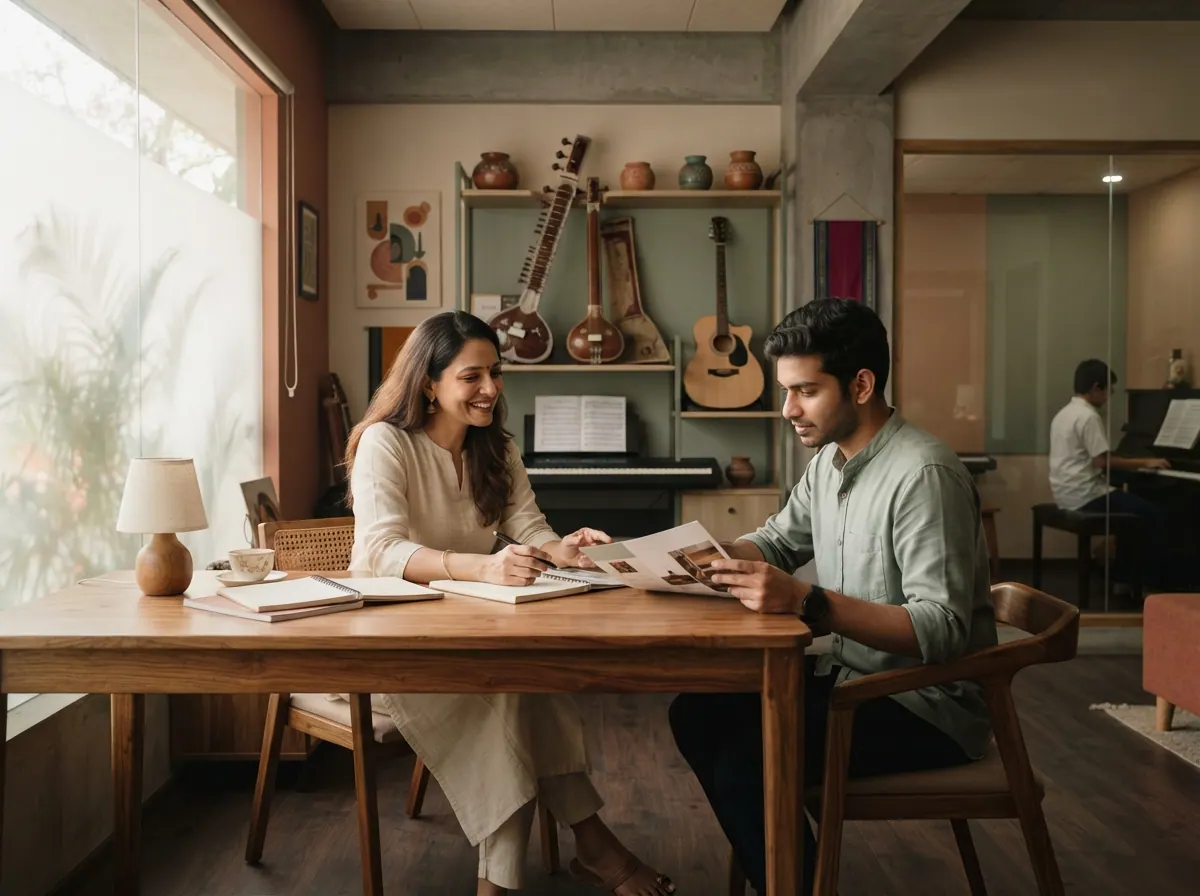
To start a music class in India you need a quiet room, two or three instruments you can teach well, a clear fee plan with monthly batches, and about ₹50,000–3 lakh. The business grows through students who keep coming for years, so the first goal is not a big opening but the first 15 students who hear themselves improving.
All figures here are estimates. Check instrument and rent prices before you spend.
What does it cost?
| Item | Small studio (15 students) | Academy (50 students) |
|---|---|---|
| Rent deposit | ₹30,000–70,000 | ₹80,000–1.5 lakh |
| Keyboard (one student-quality, one stage-quality) | ₹12,000–30,000 | ₹30,000–60,000 |
| Acoustic guitar and a stand | ₹5,000–12,000 | ₹12,000–25,000 |
| Harmonium and tabla pair | ₹8,000–18,000 | ₹18,000–35,000 |
| Amplifier, speaker, cables, mic | ₹8,000–18,000 | ₹20,000–45,000 |
| Soundproofing (door seals, foam, curtains) | ₹5,000–15,000 | ₹25,000–60,000 |
| Chairs, music stands, whiteboard | ₹5,000–12,000 | ₹15,000–30,000 |
| Signboard and promotion | ₹5,000–12,000 | ₹12,000–25,000 |
| Float for 3 months of rent and salaries | ₹30,000–60,000 | ₹90,000–1.5 lakh |
| Total | about ₹1.1–2.5 lakh | about ₹3–5.8 lakh |
You can begin by teaching at students' homes with one keyboard or guitar, but travel time eats your day. Many start with a rented room two evenings a week and add days as students join.
Good second-hand instruments from musicians or a reliable shop can save money. Try each one yourself and play every key or string before paying. Buy a decent amplifier early, because a harsh, thin sound makes students lose interest.
How much can it earn?
Here is a music academy with 40 students in its second year, with an average fee of ₹1,800 a month for four classes.
Income each month
- 40 students × ₹1,800 = ₹72,000
- Add exam preparation and a monthly workshop for 12 students at ₹1,000 = ₹12,000
- Total income = ₹84,000
Costs each month
- Rent = ₹20,000
- 1 part-time teacher (tabla and vocal) = ₹14,000
- Electricity, strings, repairs, tuning = ₹4,000
- Marketing and event costs = ₹4,000
- Total = ₹42,000
Left over: ₹84,000 − ₹42,000 = about ₹42,000 a month.
If you teach every batch yourself and need no part-time teacher, you keep about ₹56,000. Music has a regular dip each year in exam season and in the month of a big family wedding season, when students stop coming. A drop of ten students costs ₹18,000 a month.
What do you need before you start?
- Playing and teaching ability. Playing well is not the same as teaching well. Practise explaining one idea in three different ways.
- A teaching path. Plan the first six months: notes, rhythm, first song, simple chords or ragas. Students and parents want to see the road.
- Quiet and neighbours. Check the walls and talk to the neighbours before the first class. A noise complaint can close a class.
- A repertoire that students love. Teach popular songs in the first months and classical or technique alongside them.
- A record book. Note each student's progress, what they practised and what to do next. Parents appreciate it.
Step by step
- Decide your two or three instruments and the age you will teach. A mix of children and adults needs different pace and songs.
- Find a room near schools or colonies, with a door that closes and a wall with neighbours who are not asleep during class hours.
- Buy a core set of instruments. Test each one. Add more only when students ask.
- Write a six-month course. Each month has a goal, such as "play a simple song with both hands".
- Run a free trial class for 8 to 10 people. Let each one try the instrument, and play for them.
- Fix fees and rules. Monthly fees in advance, a fixed number of classes, a make-up class rule and a notice period.
- Plan an end-of-term recital. Parents come, children perform and new admissions follow. Hold it in a hall or your own room.
Which licences apply?
Rules vary by state and city, so confirm with the local office.
- Shop and establishment or trade licence for a commercial studio.
- GST registration when your turnover crosses the limit for services. Ask a CA what applies.
- Noise rules. Local rules limit loud noise, especially at night, so check your hours and soundproofing.
- Music rights. Playing recorded film songs in a paid concert or posting videos online can need permission from the licensing bodies. Ask them before a public event.
- Fire and building safety for a room with many people.
- Exams. Graded exams are run by recognised boards and institutions. Do not claim affiliation you do not hold.
What goes wrong?
- Students leave after six months. Many hit a wall when practice becomes hard. Short wins and small shows keep them.
- Instruments go out of tune or break. Strings snap, keyboards fail and tablas dry out in summer. Keep a small repair budget.
- Noise complaints. A tabla in a flat at 7 pm can bring a neighbour to the door.
- Parents who pay but do not make children practise. Progress stalls. Give a short, clear practice plan for the week.
- Teaching only your favourite style. A student who wants film songs and gets only exercises stops coming.
- Too many instruments at once. Buying ten instruments for three students ties up money.
Situations you will face
What would you do? Each choice costs something.
Getting started
You can afford about ₹40,000 of instruments. Keyboard and guitar are in demand, tabla and harmonium suit classical students.
- Keyboard and guitar: Popular with teens, less classical
- Harmonium and tabla: Classical base, narrower pool
A musician sells a branded keyboard at half price. You have not tried all the keys.
- Test every key, then buy: Time, saves money
- Buy a new student model: Costly, no surprises
The flat next door worries about noise. Soundproofing costs money and takes a week.
- Fit door seals and foam: Cost and delay, calm neighbours
- Teach only before 7 pm: Free, loses evening batches
A room near a school gets children after class. A room in a colony is quieter but has fewer walk-ins.
- Take the school-side room: Higher rent, more walk-ins
- Take the quiet colony room: Cheaper, referral-based growth
A school lane's parents want to see you teach. A free class costs time, a hall and printouts.
- Hold a free trial: Small cost, many join
- Charge a ₹200 trial: Covers cost, fewer come
A cheap speaker sounds thin and harsh. A better amplifier costs three times more.
- Buy the good amplifier: Costly, richer sound
- Buy the cheap one: Saves money, students lose interest
A rival charges ₹1,200 for four classes. You teach better but have no reputation yet.
- Charge ₹1,800: Better margin, slower fill
- Charge ₹1,200: Fills fast, thin margin
First month
A nine-year-old asks to play a film song after week one. The mother agrees.
- Teach a simple song early: Keeps the child happy, slower technique
- Stay with scales for a month: Strong base, may drop out
Most students skip home practice. Parents expect results, and progress is slow.
- Give a short weekly practice plan: Takes time, better progress
- Add a short recital deadline: Motivates, adds effort
Beginners are rough with the guitar and strings break weekly. A set costs ₹300.
- Charge a small material fee: Fair, a few grumble
- Absorb the cost: Goodwill, small leak
A dry summer cracks the tabla head. A new skin costs money and a day without the instrument.
- Repair with a proper craftsman: Costly, good sound
- Use a cheaper fix: Cheap, poor sound
A seven-year-old crosses arms and will not touch the keyboard. The mother watches from the door.
- Let the child pick the song: Wins the child over, off plan
- Keep to the plan: Firm, may quit
Half your students travel for weddings for three weeks. Fees still depend on regular attendance.
- Offer make-up classes: Extra work, keeps fees
- Allow no make-ups: Firm rule, some leave
Running it
A 38-year-old manager wants guitar lessons, but only on Sunday mornings when your room is shut.
- Open Sunday mornings: New fees, lost rest day
- Keep your timetable: Rest day kept, lose the student
Parents ask for tabla and classical vocal. A part-time teacher costs ₹14,000 a month.
- Hire the teacher: Salary, new student pool
- Keep your instruments only: Saves salary, narrower reach
Parents love the videos of children playing film songs. Posting them may breach music rights.
- Post only instrumental practice: Safe, less shareable
- Ask rights body about licence: Fee, wider freedom
A recognised board's exams give students a certificate. Fees, practice and travel cost money.
- Prepare a group for exams: Effort and fees, strong credibility
- Keep classes informal: Easier, less credibility
Parents ask for a recital. A hall, sound and refreshments cost money.
- Hold it in a hall: Costly, strong admissions
- Hold it in your room: Cheap, smaller crowd
A family offers ₹12,000 for a live show on a Saturday that clashes with your classes.
- Accept the show: Cash now, cancel classes
- Decline to keep classes: No cash, steady name
Four older students want a band practice slot after class. The room fits them but is noisy.
- Offer a paid band slot: Extra income, noise risk
- Decline for now: Quiet, lose interest
When things go wrong
Your best student moves to a bigger academy. Others watch to see how you react.
- Wish well, ask for testimonial: Dignified, small boost
- Offer a discount to stay: Costs money, keeps the student
The society writes that evening classes disturb families. They ask you to move or fit soundproofing.
- Invest in soundproofing: Costly, peace
- Move to a new room: Moving cost, lose some students
A sustain pedal fails and keys stick. The service centre needs two weeks and a high fee.
- Repair it: Fee, long wait
- Replace with a new one: Costly, no gap
A franchise academy opens on the main road with a launch discount and a branded certificate.
- Offer a loyalty month: Costs, keeps students
- Focus on small-group attention: Free, some leave
Nine families owe a month's fee, ₹16,000 in all. Rent is due in a week.
- Set a firm deadline: Awkward, money may come
- Wait and use reserves: Kind, thin cash
After a year, the mother worries the child has no ear for music and asks if it is worth continuing.
- Offer ear-training exercises: Extra time, honest help
- Suggest trying another instrument: Honest, the father may leave
Board exams keep school students away for six weeks. Income drops by a third.
- Offer short weekend lessons: Effort, keeps some fees
- Pause and plan a restart: Rest, lost income
Growing
Students in other cities want lessons by video. You need a good camera, a mic and a steady line.
- Set up proper online lessons: Equipment cost, new fees
- Stay in the studio: Simple, no new income
Evening slots are full. A second room lets two teachers work at once, but doubles instruments.
- Rent a second room: Costly, more batches
- Add morning slots: No cost, tiring week
A private school offers a small fee to run weekly music classes for 60 children. You would need two extra teachers.
- Take the school contract: Steady income, thin margin
- Decline to focus on your studio: No income, simpler week
Is it right for you?
A music class suits you if you love explaining music, are patient with beginners who sound bad at first, and can plan a six-month path for each student. It suits you less if you want a quick income, or if you do not enjoy repeating the same first lessons many times.
A good test: teach five students for two months in a rented room two evenings a week. If at least four are still coming and two have recruited a friend, add a third evening and think of a second teacher.