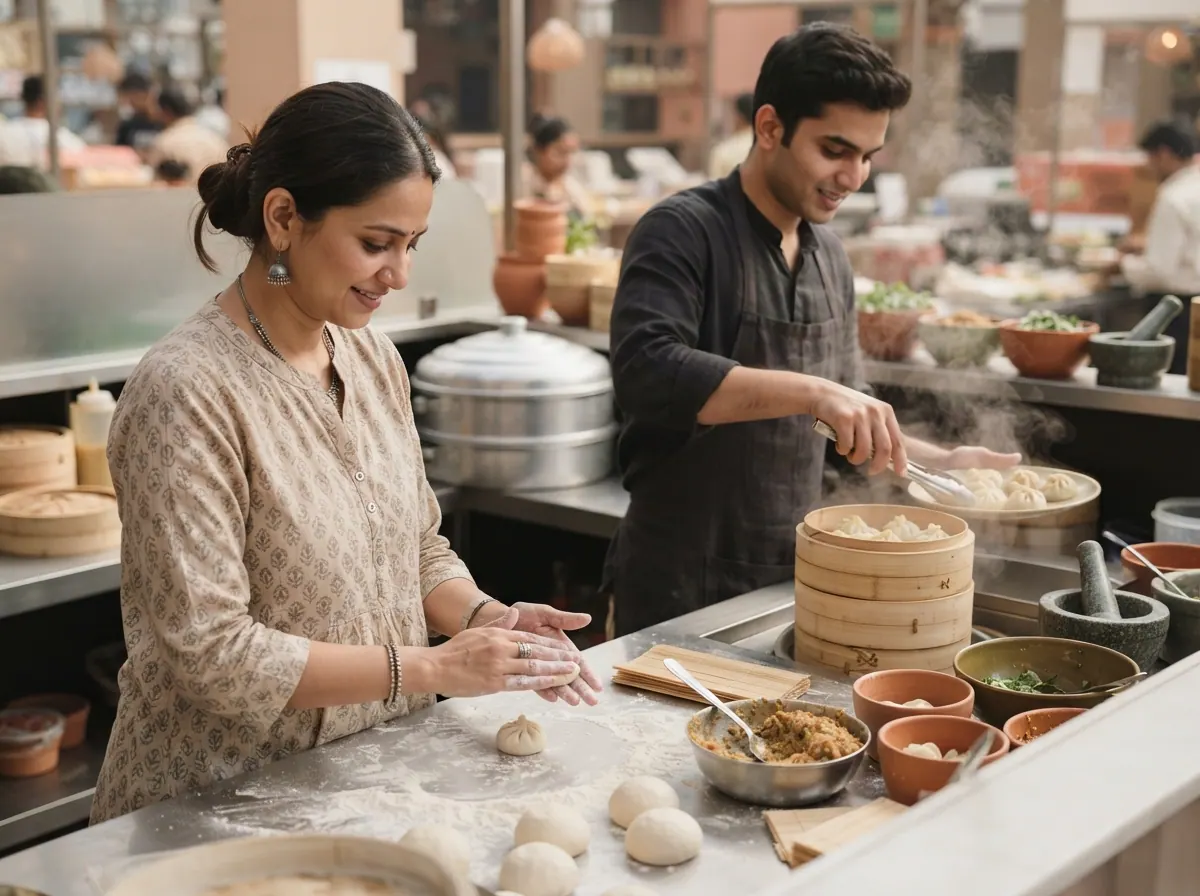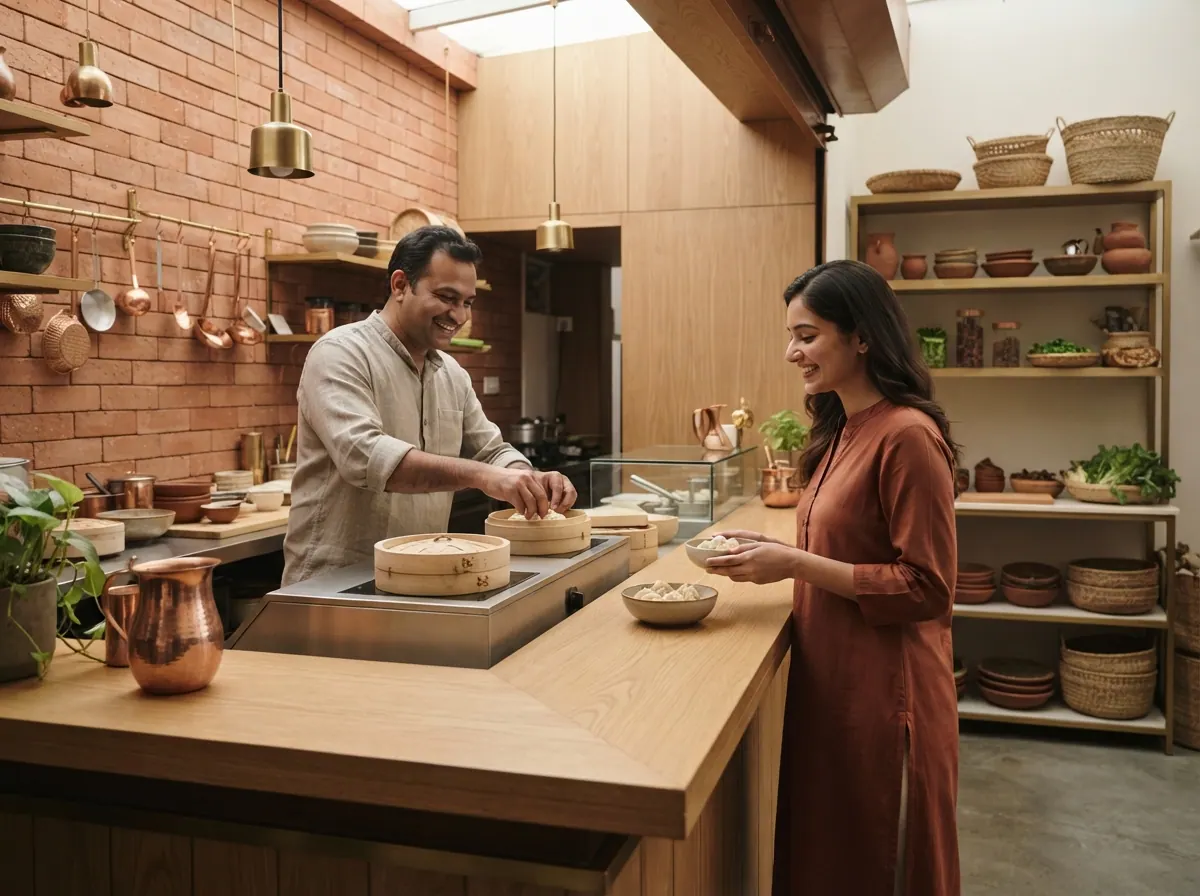
To start a momos business in India you need a small shop counter, a multi-tier steamer, a fridge, a clean way to make dough and filling every morning, and about ₹20,000 to ₹1 lakh. The low end is a compact counter in a rented corner of an existing shop. The high end is a tiny shopfront with a proper kitchen space. Momos are cheap to make, but the profit sits in the small details: filling cost, steaming times and not throwing away unsold stock.
All figures here are estimates. Check prices near you before you spend.
What does it cost?
| Item | Compact counter | Small shopfront |
|---|---|---|
| Rent deposit and counter fitting | ₹10,000–30,000 | ₹30,000–60,000 |
| Steamer (multi-tier) and gas stove | ₹5,000–12,000 | ₹8,000–15,000 |
| Fridge or chest freezer | ₹8,000–15,000 | ₹12,000–20,000 |
| Dough roller or sheeter, tubs, knives | ₹3,000–12,000 | ₹10,000–25,000 |
| Plates, boxes, sauce bottles | ₹2,000–5,000 | ₹4,000–8,000 |
| Sign board and menu | ₹2,000–5,000 | ₹4,000–10,000 |
| FSSAI and other registrations | ₹2,000–5,000 | ₹3,000–8,000 |
| First stock and working money | ₹10,000–20,000 | ₹20,000–40,000 |
| Total | about ₹40,000–1 lakh | about ₹90,000–1.8 lakh |
You can come in near ₹20,000 by sharing space with an existing tea or snack shop and renting a sheeter or buying only a hand roller at the start. Know that cheap equipment usually means slower work and more of your time.
What fillings and types should you offer?
- Veg momos: cabbage, carrot, onion, a little paneer or soy. The cheapest to make.
- Chicken momos: mince with ginger, garlic and spring onion. Needs a fridge and a trusted chicken source.
- Fried and pan-fried: sell at a higher plate price, but add oil cost and smoke.
- Tandoori or gravy momos: a premium item that uses the same base momo.
- Chutney: a good red chilli chutney and a mayo dip bring people back. Make the chutney yourself.
How much can it earn?
Here is a small counter in its second or third month, selling about 150 plates a day, open 30 days.
Sales
- 100 veg plates × ₹60 = ₹6,000
- 50 chicken plates × ₹80 = ₹4,000
- Total per day = ₹10,000
- ₹10,000 × 30 days = ₹3,00,000 a month
Costs each month
- Flour, vegetables, chicken, oil, chutney: about 33% of sales = ₹99,000
- Rent = ₹15,000
- One helper = ₹10,000
- Gas, power, water = ₹12,000
- Plates, boxes, tissue = ₹15,000
- Repairs and small things = ₹4,000
- Total = ₹1,55,000
Left over: ₹3,00,000 − ₹1,55,000 = about ₹1,45,000 before tax and your own work. That is a best-case figure for a very busy spot.
A more normal early result is about 70–80 plates a day. At 75 plates a day (sales ₹1,50,000, ingredient cost about ₹50,000, other costs about ₹50,000), you keep about ₹50,000. Momos are a footfall business, so a quiet street with no students or office workers can run far below that.
What do you need before you start?
- A spot with evening footfall. Near a college, market, office block or tuition area. People eat momos as a snack, mostly from 4 to 9 p.m.
- A dough that stays soft. Maida needs the right water and rest. Practise at home till the wrapper is thin but does not tear.
- A hygiene routine. Hand washing, covered tubs, clean cloth, a separate chopping board for raw chicken.
- A fridge you can trust. Raw filling should not sit out in the heat.
Step by step
- Perfect two fillings and one chutney at home. Time how long it takes to fold 100 pieces.
- Calculate cost per plate: flour, filling, oil, gas, packing. Aim for ingredients to be about a third of the plate price.
- Rent the counter and set up gas, fridge and steamer in a layout where raw and cooked food stay apart.
- Register with FSSAI and ask the municipality about trade licence rules.
- Prepare in the morning, steam to order. Fold the day's pieces in small lots and keep them chilled.
- Start with a short menu, then add fried or tandoori once the basic momos sell out.
- Ask every customer one thing: was the chutney hot enough? Small tweaks keep people coming back.
Which licences apply?
- FSSAI registration or licence, depending on your yearly sales. Apply on the FoSCoS portal.
- Trade or shop licence from your municipality, if your city requires it. Many do.
- Permission from the shop owner or landlord if you operate from a corner of someone else's shop.
- GST only after your sales cross the limit, so ask a CA.
- Rules vary by state and city, so confirm each with the local office.
What goes wrong?
- Making too many. Unsold steamed momos get hard and cannot be sold the next day. Fold in lots and track what sells by the hour.
- Cheap, doubtful chicken. One bad batch can make people ill and end your trade in a week.
- The wrapper tears or turns gummy. This is usually dough that is too wet, or steam that is too cold.
- Customers get tired of one type. Add a seasonal item or a combo before sales fall.
- Gas or power cut at peak time. Have a spare cylinder and a small inverter or backup.
- Poor chutney. Many customers return for the chutney as much as the momo.
Situations you will face
What would you do? Each choice costs something.
Getting started
One counter is in a tuition lane with student crowds. Another is inside a busy market shop with higher rent.
- Take the tuition lane counter: Low rent, evenings only
- Take the market counter: High rent, all-day crowd
A four-tier steamer cooks more at once. A two-tier is cheaper and easier to clean.
- Buy the four-tier: Costs more, handles rush
- Buy the two-tier: Cheaper, slower in rush
A dough sheeter saves hours but costs money. Hand rolling is cheap and gives you a thin even wrapper only with practice.
- Buy a sheeter: Faster, steady wrappers
- Roll by hand: Saves cash, slow mornings
A shop offers cheap pre-minced chicken. Another sells fresh chicken that you mince at your counter.
- Mince fresh yourself: More work, safer, tastier
- Buy pre-minced: Cheaper, quality varies
The counter owner says you can start now and register later. FSSAI takes a few days.
- Register first: Delay and fee, safe start
- Open with free samples only: Waste a few days, build buzz
Friends say add fried, tandoori and cheese momos from day one. Your small counter can handle only a few things.
- Start with two types: Less choice, less waste
- Offer six types: More choice, more waste
First month
You folded 150 pieces and sold 40. The rest will go hard if they sit in the fridge for days.
- Freeze and steam tomorrow: Save some stock, lower softness
- Bin them, fold less tomorrow: Lose the cost, learn demand
Students ask for more fire in the red chutney. Office workers say it is already too hot.
- Offer mild and hot: Two batches, wider appeal
- Keep one medium chutney: Simple, some customers leave
A drink supplier offers cold drinks at a small margin. A combo can raise each bill but may make you look like a fast food shop.
- Launch the combo: Higher bill, tiny margin
- Sell only momos: Simple, lower bill
The owner of the next shop says steam and cooking smell reach their customers.
- Fit an exhaust and duct: Costs money, keeps peace
- Argue it is a shared lane: Free now, tension later
A local food creator offers to post about your momos for a fee, with free plates.
- Pay for the reel: Cost now, crowd for days
- Give only free plates: Cheap, small reach
A third of your momos break open in the steamer and look messy to customers.
- Retest the dough recipe: Waste flour, fix the problem
- Serve them as they are: No cost, ugly plates
Running it
A crowd of 20 arrives together. You steam in batches and some customers wait ten minutes.
- Hire an evening helper: Pay wage, faster service
- Pre-steam batches: Free, momos get softer
Vegetable prices jump for two weeks and your veg momo cost rises sharply.
- Raise veg plate by ₹5: Protect margin, fewer buyers
- Hold the price: Keep buyers, thin margin
Customers keep asking for fried momos. A fryer costs money, uses oil and adds smell.
- Add a small fryer: Higher price, oil cost
- Skip fried momos: No cost, lose some buyers
On Saturdays you need to prepare twice as many momos. Your small fridge is full by noon.
- Buy a second fridge: Costs more, space for growth
- Prepare in two lots: No cost, lose weekend sales
A shopkeeper next door wants to eat daily and pay monthly. Other stalls give credit.
- Allow limited credit: Friendly, payment risk
- Only cash or UPI: Safe cash, slight chill
A school function needs 200 steamed pieces by 11 a.m. Your normal run is about 100.
- Take the full order: Late nights, good income
- Offer only 100: Safe workload, smaller income
Customers want a cheese dip with the plate. It costs more and spoils faster than chutney.
- Add cheese dip: Costly, upsell winner
- Stay with chutney: Cheap, plain menu
Power goes off at 5 p.m. and returns near midnight. Raw filling in the fridge starts warming.
- Throw the filling, buy fresh: Big loss, safe food
- Rent a small generator: Fee now, saves some stock
When things go wrong
A student messages that their stomach hurt after eating chicken momos at your counter.
- Refund and clean everything: Pay now, protect trust
- Ignore the message: Free, rumours grow
A notice says your counter needs a trade licence and cleaner drainage near the shop front.
- Apply and fix drain: Fees and repair, safe trade
- Only apply for licence: Cheaper, drain problem remains
A new momos counter opened two shops away selling thinner momos at a lower price.
- Launch a smaller plate: Keeps buyers, low profit
- Stay on quality: Keep margin, lose some buyers
Your helper who folds pieces quickly leaves for a hotel job. A Saturday rush is two days away.
- Pay a new helper more: Higher wage, steady speed
- Fold yourself till late: No cost, exhausting, less menu
It rains all week and students stay home. Sales drop by half and delivery boys avoid your lane.
- Offer a rainy-day combo: Smaller margin, brings people
- Cut batches and wait: Safe, income falls
Growing
A friend offers a counter in a busy lane. You would need a helper and a second fridge.
- Open the second counter: Big cost, more sales
- Improve the first counter: Safer, slower growth
Customers ask to take home frozen momos packs. You need packing, labels and freezer space.
- Start frozen packs: New income, extra rules
- Focus on plates: Simple, no extra income
Your hand-painted sign is faded. A lit board with photos would attract more passers-by.
- Get a lit board: Costly, more walk-ins
- Repaint the old sign: Cheap, small effect
A supplier gives a better rate on 10 sacks of maida if you pay in advance. Storage is limited and damp is a risk.
- Buy the 10 sacks: Cash locked, lower cost
- Buy two sacks at a time: Higher rate, flexible cash
Your regulars suggest a special jhol or tandoori momo. It needs testing time and extra ingredients.
- Develop and launch it: Cost now, loyal crowd
- Keep the current menu: No risk, same crowd
Is it right for you?
A momos business suits you if you like steady hands-on work, can stand at a counter for hours and are comfortable with food hygiene. It suits you less if you want a fully hands-off business, because quality drops quickly when you are not there.
A good test: spend a week as a helper at a busy momos counter. If you still enjoy folding pieces on a hot afternoon, start with a compact counter and two fillings, and add shops only after one counter sells out regularly.