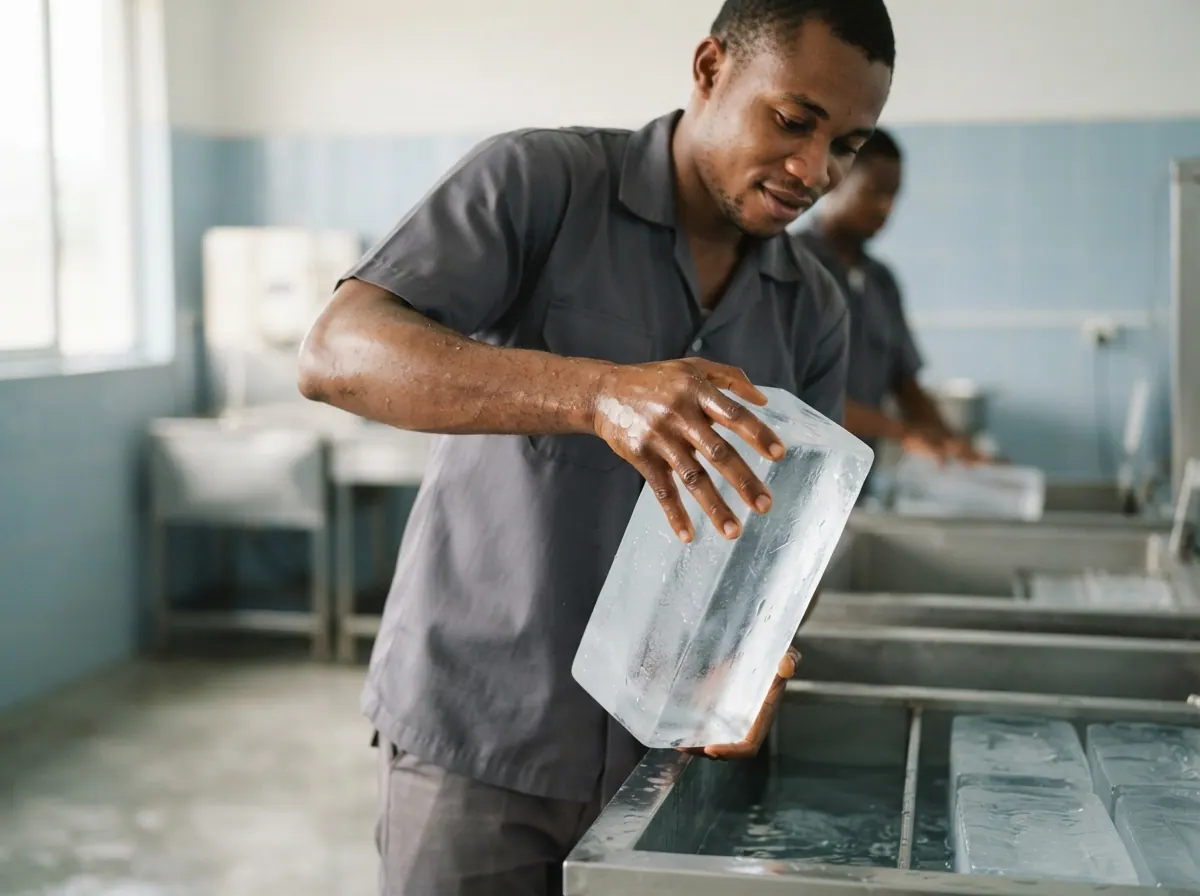
To start an ice block business in Nigeria you need an ice-making machine, a cold store, clean water, a steady power plan, and about ₦5.4–25 million depending on size. You sell blocks, and sometimes tube or cube ice, to fish sellers, pure water vendors, butchers, bars and caterers. The business works only if you can make ice cheaply enough on your own power and sell it before it melts.
All figures here are estimates. Check prices near you before you spend.
What does it cost?
| Item | Small unit | Larger unit |
|---|---|---|
| Ice-making machine | ₦2.5–9 million | ₦8–10 million |
| Cold store or insulated room | ₦700,000–2 million | ₦2–3 million |
| Borehole, tank and water filter | ₦600,000–1.5 million | ₦1.5–2.5 million |
| Generator and installation | ₦900,000–3 million | ₦2.5–4 million |
| Building, floor, drainage and wiring | ₦400,000–1.2 million | ₦1–1.5 million |
| Ice moulds, handling tools, crates | ₦100,000–400,000 | ₦300,000–600,000 |
| Delivery tricycle or van | ₦0–1.5 million | ₦1–2.5 million |
| Working cash for diesel and wages | ₦200,000–500,000 | ₦500,000–1 million |
| Total | about ₦5.4–19 million | about ₦16–25 million |
Machine prices depend on the make, size and where it is made. Ask the seller who services the machine in Nigeria, and how long spare parts take to arrive.
How much can it earn?
Income depends on how much ice you can make and sell each day, and what your power costs. Figures below are for a settled small unit in a busy market area.
One month
- 100 blocks a day sold × ₦1,800 a block = ₦180,000 a day
- 26 selling days = ₦4,680,000
- Rainy-season slow days: assume 80% of that, about ₦3,744,000
Costs each month
- Diesel or power: ₦1,200,000
- Water, salt and treatment: ₦120,000
- Two workers: ₦200,000
- Delivery fuel and tricycle upkeep: ₦150,000
- Machine servicing and repairs, set aside: ₦200,000
- Market levies and permits: ₦50,000
- Total = ₦1,920,000
Left over: ₦3,744,000 − ₦1,920,000 = about ₦1,824,000 a month before tax, before paying back any loan.
If power costs rise or the machine is down for a week, the number falls fast. If buyers pay on credit, the cash you can see is smaller than the profit on paper.
What do you need before you start?
- A place with buyers close by, such as near a fish market, a landing site or a busy drinks depot.
- A power plan. Compare grid supply, a generator and solar, and count the true cost per block.
- Clean water. A borehole needs testing, and cloudy or smelly water makes ice customers will reject.
- A repair route. Find out who services your machine and how far they are.
- Buyers lined up. Speak to fish sellers and pure water vendors before buying the machine.
Step by step
- Visit working ice plants and ask about their power bill, breakdowns and how many blocks they really sell.
- Choose the site. It needs good drainage, a strong floor and space for the cold store and a delivery bay.
- Test the water, drill the borehole if needed, and install a filter.
- Buy the machine from a supplier who installs it and trains your staff, and gives a written warranty.
- Set up power with a fuel plan. Know how many litres of diesel one batch of ice uses.
- Test the ice for clarity and taste before you sell, and check the moulds for cleanliness.
- Sign up your first buyers, with a price list for blocks and bulk orders, and agree payment terms.
- Keep a daily record of blocks made, blocks sold, diesel used and money received.
Which licences apply?
Confirm each with the relevant office, because rules vary by state:
- Business registration with the Corporate Affairs Commission, if you are forming a company, and a tax registration through the tax authority.
- NAFDAC. If your ice is meant for drinks or food, ask NAFDAC what applies to your product and packaging.
- State environment and health approvals for a factory, borehole and wastewater. Ask your state ministry.
- Local government permits and market levies for your site and deliveries.
- Fire and electrical safety checks for the plant and generator house.
- Staff safety. Workers handle heavy blocks, wet floors and electrical equipment. Ask a safety adviser what you need.
What goes wrong?
- Diesel eats the profit. A small rise in fuel cost can cancel a month of margin.
- The machine stops. Waiting for a part from abroad can mean weeks without sales.
- Bad water. Ice that is cloudy, has a smell or fails a test makes buyers leave.
- Melting losses. Poor insulation, door left open or a long delivery run turns stock into water.
- Credit sales. A fish seller owes you for two weeks, then stops paying.
- Rainy-season dip. Fewer people buy cold drinks or cold fish, and your fixed power cost stays.
Situations you will face
What would you do? Each choice costs something.
Getting started
A plot beside the fish market costs more rent. A cheaper plot outside town adds delivery cost.
- Rent beside the market: ₦900,000 a year more, easy sales
- Rent the cheaper plot: Cheaper rent, delivery costs
A second-hand machine is cheap, but nobody nearby knows how to repair it. A new one costs far more.
- Buy new with local service: ₦6 million, warranty
- Buy second-hand: ₦3.2 million, breakdown risk
The new borehole gives slightly cloudy water. A filter and a lab test cost money.
- Test and install a filter: ₦450,000, clear safe ice
- Test first, then decide: ₦60,000 and a delay
The grid is cheap but goes off often. A bigger generator runs steadily but burns diesel.
- Buy a larger generator: ₦2.4 million, steady output
- Use the grid with a small backup: ₦900,000, outages cut output
Fish sellers will buy daily if you give them credit. Cash buyers are fewer.
- Cash only, lower volume: Safe cash, fewer sales
- Short credit to trusted sellers: More sales, delay in cash
Workers must handle slippery floors, heavy blocks and the machine. A trainer costs money.
- Pay for a short training: ₦120,000, safer plant
- Teach them yourself: Free, slower start
First month
The first blocks have white cores and look poor. A fish seller refuses to buy them.
- Adjust and remake the batch: Lose diesel and a day
- Sell cheaply for cooling use: Some cash, lower price
The machine uses more fuel than the seller said. You can adjust production hours.
- Run at night when cooler: Lower fuel use, tired staff
- Raise block price by a little: Some buyers leave
A hot afternoon run loses blocks on the tricycle. Insulated covers cost money.
- Buy insulated covers: ₦180,000, fewer losses
- Deliver in the cool morning only: Fewer runs, lower sales
Running it
A fish seller owes ₦280,000 and keeps saying they will pay after the weekend.
- Stop supplying until paid: Lose the client, protect cash
- Agree a weekly payment plan: Slow cash, keep client
A nearby plant drops its block price to win your fish sellers.
- Match their price: Keep buyers, thinner profit
- Offer faster delivery instead: Extra run costs
Sales fall during the rainy weeks. Diesel and wages stay the same.
- Run fewer hours: Save diesel, lower output
- Seek event and cold-drink buyers: Extra effort, some sales
Bars and caterers would pay more for clean crushed ice, but you need a crusher and food-safe bags.
- Buy a crusher and bags: ₦900,000, higher price per kg
- Sell blocks only: No cost, narrower market
A technician notices old wiring near the generator house.
- Rewire properly: ₦350,000, safer
- Fix the worst section now: ₦120,000, plan the rest
A solar firm offers to cut your diesel use. The system is costly and pays back slowly.
- Install the hybrid system: ₦6 million, lower diesel later
- Stay on diesel: No cost, high running cost
A group of pure water sellers will take 60 blocks a day at a lower price.
- Accept the bulk deal: Steady cash, lower price
- Keep retail prices: Higher price, uneven sales
Hot weeks bring more orders than your machine can make.
- Run extra hours at night: ₦300,000 more diesel, more sales
- Ration to regular buyers: No extra cost, lose new buyers
When things go wrong
The machine goes quiet. A part must come from Lagos or abroad, and customers wait.
- Air-freight the part: ₦700,000, back in days
- Order by road: ₦300,000 plus two weeks of lost sales
The generator trips and smells hot. A mechanic says the cooling needs work.
- Stop and repair properly: ₦350,000 and two days
- Rent a generator meanwhile: ₦400,000 for a week
A drinks seller wants to put your ice directly in cups. Your plant was built for fish cooling.
- Refuse until it passes tests: Lose the sale, stay safe
- Set up a separate food-grade line: ₦1.2 million, new customers
A worker slips while carrying a block and hurts their wrist.
- Pay for treatment, add grip floor: ₦250,000, safer plant
- Pay treatment only: ₦80,000, same floor
Several people ask for different levies. You do not know which are official.
- Ask for receipts and check with the council: Takes time, clear record
- Pay one official receipt only: Fair cost, keep paperwork
A night guard finds diesel siphoned from the storage tank.
- Hire a guard and lock tanks: ₦150,000 and monthly pay
- Lock tanks only: ₦40,000, some risk
Growing
Tricycle trips limit your reach. A van carries more ice farther but costs fuel and a driver.
- Buy a used van: ₦2.5 million, wider reach
- Hire a tricycle owner: Pay per trip, flexible
Demand is higher than you can supply on peak days. A second machine doubles power use.
- Buy a second machine: ₦5 million, higher sales
- Raise prices slightly: No cost, some buyers leave
Fish sellers ask to store fish in your cold room. It earns rent but adds smell and wear.
- Rent space by the week: ₦120,000 a month, extra work
- Keep it for your ice: No new income
Packaged ice for drinks pays more, but needs approvals, clean packing and testing.
- Pursue approval and packaging: ₦1.8 million, slow, better price
- Stay with industrial blocks: Simple, lower price
Fish sellers in the next town want your ice. The road is long and rough.
- Start twice-weekly runs: ₦300,000 a month, new buyers
- Stay in your town: Lower cost, same sales
Stock and diesel disappear and you cannot tell how. A proper record system takes effort.
- Hire a store keeper: ₦70,000 a month, fewer losses
- Keep your own notebook: Free, losses continue
Bars want clean tube ice. It needs a different machine and food-safe handling.
- Buy a small tube ice machine: ₦4 million, higher price per kg
- Stay with blocks only: No cost, narrower market
Is it right for you?
An ice block business suits you if you can manage machines and power, deal with daily buyers and keep strict records. It suits you less if you want a hands-off business or have no reliable way of making power or repairs.
A good test: spend a week at a busy ice plant near a fish market, note how many blocks leave each hour, and check what happens when the power fails. If the numbers still look good after the diesel bill, start with one machine and build your buyer list before adding more.