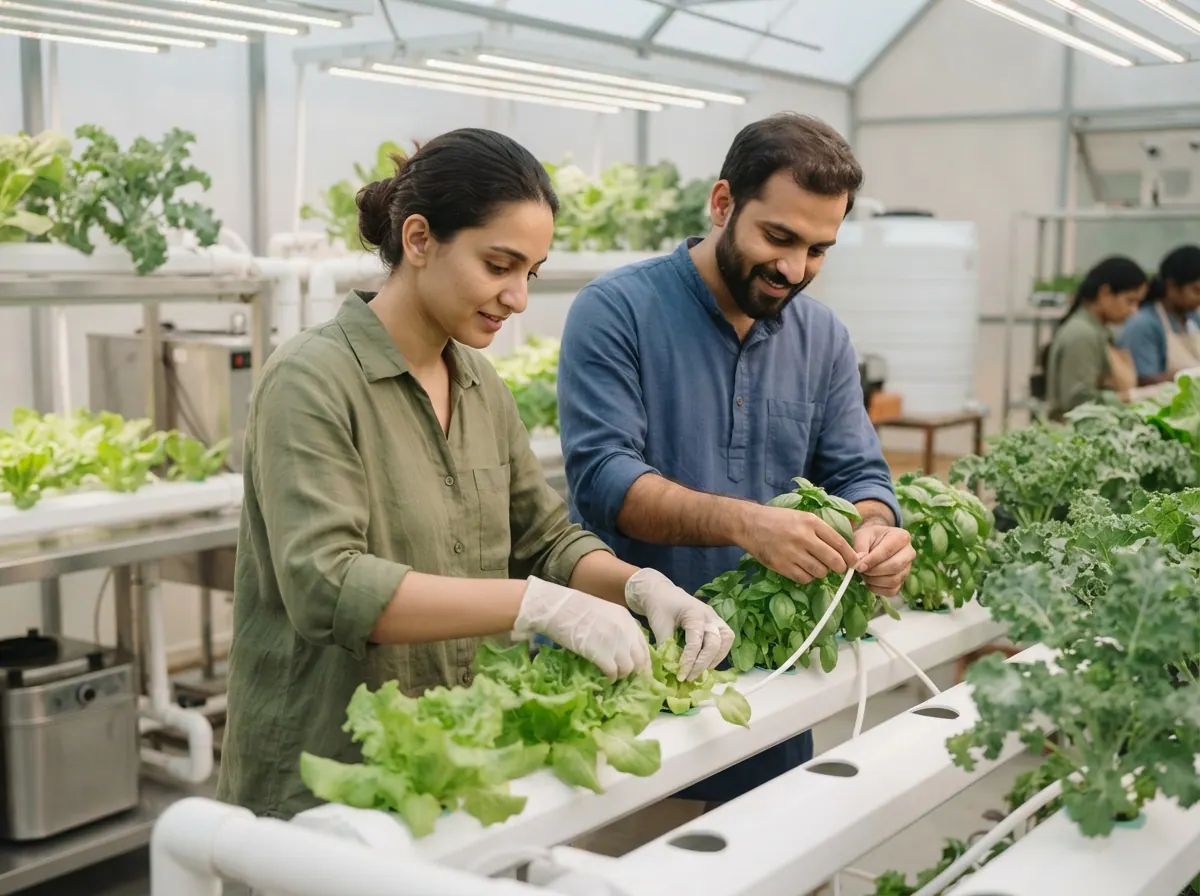
To start a hydroponic farm in India you need a covered, cooled growing space, a system such as nutrient film channels with pumps, clean water, a nutrient mix and a pH and EC meter, and about ₹2–4 lakh for about 400 plant sites or ₹10–18 lakh for about 2,000. The crop grows fast and cleanly, but the farm runs on electricity and daily attention, so profit depends on selling every head fresh at a good price.
All figures here are estimates. Check prices near you before you spend.
What does it cost?
| Item | About 400 plant sites | About 2,000 plant sites |
|---|---|---|
| Shade house or polyhouse structure | ₹60,000–1.2 lakh | ₹4–8 lakh |
| NFT channels, tanks, stands, pipes | ₹60,000–1.2 lakh | ₹3–5 lakh |
| Pumps, timers, back-up power | ₹20,000–40,000 | ₹80,000–1.5 lakh |
| Cooling: fans, fogger or wet pad | ₹20,000–40,000 | ₹1–2 lakh |
| pH and EC meters, nutrient set | ₹10,000–25,000 | ₹30,000–60,000 |
| Seed, cubes, trays and first nutrients | ₹10,000–20,000 | ₹40,000–70,000 |
| Packaging, cold box, cash reserve | ₹15,000–30,000 | ₹60,000–1.2 lakh |
| Total | about ₹2–4 lakh | about ₹10–18 lakh |
The cooling is the cost most beginners leave out. In many parts of India, lettuce bolts or rots in summer heat, and the water in your tanks gets too warm.
What should you grow?
- Lettuce: butterhead, lollo rosso and similar types, popular with hotels and salad buyers.
- Basil and other herbs: sold fresh to restaurants and pizza outlets.
- Pak choi, mint and spring greens: quick crops.
- Cherry tomato, cucumber, strawberry: can be grown in hydroponic systems but need more skill, support and a bigger setup, so try them after you have a stable leafy crop.
Pick two or three crops with a clear buyer. Selling a mixed box of salad leaves at one price is easier than selling a single item.
How much can it earn?
Here is a farm with about 2,000 plant sites after the first year. These are example numbers.
Heads sold in a year
- 2,000 sites × about 90% harvest = 1,800 heads a cycle
- About 8 cycles a year = 14,400 heads
- 14,400 heads × about ₹35 each = ₹5,04,000 a year
- ₹5,04,000 ÷ 12 = about ₹42,000 a month
Costs each month
- Seed, cubes and trays: 14,400 × ₹3 = ₹43,200 a year = ₹3,600
- Nutrients: 14,400 × ₹3 = ₹43,200 a year = ₹3,600
- Electricity for pumps, fans and cooling: about ₹6,000
- Packaging: 14,400 × ₹3 = ₹43,200 a year = ₹3,600
- One paid worker = ₹10,000
- Water, transport and small repairs = ₹2,000
- Total = about ₹29,000
Left over: ₹42,000 − ₹29,000 = about ₹13,000 a month.
Notice what this means. A farm costing ₹10–18 lakh earns ₹13,000 a month, so it takes years to repay. It becomes better with higher-priced crops, direct sales at better prices, and a bigger share of work done by you. It becomes worse the moment a pump fails or a batch cannot be sold.
What do you need before you start?
- A buyer first. Hotels, restaurants, supermarkets and weekly salad subscriptions pay for fresh, clean produce. Talk to them before you build.
- Reliable power and water. A pump failure can kill plants in hours. Know your water quality too, as high salt content upsets the nutrient balance.
- Cooling. Plan for the hottest week of summer.
- Training. A short course or time with a working farm is better than learning on your own money.
- Daily time. You must check pH, EC, water level and plant health every day.
Step by step
- Visit two working hydroponic farms and ask about power cost and failed batches.
- Sign up your first buyers and ask the quantity, size and delivery day they want.
- Build the structure, with shade or a polyhouse and good airflow.
- Install channels, tanks, pumps and timers, then run them with water only and test for leaks.
- Prepare the nutrient solution as instructed, and check pH and EC with meters.
- Sow in cubes, then move seedlings into the channels when roots show.
- Test every day, top up water, and adjust nutrients.
- Harvest to order, pack and deliver the same day, and clean the system between crops.
Which licences apply?
- No special hydroponic licence: but ask the horticulture office about help for protected cultivation. Some state and central schemes support polyhouses. Rules change, so confirm.
- Food registration: whether your sales need FSSAI registration depends on what you sell and your size. Ask FSSAI or a CA.
- GST and tax: ask a CA how your sales are treated.
- Local permission: check for structure and water use with your panchayat or municipality.
What goes wrong?
- Pump or power failure. Roots dry in hours. A backup is not optional.
- Hot water and root rot. Warm tanks cause root diseases like pythium.
- Wrong nutrient balance. Too strong or too weak solution burns leaf edges or stops growth.
- Algae and clogging. Light on tanks and channels breeds algae and blocks lines.
- Pests in a closed space. Aphids and whitefly spread fast. Check often.
- No buyer for the harvest. Leafy crops do not keep. A batch with no buyer becomes waste.
Situations you will face
What would you do? Each choice costs something.
Getting started
A hotel wants 60 heads every Monday. A supermarket buyer wants 200 but at a lower price.
- Sign the hotel: Smaller volume, better price
- Sign the supermarket: Bigger volume, lower price
A supplier quotes a full NFT channel setup. A seller shows a cheap kit with weak pumps.
- Buy the NFT setup: Costly, steady growth
- Buy the cheap kit: Cheaper, pump trouble
Summer heat can bolt lettuce and warm your tanks. Fans and wet pad cost money.
- Install fans and wet pad: Costly, healthy summer crop
- Skip cooling for now: Saves cash, summer losses
Your borewell water tastes slightly salty. A lab test costs money.
- Pay for a water test: Fee, avoid nutrient problems
- Use it as it is: Free, risk of burn
Local cuts last two hours. Your plants have no water flow without the pump.
- Buy an inverter: Costly, steady flow
- Rely on the grid: Cheap, crop risk
A trainer offers a three-day hydroponics course for a fee.
- Take the course: Fee, fewer beginner errors
- Learn from videos: Free, slower progress
A reliable seed company sells pelleted seed. A local shop sells cheaper loose seed.
- Buy pelleted seed: Higher cost, even germination
- Buy loose local seed: Cheaper, patchy germination
First month
You mix nutrient A and B. The label is in small print and the leaf tips look pale.
- Test pH and EC and adjust: Time, healthier plants
- Add more nutrient: Cost, may burn roots
The lettuce edges brown on hot afternoons.
- Cool the tanks and shade: Cost, healthier leaves
- Add more fertiliser: Cost, worse burn
Light is reaching the channels and algae coat the pipes.
- Cover channels and clean: Cost and labour, lasting fix
- Just flush with water: Free, algae return
pH climbs each day and plants slow down. You have no meter.
- Buy a good pH meter: Cost, steady control
- Use paper strips: Cheap, rough guess
Roots reach the filter. A pump is jammed and the flow is low.
- Fit a filter and spare pump: Cost, safer nights
- Clean by hand each day: Free, risk when missed
Running it
Tank water goes above 30 degrees. Plants wilt in the afternoon.
- Add ice bottles and shade: Cost, saves the batch
- Do nothing: Free, batch lost
The roots of one channel smell bad and plants droop.
- Remove plants, clean the channel: Lose a channel, save the rest
- Wait and add more air: Free, rot may spread
Aphids cling to basil leaves. A spray could leave residue.
- Use mild methods and nets: Slower, safer for buyers
- Use an approved spray, wait days: Costs more, safe for buyers
Your buyer wants heads by 7 AM. Your helper is late and ice is low.
- Pay extra for early help: Cost, fresh delivery
- Deliver later in the day: No cost, wilted heads
A restaurant cancelled and 150 heads are ready. They will not keep long.
- Sell cheap at a market stall: Low price, quick cash
- Offer them to nearby families: Small price, good name
Families ask for weekly salad boxes. Packing and delivery take time.
- Start weekly boxes: Pack and fuel cost, better price
- Sell only to restaurants: Simple, one channel
A hotel wants clean sealed boxes with a date. Plain bags are cheaper.
- Use sealed boxes with dates: Cost, trusted supplier
- Use plain bags: Cheaper, hotel unhappy
Pumps, fans and lights make your power bill the biggest cost.
- Add timers and efficient pumps: Cost now, lower bills
- Leave it as it is: No outlay, high bills
When things go wrong
Power returns but the main pump will not start. Plants have been dry for hours.
- Call a mechanic now: Fee, saves most plants
- Splash water by hand: Free, tiring, some loss
A helper doubled the nutrient strength and leaves are curling.
- Drain, flush and refill: Cost, recovers most plants
- Dilute slowly: Cheaper, slower recovery
Your biggest hotel changes its supplier.
- Find new buyers quickly: Time and samples
- Cut price to keep the buyer: Thin margin, steady order
The tank water is warm even at night and roots are weak.
- Bury tanks and add a chiller: Costly, healthy roots
- Paint tanks white: Cheap, partial relief
Rain drips into the channels and dilutes the nutrient solution.
- Fix the roof sheet: Cost, safe crops
- Cover with plastic: Cheap, still leaks
The only person who knows the routine quits.
- Offer a raise: Higher pay, steady care
- Train someone new: Slow, errors meanwhile
Growing
Demand is steady. More channels need more power, tanks and time.
- Add one more channel set: Costly, more output
- Improve what you have: Cheaper, steady
A buyer pays much more for these. They need support, pollination and more care.
- Trial a small batch: Cost and skill, higher price
- Stay with leafy crops: Simple, lower prices
The horticulture office mentions support for protected cultivation. It needs a report and nothing is promised.
- Apply with a CA: Fees, cleaner books, no promise
- Skip it: No fees, no outside help
You cannot tell which crop made money. Logging seed date, harvest and sales each batch takes time.
- Keep a batch log: Small effort, better decisions
- Go by memory: No effort, repeated mistakes
Is it right for you?
Hydroponics suits you if you like daily, careful, technical work, can keep power and water reliable, and have buyers lined up. It does not suit you if you cannot be at the farm each day, or if you hope for fast, large profits from a first small unit.
A good test: spend two weeks at a working hydroponic farm, including harvest day and a cleaning day. If you still want to start, build 400 sites, sell every head, and grow only when your buyers ask for more.