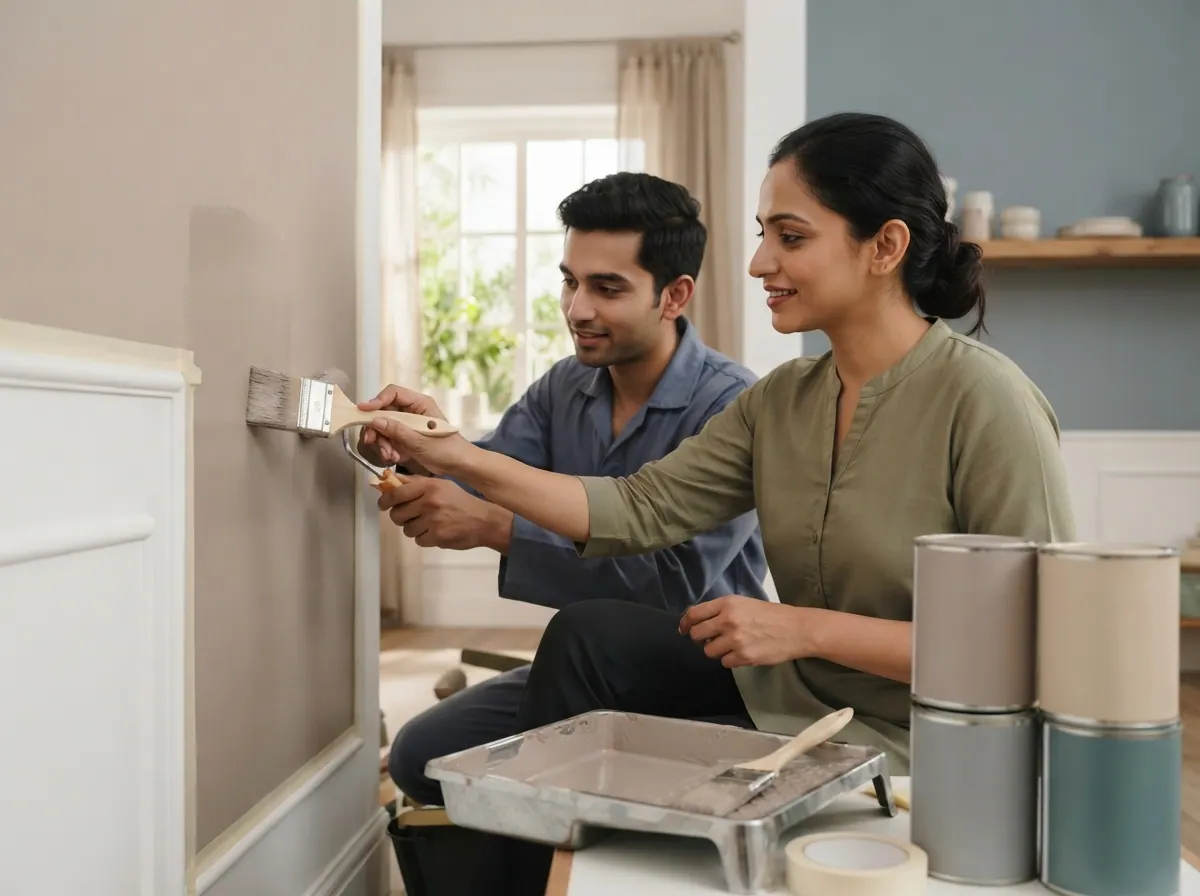
To start a house painting business in India you need a team of two or three trained painters, brushes, rollers and ladders, a way to measure and quote per sq ft, a few steady sources of work, and about ₹20,000–2 lakh. A painter who owns basic tools can start at the low end. Money comes from labour charged per sq ft and from a small margin on material. It is lost on peeling walls, wasted paint, a team that does not turn up and customers who pay late.
All figures here are estimates. Check prices near you before you spend.
What does it cost?
For a contractor with a small team:
| Item | Estimate |
|---|---|
| Brushes, rollers, trays, scrapers, putty knives, masking | ₹5,000–25,000 |
| Sprayer and sanding machine (optional) | ₹0–40,000 |
| Ladders, plank for scaffold, small stock of putty and primer | ₹3,000–25,000 |
| A handcart or two-wheeler carrier | ₹2,000–15,000 |
| Cards, uniforms, phone listing | ₹1,000–5,000 |
| Money to pay painters before customers pay | ₹9,000–90,000 |
| Total | about ₹20,000–2 lakh |
You will pay your painters weekly, while customers often pay at the end. Keep this gap in your budget, or you will end up borrowing from a shop.
How much can it earn?
A normal month for a contractor with three painters and a helper:
Income
- About 6,000 sq ft of wall painted × about ₹16 labour per sq ft = ₹96,000
- Margin on putty, primer and small materials you supply = ₹12,000
- Total = ₹1,08,000
Costs
- Three painters at about ₹16,000 = ₹48,000
- Helper = ₹10,000
- Transport = ₹5,000
- Brushes, rollers, masking, sandpaper = ₹6,000
- Phone and cards = ₹2,000
- Rework and small losses = ₹4,000
- Total = ₹75,000
Left over: ₹1,08,000 − ₹75,000 = ₹33,000 a month, and this has to pay you as well.
Rates differ by city and by finish. A flat with putty, primer and two coats of emulsion costs more than one that only needs a coat on clean walls. In a slow month, painters may sit idle and you still pay them, which is why many contractors keep a small group and call more when needed.
What do you need before you start?
- Painters who can finish. Smooth putty, straight edges and even coats are what customers notice. A good painter is worth more than another ladder.
- Knowledge of surfaces. Damp walls, old distemper, oil paint and new plaster all need different preparation. A wrong base ruins the best paint.
- A way to measure. Learn to measure wall area, minus doors and windows, and work out paint litres per coat. Mistakes here cost you money.
- A paint dealer who helps. A dealer who gives colour advice, tinting, a fair rate and sometimes a customer lead is gold.
- A written agreement. Rate per sq ft, number of coats, who buys paint, and payment stages. Without it, every job ends in an argument.
Step by step
- Work with a good painting contractor for a season and note how they measure, quote and manage the team.
- Buy brushes, rollers and basic tools, then add a sprayer or sanding machine when jobs grow.
- Visit three nearby paint dealers. Ask about colour cards, tinting and what brands move.
- Make a rate card. Putty and primer, emulsion per coat, ceiling, enamel on grills, doors and waterproofing.
- Tell flat owners, societies, interior designers and builders that you take work.
- Always visit the site before quoting. Check dampness, cracks and the old paint. Photograph them.
- Take advance for material and stage payment for labour.
- Leave the site clean, with the floor wiped and the leftover paint tin labelled.
Which licences apply?
- Udyam registration is free and helps with loans later.
- GST depends on your turnover and whether you supply paint. Ask a CA.
- Society permission. Apartment societies may ask for a work permit, working hours and a deposit. Ask the committee.
- Contractor registration. For larger government or builder contracts, ask what registration is needed.
Confirm all of this with your local office or a CA, since rules vary by state.
What goes wrong?
- Painting over damp. Fresh paint on a damp wall bubbles and peels within months. Find the cause of dampness first, and tell the owner honestly.
- Poor putty work. Thin or unsanded putty shows every crack once the light falls. Do not rush the putty stage.
- Wrong measure. If you underquote the area, you lose money on the whole job. Measure twice.
- Colour mismatch. A shade that looked good on the card looks different on the wall. Paint a patch and show it by day and under tube light.
- Painters who do not turn up. After Diwali, painters go home and may not return for days. Keep two spare names.
- Customers who change their mind. A colour change after two coats costs a lot. Put the colour in writing before the first coat.
- Floor and furniture damage. One splashed floor or sofa can cost you more than the job. Cover everything properly.
Situations you will face
What would you do? Each choice costs something.
Getting started
A sprayer finishes ceilings fast but wastes paint and needs masking. A roller is slower and cheap.
- Buy a sprayer: Fast, costly, more masking
- Stay with rollers: Cheap, slower on big jobs
Hand sanding takes hours and tires your painters. A machine gives a smoother finish and costs ₹9,000.
- Buy the sanding machine: Smooth walls, a cost
- Sand by hand: No cost, uneven finish
A fixed team gives better work but costs wages even when jobs are few. Day workers cost more per day.
- Keep three on weekly pay: Reliable, fixed cost
- Call day workers: Flexible, patchy quality
A dealer will send you leads and give a better rate if you buy only their brand.
- Take the tie-up: More leads, limited brand
- Buy from many dealers: Free choice, fewer leads
A 2BHK owner asks for a rate. You can measure floor area and multiply, or measure every wall.
- Measure each wall: Takes a day, accurate
- Use a quick floor-area rate: Fast, risk of loss
Owners often change their mind on colour. A patch on the wall costs paint and half an hour.
- Paint a sample patch: Small cost, fewer changes
- Go by the colour card: Quick, risk of changes
The owner says payment will come at the end. The paint for the flat costs ₹22,000.
- Ask for half as advance: Protects cash, owner may hesitate
- Buy it on your cash: Customer happy, you carry risk
First month
An owner wants a quick coat on a wall with dampness. The paint will bubble in a few months.
- Advise waterproofing first: Costs more, honest work
- Paint with a signed warning: Quick job, written warning
The living room is done in beige. The owner now wants it grey and expects you to bear part of the cost.
- Charge only labour for redoing: Partly fair, costs you paint
- Insist on full payment: Fair on paper, may argue
A helper left a bucket open and paint dripped on a new marble floor in a hallway.
- Pay for professional polishing: Costs money, saves trust
- Scrub it yourselves: Cheap, floor may stay dull
The job needs 30 percent more paint and labour than you quoted. Raising the price now is awkward.
- Absorb the loss: Costly, honest name
- Ask the owner for extra: Fair, owner may refuse
You visit ten flats a week to quote, but only three say yes. Petrol and time add up.
- Charge a refundable visit fee: Fewer visits, serious owners
- Quote by photo first: Saves petrol, less accurate
Running it
Two of three painters go home for a week at peak season. Pre-festival jobs are waiting.
- Hire day painters, pay extra: Extra cost, jobs finish
- Ask customers to wait: Cheap, some cancel
After the rains, calls come in for exterior walls and touch-ups. Dry days are short.
- Add a second crew: More jobs, more wages
- Book in order, no rush: Neat work, lose some jobs
A family wants the whole house painted before a wedding in four days. It is a rush but pays well.
- Take it with a rush fee: High pay, long hours
- Offer only front rooms: Safer, smaller job
The committee wants a ₹5,000 deposit and strict working hours for painting inside the building.
- Pay it and follow rules: Deposit refunded after, strict
- Skip the building jobs: No deposit, lose work
A builder wants twenty flats painted at a low rate, payment in three stages over two months.
- Take the builder's rate: Volume, thin margin
- Ask a higher rate: Builder may refuse
The family moves in on Sunday. The putty needs a full day to dry before primer goes on.
- Let it dry, finish Monday: Safe finish, one day late
- Finish front rooms, rest Monday: Small cost, safe finish
When things go wrong
A flat you painted last year has peeling patches near a bathroom wall. The owner is angry on the phone.
- Come, fix, and seal the wall: Costs time and paint
- Inspect together, split the repair: Costs half, fair look at cause
The flat is finished and the owner says some corners are not neat, so payment will come later. You have wages to give.
- Touch up and ask politely: Costs time, may get paid
- Send a firm notice: Firm, may lose goodwill
The owner has a cheaper quote and you suspect only one coat of putty.
- Match with a lighter plan: Win it, thinner margin
- Explain the steps, keep price: May lose the job
You bought extra tins for a job that shrank. The unused tins dried up in the store.
- Write off, buy exact next time: Loss now, better planning
- Use it only for primer coats: Saves some paint, small test cost
A painter fell from a makeshift scaffold on an outside wall. They have a leg injury and cannot work.
- Pay treatment and rest wages: Costs money, loyalty stays
- Pay treatment and half rest wages: Costs money, team looked after
Rain washed fresh paint off a front wall before it dried. The owner wants it redone at your cost.
- Redo it at your cost: Costly, honest
- Share the cost 50-50: Cheaper, debated
Growing
Interior designers ask for wall textures. A one-week course and kit cost money but pay higher rates.
- Do the course: Cost now, premium jobs
- Stay with plain paint: No spend, no premium work
Terrace and wall waterproofing brings higher value. You would need training and a trusted material supplier.
- Learn and offer it: Cost and risk, higher income
- Refer it to a specialist: Simple, small commission
A designer offers regular flats but pays after 45 days and checks every wall.
- Take the designer's work: Steady, slow payment
- Stay with owners directly: Quicker cash, smaller volume
You spend time fetching paint and ladders by hand. A small loader costs money but saves hours.
- Buy a small loader: High cost, faster jobs
- Use delivery from the dealer: Cheap, some delay
Your ladders and tins fill your home. A small rented room helps but costs every month.
- Rent a storage room: Monthly cost, tidy stock
- Keep stock at home: No rent, family complains
Finished flats look good in photos. A listing with reviews brings enquiries without paid ads.
- Ask owners for reviews: Free, slow build
- Run a paid ad: Costs money, quick calls
Is it right for you?
Painting suits you if you can manage a small team, have an eye for finish, and do not mind dust, heights and a smell all day. It helps to be calm with owners who want changes and honest when a wall needs more than a coat.
It suits you less if you want a steady monthly income from the first month. Work comes in waves, and payments are often delayed. Try this first: do one or two small rooms for people you know, with your own team, and see what it really costs and how long it takes. It will tell you more than any plan.