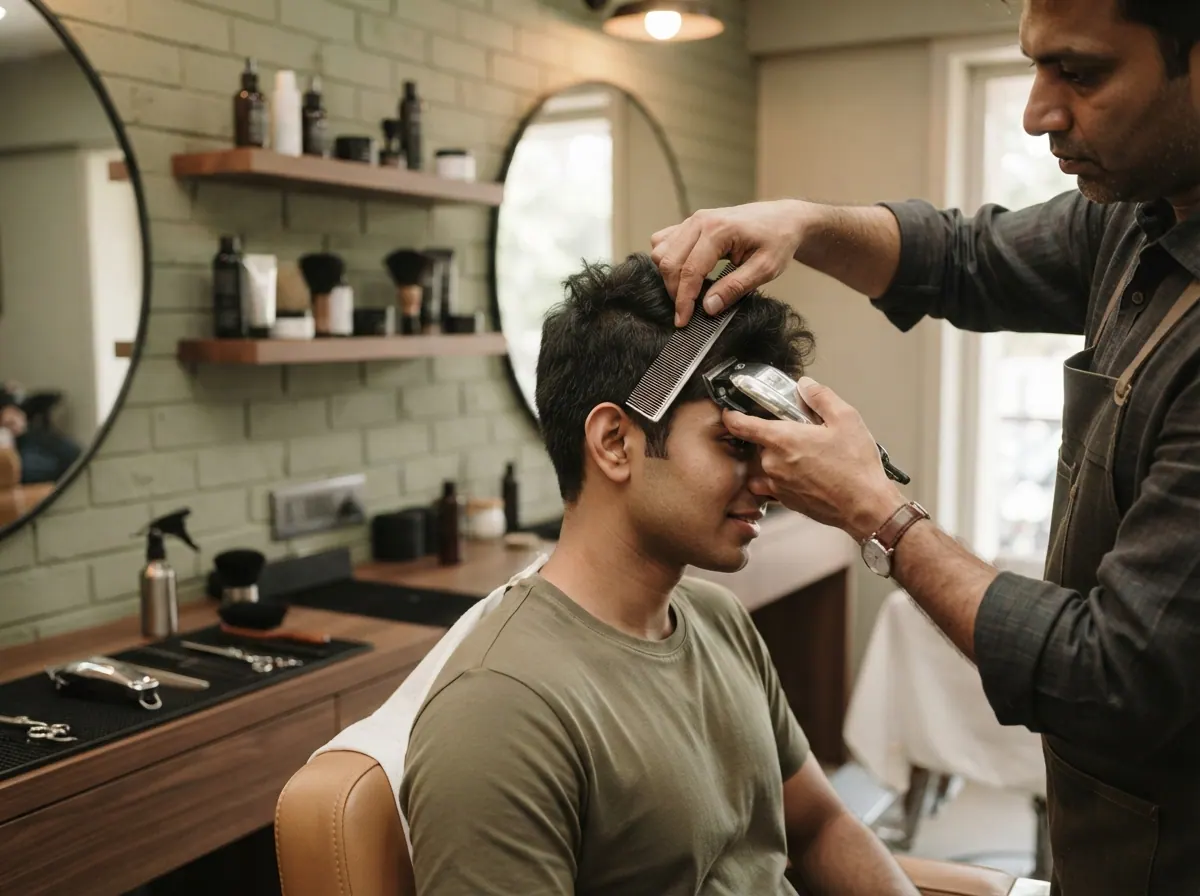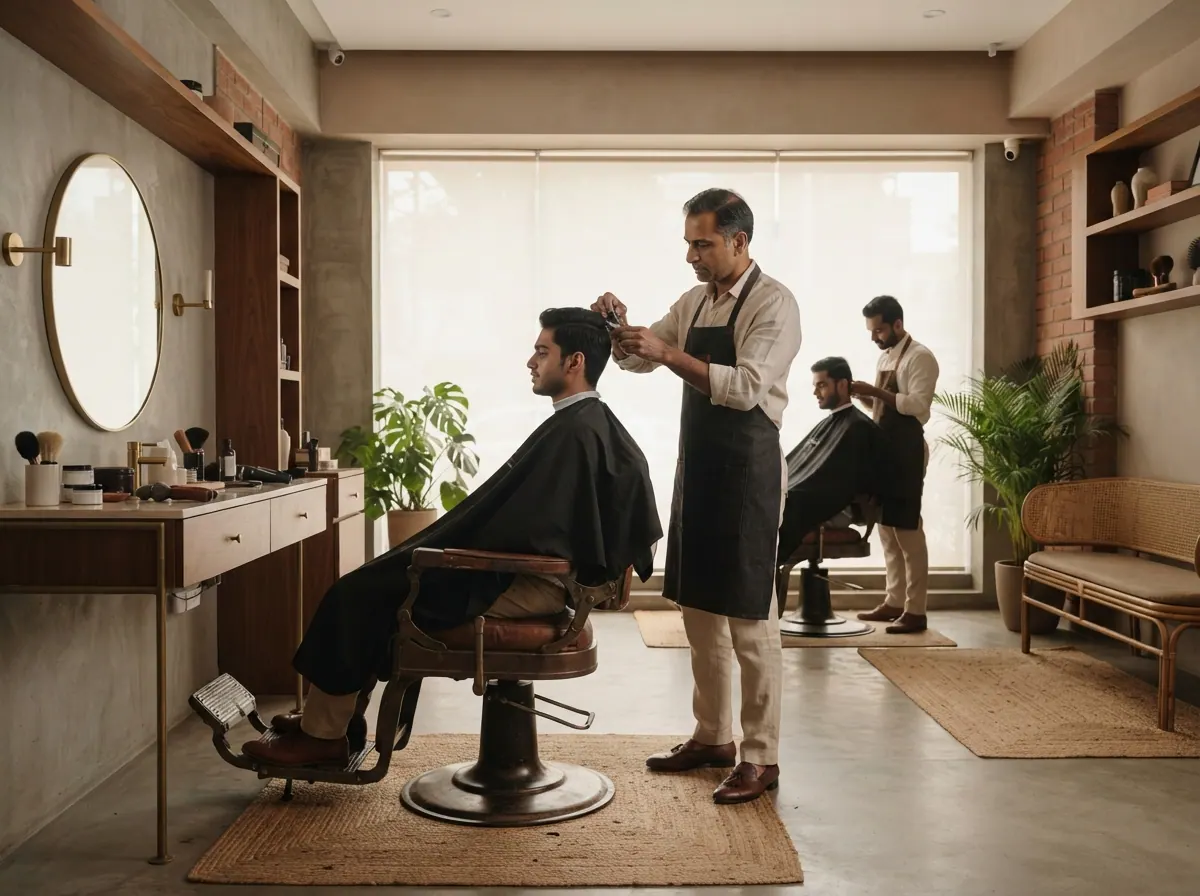
To start a barber shop in India you need a rented shop in a lane with steady walking traffic, two or three good chairs, clean tools, a skilled barber, and about ₹1–5 lakh. A small two-chair shop in a town can open near the lower end. A smarter men's or unisex salon in a city can reach the top. The money comes from many small haircuts every day, so your lane, your hygiene and your regular customers matter more than anything else.
All figures here are estimates. Check prices near you before you spend.
What does it cost?
| Item | Small 2-chair shop | Smart men's salon |
|---|---|---|
| Rent deposit (a few months) | ₹30,000–90,000 | ₹1–2 lakh |
| Interior, mirrors, lights, paint | ₹30,000–70,000 | ₹80,000–1.5 lakh |
| Salon chairs (hydraulic) | ₹10,000–30,000 | ₹30,000–70,000 |
| Trimmers, clippers, scissors, razors | ₹6,000–12,000 | ₹12,000–25,000 |
| Towels, capes, combs, brushes | ₹4,000–8,000 | ₹8,000–15,000 |
| Wash basin, plumbing | ₹5,000–15,000 | ₹15,000–30,000 |
| Sterilising and cleaning supplies | ₹2,000–4,000 | ₹4,000–8,000 |
| Hair products, creams, dyes | ₹4,000–10,000 | ₹10,000–25,000 |
| Signboard and registration fees | ₹5,000–10,000 | ₹10,000–20,000 |
| Total | about ₹1–2.5 lakh | about ₹3–5 lakh |
The shop's lane is the biggest hidden cost. A shop beside a college, bus stand or office area costs much more rent, but fills its chairs. A cheap back lane saves rent and leaves chairs empty.
How much can it earn?
Prices vary by town and style. Take a shop with two chairs, the owner cutting hair and one hired barber, in a lane with steady traffic.
Income in a month
- 24 customers a day × about ₹130 average (haircut, beard, a few extras) = ₹3,120 a day
- ₹3,120 × 26 working days = about ₹81,100
- Add head massage, hair colour and facial extras: about ₹6,000
- Total = about ₹87,000
Costs in a month
- Shop rent = ₹15,000
- Hired barber = ₹12,000
- Products and consumables = ₹6,000
- Electricity and water = ₹3,000
- Repairs, towel washing and small costs = ₹3,000
- Total = ₹39,000
Left over: ₹87,000 − ₹39,000 = about ₹48,000, and this includes your own work.
If footfall drops to 15 customers a day, the same shop earns about ₹54,000 and leaves only about ₹15,000. This is why the lane decides whether the shop lives.
What do you need before you start?
- A lane with a reason to stop. Count people passing at haircut times. Check how many shops already cut hair within a few minutes' walk.
- A skilled barber. Customers come for the person. Know how to cut yourself, or hire someone you have watched work.
- A routine for cleaning. Clean razors, combs and clippers after every customer, use a fresh blade or clean razor, and wash towels.
- A price board. Show prices clearly so there is no argument later.
Step by step
- Pick the lane first. Sit near the shop for two or three days at different times. Notice school hours, office hours and weekend crowds.
- Negotiate the rent and deposit in writing, including who pays for fit-out and how long the lease runs.
- Fit out simply. Two good chairs, a big mirror each, bright lights and a clean floor are enough to begin.
- Buy tools from a reliable supplier, with a spare clipper and extra blades so one breakdown does not stop work.
- Hire or train one barber and agree on pay and any commission clearly.
- Register the shop and take the permissions your area needs before the signboard goes up.
- Start a regular-customer habit. Learn names and favourite cuts. Many shops run a small stamp card or monthly pass.
- Add services slowly, such as hair colour, beard styling or facials, once your chairs are full.
Which licences apply?
This varies by state and city:
- Shop and establishment registration with your state labour office.
- Trade licence from the municipal corporation or panchayat. Ask them whether a salon needs special rules for water or waste.
- GST registration when your turnover crosses the limit for services. Ask a CA, because the limit and options can change.
- Electricity connection for a commercial shop, which usually costs more than a home connection.
- Hair dyes and cosmetics. Buy from genuine dealers and read the label. Do patch tests on customers who ask for colour.
What goes wrong?
- Your best barber leaves and takes regular customers with them to a new shop a few streets away.
- Dirty tools. One customer with an infection or a shaving cut who talks about it can empty chairs.
- Wrong lane. A shop that looked busy at noon can be dead at five.
- Power cuts in summer. Without power, trimmers and fans stop. A backup battery or a manual scissor-cut fallback helps.
- Rate fights. The shop next door cuts prices and you follow, until nobody earns.
- Cheap dye. A reaction on a customer's scalp costs more than the product saved.
Situations you will face
What would you do? Each choice costs something.
Getting started
A shop near the bus stand has high rent. A back-lane shop costs half but sees few people.
- Take the bus stand shop: High rent, many walk-ins
- Take the back-lane shop: Low rent, slow customers
A dealer sells good hydraulic chairs new. A closing salon sells its chairs at half price.
- Buy two new chairs: Costly, lasts years
- Buy the second-hand ones: Cheaper, may leak oil
Branded trimmers hold a clean edge for years. Market ones cost a third and heat up fast.
- Buy branded trimmers: Pay more, clean fades
- Buy market trimmers: Cheap, slows busy days
A barber with many regulars wants a higher monthly pay. A newer barber accepts much less.
- Hire the star barber: High pay, brings their regulars
- Hire the newer barber: Low pay, slower start
A flex board with lights makes your shop look smart at night. A painted board costs very little.
- Get the lit board: Costly, visible after dark
- Paint a plain board: Cheap, easy to miss
The owner offers a lower rent if you agree by word only. The rent may rise after you spend on fit-out.
- Insist on a written lease: Slightly higher rent, safe
- Take the word-only offer: Lower rent, risk of a hike
The trade licence will take weeks. Rent runs every day you stay closed.
- Wait for the licence: Lose weeks of income
- Open now, apply in parallel: Earn now, a notice can come
First month
Customers wander in but go back to their old barber. A neighbour suggests a launch offer.
- Run a cheap week: Lower income, many new faces
- Keep normal prices: Fair rate, slower crowd
A man watches you reach for a used razor and asks you to change it. A new blade costs a little each time.
- Use a fresh blade always: Small cost, customers trust you
- Wash and reuse the razor: Saves money, hygiene risk
Parents want fast, cheap haircuts before school opens. A discount for kids adds footfall but pays less per chair.
- Offer a kids' price: More heads, less each
- Keep one price for all: Better rate, some parents leave
On a Saturday evening your trimmer burns out. Six men are waiting.
- Buy a new one nearby: Pay now, lose no queue
- Cut with scissors, apologise: Slower, some leave
The dhobi comes only twice a week and your towels run out by Friday.
- Buy a second towel stock: Spend now, always fresh
- Reuse towels carefully: No spend, customers notice
A neighbour who has been a regular for weeks asks to pay at the month end.
- Allow a small credit: Loyal customer, late money
- Cash on the day: Clear, customer upset
Running it
On Sundays men wait an hour. Some give up and leave. A third chair needs a barber too.
- Add a part-time barber: Pay extra, serve more
- Book slots by phone: Free, only works for regulars
The night before a big festival, every chair is booked and men queue outside until midnight.
- Stay open till late: Tiring, extra earnings
- Raise prices for the day: More per head, some grumble
Young men now ask for sharp beard shaping. It takes longer than a haircut but can charge more.
- Train and add a beard menu: Course and products cost
- Stay with basic cuts: No cost, lose younger men
The salon two doors away drops haircut rates and pulls away some of your customers.
- Match their prices: Keep crowd, thin profit
- Hold price, improve service: Lose some, keep quality
Daily power cuts stop your fans and trimmers in the afternoon. Men leave rather than sit in the heat.
- Buy an inverter: Big cost, steady afternoons
- Cut with scissors, sit outside: Free, slow and sticky
A customer asks for black hair colour but says a patch test is not needed. The scalp looks sensitive.
- Insist on a patch test: Delay, the customer may leave
- Offer a gentler product: Costs more, safer for the scalp
When things go wrong
Your barber joins a new shop two lanes away, and some regulars may follow. The queue is already long.
- Pay a retention bonus: Costs money, may stay
- Hire a new barber fast: Slow rebuild of regulars
A new barber nicked a customer's cheek while shaving. The customer is upset and may go online.
- Apologise, free service, treat it: Small cost, name saved
- Say it is normal: Free, bad word spreads
An official visits and says your trade licence renewal is overdue. The papers must be fixed.
- Pay the renewal and fine: Costly, safe from now
- Delay the renewal: Saves cash, risk of more
The basin pipe starts to leak under your floor and the neighbour below complains of damp.
- Call a plumber now: Pay now, no complaint
- Patch it yourself: Cheap, it may leak again
The landlord asks a big raise from next month because your shop looks busy.
- Agree and reprice haircuts: Costs more, risk of lost regulars
- Negotiate with a lease offer: Locks rent, long commitment
Students and offices go quiet for weeks. Your chairs sit empty while rent and wages continue.
- Offer home visits: Travel time, small extra
- Cut the barber's hours: Save pay, morale drops
Growing
A shop opens near a new housing colony. It could double footfall but you would need another barber you trust.
- Open the second shop: Big spend, more income later
- Grow the first shop: Smaller spend, steadier
Wedding families ask for groom haircut, beard and facial in one package at their home.
- Offer groom packages: Time and kit cost, high price
- Stay in the shop only: Simple, miss wedding money
Regulars would pay in advance for four haircuts at a small discount. It gives cash early but lowers rate.
- Launch the pass: Cash now, lower per cut
- Stay pay-per-visit: Full rate, less loyalty
Women ask if you can add haircuts and threading. It means another room, a trained stylist and stock.
- Add a ladies' section: Heavy spend, higher bills
- Stay men-only: Focused, steady clientele
A teenager wants to learn the trade. They would help with towels and sweeping for low pay before they cut.
- Train an apprentice: Small pay, future barber
- Hire only finished barbers: Higher pay, quick help
Is it right for you?
A barber shop suits you if you like standing for long hours, talking to regular customers and keeping a steady daily routine. It suits you less if you want an office job's weekends, since Sundays and festival evenings are the busiest days.
A good test is to work two weeks as a helper in a busy shop. If you can handle the pace, rent a shop in a lane you have already watched, start with two chairs, and add a third only once there are waiting customers most days.