To start a gift shop in India you need a busy road near homes, schools or markets, a mix of ready gifts and personalised items, and about ₹1.4 lakh for a small shop or ₹6.5 lakh for a well-stocked one. The shop earns through festival weeks, birthdays and orders made to a name, not through the ordinary day.
All figures here are estimates. Check prices near you before you spend.
What does it cost?
| Item | Small shop | Larger shop |
|---|---|---|
| Ready gift stock (showpieces, soft toys, frames, bottles) | ₹60,000 | ₹3 lakh |
| Mug press, printer and photo-gift tools | ₹25,000 | ₹1 lakh |
| Wrapping paper, ribbons, boxes | ₹8,000 | ₹30,000 |
| Racks, glass shelves, lights | ₹20,000 | ₹80,000 |
| Signboard, billing, GST set-up | ₹6,000 | ₹25,000 |
| Rent advance (deposit) | ₹15,000 | ₹80,000 |
| Cash kept for the first months | ₹10,000 | ₹40,000 |
| Total | about ₹1.4 lakh | about ₹6.5 lakh |
Personalised gifts need a small machine but give the best margin, because the customer pays for the name and photo. Stock that nobody orders, such as large showpieces, is the main way money sits idle.
How much can it earn?
Here is a shop doing about ₹2 lakh of sales in a month. This is an illustration, not a promise.
Gross margin
- Sales: ₹2,00,000
- About 35% blended margin: ₹2,00,000 × 0.35 = ₹70,000
Costs each month
- Rent = ₹15,000
- One helper = ₹10,000
- Electricity and phone = ₹3,000
- Wrapping, breakage and damaged stock = ₹4,000
- Phone ads and small promotions = ₹3,000
- Total = ₹35,000
Left over: ₹70,000 − ₹35,000 = about ₹35,000 a month.
Gift shops swing hard. A shop might make 40% of its year's sales in about eight weeks around Valentine's, Rakhi and Diwali. Plan stock and cash for those weeks, and do not assume every month looks like them.
What do you need before you start?
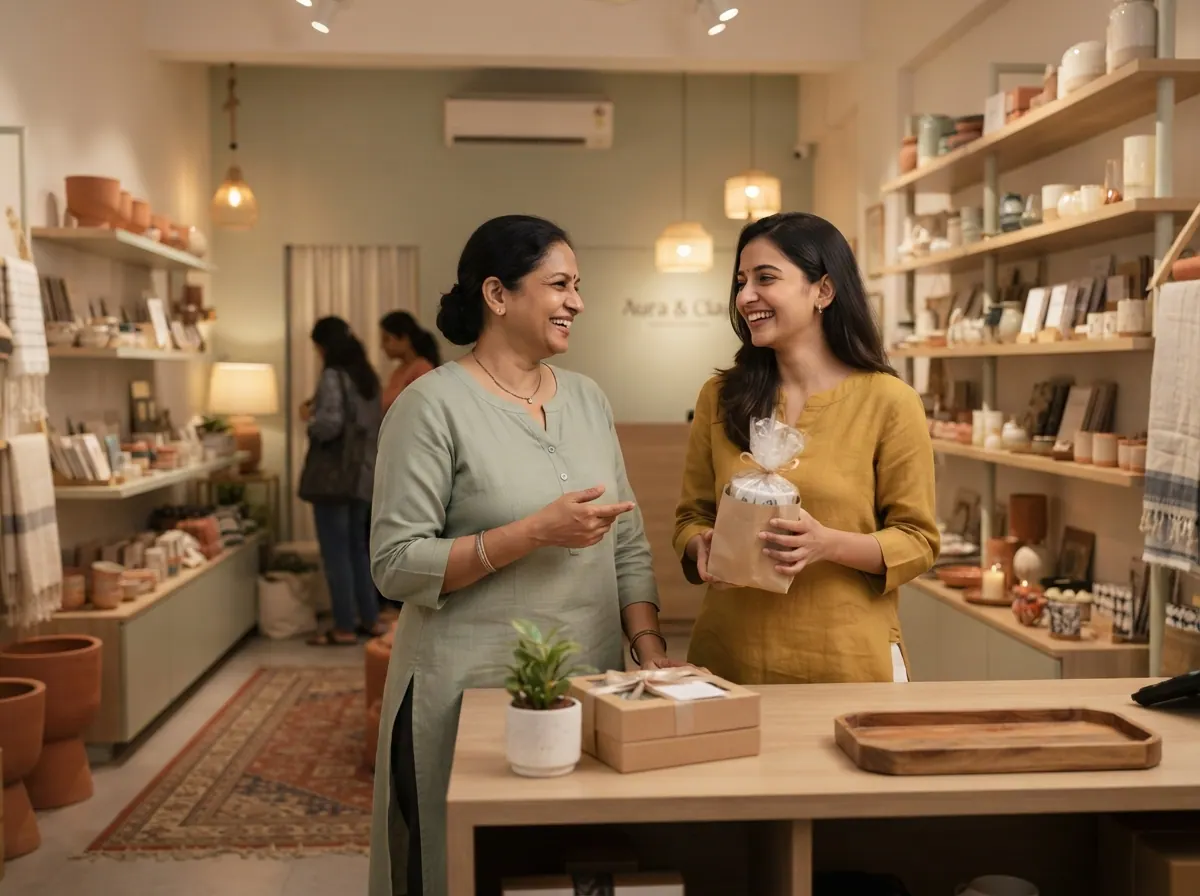
- A footfall road. Near a school, a market, a restaurant strip or a residential colony with many young families.
- Two kinds of supplier. A wholesale market for ready gifts, and a local printer or paper supplier for custom work.
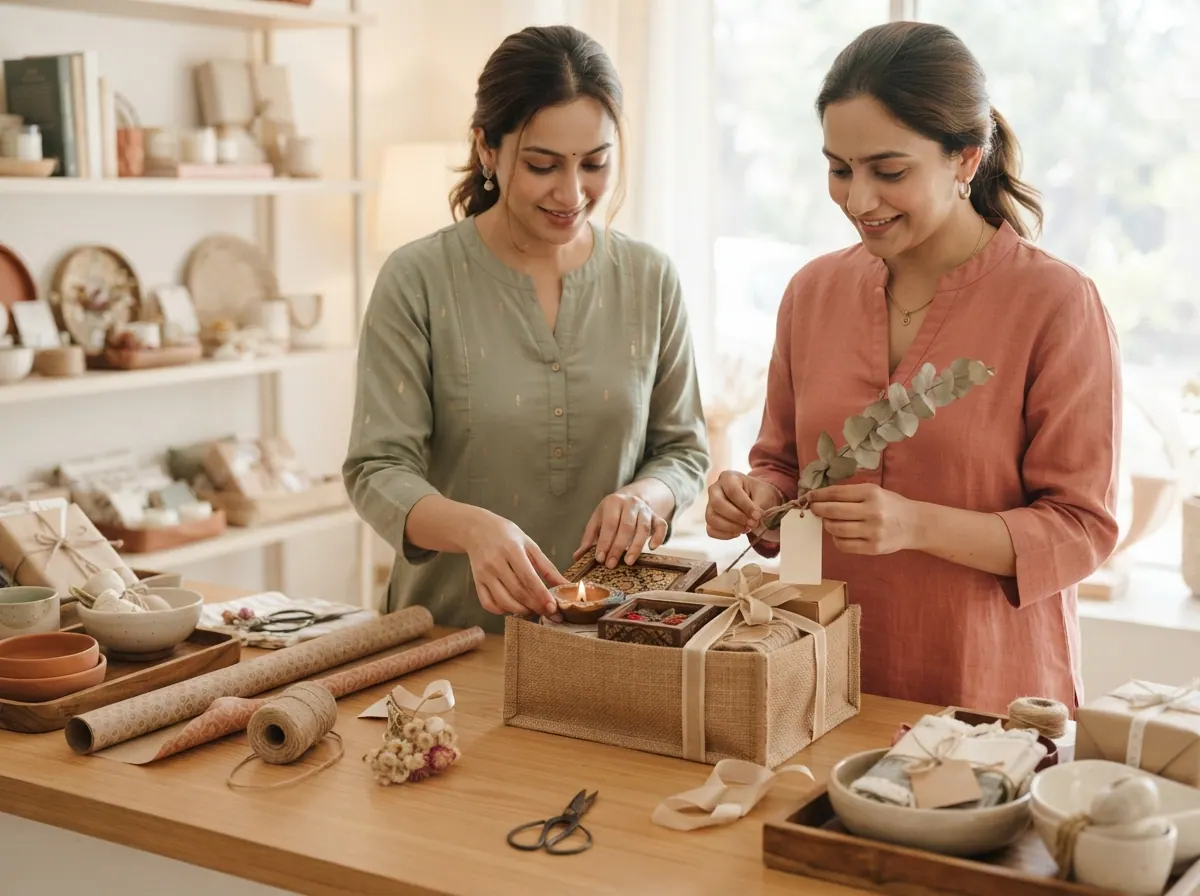
- A wrapping corner. People pay for gifts that look finished.
- A way to take advance on custom orders. Never print a name before you have the advance.
Step by step
- Spend a day at a wholesale gift market and note what is cheap and what is nearly a copy of another item.
- Pick a shop where you can display gifts at eye height and see the door.
- Start with a mix: 40% ready gifts, 30% soft toys and décor, 30% items you can personalise.
- Buy a mug press and printer only after you have tested the market with a few outsourced orders.
- Set a wrapping price or include it for larger bills.
- Take advance on custom orders and write the name and date in a book.
- Plan festival stock two months early, especially for Valentine's, Rakhi and Diwali.
How do you get customers through the door?
A gift shop is bought on impulse and on dates. Put the best-looking items at eye height near the entrance, and keep a small rack of gifts under ₹200 near the counter, because those are the walk-in sales that add up. Note birthdays and anniversaries of regular customers in a book and message them a week before. Ask schools, tuition centres and small offices for their yearly prize and return-gift orders, and photograph finished custom gifts for your WhatsApp status, since people trust what they can see.
Which licences apply?
Confirm each with your local office, as rules vary by state:
- Shop and establishment registration with your municipality or labour department.
- GST where your sales cross the limit, or for buying on tax invoices.
- Trade licence from the local body in some towns.
- Copyright and brands. Printing famous cartoon characters or brand logos without permission can cause legal trouble. Ask a lawyer or the licensing office if you are unsure.
What goes wrong?
- Fragile stock. Glass showpieces and photo frames crack in transport and during dusting.
- Dead stock. Large showpieces and old festival items sit for months and tie up cash.
- Spelling mistakes on custom gifts. A mug with the wrong name has to be reprinted, and the cost is yours.
- Late orders. Customers often order a custom gift for the same evening.
- Online competition. Photo gifts online are cheap, though customers still prefer to see and touch.
- Festival timing. Missing a festival's early stock means missing most of that festival's sales.
Situations you will face
What would you do? Each choice costs something.
Getting started
Big showpieces look grand but sell slowly. Useful gifts like bottles and lunch boxes sell fast at smaller prices.
- Stock more showpieces: High price, slow selling
- Stock useful gifts: Quick sales, smaller bills
A mug press and printer cost real money. A local printer will do custom mugs at a fee and takes two days.
- Buy the press and printer: Costly, same-day orders
- Outsource printing: Cheap, slower service
A big city market has far more variety and lower rates. You must carry stock, and some of it may not suit your town.
- Go and buy a large lot: Travel and cash, more variety
- Buy from a local supplier: Dearer, safer choices
A shop near a school gets birthday buyers. A market shop gets wedding and festival shoppers but costs more.
- Rent near the school: Lower rent, steady birthdays
- Rent in the market: High rent, festival crowds
Gift wrap takes time and paper. Customers like free wrapping, and rival shops mostly offer it.
- Wrap free on bills over ₹500: Costs paper, wins buyers
- Charge ₹30 for wrapping: Covers cost, some may leave
Open racks are cheap but fragile items get knocked. Glass shelves protect them and look neat.
- Fit glass shelves: Costly, fewer breakages
- Use open racks: Cheap, more breakages
Good lighting makes gifts look special, but costs more in power and fitting.
- Install spotlights: Costly, a better look
- Use normal tube lights: Cheap, plainer shop
First month
A buyer says the frame cracked on the way home. The supplier does not accept returns.
- Replace it from stock: You pay, buyer happy
- Refuse, glass broke at home: No loss, an angry buyer
A customer wants a custom mug for a birthday this evening and will pay extra for the rush.
- Take the rush for ₹150 extra: Late work, extra money
- Say two days is the minimum: No stress, lose the buyer
A customer ordered ten mugs with a team name. You printed one letter wrong and only noticed after pickup.
- Reprint all ten: You pay again, trust kept
- Offer a discount instead: Cheaper, may not satisfy
Toys on the open shelf collect dust and fade at the front. Customers lift them and put them back.
- Cover them with clear bags: Small cost, cleaner look
- Wipe them every week: Free, still faded
Customers keep asking what each item costs and then bargain. Tagging 400 items takes a weekend.
- Tag everything with prices: Time and tags, fewer arguments
- Quote prices as you see: Flexible, haggling continues
A school wants 60 trophies and small prizes. The teacher wants a low price and 30 days to pay.
- Accept the low price on credit: Big order, slow payment
- Ask half in advance: Safer, the school may refuse
Running it
Teddy bears, cards and chocolate boxes sell out in the last three days. Stock bought late costs more.
- Buy big and early: Cash locked, ready for rush
- Buy a modest lot: Safe, may run short
An office manager wants 100 hampers at a set price with payment 45 days after delivery.
- Take the order: Big sale, pay for stock first
- Ask for 40% advance: Safer, they may use another
Rakhis, small gifts and sweet boxes sell for about ten days. Anything unsold is almost worthless afterwards.
- Stock a wide Rakhi range: Big spend, short season
- Stock only fast designs: Small spend, fewer sales
A parent wants 40 return gifts under ₹100 each by Saturday. The margin is slim but the order is big.
- Pack them at ₹95 each: Slim margin, repeat parents
- Quote ₹120 each: Better margin, may lose it
Customers ask for photo frames, canvas and magic mugs. The machine is costly and needs power and training.
- Buy the photo gift tools: Spend now, new customers
- Take orders, outsource printing: Low risk, slower
Customers show you online prices for personalised mugs and cushions. They like seeing and touching first.
- Match on custom items: Lower margin, hold buyers
- Hold price, offer same-day: Keep margin, lose some
Twenty large showpieces from last year sit on the top shelf. They tie up money and space.
- Clearance at a deep discount: Lose margin, free space
- Keep them for wedding season: Cash stays locked
A local event decorator wants to send wedding and party clients to you for 7% of their bill.
- Agree to 7%: More clients, thinner margin
- Offer 3% instead: Cheaper, weaker push
When things go wrong
A carton of glass showpieces arrived with a third broken. The transporter says it was packed that way.
- Claim from transport and wait: Delay, may recover some
- Write it off and re-order: Quick, a bigger loss
Your supplier raises prices by a fifth the week before the festival, and rivals will do the same.
- Pay and raise your prices: Hold margin, some leave
- Find a different supplier: Time lost, may save money
A buyer cancels 25 printed cushions after you made them. They had paid 30% in advance.
- Keep the advance, sell the rest: Cover cost, an unhappy buyer
- Refund and sell at discount: Keep goodwill, lose money
Key rings, small toys and cards vanish when the shop is crowded and you are busy wrapping.
- Add a camera and mirror: Cost now, fewer losses
- Move small items behind the counter: Free, fewer impulse buys
Monsoon water dripped over cartons of cards and paper. Some wrapping paper and photo prints are ruined.
- Fix the leak, replace the stock: Costly, a dry shop
- Cover shelves with plastic: Cheap, repeated damage risk
The hamper invoice is 40 days late. The office says the accounts team is busy and offers another big order.
- Hold the new order until paid: Safer, may lose them
- Take it and wait: More owed, buyer stays
Growing
Birthday buyers also ask for balloons, banners and candles. It is a small-ticket line with quick turnover.
- Add a party corner: Spend, bigger baskets
- Stay with gifts only: Focused, smaller bills
People send photos on WhatsApp and Instagram for custom gifts. It needs a design helper and delivery.
- Hire a part-time designer: Wages, many more orders
- Do it yourself after hours: No wages, a slow reply
A busy colony has a shop available. It would double your rent and need a trusted person to run it.
- Open the second shop: Heavy spend, wider reach
- Improve the first shop: Smaller spend, steady growth
Is it right for you?
A gift shop suits you if you enjoy talking about presents and occasions, have a good eye for what looks nice, and can plan stock around the calendar. It suits you less if you cannot wait for slow weeks or are uncomfortable with fussy last-minute orders.
A good test: spend a week in a gift shop in the weeks before a festival. Watch how people choose, how often they ask for a name or a photo, and how long wrapping takes. If it suits you, begin with the small version, keep custom work paid in advance, and grow the range as your regular buyers return.