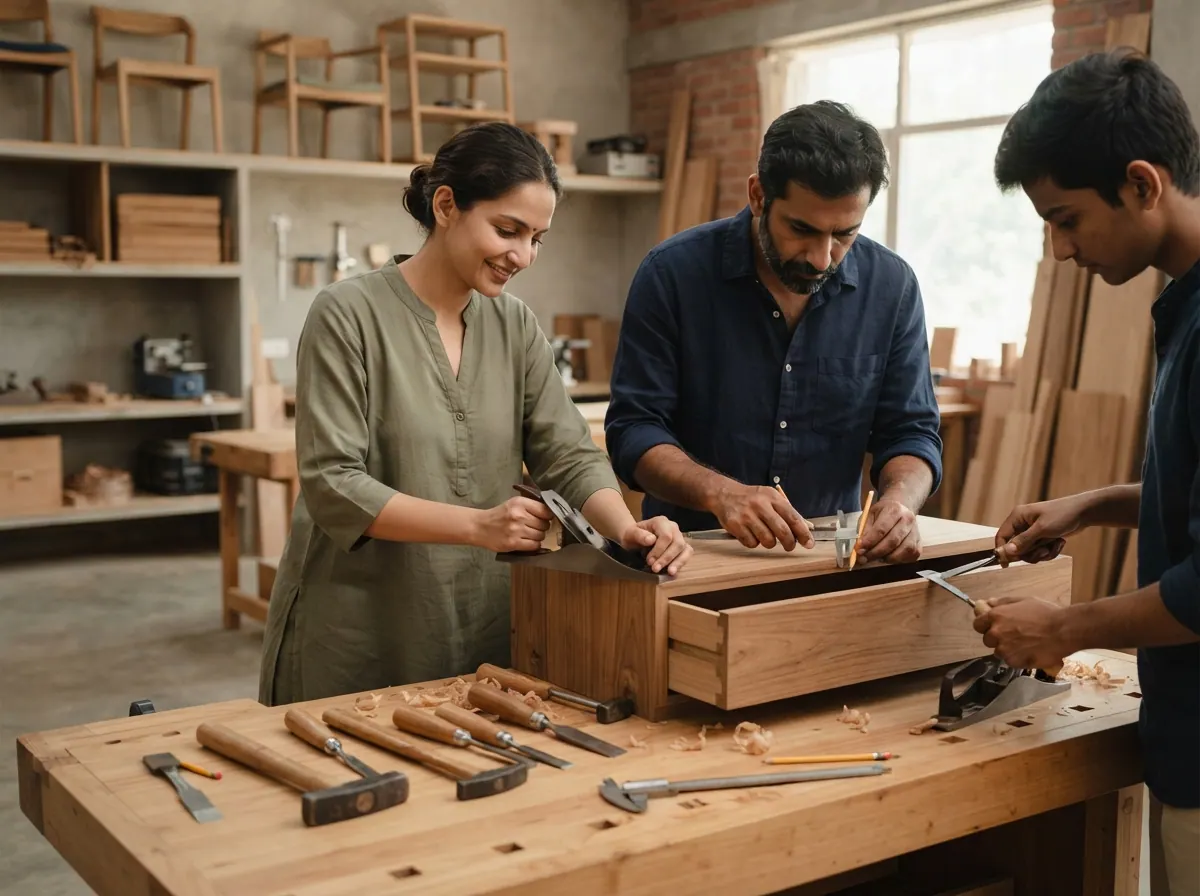
To start a furniture business in India you need a workshop or a good carpenter partner, a showroom or display space, a reliable timber and plywood supplier, and about ₹5–20 lakh. A made-to-order shop with two carpenters sits near the bottom of that range. A showroom with readymade pieces and a workshop sits near the top. Money is made on the gap between material cost and the price of finished work. It is lost in wood waste, late deliveries and customers who pay in instalments.
All figures here are estimates. Check prices near you before you spend.
What does it cost?
For a shop of about 400 sq ft with a small attached or nearby workshop:
| Item | Estimate |
|---|---|
| Rent deposit for shop and shed | ₹60,000–2.5 lakh |
| Machines: table saw, planer, drill, sander, jigsaw | ₹80,000–3 lakh |
| Carpentry hand tools and clamps | ₹15,000–40,000 |
| Display pieces for the showroom | ₹60,000–2.5 lakh |
| First stock of plywood, wood, laminate, hardware | ₹60,000–4 lakh |
| Signboard, catalogue, photos, billing | ₹20,000–60,000 |
| Registration and paperwork | ₹5,000–20,000 |
| Money for the first slow months | ₹60,000–2 lakh |
| Total | about ₹5–20 lakh |
Published guides put a small custom workshop at ₹5–15 lakh and a showroom in a tier 2 or 3 town at ₹10–20 lakh, so treat the lines above as a floor, not a quote. Hired carpenters using their own tools and a simple sample corner cut the machine cost. Do not spend on display pieces before you have a steady flow of orders.
How much can it earn?
Here is a normal month for a small shop with two carpenters and a helper:
Sales
- 20 pieces (beds, wardrobes, sofas, tables, kitchen units) × about ₹18,000 = ₹3,60,000
Costs
- Materials, about 55% of sales = ₹1,98,000
- Two carpenters = ₹44,000
- Helper = ₹12,000 (check your state's minimum wage; the Delhi skilled minimum is ₹22,411 a month)
- Rent for shop and shed = ₹30,000
- Power = ₹6,000
- Delivery and transport = ₹10,000
- Polish, tools, repairs and small things = ₹8,000
- Total = ₹3,08,000
Left over: ₹3,60,000 − ₹3,08,000 = ₹52,000 a month, and this has to pay you as well.
Wood waste and rework move this number. If cutting mistakes and remakes push materials from 55% to 62%, you lose about ₹25,000 a month. Also remember that a large order can take weeks, so cash comes in lumps and costs come every day.
What do you need before you start?
- A carpenter you trust. Ask to see finished work and visit a site they delivered. A master who walks away with half-made pieces can stop your business.
- A timber and plywood supplier. Buy from a depot that gives proper bills and tells you the grade and thickness clearly. Cheaper boards often swell in the first monsoon.
- A product focus. Beds and wardrobes, office furniture, school furniture, sofas and kitchens are different trades. Pick one or two to start.
- A way to show your work. Photos of real homes, a few finished pieces, and clear prices help more than a long catalogue.
- A delivery plan. A tempo for hire and two helpers to carry and fit. Furniture damaged in transport is your cost.
Step by step
- Visit the furniture lane and a timber market. Ask what sells slowly, what sells fast, and what plywood people pay for.
- Choose your product focus and your price level. Write a basic price list for the sizes people ask for most.
- Take a shop with a shed or workshop nearby. Noise and dust matter, so check what neighbours and the landlord will accept.
- Buy only the machines you will use daily. A table saw and a good drill first. Add a planer or edge bander when you have orders.
- Make three sample pieces in the style you want to be known for and keep them in the shop.
- Quote in writing, with size, material, finish and delivery date. Take an advance of one third or half before you cut.
- Keep a job book. For each order note material used, days taken and what was delivered.
- Get reviews and photos at delivery. One happy family in a colony brings the next five orders.
- Pay your timber and plywood supplier on time so you get better rates and priority.
Which licences apply?
- Shops and Establishments registration, and a local trade licence where your municipality asks for one.
- Workshop and machine permissions. A carpentry workshop without spray painting is reported to need only an intimation to the pollution board, and a spray booth needs consent. Ask your local office about this, and about fire and noise rules.
- BIS marks. A quality control order requires BIS marks on chairs, tables, storage furniture and beds, with an exemption reported for small Udyam units. Check whether it covers you.
- GST depends on your turnover. Furniture and plywood are at 18% in the sources found. Ask a CA, since goods and job work can be treated differently.
- Udyam registration is free and helps with a bank loan later.
- Wood purchase bills. Keep proper bills for all timber. Rules on cutting and moving some wood vary by state, so ask your supplier and the local office.
Confirm all of this with your local office or a CA, since rules vary by state.
What goes wrong?
- Wood that is not dry. Doors and tabletops warp after delivery if the wood or board was damp when cut.
- Cheap plywood. A bed that sags or a wardrobe whose shutters drop in one monsoon brings complaints and costs you free repairs.
- Cutting mistakes. A wrong measure on a full sheet of plywood is a big cost. Measure twice and cut once.
- Late delivery. A wedding or a house move gives a hard date. Promise only what your carpenters can do.
- Customers who pay the balance late. The sofa is already in their house, and now the last instalment is not coming.
- A carpenter who takes your customers. The carpenter gets your orders and starts a separate shop. Keep contacts with clients through the shop.
- Hardware that fails. Cheap hinges and drawer channels make a good cupboard look bad.
Situations you will face
What would you do? Each choice costs something.
Getting started
Beds and wardrobes sell all year. Sofas sell more in festival and wedding months and need cloth and foam suppliers.
- Focus on beds and wardrobes: Steady work, simpler stock
- Add sofas as well: More range, more stock cost
One depot sells board at ₹300 less per sheet but cannot say the glue grade. The other gives a clear bill and grade.
- Buy the graded plywood: Costs more, fewer complaints
- Buy the cheaper board: Saves money, swelling risk
A machine makes straight cuts quickly, but costs a lot. A cutting shop nearby charges per sheet.
- Buy the table saw: Big cost, faster, less waste
- Pay the cutting shop: Low cost, waiting and per-cut fees
They have good finished work but want a ₹30,000 monthly salary and their own helper. A cheaper carpenter has less to show.
- Hire the master: High pay, quality work
- Hire the cheaper carpenter: Lower pay, quality uncertain
Customers want to touch and see before ordering. Each sample piece is stock that may not sell.
- Make three good samples: Costs money, helps close orders
- Show photos only: Saves money, fewer orders
The shed behind your shop has saw noise from 9 to 6. The landlord says neighbours may complain and threatens to end the lease.
- Add sound boards, set work hours: Costs money, keeps peace
- Carry on as usual: Saves money, risk of eviction
A neighbour carpenter says nobody asks for papers. A formal bill will be needed for office orders later.
- Register shop and workshop: Fees now, orders open up
- Register the shop first: Lower fee now, workshop later
First month
A family wants a bed, wardrobe and dresser for ₹70,000 and asks you to start now. You have not priced the board yet.
- Quote at 20% margin, one-third advance: Safe pricing, they may haggle
- Quote low to win it: Order won, thin margin
A helper cut a ₹3,200 plywood sheet to the wrong size. The off-cut can only be used for small shelves.
- Absorb the loss, recut: Costs money, order on time
- Deduct from the helper's pay: Gets money, bad feeling
The finished wardrobe is too wide for the flat's door and lift. Customer is angry and waiting.
- Cut and rejoin on site: Costs a day, saves the order
- Take it back and rebuild: Costs a week, customer upset
A new customer wants a ₹45,000 sofa set made first and promises payment on delivery. Foam and cloth would cost you ₹25,000 upfront.
- Insist on 40% advance: Safe cash, may lose the job
- Start without advance: Order taken, payment risk
Neighbouring shops complain about dust and noise. The ward member says they will visit.
- Add a dust bag and cover: Costs money, keeps peace
- Ignore for now: Saves money, bigger trouble
A new dining table got a deep scratch while being delivered. The customer notices as soon as it is unloaded.
- Repolish at your cost: Costs time and money, kept trust
- Offer a discount, say why: Lose margin, honest
Running it
Three customers call about drawers that will not close in the damp. The wood was cut in the dry season and fitted tight.
- Visit and plane the doors: Costs a few days, name saved
- Offer a free fix after monsoon: Customers wait, honest
A small company needs 20 desks in six weeks, wants a low rate and pays after 45 days. Material cost is high.
- Take it with 30% advance: Big order, tied-up cash
- Decline politely: No risk, no big order
Families order furniture before weddings and want delivery by a fixed date. Your two carpenters are already full.
- Hire extra carpenters on piece rate: More output, quality risk
- Take fewer orders: Quality safe, income capped
Board prices rise 8% this month. You have quotes out at old rates for the next three weeks.
- Honour the old quotes: Lower margin, trust stays
- Ask customers to adjust: Margin safe, some leave
They say they will open their own shop in a month. They know your clients and your suppliers.
- Offer them a share of orders: Higher cost, they stay
- Let them go, hire new: Saves pay, some orders lost
Soft-close hinges and branded drawer channels cost 30% more but customers notice them.
- Use branded hardware: Costs more, fewer repairs
- Keep cheaper hardware: Saves money, more complaints
A house owner wants a modular kitchen worth ₹1.8 lakh. You have never done a full one and need hardware you do not stock.
- Take the job and learn: Big margin, high risk
- Refer to a kitchen specialist: No risk, no big job
A family owes ₹22,000 on a sofa set and stops answering calls. The set is already in their home.
- Visit and agree a new plan: Slow, some money back
- Send a legal notice: Costs fees, may recover more
Rent goes up 15% from next month. A cheaper shed is on the edge of town, away from walk-in customers.
- Pay the higher rent: Higher cost, keep walk-ins
- Move the shed, keep a small shop: Saves rent, more transport
When things go wrong
A grinder spark lit a pile of sawdust and shavings in the shed. You put it out in time, but there is no extinguisher.
- Buy extinguishers, clear shavings: Small cost, safer shed
- Just sweep more often: Free, fire risk remains
A helper's finger was cut by the table saw. They need stitches and cannot work for two weeks.
- Pay treatment and wages: Costs money, loyal team
- Pay treatment only: Lower cost, workers lose trust
The sheesham planks you bought are damp and have started to warp. The depot says no returns once cut.
- Return before cutting: Fight for refund, delay orders
- Dry it first, delay orders: Weeks of delay, sound wood
A buyer says the polish colour is darker than the sample and refuses to take it. You have already cut and made it.
- Repolish it lighter: Costs time and polish
- Hold firm, point to the order: No cost, a dispute starts
A notice says your returns are not matching your purchase bills. Some timber was bought without a GST bill.
- Hire a CA and fix it: Fees and tax, papers clean
- Pay the tax, reply yourself: Cheaper, errors possible
Growing
A landlord offers a 1,200 sq ft showroom on the main road. Fit-out and display pieces cost a lot.
- Take the showroom: Big spend, more walk-ins
- Stay in the small shop: Safe, slower growth
A builder offers repeat orders for wardrobes in 40 flats, at a low rate and 60-day payment.
- Accept with a part advance: Big volume, slow money
- Stay with home customers: Better margin, smaller volume
Customers in nearby towns ask for photos and prices. Shipping bulky furniture needs good packing and damage insurance.
- Build the online catalogue: Cost and shipping risk, wider reach
- Stay with local customers: Simple, limited reach
Is it right for you?
A furniture business suits you if you like working with customers on sizes and designs, can read a drawing, and are patient with people who change their minds after the cutting. It helps if you can do some carpentry yourself, or at least judge wood and finish well.
It suits you less if you want fast cash. Big orders take weeks, advances come in parts, and a bad batch of plywood costs you a month. Try this first: take one small made-to-order job such as a study table or a shoe rack for someone you know, price it with every material and day counted, and see what you earn.