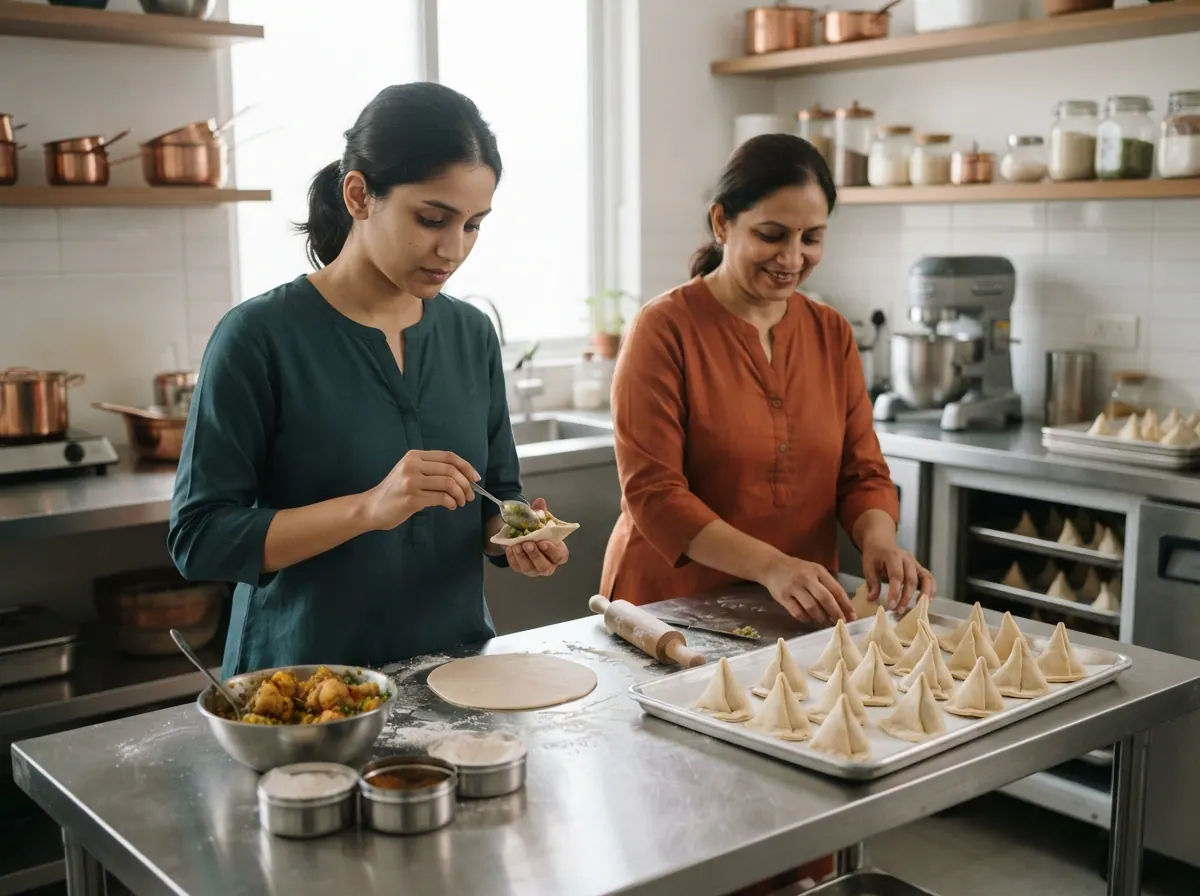
To start a frozen food business in India you need a deep freezer, a sealing machine, a clean kitchen to make small batches, two or three products that freeze well, FSSAI registration, a labelled pack, and about ₹30,000 to ₹3 lakh. The low end is a home-based start with one freezer. The high end is a rented kitchen unit with bigger freezers, a blast chiller and insulated delivery. The business sells convenience: busy families, hostels and small shops buy ready-to-cook packs, but one thawed batch can ruin your name.
All figures here are estimates. Check prices near you before you spend.
What does it cost?
| Item | Home-based start | Rented kitchen unit |
|---|---|---|
| Rent deposit and kitchen fitting | ₹0 (own kitchen) | ₹50,000–1.2 lakh |
| Deep freezer (one or two) | ₹15,000–40,000 | ₹40,000–1.2 lakh |
| Pouch or vacuum sealer | ₹3,000–10,000 | ₹10,000–40,000 |
| Cooking equipment, trays, scale | ₹5,000–15,000 | ₹20,000–50,000 |
| Insulated boxes and gel packs | ₹3,000–8,000 | ₹8,000–20,000 |
| Pouches, labels, printing | ₹3,000–8,000 | ₹8,000–20,000 |
| FSSAI and other registrations | ₹2,000–5,000 | ₹4,000–10,000 |
| First ingredients | ₹5,000–15,000 | ₹20,000–50,000 |
| Working money and ads | ₹10,000–30,000 | ₹30,000–70,000 |
| Total | about ₹46,000–1.3 lakh | about ₹1.9–5 lakh |
You can come in near ₹30,000 by starting with one freezer, a hand sealer and three products, and by selling to people you know. A freezer that fails costs far more than the price difference, so test it before filling it.
What can you sell?
- Snacks: samosas, spring rolls, tikkis and kebabs, which freeze well raw and fry quickly.
- Parathas and rotis: aloo, paneer or plain, par-cooked and frozen in packs.
- Momos and dumplings: easy to steam from frozen.
- Marinated items: tikka pieces or fish, but these need strict cold handling.
- Batters and gravies: dosa batter or gravy bases, sold fresh-frozen.
- Festival packs: Diwali snack boxes and party platters.
How much can it earn?
Here is a small unit selling about 600 packs a month through direct orders and two small shops, with an average pack price of ₹250.
Sales
- 400 packs through direct orders × ₹260 = ₹1,04,000
- 200 packs to two shops × ₹200 = ₹40,000
- Total = ₹1,44,000 a month
Costs each month
- Ingredients and cooking: about 40% of sales = ₹57,600
- Pouches, labels and gel packs = ₹9,000
- Electricity for freezers = ₹6,000
- Delivery and shop commission = ₹14,000
- One part-time helper = ₹10,000
- Kitchen rent = ₹12,000
- Ads, phone and small items = ₹5,000
- Total = ₹1,13,600
Left over: ₹1,44,000 − ₹1,13,600 = about ₹30,400 before tax and your own pay.
For a home-based start with 150 packs a month at ₹250, sales are about ₹37,500, ingredients about ₹15,000, and other costs about ₹10,000, so you keep roughly ₹12,500. The jump comes when you sell to shops and caterers in bulk instead of one pack at a time.
What do you need before you start?
- Products that freeze well. Test every item: freeze it, store it, cook it from frozen, and check taste and texture.
- A steady, safe cold chain. A freezer that holds its temperature, a power backup and insulated delivery.
- Clean, small batches. Make only what you can freeze quickly, so food does not sit warm.
- Proper labels. Name, ingredients, date made, storage and cooking instructions, and your FSSAI number.
Step by step
- Choose two or three products and test their freezing at home for a few weeks.
- Cost each pack: ingredients, pouch, label, gel pack, power and your time. Price it at about 2 to 2.5 times food cost.
- Buy the freezer and sealer, and a thermometer so you can check temperature daily.
- Register with FSSAI and ask what labelling your packs need.
- Take pre-orders from friends, hostels and nearby offices before you cook big batches.
- Deliver in insulated boxes with gel packs within a short time, and ask customers to freeze packs on arrival.
- Approach shops and caterers once your product is steady, with samples and a clear bulk price.
Which licences apply?
- FSSAI registration or licence, depending on yearly sales, on the FoSCoS portal.
- Labelling rules. Packaged food needs a proper label. Ask the food safety office.
- Local permission for running a food unit from home, which differs by society and city.
- GST once your sales pass the limit. Ask a CA.
- Cold storage records. Keep a temperature log, since it helps if a customer complains.
- Rules vary by state, so confirm each with the local office.
What goes wrong?
- Power cut with a full freezer. Food that thaws and is refrozen is unsafe to sell. A backup or a plan with a cold storage unit is needed.
- Products that turn watery or rubbery. Some foods do not freeze well. Test before you launch.
- Thawed packs on delivery. A delivery boy who waits for an hour ruins the pack. Use gel packs and short routes.
- Poor labels. Missing dates or storage instructions confuse customers and raise legal risk.
- Freezer burn and old stock. Rotate stock, and sell the oldest packs first.
- Big stock of one item. A batch that does not sell fills your freezer and cash.
Situations you will face
What would you do? Each choice costs something.
Getting started
A new deep freezer holds temperature well. A second-hand one is cheaper but you do not know how old the compressor is.
- Buy a new freezer: Costly, dependable cold
- Buy a tested used one: Cheaper, breakdown risk
Samosas freeze well and sell easily. Parathas need par-cooking and a tested method to stay soft.
- Start with samosas and tikkis: Simple, many competitors
- Start with stuffed parathas: More testing, fewer rivals
You can start taking orders now, but you have not cooked any product from frozen yet.
- Test for three weeks: Waste food, safe launch
- Take pre-orders and test later: Earn sooner, risk bad packs
A hand sealer is cheap. A vacuum sealer protects texture and reduces freezer burn but costs more and works slowly.
- Buy a vacuum sealer: Costly, better quality
- Buy a hand sealer: Cheaper, more freezer burn
A printer offers plain stickers quickly. A proper label with FSSAI number, date and storage steps takes a few days longer.
- Wait for proper labels: Small delay, safe start
- Start with pre-orders from friends: Earn little, label later
Your home kitchen is free but crowded. A small rented kitchen costs rent but keeps family food separate.
- Rent a small kitchen: Costly, separate and clean
- Stay in the home kitchen: Free, limited batch size
First month
A 12-piece pack is easy to sell to families. A 30-piece party pack costs more but suits hostels and offices.
- Offer only family packs: Easy sales, smaller bills
- Add the party pack: Bigger bills, more stock
A customer says the pack was soft on arrival. Gel packs and insulated boxes add to every order.
- Use boxes and gel packs: More cost, frozen on arrival
- Deliver faster on a bike: Cheap, still a risk
A delivery boy waited an hour in traffic. The customer sends a photo of a soft, wet pack.
- Refund and tighten delivery: Pay now, protect trust
- Send a fresh pack, same route: Cheaper, may thaw again
A hostel warden wants 100 snack packs next week at a lower price. It would fill your freezer.
- Accept at a small discount: Big order, tight margin
- Offer 60 packs only: Safe workload, smaller order
Customers say your frozen parathas turn dry when cooked. The dough needs a tested change.
- Test a softer dough recipe: Wasted batch, better parathas
- Keep recipe, add cooking tips: Cheap, same complaints
A local food page offers to post about your packs for a fee, with free samples.
- Pay for the feature: Cost now, enquiries for days
- Only send samples: Cheap, small reach
Running it
Power fails for eight hours with a full freezer. The freezer lid was opened twice.
- Move packs to cold storage: Rent now, saves stock
- Buy an inverter for the freezer: Bigger cost, fix for later
A shop owner wants to stock your packs in their freezer and take a good margin.
- Supply at a trade price: Steady sales, lower margin
- Stay with direct orders: Higher margin, slow growth
Families and offices want snack boxes before Diwali. Orders are big but your freezer is almost full.
- Rent extra freezer space: Cost now, big sales
- Take only what fits: Safe, miss sales
Oil, flour and potato rates rise for the month. Your pack prices are on your price list.
- Raise pack price by ₹15: Margin safe, fewer orders
- Hold price, shrink portion: Keeps buyers, trust risk
You find packs made six weeks ago behind the new ones. You have been selling from the front.
- Check dates, discard doubtful packs: Lose stock, safe sales
- Discard and start a date board: Bigger cost, fixes the habit
A caterer wants 500 samosas in three days at a low per-piece price.
- Take it with a helper: Big order, wage cost
- Decline, keep retail focus: Safe, miss a lump sum
Customers ask for marinated chicken kebabs. They need strict cold handling and a tested marinade.
- Add the kebab packs: New income, strict handling
- Stay with veg snacks: Simple, no new risk
When things go wrong
You find the freezer warm in the morning. Packs are soft and some are leaking.
- Throw out the soft stock: Big loss, safe sales
- Throw it, buy a backup freezer: Bigger loss, safer future
A customer messages that they felt ill after cooking one of your kebab packs.
- Refund and review your records: Pay now, protect trust
- Ignore the message: Free, rumours spread
An officer asks to see your registration, labels and freezer temperature log. You have no log.
- Start a daily log, fix labels: Small cost, safe record
- Show registration only: Cheap, repeat visit risk
A national frozen snack brand now sits in the shop where you sell, at a lower price.
- Stress home-made taste: Costs a bit, keeps loyal buyers
- Cut your price to match: Keeps shelf, hurts margin
The helper who folds and packs leaves a week before festival orders start.
- Hire a skilled helper, pay more: High wage, quick fix
- Train a new person: Cheaper, slower output
Flooded roads delay delivery by hours and packs may thaw in the van.
- Pause deliveries for a day: Lose sales, safe packs
- Add extra gel packs and deliver: More cost, keep sales
Growing
A blast chiller freezes batches quickly, keeping better texture and safety. It costs a lot at your size.
- Buy the blast chiller: Costly, better quality
- Keep using deep freezers: Cheap, slower freezing
More shops ask for deliveries. A refrigerated van costs far more than bike delivery.
- Buy a small cold van: Big cost, wider reach
- Hire a van, use insulated boxes: Cheaper, limited range
Your plain pouches look like street food. A designed pouch with a window costs more per pack.
- Print designed pouches: Costly, shop shelf appeal
- Keep plain pouches: Cheaper, plain look
A grocery app offers to list your packs. It takes a large share and needs steady stock.
- List on the app: More sales, lower margin
- Own WhatsApp orders only: Keep margin, slower sales
A small hotel asks for free samples of your kebabs and parathas before ordering in bulk.
- Send full samples: Costs stock, may win bulk
- Send a few pieces: Cheap, weaker impression
Is it right for you?
A frozen food business suits you if you are comfortable with food hygiene, careful about temperature and can plan batches in advance. It suits you less if you want a casual, low-attention business, because cold chain mistakes cost real money and trust.
A good test: make one product, sell fifty packs to people you know over a month, and ask each buyer how it tasted after cooking from frozen. If most would buy again, add a second product and approach a shop.