To start a flex printing business in India you need a large-format printer, a computer with design software, a shop near the market, media like flex rolls and vinyl, and about ₹3–8 lakh with a used or basic printer, or ₹10–20 lakh for a new machine and fuller setup. You earn by printing banners, shop boards and hoardings by the square foot, and by adding design and finishing work.
All figures here are estimates. Check prices near you before you spend.
What does it cost?
| Item | Basic setup | Fuller setup |
|---|---|---|
| Large-format printer (used or new) | ₹2–4 lakh | ₹6–12 lakh |
| Computer, software, UPS | ₹60,000–90,000 | ₹90,000–1.3 lakh |
| Vinyl cutter, hand tools, eyelet and pasting tools | ₹25,000–60,000 | ₹70,000–1.5 lakh |
| Laminator (for vinyl and stickers) | none at first | ₹50,000–1.2 lakh |
| Flex rolls, vinyl, sunboard stock | ₹50,000–90,000 | ₹1–1.8 lakh |
| Ink, cleaning kits, spare head budget | ₹30,000–60,000 | ₹60,000–1 lakh |
| Shop advance, signboard, furniture | ₹50,000–1 lakh | ₹1–2 lakh |
| Total | about ₹3–8 lakh | about ₹10–20 lakh |
The printer is the heart, and the print head is its costly part. A cheap printer with a poor head can cost you more in downtime than it saved. Ask the seller how long the head lasts, who services it in your city, and what ink costs per litre.
How much can it earn?
Customers pay by square foot, so your monthly number comes from area printed, rate and media cost. Here is a month for a shop with one printer, one designer and one helper.
Sales
- 12,000 sq ft printed × about ₹14 a sq ft = ₹1,68,000
Costs
- Media and ink, about ₹6 a sq ft × 12,000 = ₹72,000
- Designer = ₹15,000
- Helper = ₹12,000
- Shop rent = ₹15,000
- Electricity = ₹6,000
- Head cleaning, repairs, spares = ₹8,000
- Total = ₹1,28,000
Left over: ₹1,68,000 − ₹1,28,000 = about ₹40,000 a month, before any loan EMI and before your own pay.
Festivals, weddings, elections and school admissions bring spikes. Slow months can fall by half, so the average matters more than your best week.
What do you need before you start?
- Design skill in the shop. Many orders arrive as a phone photo and a rough idea. A fast designer turns those into proofs and wins the work.
- A power plan. Printers and heaters dislike voltage swings. Use a stabiliser and a UPS, and keep the room cool and dust-free.
- A reliable media supplier. Flex, vinyl and sunboard prices move, so ask for a stock list and credit terms.
- A technician you can call. A stopped printer means no income. Know who repairs heads and boards in your city.
- Space and ventilation. Solvent-based inks smell, and some customers and neighbours dislike it. Choose a printer and room accordingly.
Step by step
- Spend a few weeks in a working press and learn printing, colour matching and finishing.
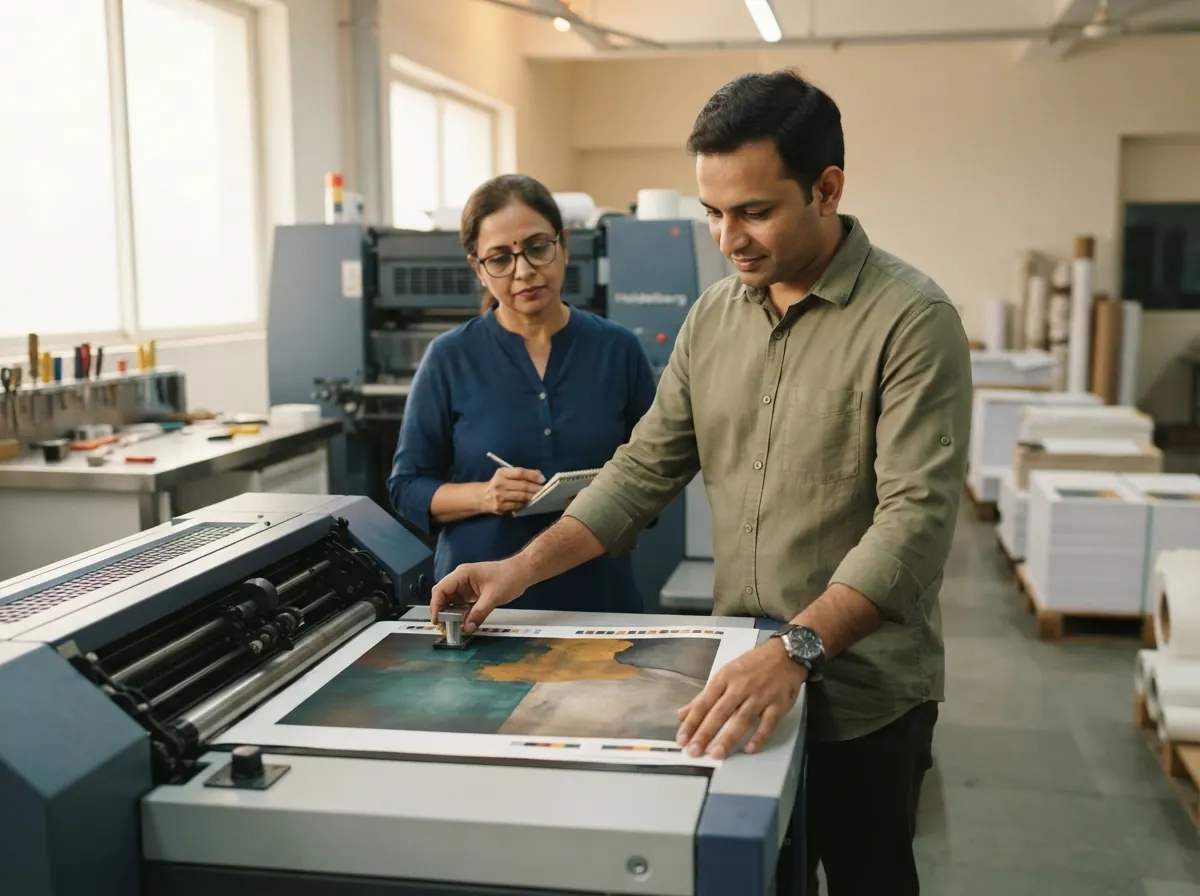
- Pick the printer after you see the work. Ask for a test print on the media you will use, in sunlight, and check colour and banding.
- Choose a shop on a road where shopkeepers pass. Most business is local shop boards and events.
- Set a rate card by media and quality. Include design, eyelets, stitching and frames as separate lines.
- Show proofs before printing and get confirmation on spelling, phone numbers and size. Most disputes come from a typo.
- Take a part advance on large or special-size orders.
- Build a regular base: shop owners, event planners, coaching institutes, political workers, schools and real estate agents.
- Add vinyl, stickers, standees and sunboard so you do not depend on flex alone.
Which licences apply?
Local rules differ, so ask the relevant office:
- Shop or trade permission from the municipality or panchayat.
- GST depends on turnover, and you will often be asked for GST bills by business customers. A CA can advise.
- Udyam registration is free to apply and helps with loans.
- Rules on flex and hoardings. Some cities have limits on PVC flex or need permission to put up outdoor displays. Confirm before accepting hoarding work.
- Political or event material. Election authorities set rules on printing details and publicity material. Ask the local office what must be printed on a banner.
- Loans. Banks and Mudra loans are used for printing machines. Confirm what is open now.
What goes wrong?
- Spelling mistakes. A shop board printed with a wrong name or number is yours to reprint if you never got a signed proof.
- Head clogging. Ink dries in the head when the machine sits idle. Daily cleaning is cheaper than a new head.
- Colour that looks different outdoors. A bright screen colour prints dull on flex. Test and tell the customer before printing.
- Slack season. After a festival or election, orders stop for weeks while rent and EMI continue.
- Price cutting. Another shop quotes one rupee less per square foot. If you follow, you cannot cover ink and repairs.
- Dispute over size. Customers say they asked for 10 by 4 feet, and you printed 8 by 4. Write sizes on the order slip.
- Old stock and sun damage. Flex stored in heat gets brittle and cracks at eyelets.
Situations you will face
What would you do? Each choice costs something.
Getting started
A closing press sells its wide printer cheap. The seller cannot say how many hours the print head has run.
- Buy the used printer: Cheap, head may fail soon
- Buy a new printer: Costly, warranty and service
The dealer shows a sample printed indoors. You want a test on your own flex, outside in the sun.
- Insist on a sunlight test: Dealer irritated, you see real colour
- Trust the indoor sample: Quick, risk of dull prints
A shop on the main market road costs far more rent. A back-lane shop is cheap but shopkeepers rarely walk by.
- Rent on the market road: High rent, more walk-ins
- Take the back lane: Lower rent, fewer customers
Your lane has power cuts and sudden voltage swings. The printer board is expensive to replace.
- Buy stabiliser and UPS: Costs now, protects the board
- Plug in directly for now: Saves money, board at risk
Customers send blurry phone photos and want a nice design. A good designer asks a steady monthly pay.
- Hire a designer: Costs monthly, faster proofs
- Design it yourself: Saves pay, slow and basic
The printer room has no window and the ink smell is strong. Your helper keeps getting headaches.
- Fit an exhaust fan and vent: Costs money, healthier room
- Fit a window exhaust fan: Small cost, fresher air
Every banner needs hemmed edges and eyelets. A hemming and eyelet tool is costly, hand work is slow.
- Buy an eyelet machine: Spend now, neat fast finish
- Finish by hand: Cheap, slow and uneven
First month
A tailor wants a 10 by 3 feet board. Nothing is said about sizes of the photo and phone number text.
- Send a proof and wait: Slower, no typo risk
- Print straight away: Faster, risk of reprint
A customer shows the board you printed. The spelling was on the customer's own WhatsApp message, but you are blamed.
- Reprint at half cost: Costs flex and ink, keeps the customer
- Show the message, refuse: Right but may lose the customer
A school asked for a 10 by 4 feet gate banner. Your helper printed 8 by 4 from a mix-up with the order slip.
- Reprint it, own the error: Full loss, trust stays
- Discount the short print: Costs a little, honest answer
Banding appears across a banner. The head probably clogged over the weekend.
- Do a full head clean: Uses ink, saves the head
- Print on and hope: Saves ink, prints wasted
An event planner wants 40 banners for a fair and says payment will come after the event.
- Ask for half in advance: Safer, may go elsewhere
- Print it all on trust: Big order, cash stuck
Running it
A bright orange logo on a customer's file prints brownish on flex. The customer expected the screen colour.
- Tune colour and reprint: Costs ink and media
- Explain flex limits: Saves cost, may be unhappy
A candidate's team wants 300 banners in four days. Printing rules require specific details to appear on each.
- Print with required details: Slower proofs, full order
- Take half the order: Less strain, less income
A shop across the road lowers its rate, and two of your regulars ask if you will match.
- Match the rival's rate: Keeps customers, thin margin
- Hold the rate, add proofs: Margin kept, some leave
Shopkeepers want festival offers on banners and standees. You have limited media stock.
- Stock extra flex and vinyl: Cash locked, catch the rush
- Buy only as orders come: Safe cash, miss some orders
Your supplier raises the roll rate. Another dealer offers a cheaper roll that looks thinner.
- Stay with your supplier: Costs more, steady quality
- Switch to the thin flex: Saves money, weaker banners
Shops want cut vinyl letters and window stickers. You would need a cutter and some learning.
- Buy a vinyl cutter: Costly, a second product
- Outsource to another shop: No spend, low margin
A builder asks you to print a large roadside hoarding. The builder says permission is their job, and wants it fast.
- Ask for the permission papers: Slower start, safe for you
- Print only, client puts it up: Smaller bill, no install risk
When things go wrong
A tube loosens and ink spills near the heater. The room smells strongly.
- Stop, clean, replace the tube: Lose half a day, safe fix
- Call the technician, shut for a day: Costs service fee and orders
The technician says one head is dead and a new one is costly. Pending orders are large.
- Replace the head: Big bill, back in work
- Outsource orders for now: Lower margin, no new head
A coaching institute collected your banners for admissions and keeps asking for more time to pay.
- Stop work till they pay: Pressure, may lose them
- Give new banners anyway: Keeps them, more owed
The city announces limits on PVC flex banners for some events. Customers ask for other options.
- Offer cloth and paper banners: New media cost, keeps customers
- Wait and see: No spend, risk of losing orders
The shop is quiet for three weeks. Rent and printer EMI are due.
- Visit shops with sample cards: Costs time and printing
- Cut costs, wait it out: Cheap, slower recovery
A roll stored near the roof for months cracks when you roll it out. Customers will notice it on eyelets.
- Discard it and buy fresh: Loss, clean prints
- Use for indoor jobs, say so: Small loss, honest to client
Stock numbers do not match sales. You suspect waste and maybe more, but have no proof.
- Start a daily stock register: Time and a notebook, clear count
- Talk privately, count stock daily: No accusation, small effort
Growing
Jobs wait two days for the printer. A second machine could double output but needs more media cash and staff.
- Buy a second printer: Heavy spend, more output
- Extend shop hours: Cheap, tired staff
Retail shops want laminated vinyl and signboard work. A laminator opens that market.
- Buy a laminator: Costly, new product
- Skip it for now: No spend, no new income
The bank says a loan for printing equipment is possible with your Udyam papers and bills.
- Apply with proper papers: Fees and effort, lower interest
- Borrow from a private lender: Quick, high interest
Event planners want roll-up standees and framed prints. You would need to buy fittings and learn assembly.
- Stock standee fittings: Spend now, higher margin
- Stay with flex and vinyl: No spend, one product line
Is it right for you?
Flex printing suits you if you like design and colour, can handle machine troubles calmly and can meet last-minute deadlines. It suits you less if you want steady income every month with no rush seasons, or if you cannot manage a loan EMI in slow months.
A good test: work in a press for a month, including one festival or election rush. Then start with a basic printer and a designer, win a base of shop owners, and add machines only when jobs prove the need.